
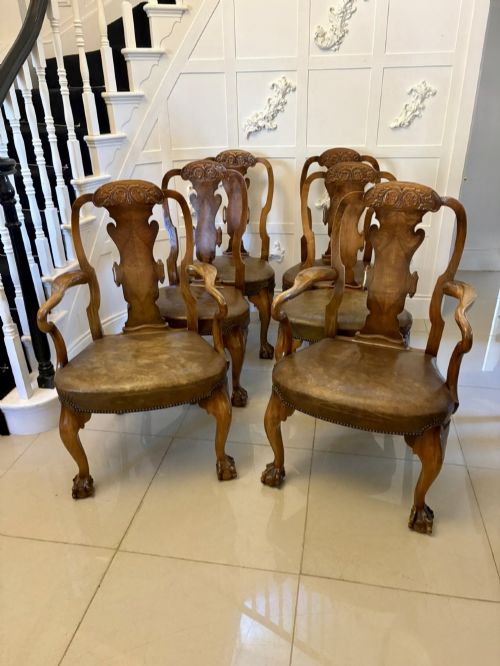

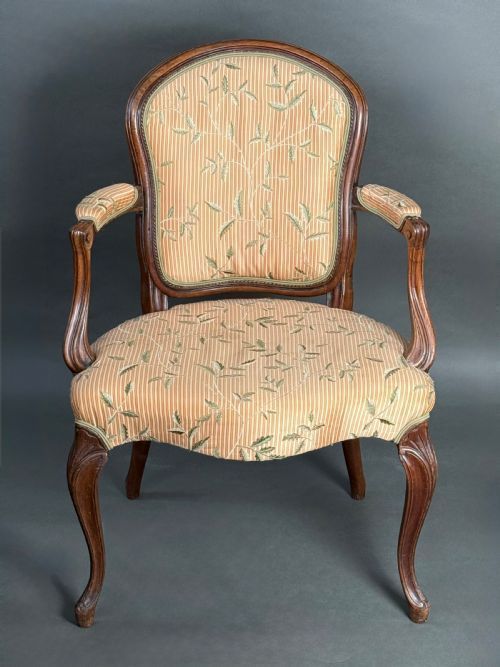
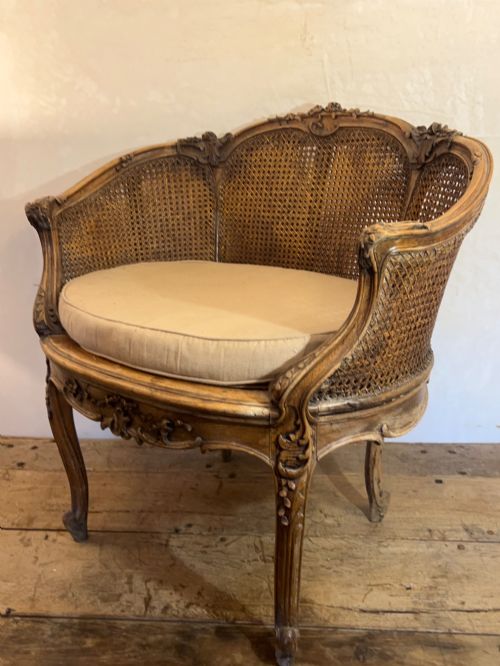
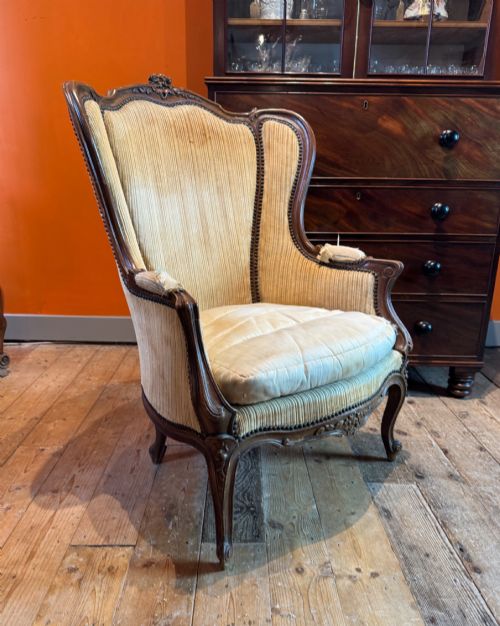
Walnut Leg Armchair
Solid walnut leg armchair designs span formal eighteenth-century wing backs to comfortable Victorian library seats, offering durable timber frames and traditional upholstery.
Walnut Leg Armchair
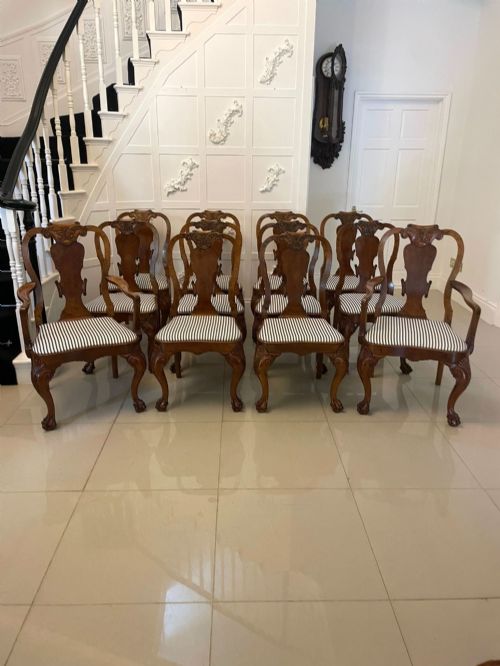
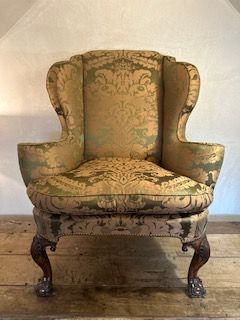
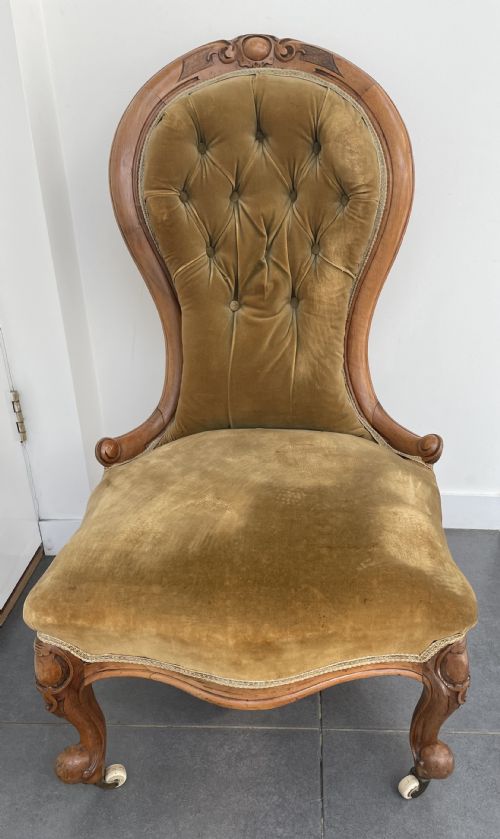
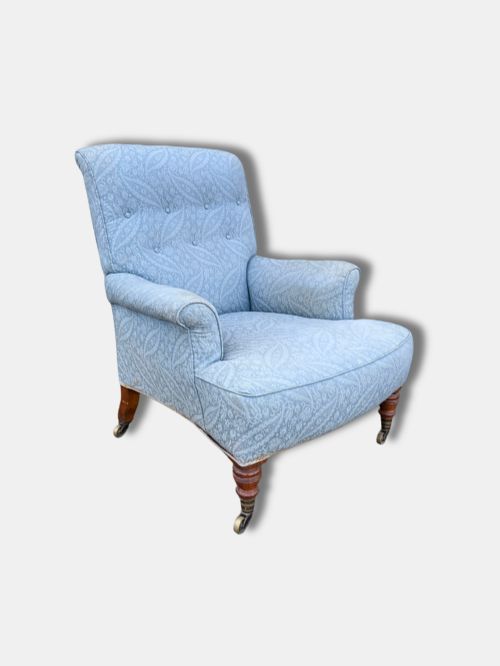
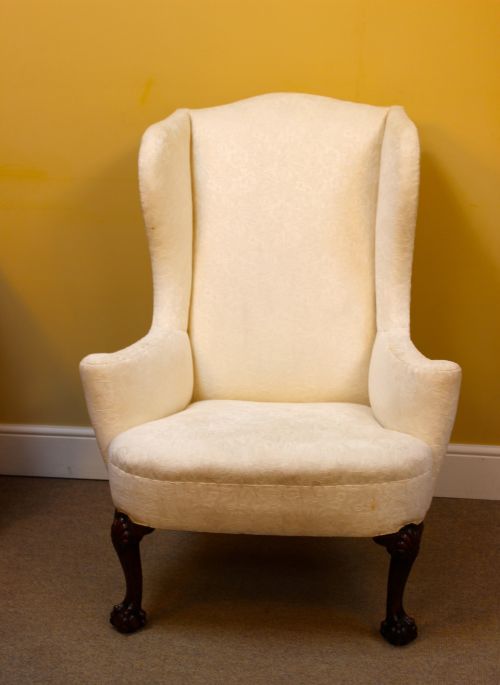
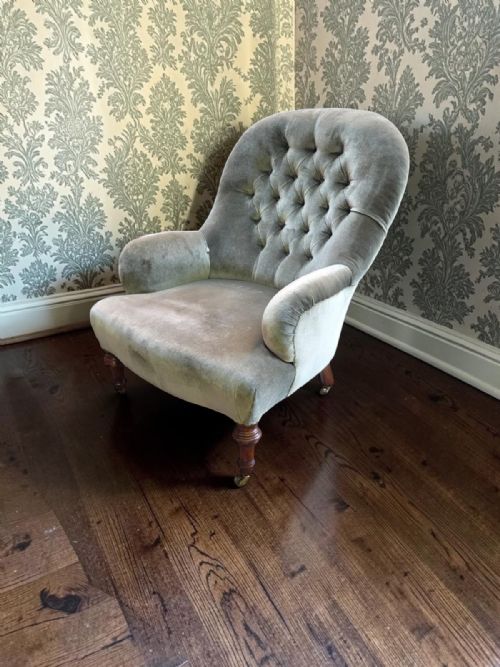
A walnut leg armchair combines a sturdy exposed timber framework with supportive sprung or padded seating, designed for domestic comfort in living rooms and libraries. The selection encompasses stately eighteenth-century wing chairs, elaborate nineteenth-century Victorian spoonbacks, and refined Edwardian reinterpretations.
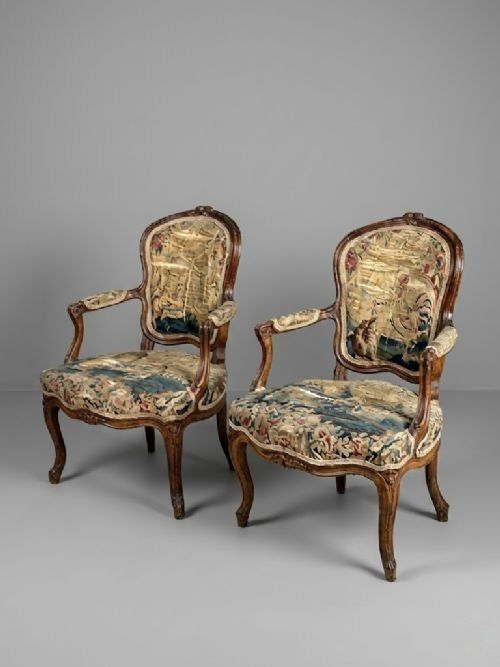
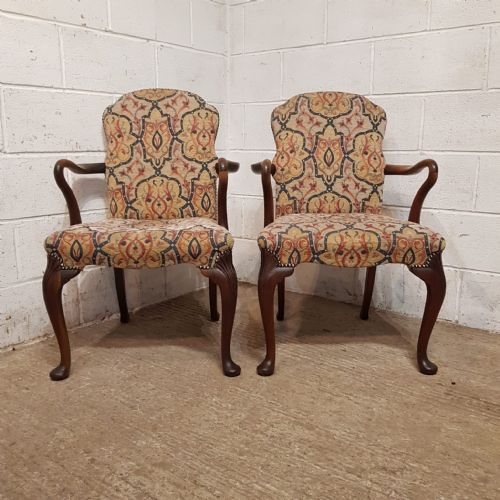
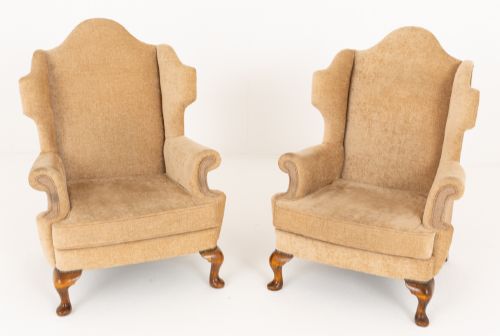
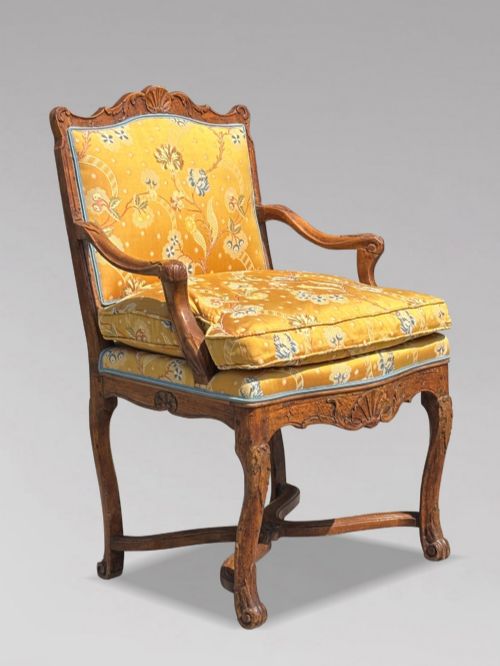
Buyers will encounter various forms on this page, ranging from open-armed library and desk chairs to enclosed wing chairs and low-slung nursing seats. Many examples adopt historical revivals, notably Queen Anne and Louis XV styling, featuring characteristic cabriole supports.
Materials and construction
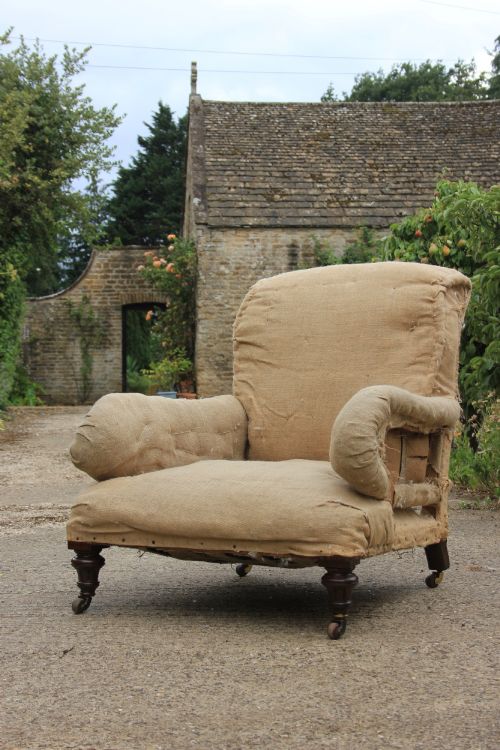
Makers utilised dense walnut timber for the primary structural frames, often carving cabriole legs, arm terminals, and crest rails with intricate botanical motifs. Beneath the visible woodwork, traditional upholstery foundations incorporated materials such as hessian, calico, and supportive webbing.
The outer coverings rely on varied textiles, including plush velvet, silk, leather, and woven Aubusson tapestries, secured with traditional brass tacks. Structural joints frequently employ traditional cabinetmaking techniques to ensure long-term stability under daily use.
Walnut Leg Armchair Retail Price Guide 2026
Typical asking prices for walnut leg armchair among the pieces listed under this phrase on Sellingantiques today, from the lower quarter to the upper quarter. They describe what is for sale here now, not the wider market.
Some Victorian wing chairs hide deep buttoned upholstery designed to trap heat near the occupant on chilly evenings.
Distinctions in standard
Quality rests significantly upon the crispness of the timber carving and the architectural proportion of the walnut frame. Master carvers produced deeply articulated cabriole legs and flowing scrollwork that integrate harmoniously with the overall silhouette.
The integrity of the interior stuffing and the selection of covering textiles further define the grade of the piece. Original show-frames with retained upholstery methods command greater appreciation than heavily altered examples.
Howard and Sons·SF Cullen·Shoolbred
The Walnut Leg Armchair Glossary
- Cabriole leg
- A furniture leg that curves outward at the knee and tapers inward toward the foot, mimicking animal limbs. This form frequently terminates in scroll, claw, or pad feet on period walnut seating.
- Wing armchair
- An upholstered seat featuring protective side panels designed to shield the occupant from draughts. Eighteenth-century and Victorian examples often pair these wings with prominent cabriole supports.
- Spoonback
- A chair back shaped in a concave oval contour resembling the bowl of a spoon, popular during the Victorian era. This ergonomic design provides enhanced lumbar support for the seated user.
- Show-frame
- A wooden armchair structure where polished walnut is deliberately left exposed around the upholstered elements. These frames display the grain and carved details of the timber.
- Bergere
- An enclosed upholstered armchair with a wooden frame and closed sides. French iterations frequently incorporate cane panels or luxurious silk coverings.
Walnut Leg Armchair: Frequently Asked Questions
How do I identify a true period walnut armchair?
Examine the timber density, grain patterns, and hand-cut joinery visible beneath the frame. Period pieces exhibit authentic wear consistent with age, alongside traditional construction methods rather than modern metal fasteners.
Compare the silhouette and leg profiles against documented historical examples from the eighteenth and nineteenth centuries. Subtle irregularities in hand-carved cabriole legs often confirm genuine period craftsmanship.
Where were these armchairs used historically?
These chairs served primarily in formal drawing rooms, private libraries, and comfortable parlours as principal seats for reading or social gathering. Winged variants were stationed near fireplaces to block cold air.
Smaller nursing and occasional chairs were easily moved between domestic chambers to accommodate guests. Library and desk variants provided ergonomic support for writing and study.
Can I use these antique chairs daily?
Solid walnut frames offer robust structural integrity suitable for everyday seating when the internal webbing and springs are sound. Many examples have survived centuries because the hardwood resists heavy wear.
Periodic professional maintenance of the upholstery foundations ensures the seating remains comfortable and supportive. Gentle cleaning preserves the surface finish of the exposed timber.
What is the difference between Queen Anne and Victorian styles?
Queen Anne style pieces, often revisited in later decades, emphasise clean lines, subdued walnut grain, and elegant cabriole legs ending in pad or claw feet. Victorian designs favour heavier proportions, button-backed upholstery, and deeply carved spoonbacks.
Victorian makers also embraced eclectic revivals, incorporating French Louis XV influences alongside traditional English forms. This results in more ornate carving and varied textile choices compared to earlier minimalism.