

Fireside Easy Chair
A fireside easy chair brings a substantial upholstered seat to the hearth, offering deep comfort and traditional period presence.
What fireside easy chairs are
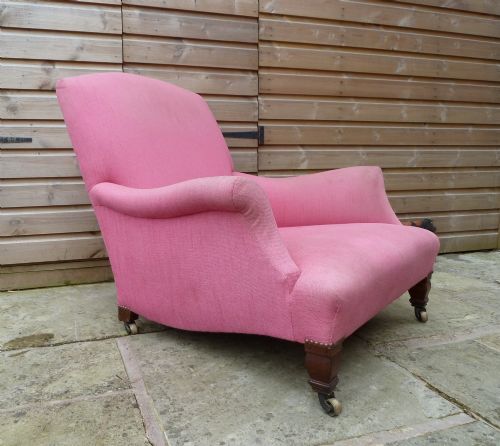
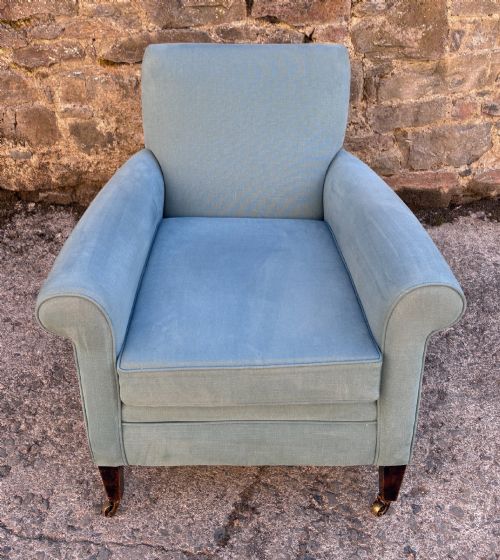
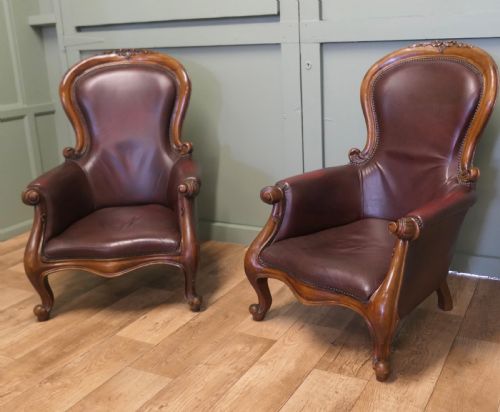
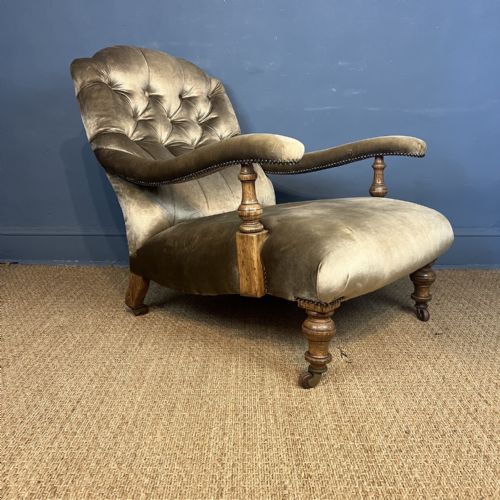
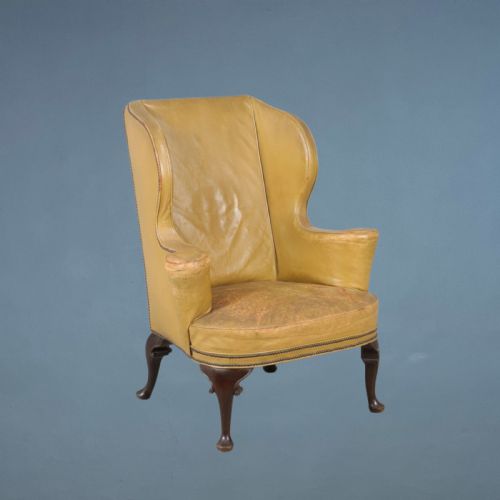
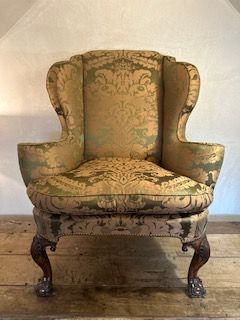
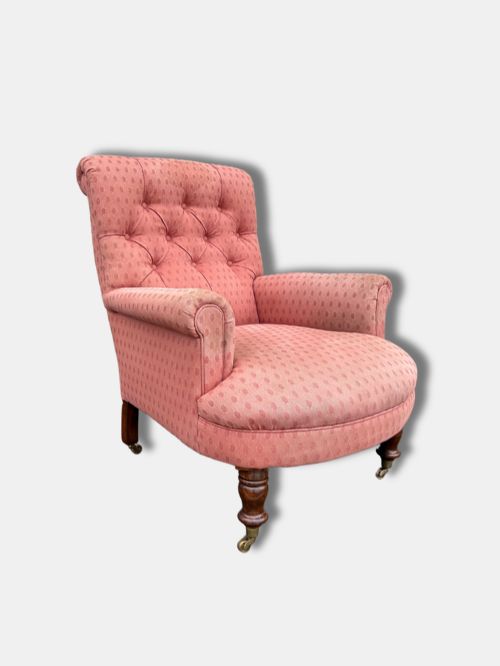
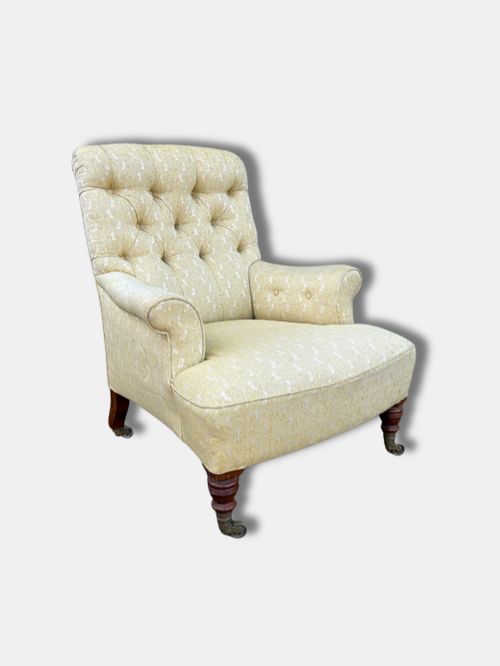
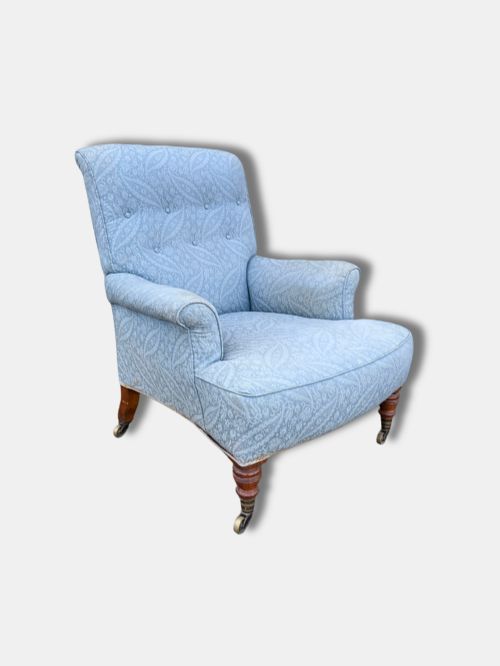
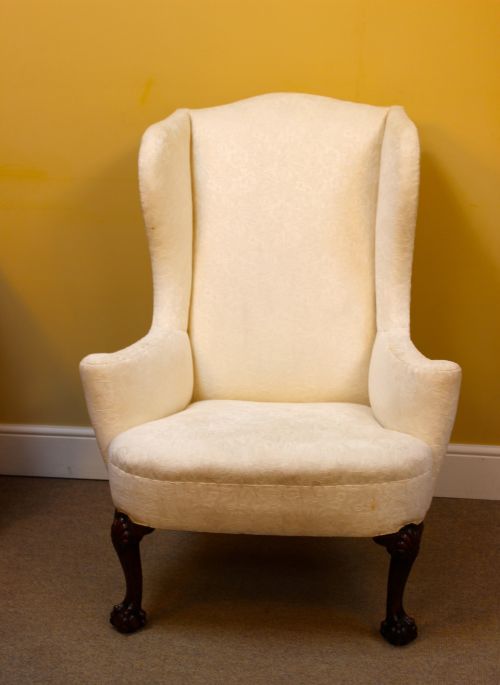
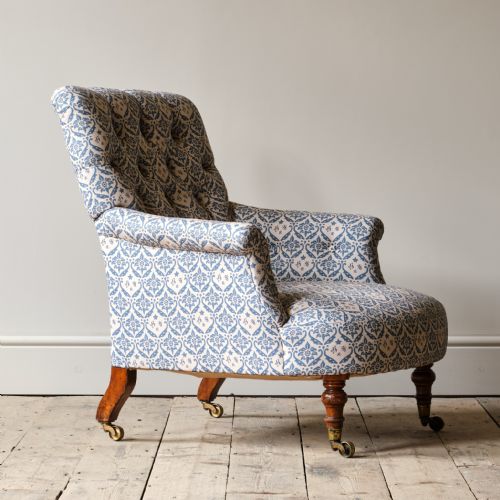
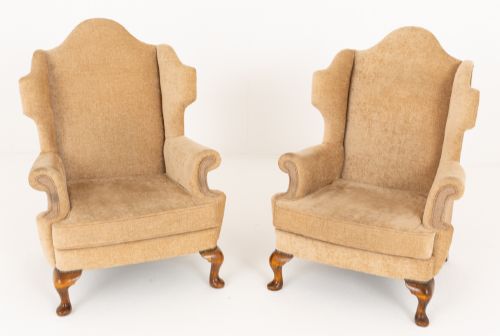
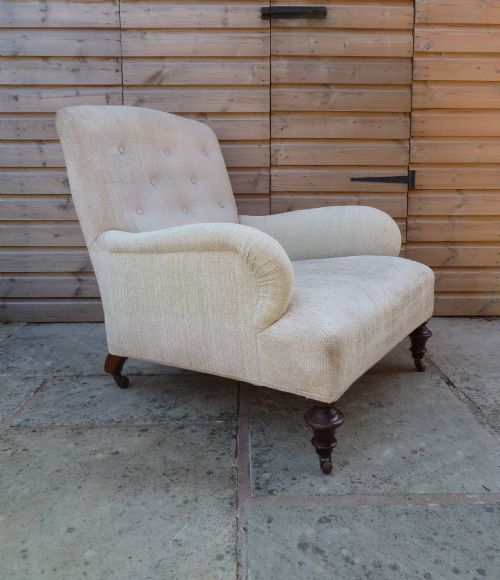
When you search for a fireside easy chair, you encounter a variety of substantial seating designed for warmth and comfort by the hearth. The selection spans the eighteenth and nineteenth centuries, taking forms such as wing chairs, wingback armchairs, open armchairs, and tub chairs.
The pieces appearing on this page include examples from the George III period, Queen Anne style, and Victorian era, alongside English traditional designs. These armchairs range from fully upholstered frames to open woodwork structures waiting for final covering.
How they were made
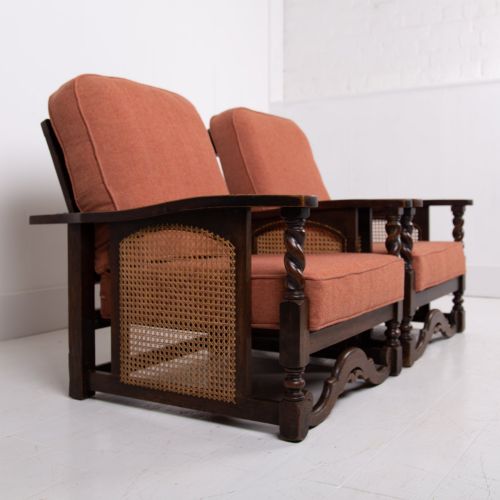
Makers constructed the frames of these chairs using hardwoods such as mahogany and walnut, providing a sturdy skeleton to withstand daily use. Exposed woodwork often shows careful turning or shaping on the legs and arm supports.
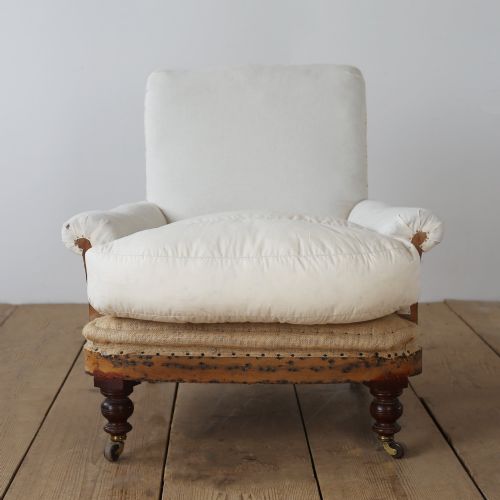
Upholstery forms a major component of construction, utilising materials like calico, damask fabric, velvet, and cotton, frequently complemented by brass hardware or castors. Many historic frames survive beneath modern calico or ticking, or await complete re-upholstery.
Retail Price Guide 2026
Typical UK retail prices for fireside easy chair, calculated from the Sellingantiques database of over a million retail prices indexed since 2003. This retail price guide relies exclusively on Sellingantiques data; no external sources or auction records are used, so the figures do not describe the wider market.
The selection spans the eighteenth century, the George III period, and the Victorian era.
What varies in quality
The distinction between standard examples and superior pieces rests upon the integrity of the underlying hardwood frame and the elegance of its proportions. Chairs displaying refined woodwork, balanced wing profiles, and harmonious lines command greater attention.
Condition of the textiles also influences character, as original or sympathetic period fabrics like damask and velvet elevate the visual weight compared to plain calico coverings intended for further work.
Howard and Sons
The Fireside Easy Chair Glossary
- Wing chair
- An upholstered armchair with side panels designed to shield the occupant from drafts near a fireplace. These protective flaps extend from the back to the armrests.
- Tub chair
- A compact armchair featuring a rounded back that curves continuously into low arms. This enclosing shape creates a snug seat suited to smaller spaces.
- Calico
- A plain-woven cotton textile frequently used as a base layer for upholstery work. It provides a clean foundation before decorative fabrics are applied.
- Damask
- A reversible figured fabric woven on a jacquard loom with patterns formed by contrasting warp and weft threads. It appears in traditional upholstery schemes.
Frequently Asked Questions
What defines a fireside easy chair?
These pieces comprise upholstered seating forms from the eighteenth and nineteenth centuries, specifically designed for placement near a hearth.
They incorporate supportive backs, arms, and substantial padding to provide warmth and comfort.
How were these armchairs used historically?
Occupants sat in them beside the fireplace to benefit from the retained heat of the hearth during colder months.
The enclosed designs, particularly wing chairs, helped block cold drafts circulating in older rooms.
How do I live with an antique upholstered chair?
Place the chair near a living room fireplace or reading corner where its traditional proportions can be appreciated.
Protect delicate textiles such as velvet or damask from direct sunlight to preserve the fabric over time.
How do I identify a George III armchair?
Look for specific stylistic cues associated with the late eighteenth century, including mahogany framing and characteristic wingback silhouettes.
Construction methods and timber selection help distinguish these earlier pieces from nineteenth-century Victorian equivalents.
Why do some chairs come in calico?
Calico serves as a neutral base upholstery layer that allows buyers to apply their own choice of decorative fabric.
Many historic frames are sold in calico or ticking to make re-upholstery straightforward.