


Walnut Inlay Console Table
A walnut inlay console table brings warmth and intricate pattern into a room, offering surface space paired with decorative woodworking.
Walnut Inlay Console Table
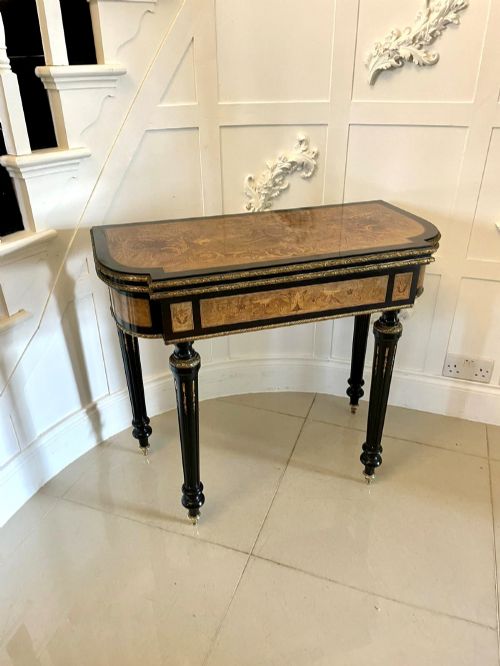
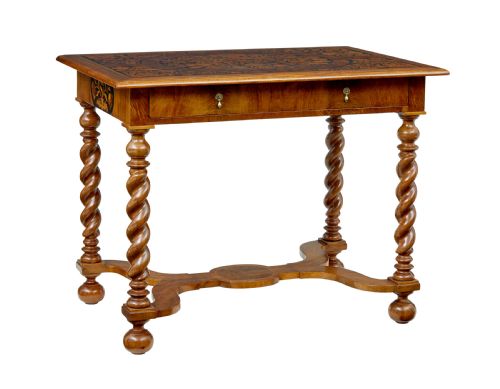
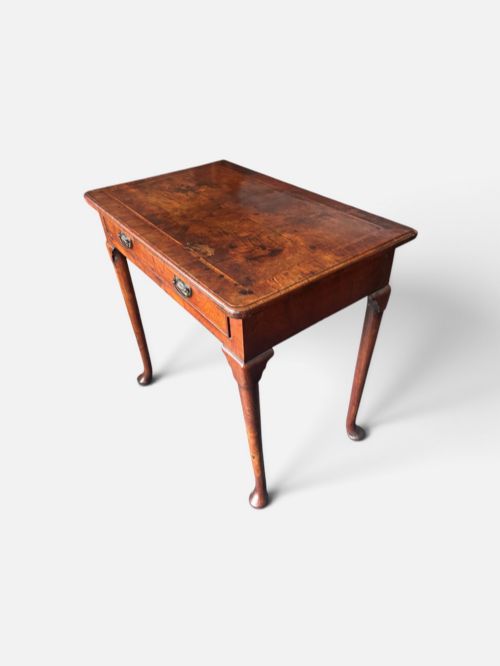
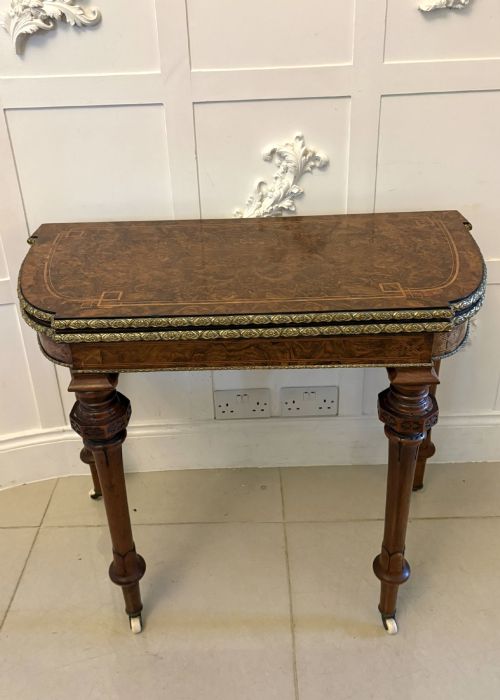
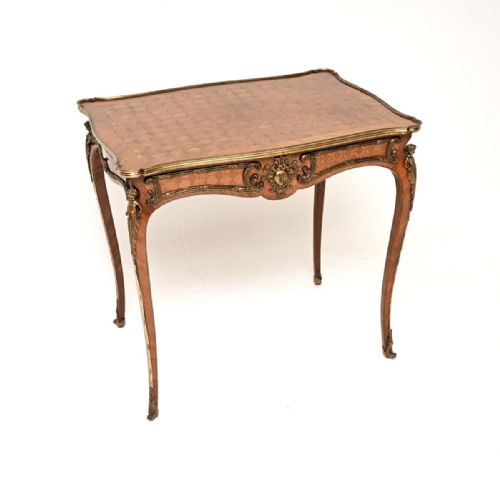
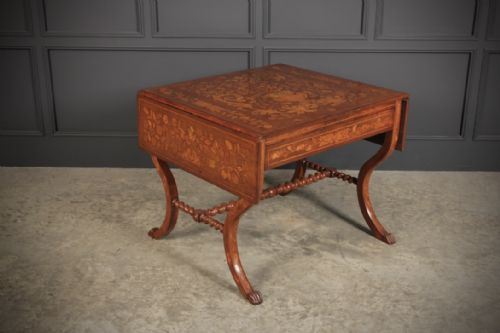
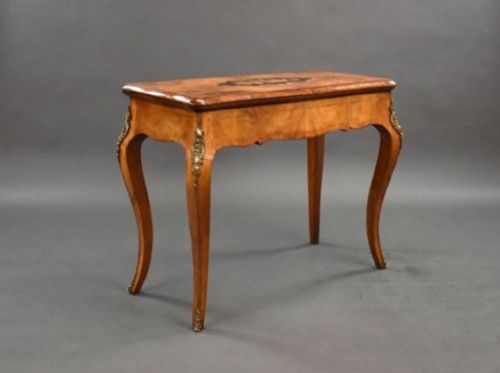
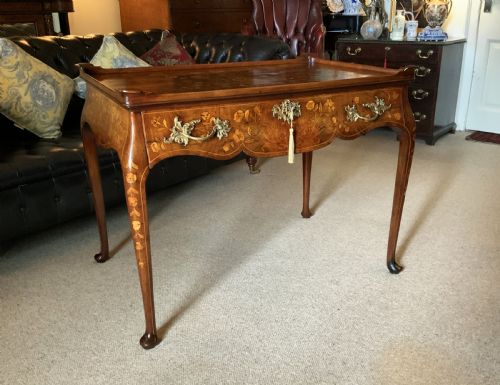
A walnut inlay console table brings together rich timber and delicate contrasting details, often appearing as fold-over card tables, games tables, or wall-mounted side pieces from the eighteenth and nineteenth centuries. You will frequently encounter Victorian examples alongside continental pieces exhibiting Dutch Rococo or French revival styles.
Makers utilised figured timbers such as burr walnut to create striking grain patterns across the top surface, frequently framed by floral or geometric marquetry. These furniture forms served various domestic functions in period interiors, acting as writing desks, display surfaces, or convertible gaming boards.
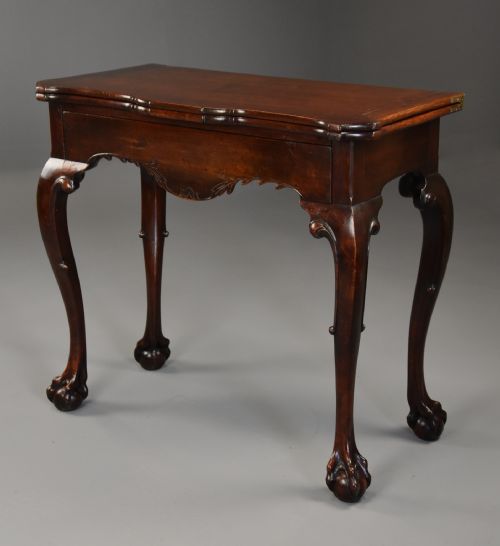
The physical form ranges from serpentine-fronted fold-over tables supported by pillar bases to demi-lune shapes resting against a wall. Such pieces reflect the design priorities of the Victorian era and the eighteenth century, where decorative woodworking demonstrated the skill of the cabinetmaker.
How they were made
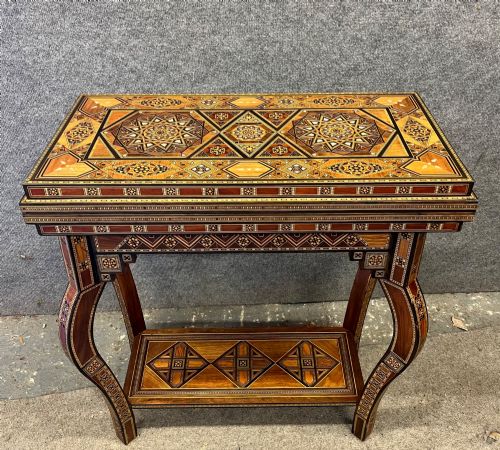
Craftsmen built these tables using solid walnut and secondary timbers, applying burr walnut veneers to the primary display surfaces to emphasise the natural grain. Marquetry and parquetry patterns utilised fruitwood, boxwood, and exotic woods cut into precise shapes and set flush into the timber ground.
Metal elements such as cast brass or ormolu mounts frequently decorated the corners, edges, and cabriole legs, adding structural definition and contrast to the dark wood. Joinery techniques relied on traditional hand-cut joints, while folding mechanisms on card tables utilised wooden hinges or pivoting supports.
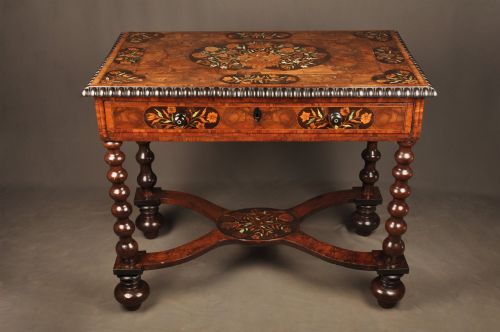
A few eighteenth-century examples feature surprising inlaid birds gazing across wooden flowerbeds right beneath your tea service.
What varies in quality
The distinction between ordinary and exceptional examples rests upon the precision of the marquetry and the choice of veneer. Finer tables display intricate floral or bird motifs executed in diverse contrasting woods without gaps or crude filler.
Quality also shows in the depth and movement of the timber grain, particularly in burr walnut surfaces that retain a rich, consistent sheen. Superior cabinetmaking is evident in stable folding actions and harmonious proportions that integrate the ormolu mounts and inlay seamlessly.
Pietro Ferrario·E & R
The Walnut Inlay Console Table Glossary
- Marquetry inlay
- A decorative technique where small pieces of veneer are arranged to form pictorial or geometric patterns on a wooden surface. This method creates the detailed floral and bird designs seen across many table tops.
- Burr walnut
- A specialised timber taken from the growth excrescences on walnut trees, prized for its swirling and knotty grain patterns. It provides the highly decorative background surface on Victorian examples.
- Ormolu
- Gilded bronze ornamentation applied to furniture edges and mounts during the eighteenth and nineteenth centuries. It adds metallic contrast to the dark walnut body.
- Demi-lune
- A half-moon shape used for console and side tables designed to stand flat against a wall. This profile became particularly popular in Neoclassical and French revival designs.
- Parquetry
- Geometric wood inlay arranged in repetitive patterns such as cubes or chequers. It differs from marquetry by focusing on repeating lines rather than pictorial scenes.
Walnut Inlay Console Table: Frequently Asked Questions
What is a walnut inlay console table used for?
These tables provide a decorative surface for lamps, ornaments, or books while standing flat against a wall in a hallway or reception room. Many historical variants double as functional writing desks or convertible games tables.
Their versatile proportions allow them to fit into narrow spaces where standard furniture would overwhelm the room. The inclusion of drawers or fold-over tops adds practical utility to their decorative appearance.
How do I identify a Victorian walnut table?
Victorian examples often feature rich burr walnut veneers combined with elaborate floral marquetry and heavy serpentine shaping. They frequently incorporate clever folding mechanisms designed for card playing.
Look for the characteristic warmth of the walnut timber alongside classical revival motifs popular during the mid to late nineteenth century. Ormolu mounts and turned pillar supports further point toward this period of production.
What is the difference between marquetry and parquetry?
Marquetry involves cutting various woods to form pictorial scenes, such as flowers, birds, or scrolling foliage. It requires immense skill to fit the coloured veneers together into a cohesive picture.
Parquetry relies on geometric shapes arranged in repeating patterns like cubes or bricks. Both techniques appear frequently on the surface of walnut tables from the eighteenth and nineteenth centuries.
How should I care for antique walnut furniture?
Keep wooden tables away from direct sunlight and strong heat sources to prevent the walnut veneer from drying out or splitting. Maintaining a stable room temperature preserves the integrity of the antique glue and finish.
Dust the surface gently with a dry, soft cloth and avoid chemical polishes that can build up over time. Applying occasional appropriate wax helps nourish the timber and maintain its natural lustre.