


Renaissance Revival Console Table
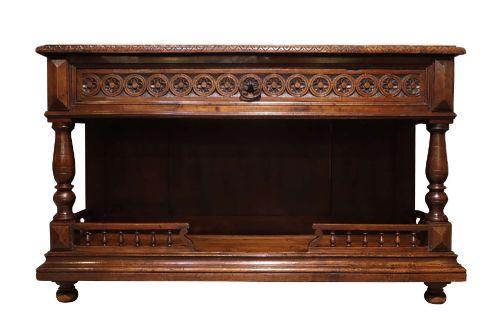
A renaissance revival console table brings heavy classical ornament and architectural presence into a room, offering a dramatic focal point for an entrance hall or living space.
Renaissance Revival Console Table
When you search for a renaissance revival console table, you are looking at nineteenth-century furniture that imitates sixteenth-century Italian and French design. These pieces draw heavily on architectural forms, incorporating carved details like scrollwork and figural motifs.
The versions you meet most frequently on this page date from the Victorian era, specifically the nineteenth century. They appear as console tables, centre tables, and side tables constructed in heavy woods.
Makers of these items looked back to historical epochs, blending Italian and French revival styles with Victorian cabinet-making traditions. The resulting furniture serves both as functional surface space and as a bold decorative statement.
Materials and construction
Construction relies heavily on durable hardwoods such as oak, golden oak, walnut, and Brazilian mahogany. These timbers provide the structural strength needed to support heavy carved ornamentation and thick tabletops.
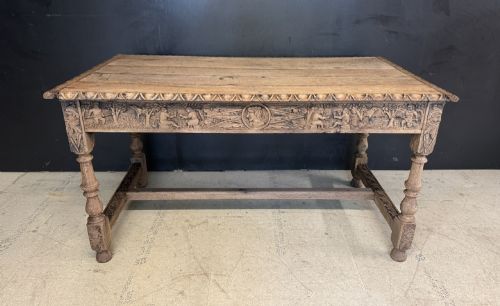
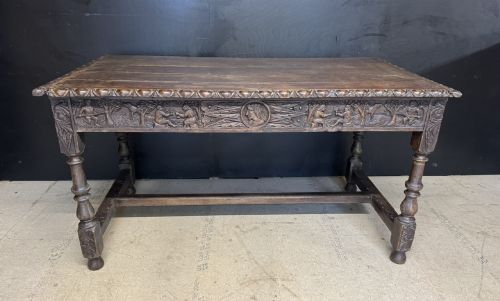
Craftsmen utilised intricate hand-carving techniques to create deep relief decoration, including scrollwork and Green Man motifs. Some examples incorporate specialised decorative methods like bone inlay to contrast against the dark walnut body.
The listings span the nineteenth and early twentieth centuries, featuring walnut, mahogany, and oak across console, centre, and hall table formats.
Judging quality
Quality in these tables rests upon the depth, sharpness, and ambition of the carving. Superior examples display crisp detail in sculptural elements and foliage rather than shallow, mechanical tooling.
The choice of timber and the integration of secondary materials dictate the grade of the piece. Dense, well-figured walnut or richly grained mahogany elevated the status of the furniture from utilitarian to high-end salon display.
The Renaissance Revival Console Table Glossary
- Console table
- A table designed to stand against a wall, traditionally fixed with brackets or supported by front legs. It often serves as a surface for lamps or decorative objects.
- Renaissance revival
- A nineteenth-century architectural and decorative style inspired by the art and architecture of the European Renaissance. It revives classical motifs such as columns, pilasters, and elaborate scrollwork.
- Green Man
- A sculptural ornament depicting a human face surrounded by or entwined with foliage and vines. It symbolizes rebirth and appears frequently in nineteenth-century wood carving.
- Centre table
- A freestanding table finished on all sides, intended to stand in the middle of a room rather than against a wall. These pieces often feature elaborate carving visible from every angle.
Renaissance Revival Console Table: Frequently Asked Questions
What is a renaissance revival console table?
A renaissance revival console table is a nineteenth-century piece designed to stand against a wall, drawing its decorative inspiration from sixteenth-century European classicism. These items feature substantial timber construction and deep relief carving.
They bring an architectural weight to domestic interiors, often serving as a prominent surface in hallways or principal rooms.
How were these tables used originally?
Historically, these tables functioned primarily as decorative furniture for display in grand hallways, saloons, or formal reception rooms. They held lamps, decorative objects, or served as a surface upon entering the home.
Their substantial construction meant they remained stationary, acting as permanent architectural fixtures within the room's layout.
Where do these tables originate from?
The listings show pieces originating from British, French, and Italian workshops during the nineteenth century. Makers across these regions drew on their own domestic Renaissance history to inform the revival aesthetic.
French and Italian examples frequently utilised walnut and specific inlay techniques, while British workshops often favored oak.
How do I live with a heavy wooden table?
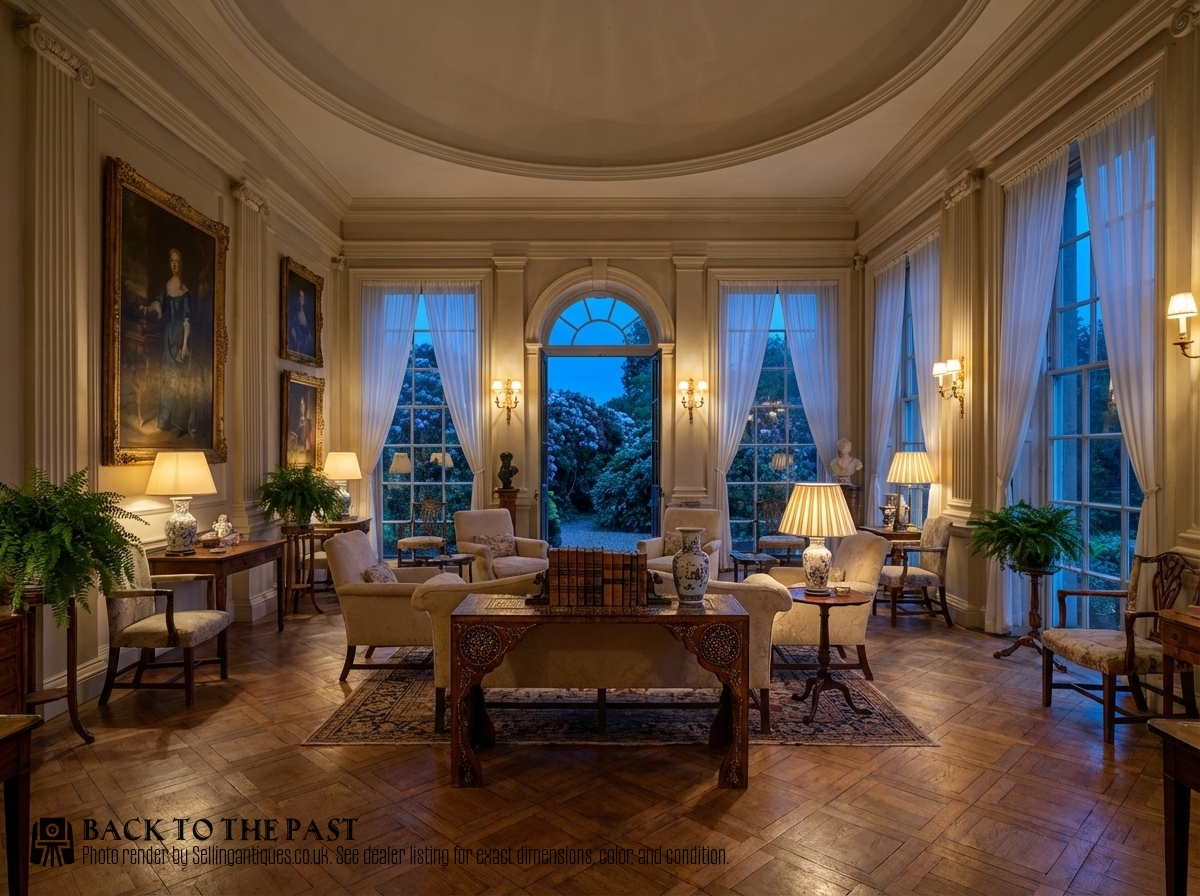
Living with a substantial carved table involves balancing its visual weight with the surrounding room. Because many are designed as freestanding centre tables or wall consoles, placement depends on circulation space and sightlines.
Regular polishing with appropriate wax preserves the dark hardwoods and highlights the depth of the nineteenth-century carving.