

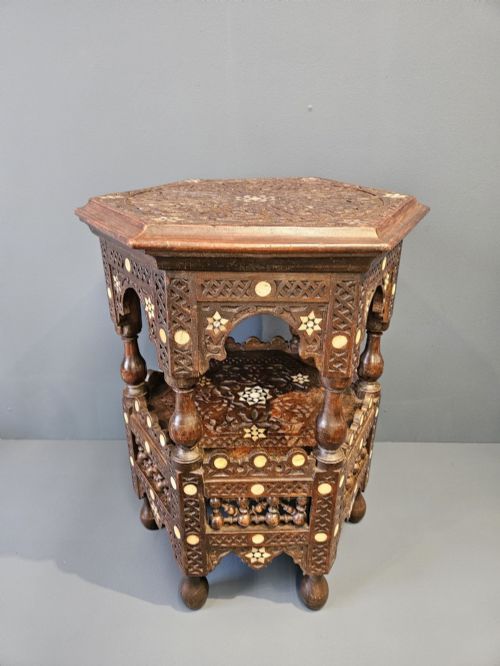


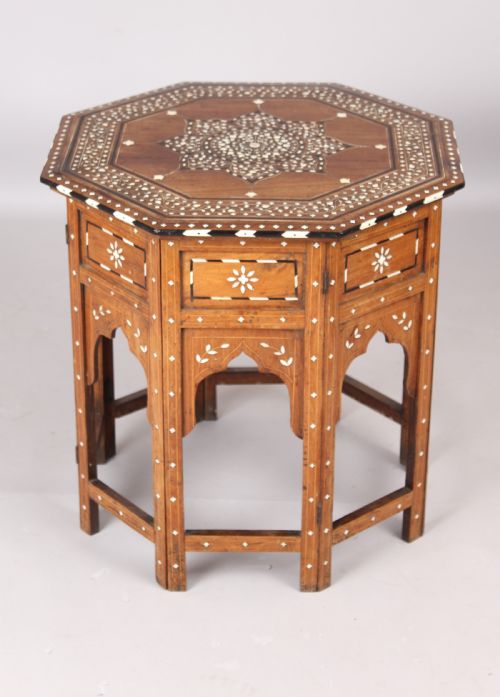


Moorish Style Inlaid Table
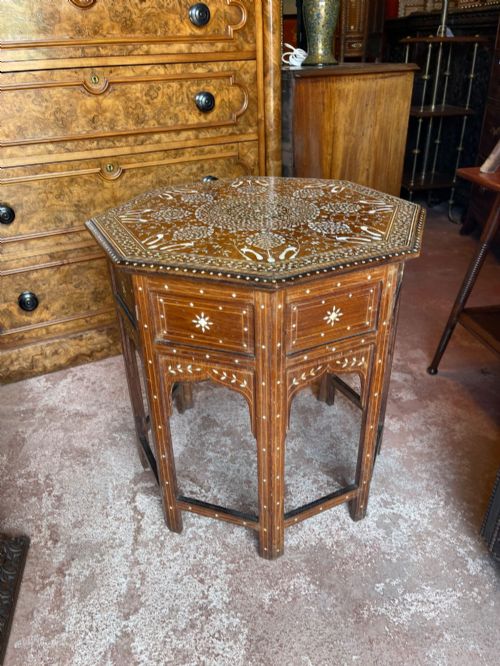
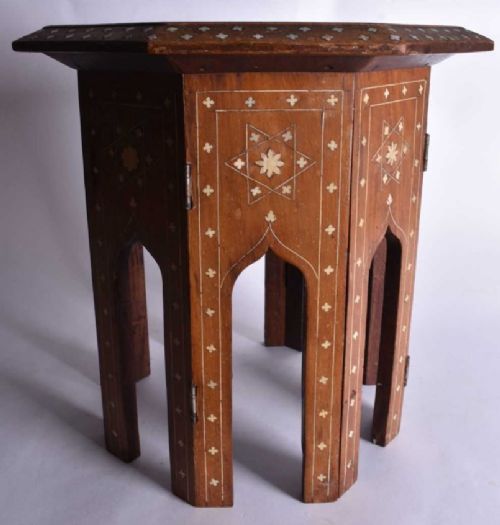
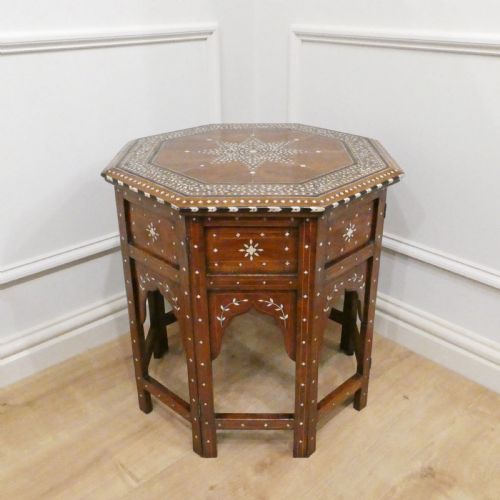
These moorish style inlaid table pieces bring intricate geometric design and rich eastern craft into western interiors.
Moorish Style Inlaid Table
A moorish style inlaid table typically takes an octagonal or hexagonal form, designed as a side, occasional, or centre table. The selection spans pieces from the nineteenth century through the early twentieth century, alongside specific revival and regional variants.
How they were made
Construction relies heavily on dense hardwoods, walnut, and ebonised wood, providing a dark foundation for intricate decorative work. Artisans assemble these frames using traditional joinery methods suited to folding or rigid geometric shapes.
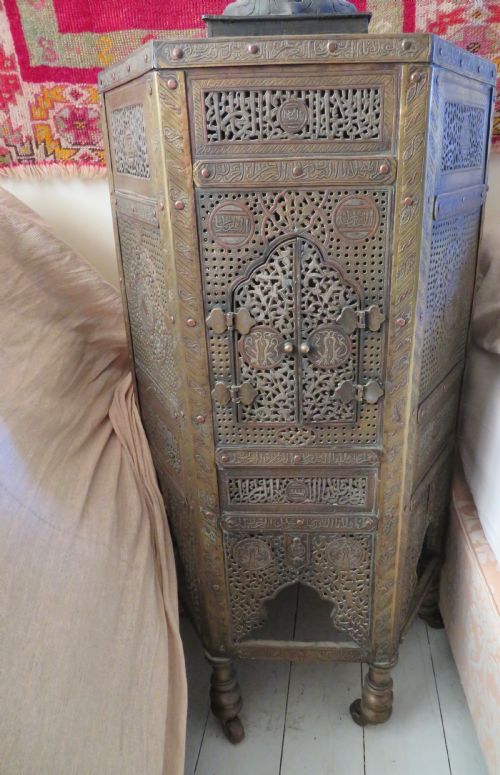
The surface decoration incorporates detailed bone and mother-of-pearl inlay, often paired with brass, white-metal, and copper wire work. Openwork carving and marquetry complete the detailed geometric patterns seen across the panels.
The site listings feature nineteenth-century and early twentieth-century examples, incorporating bone, mother-of-pearl, brass, and hardwoods across octagonal and hexagonal forms.
What varies in quality
The distinction between tiers rests upon the precision of the geometric inlay and the density of the bone or mother-of-pearl work. Finely executed pieces maintain tight joints and crisp openwork carving across every panel.
Makers such as Liberty and Co or Carlo Bugatti introduce specific design provenance that elevates certain pieces above standard regional work. The complexity of the underlying timber structure and the preservation of the delicate mosaic surface dictate overall distinction.
Liberty and Co·Carlo Bugatti
The Moorish Style Inlaid Table Glossary
- Moorish Revival
- A nineteenth-century architectural and decorative style incorporating elements of Spanish, North African, and Islamic design. It heavily influenced European furniture makers of the period.
- Hoshiarpur
- A North Indian city renowned for intricate wood carving and inlay work using brass, bone, and shisham wood. Tables from this tradition often feature dense botanical and geometric patterns.
- Damascus Table
- A folding occasional table originating from Syria, constructed with an octagonal top and complex inlaid geometric woodwork. These pieces collapse flat using interlocking wooden segments.
- Cairoware
- Metalwork objects from Egypt decorated with inlaid silver, copper, and brass calligraphy or geometric motifs. This technique occasionally appears on mixed-media tables from the period.
- Octagonal
- Having eight sides and eight angles, forming the standard geometric footprint for many eastern-inspired occasional tables. This shape allows complex repeating inlay patterns around the perimeter.
Moorish Style Inlaid Table: Frequently Asked Questions
How do I care for inlaid wood?
Keep these surfaces away from direct sunlight and excessive heat sources to protect the delicate bone and mother-of-pearl elements. Use a soft, dry cloth for cleaning and avoid liquid polishes that can seep into the fine joints.
Maintain stable indoor humidity levels to prevent the timber from expanding and loosening the individual inlay tesserae.
Are these folding tables sturdy?
Folding Damascus tables rely on an interlocking wooden lattice frame that expands to support the octagonal top securely. When properly aligned, they provide a stable surface for everyday use as a lamp or side table.
Avoid placing excessive weight on the edges of folding models to protect the hinged wooden joints from undue strain.
What rooms suit these tables?
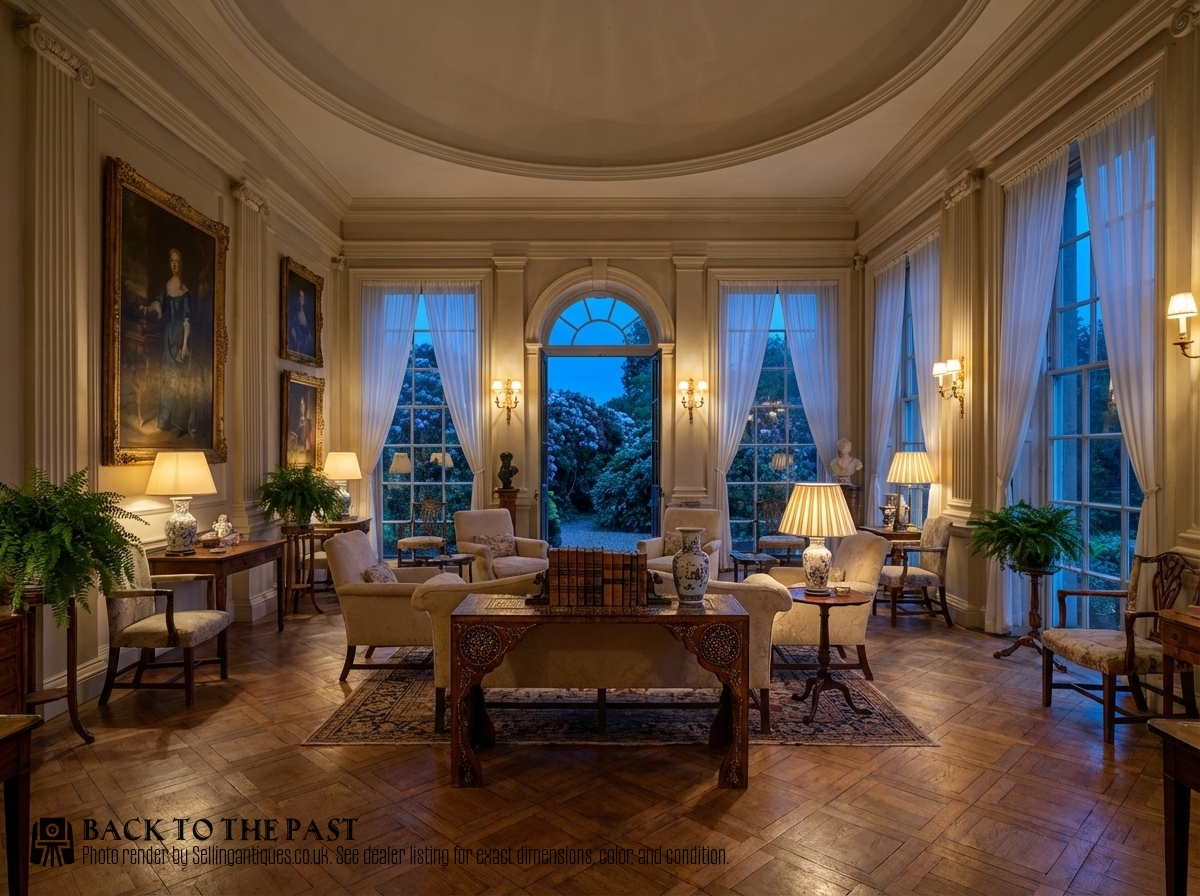
Their compact dimensions make them suitable as occasional or side tables in drawing rooms, studies, or hallways. The reflective quality of the mother-of-pearl and bone inlay catches ambient light effectively in smaller spaces.
They pair well with eclectic interiors that mix period antiques with textiles and global decorative objects.