
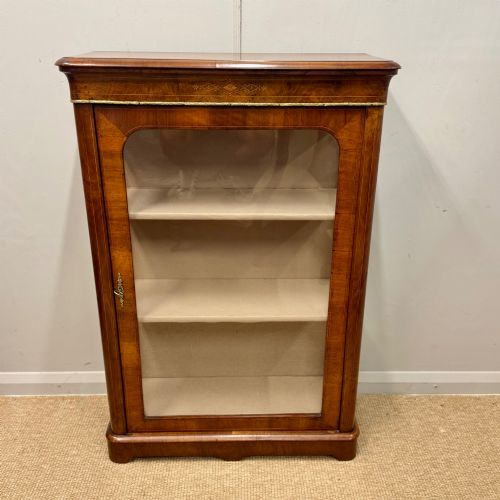
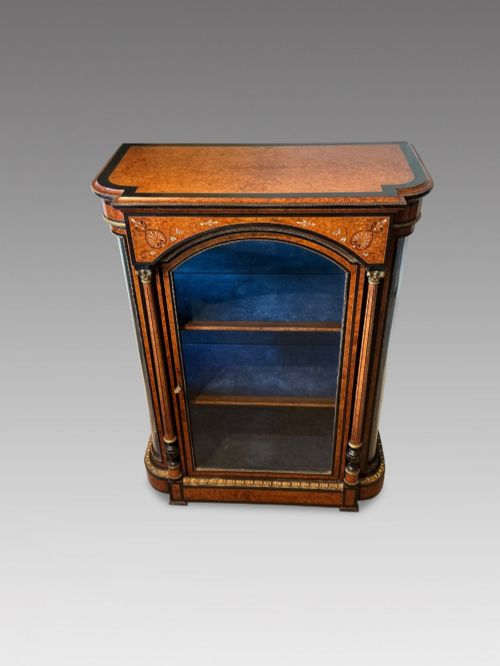
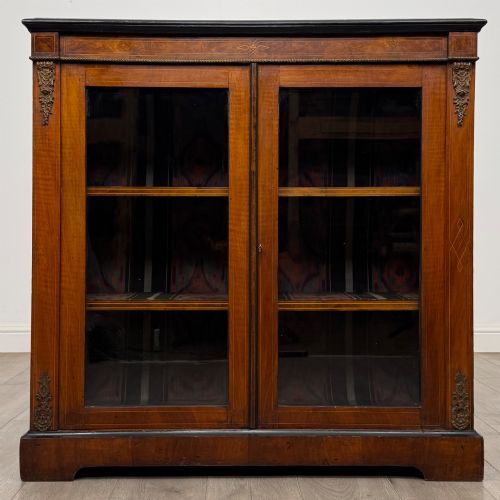
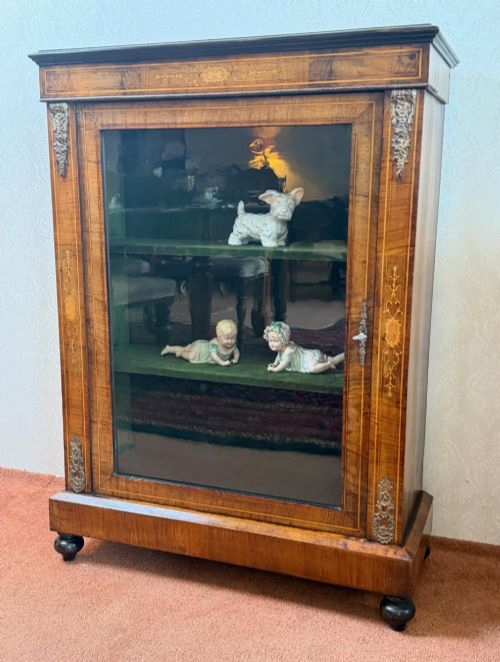
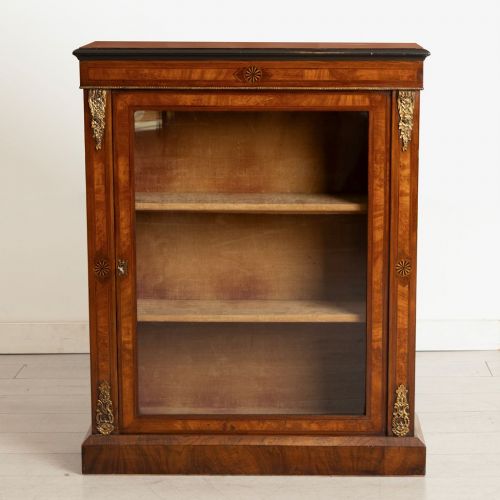
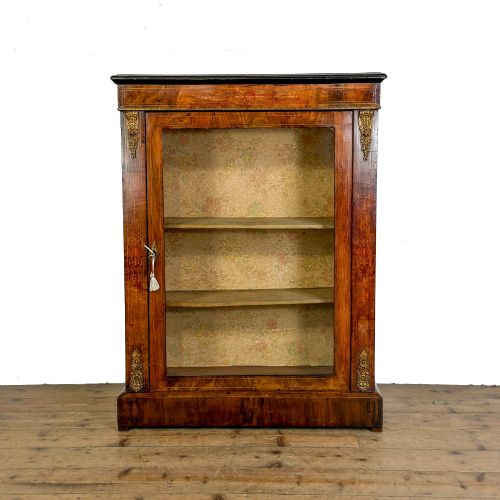
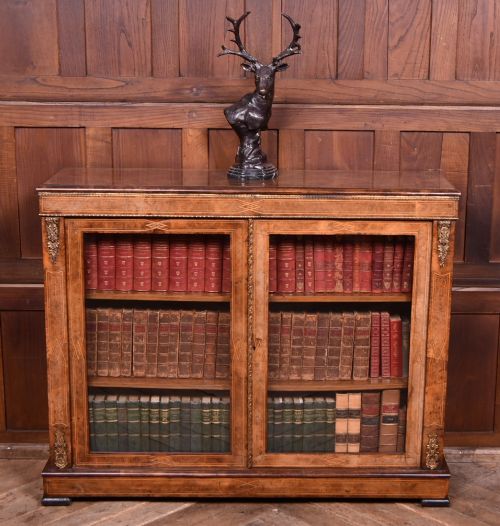
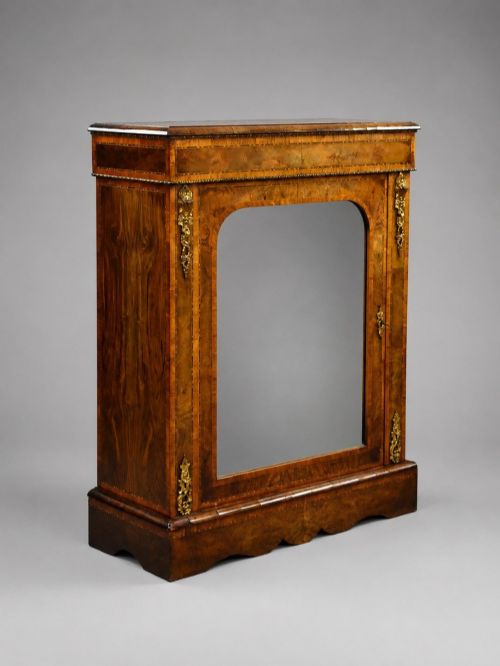
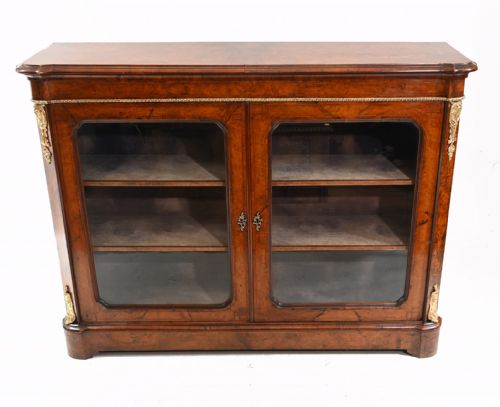
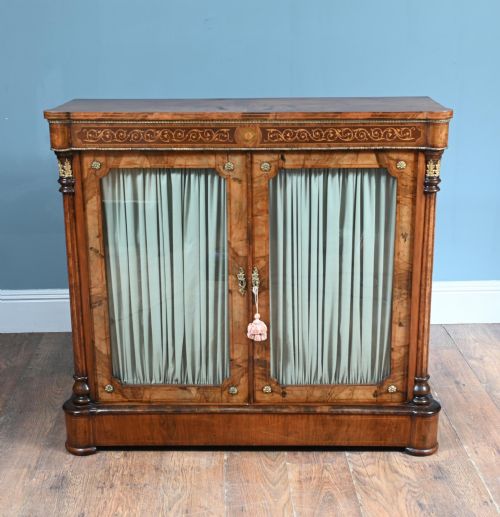
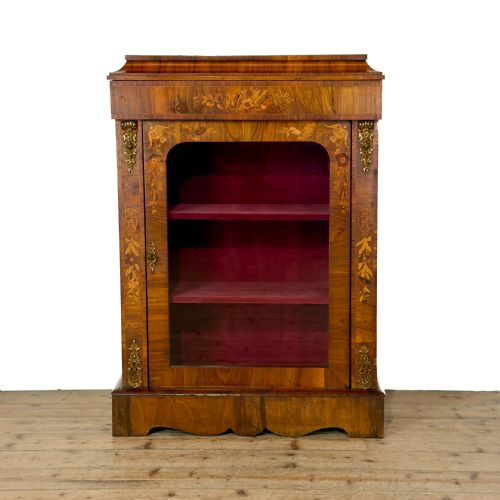
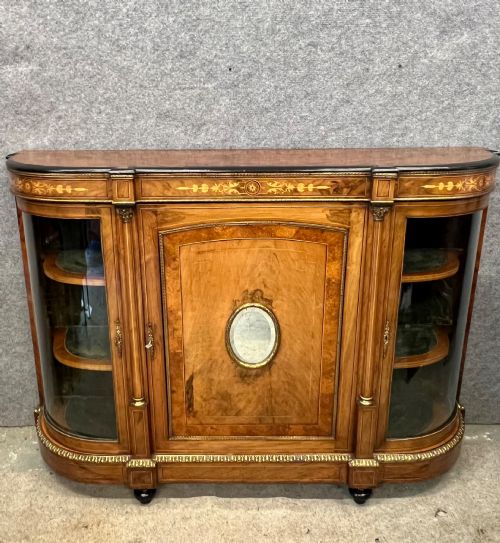
Walnut Glazed Pier Cabinet
A walnut glazed pier cabinet brings a slender, glass-fronted elegance to drawing rooms and hallways.
Walnut Glazed Pier Cabinet
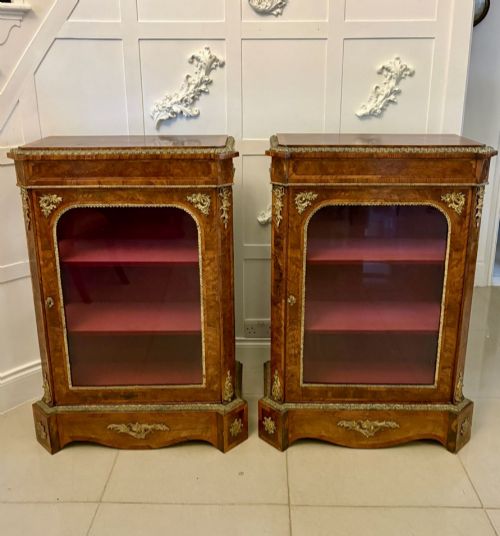
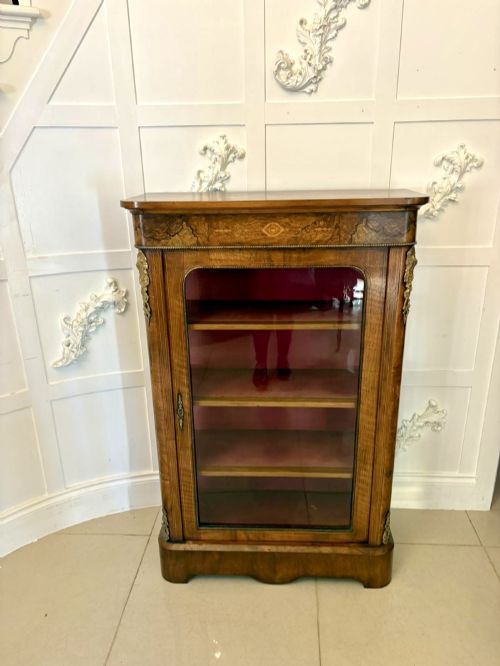
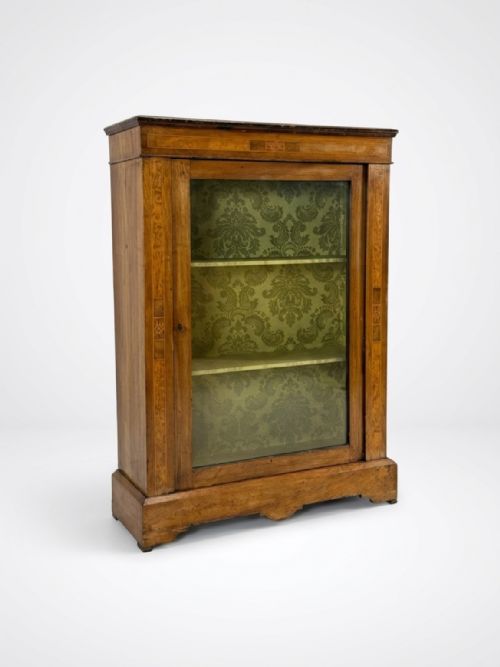
A walnut glazed pier cabinet is a tall, narrow display piece designed to sit against the wall between windows, making the most of tight spaces in nineteenth-century interiors. These cabinets combine a glazed door for showcasing porcelain and books with a flat top surface, appearing most frequently from the Victorian era alongside Regency and Edwardian examples.
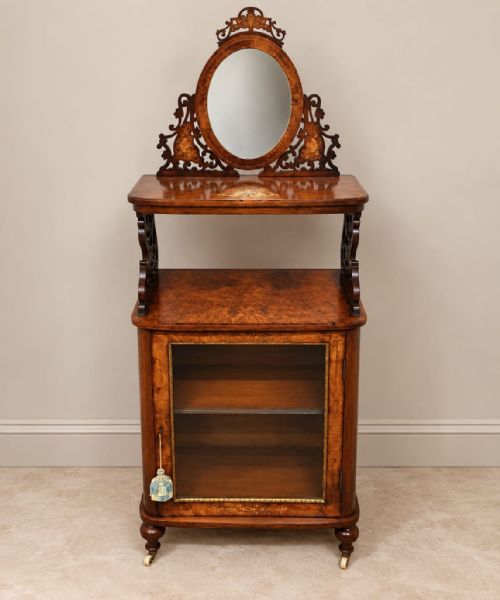
The form ranges from single glazed cupboards to twin cabinets and pieces raised on stands, utilising display storage effectively. Most options encountered on this page date from the mid to late nineteenth century, spanning Victorian and Aesthetic Movement styles.
Makers and cabinetmakers constructed these display units to catch the light in formal reception rooms. The integration of glass panels protects delicate objects while keeping them fully visible to visitors.
How They Were Made
Craftsmen built these cabinets using a timber carcase overlaid with fine walnut veneers, frequently selecting burr walnut or figured walnut for its rich, swirling grain patterns. Crossbanding in contrasting woods and delicate boxwood, rosewood, and ebony marquetry inlay decorate the exterior surfaces.
Gilded ormolu mounts accentuate the corners, borders, and door frames, adding structural highlights and formal weight to the design. Glass is fitted into single or multiple panel doors, while interior shelves often feature fabric or velvet lining.
Listings feature walnut, burr walnut, and figured walnut timbers accented with boxwood, ebony, and brass.
What Varies In Quality
Quality rests heavily on the choice of timber veneer and the precision of the marquetry, where select burr walnut displays deeper figuring and symmetry. The crispness of the cast ormolu mounts and the subtlety of boxwood and ebony stringing differentiate finer workshops from standard production.
Proportions also dictate standard, with superior examples exhibiting refined cornices, balanced glazing bars, and intact original glass panels. The integration of details such as ebonised columns and polished brass fittings elevates the presence of the cabinet.
The Walnut Glazed Pier Cabinet Glossary
- Pier cabinet
- A tall, narrow display cabinet specifically designed to fit the narrow wall space between windows. These pieces traditionally house books or porcelain behind glass doors.
- Burr walnut
- A specialised timber cut from the abnormal growth of a walnut tree, yielding highly decorative and swirling grain patterns. It is sliced into thin veneers for high-end cabinetry.
- Ormolu
- Gilded bronze mounts applied to furniture for decorative effect. They are cast and chased with intricate detail before receiving a gold finish.
- Marquetry
- The art of applying pieces of veneer to a structure to form decorative patterns and pictures. Craftsmen use contrasting timbers like boxwood and ebony to achieve tonal variation.
- Crossbanding
- A narrow strip of veneer laid around the border of a panel so that the grain runs at right angles to the main surface. This technique frames the primary wood figure.
Walnut Glazed Pier Cabinet: Frequently Asked Questions
How do I clean the wood and glass?
Dust the walnut surfaces regularly with a soft, dry cloth to protect the veneer and polish. Avoid silicone-based polishes that can build up on nineteenth-century finishes.
Clean the glass panels with a mild glass cleaner applied to a cloth rather than sprayed directly, ensuring liquid does not seep into the wood or ormolu mounts.
Can I adjust the internal shelves?
Most period pier cabinets feature fixed wooden shelves or rest on simple wooden supports rather than modern adjustable metal brackets. Altering shelf heights generally requires professional intervention to preserve the interior fabric or lining.
Consider the height of your display items before placing them inside the glazed enclosure.
How do I identify a Victorian walnut cabinet?
Look for characteristic Victorian indicators such as figured walnut veneers, boxwood stringing, and applied ormolu mounts around the glazed door. Construction methods often include hand-cut dovetails on internal drawers and traditional backboards.
Styles span from mid-century Victorian pieces to later aesthetic movement designs featuring ebonised details.