


Late Victorian Walnut Credenza
A late victorian walnut credenza brings rich timber grain, glass display space, and architectural presence into a room.
Late Victorian Walnut Credenza
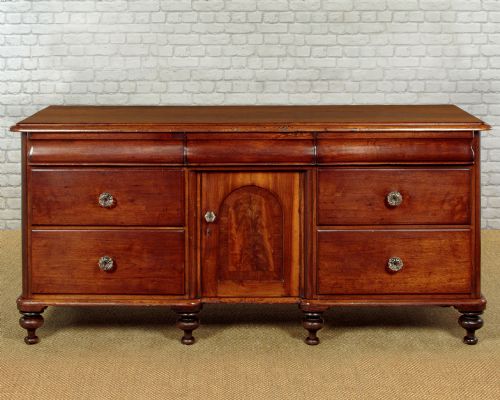
When you search for a late victorian walnut credenza, you are looking at substantial timber storage furniture spanning sideboards, side cabinets, and display pieces. The items you are most likely to meet on this page date predominantly from the late nineteenth century, around eighteen eighty, featuring walnut and burr walnut timbers.
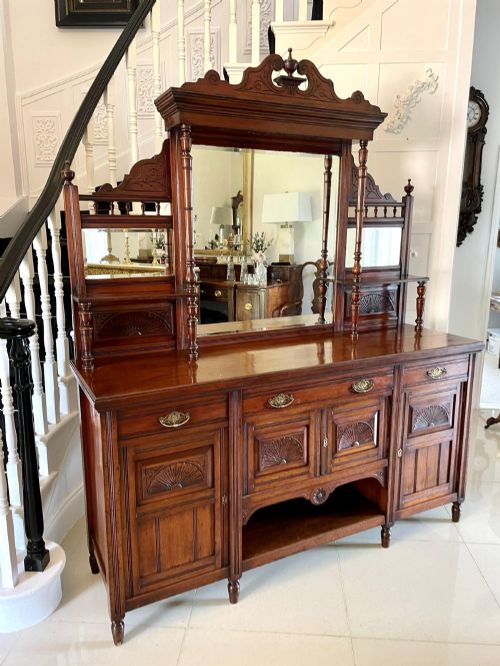
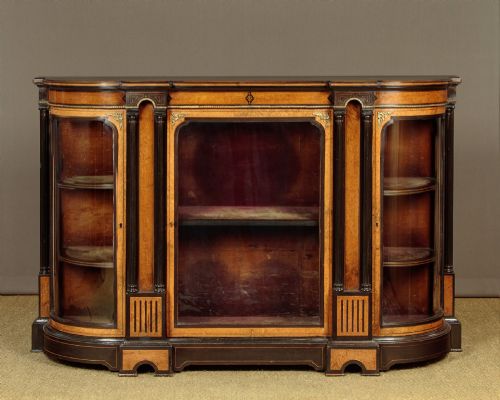
Makers and workshops of the period produced these cabinets in various forms, including mirrored back sideboards, pier cabinets, and dedicated credenzas. Alongside standard walnut, you will encounter pieces showing ebonised wood, amboyna, and glass panels designed for formal storage and display.
How they were made
Cabinet makers utilised solid walnut and decorative burr walnut veneers applied to secondary woods such as oak, often enriched with crossbanding. Ebonised wood details and brass hardware frequently accent the main timber body.
Construction techniques involve detailed wood carving, shaped glass installation for display doors, and integrated mirrors within carved backboards. Iron fittings support internal structures while exterior surfaces showcase the natural figuring of the grain.
One exceptional piece arrives carrying a nineteenth century attribution to Holland and Sons.
What varies in quality
The distinction between standard utility furniture and finer cabinet work lies in the selection of timbers and the crispness of the carving. Finely figured burr walnut and crossbanded borders elevate the visual weight of a piece compared to plain walnut surfaces.
Design ambition also separates the output, with Aesthetic movement and Gothic revival examples showing specific stylistic conviction. The integration of specialised elements like amboyna or superior mirror glass marks out the upper tier of production.
James Plunckett Art Furniture Makers·Holland and Sons
The Late Victorian Walnut Credenza Glossary
- Burr walnut
- A figured wood grain obtained from walnut tree growths, prized for intricate patterns. It provides a decorative surface on cabinet doors and panels.
- Credenza
- A low cabinet or sideboard used for storage and display, often featuring glass doors. This form became central to formal dining and reception rooms.
- Ebonised wood
- Timber treated to resemble ebony, providing dark contrast against lighter walnut. Makers used this finish to emphasise architectural lines.
- Crossbanding
- A border technique where veneer strips run perpendicular to the main grain. This frames drawer fronts and table tops with precise geometric edges.
Late Victorian Walnut Credenza: Frequently Asked Questions
What is a late victorian walnut credenza?
A late victorian walnut credenza is a timber storage and display cabinet from the late nineteenth century, built primarily from walnut and burr walnut.
These pieces typically feature glass doors, mirrored backs, or carved wooden panels designed for formal interior spaces.
How do I date a walnut credenza?
Dating relies on stylistic markers such as Gothic revival motifs, Aesthetic movement lines, or specific Victorian carving techniques from around eighteen eighty.
Construction methods and timber choices, including the presence of ebonised wood or amboyna, further help place the piece within the nineteenth century.
Where were these cabinets used?
These cabinets served in formal dining rooms, drawing rooms, and large hallways as serving surfaces and display storage.
Glass-fronted sections and mirrored backs allowed households to display ceramics and glassware while keeping dining accessories stored securely below.
What wood types should I expect?
Walnut and burr walnut form the primary visual surfaces, often supported by secondary timbers like oak for internal structure.
Accents of ebonised wood, brass fittings, and glass panels appear frequently across the varied sideboard and cabinet designs.