

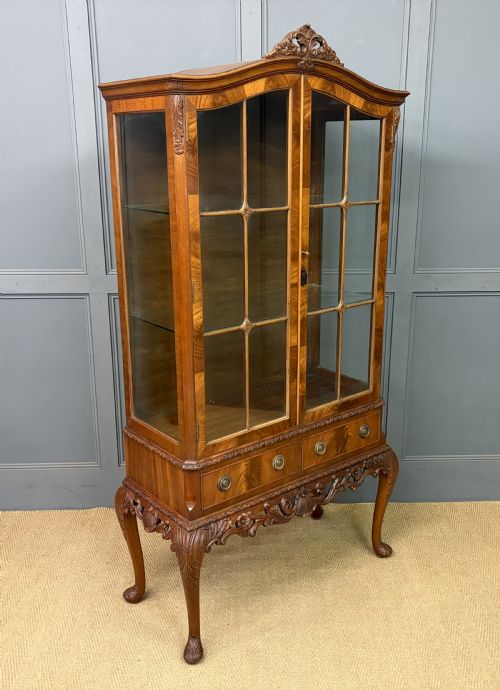
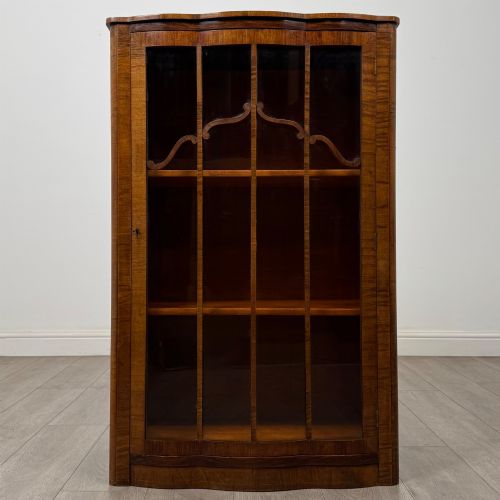
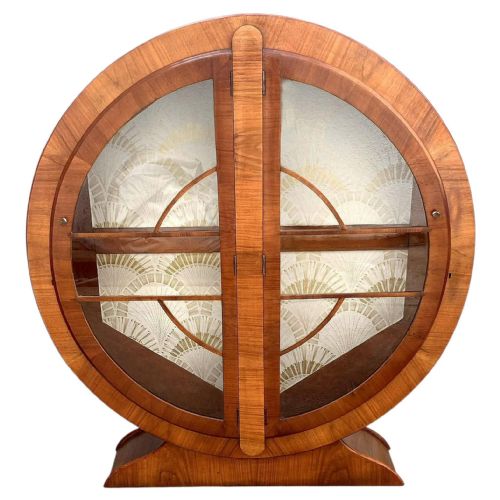
Walnut Glass Bookcase
A walnut glass bookcase houses your volumes behind glazed doors, pairing warm timber with visibility.
Walnut Glass Bookcase
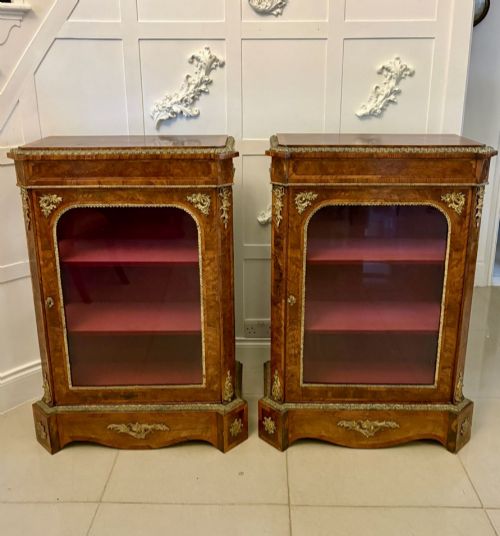
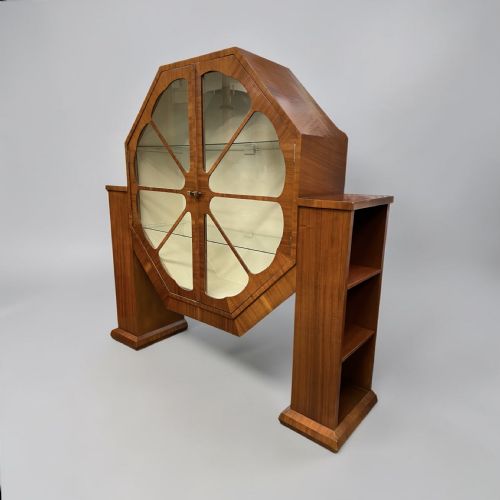
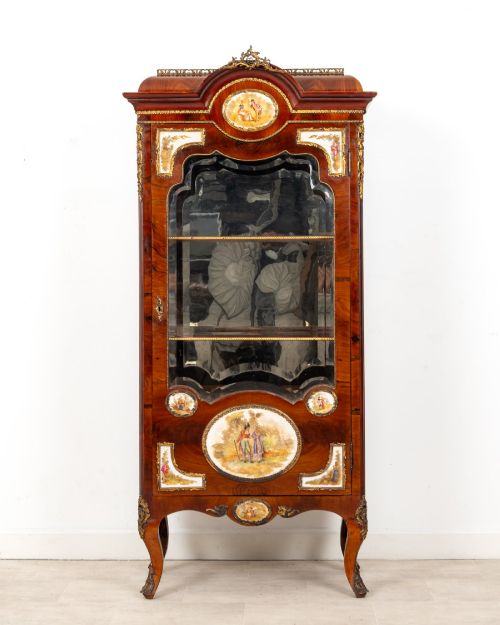
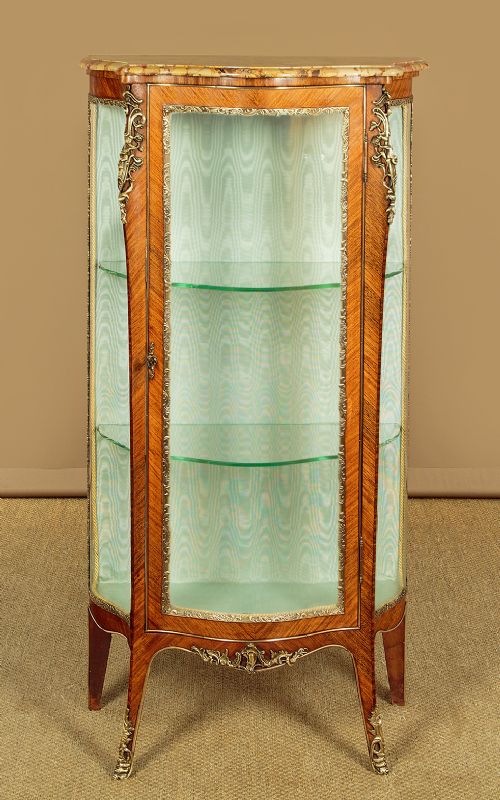
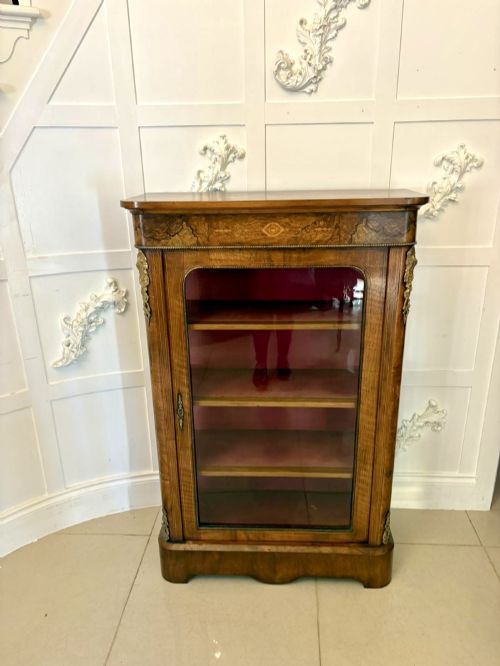
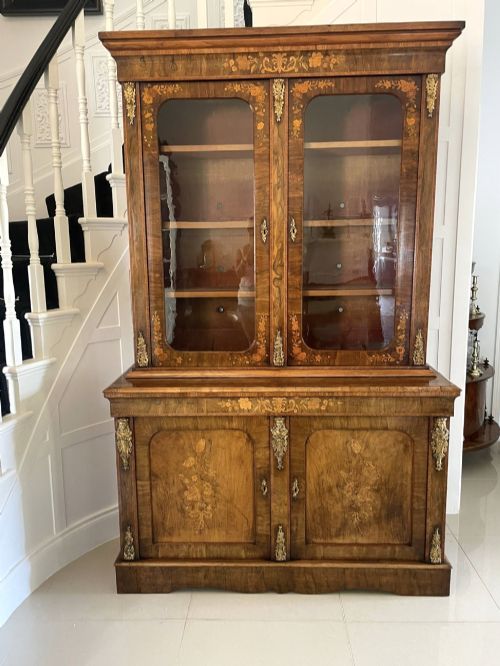
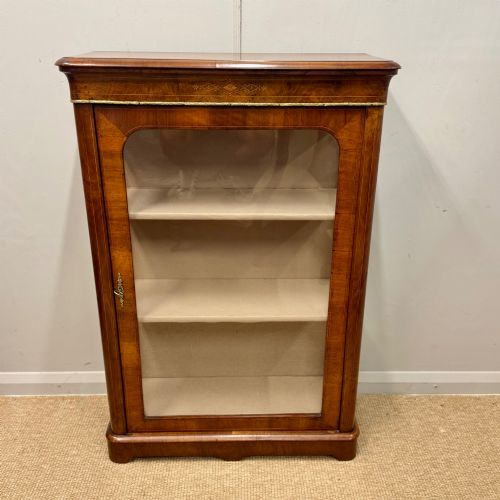
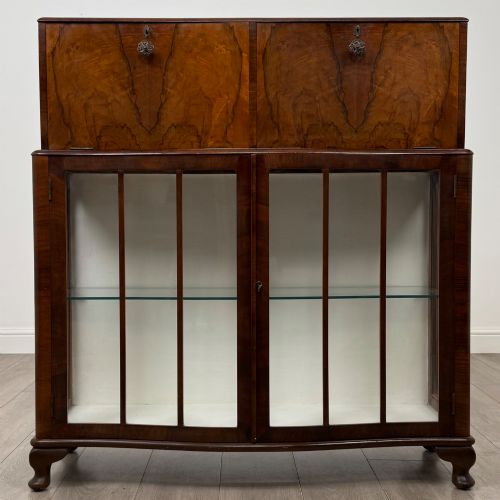
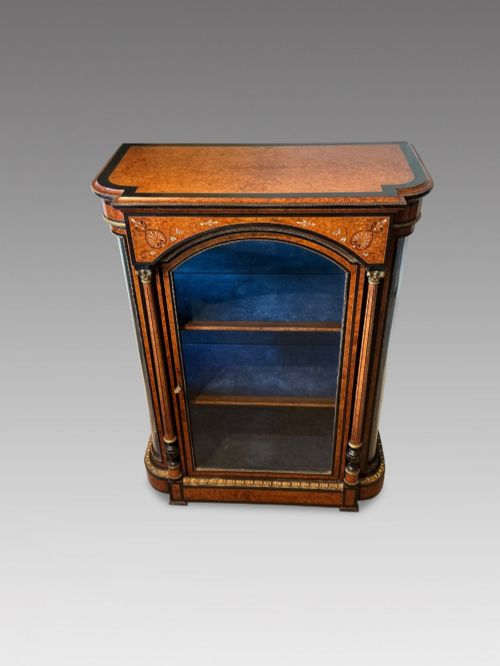
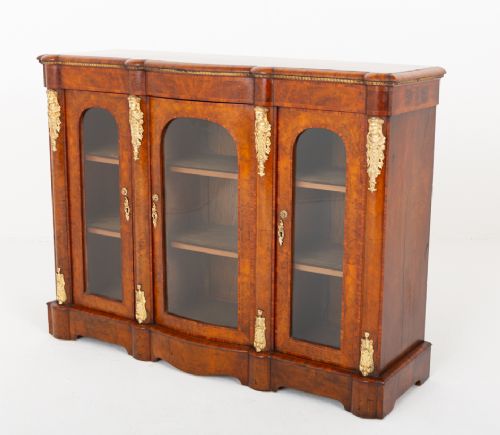
A walnut glass bookcase combines timber framing with glazed display fronts to store and protect bound volumes. These pieces range from compact Victorian pier cabinets and upright display vitrines to large Edwardian and Art Deco library cases.
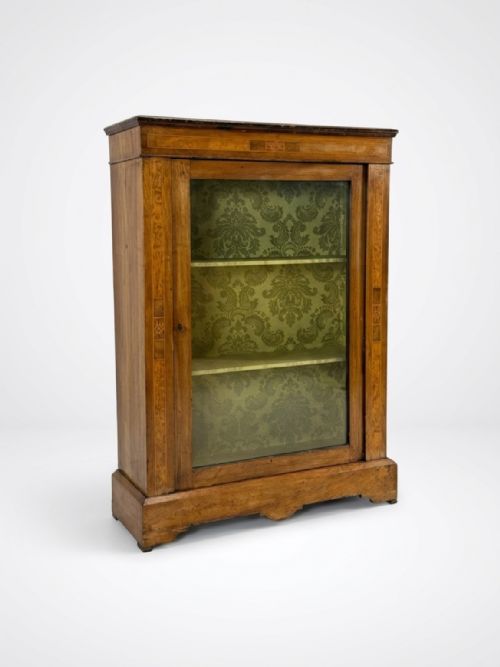
The version most commonly met on this page is the Victorian pier cabinet or display case, often constructed around eighteen sixty with figured timbers and glazed doors. Alongside these, Edwardian and nineteen thirty Art Deco designs appear frequently in the listings.
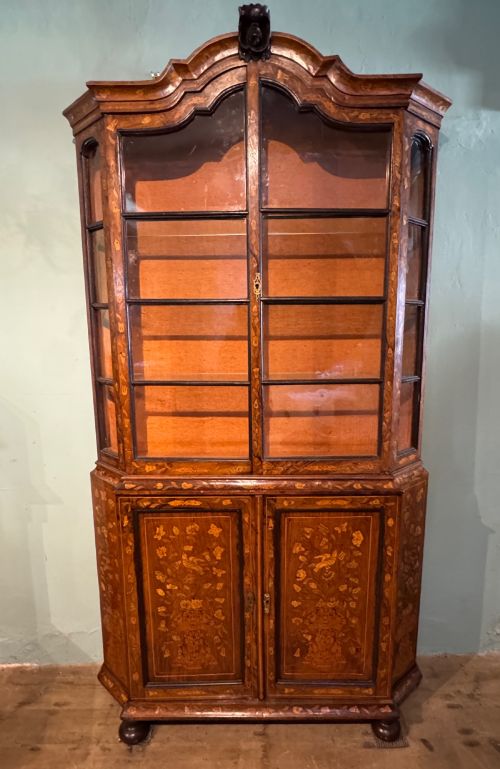
Makers and workshops across Britain and continental Europe produced these items in styles spanning Queen Anne revival, Dutch marquetry, and Louis XV influence. Formats extend from tall stacking barrister sections to low credenzas and music cabinets.
How they were made
Cabinet makers utilised dense native and continental timbers, selecting burr walnut, figured walnut, and plain walnut veneers over secondary carcase woods. These grain patterns were arranged symmetrically across doors and panels to create decorative movement.
Metal and ceramic elements such as brass mounts, ormolu enrichments, and fabric or velvet linings complement the woodwork. Glazing relies on transparent panes secured within timber frames to keep dust from the volumes inside.
Walnut Glass Bookcase Retail Price Guide 2026
Typical asking prices for walnut glass bookcase among the pieces listed under this phrase on Sellingantiques today, from the lower quarter to the upper quarter. They describe what is for sale here now, not the wider market.
Some nineteenth-century walnut pier cabinets doubled as music cabinets and etageres for sheet music and delicate porcelain.
What varies in quality
The depth and selection of the timber veneer dictate much of the visual weight, with heavily figured burr walnut and intricate marquetry inlay sitting at the upper end of execution. Simpler plain grain surfaces offer a more restrained appearance.
The integration of cast bronze ormolu mounts, fine brass stringing, and internal velvet or fabric linings separates standard production items from masterwork commissions. Construction precision in the door framing and glazing bars further defines the grade.
Gabriel Viardot·Maple & Co.·Rurka
The Walnut Glass Bookcase Glossary
- Burr walnut
- A veneer sliced from the gnarled growth or root of a walnut tree, yielding a swirling pattern of knots. It was favoured by nineteenth-century cabinet makers for doors and panels.
- Ormolu
- Gilded bronze mounts applied to the corners, friezes, and feet of furniture. This technique added gilded highlights to Victorian and revival pieces.
- Marquetry
- Inlaid pieces of wood veneer fitted together to form pictorial or geometric designs. Dutch examples often display floral motifs across the walnut carcase.
- Pier cabinet
- A narrow low cabinet designed to stand against the wall space between windows. These nineteenth-century forms frequently feature glass doors and velvet-lined interiors.
- Vitrine
- A glass-fronted display cabinet intended for porcelain and precious objects. The term originates from the French word for glass.
Walnut Glass Bookcase: Frequently Asked Questions
How do I clean the glass?
Use a lint-free cloth and a mild glass cleaning solution applied directly to the cloth rather than the wood. Spraying liquid directly onto antique timber or ormolu mounts can cause staining or degradation to the finish.
Take care around delicate veneer edges and brass stringing when wiping the frame. Keeping moisture away from the joins preserves the integrity of the antique construction.
Can I adjust the shelves?
Many nineteenth and twentieth-century designs utilise fixed wooden shelving integrated directly into the carcase structure. Altering these layouts requires professional cabinet-making intervention.
Some later Edwardian and Art Deco editions incorporate adjustable rack supports. Check the interior fittings before planning your volume sizes.
How do I protect the books?
Keep the cabinet out of direct sunlight to prevent the walnut timber from fading and the leather bindings from drying out. Glazed doors naturally block dust and limit environmental fluctuations.
Maintain a stable room temperature and moderate humidity to protect both the wooden carcase and the paper contents inside. Avoid placing the unit near active heat sources.
How do I date the piece?
Examine the construction methods, timber choice, and secondary woods visible on the interior carcase and backboards. Victorian examples often display hand-cut dovetails and distinct walnut veneers.
Compare the decorative vocabulary, such as ormolu mounts or marquetry patterns, with established revival periods. Maker stamps or paper labels inside drawers and on back panels also provide definitive clues.