


Walnut Framed Sofa
A walnut framed sofa brings warmth and architectural presence to a room, offering deep comfort upholstered in velvet, leather, or textile.
Walnut Framed Sofa
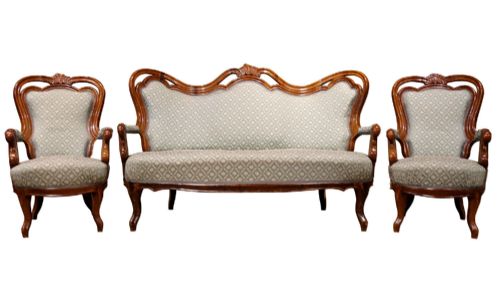
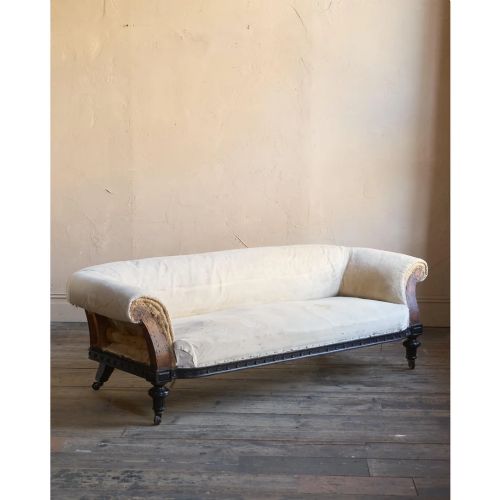
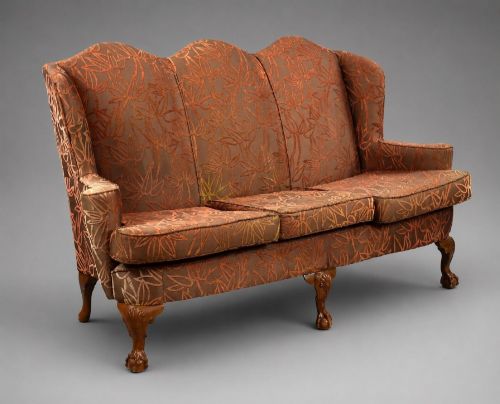
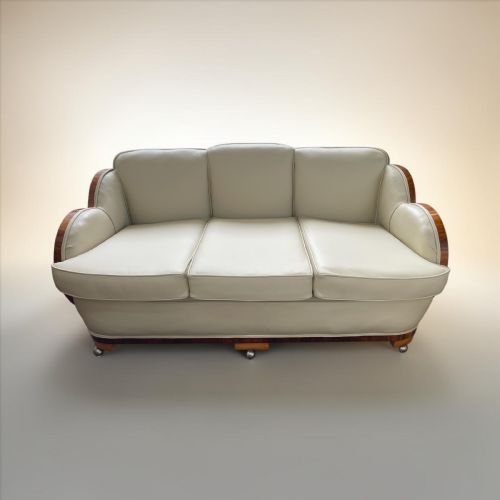
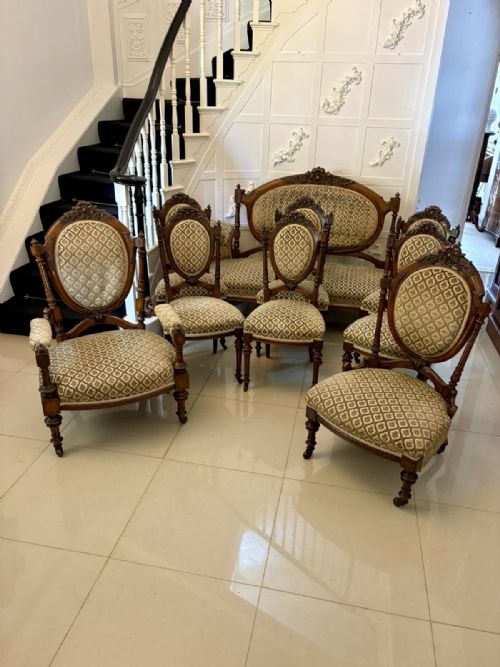
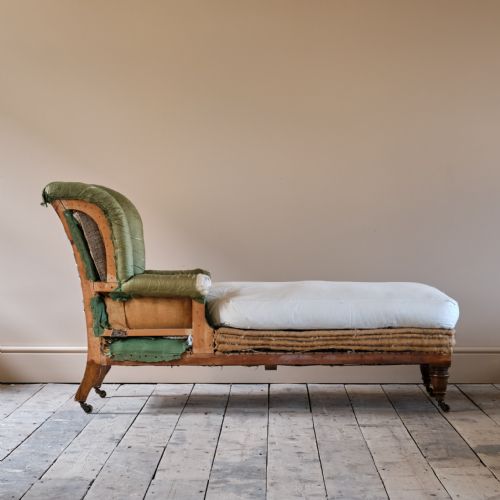
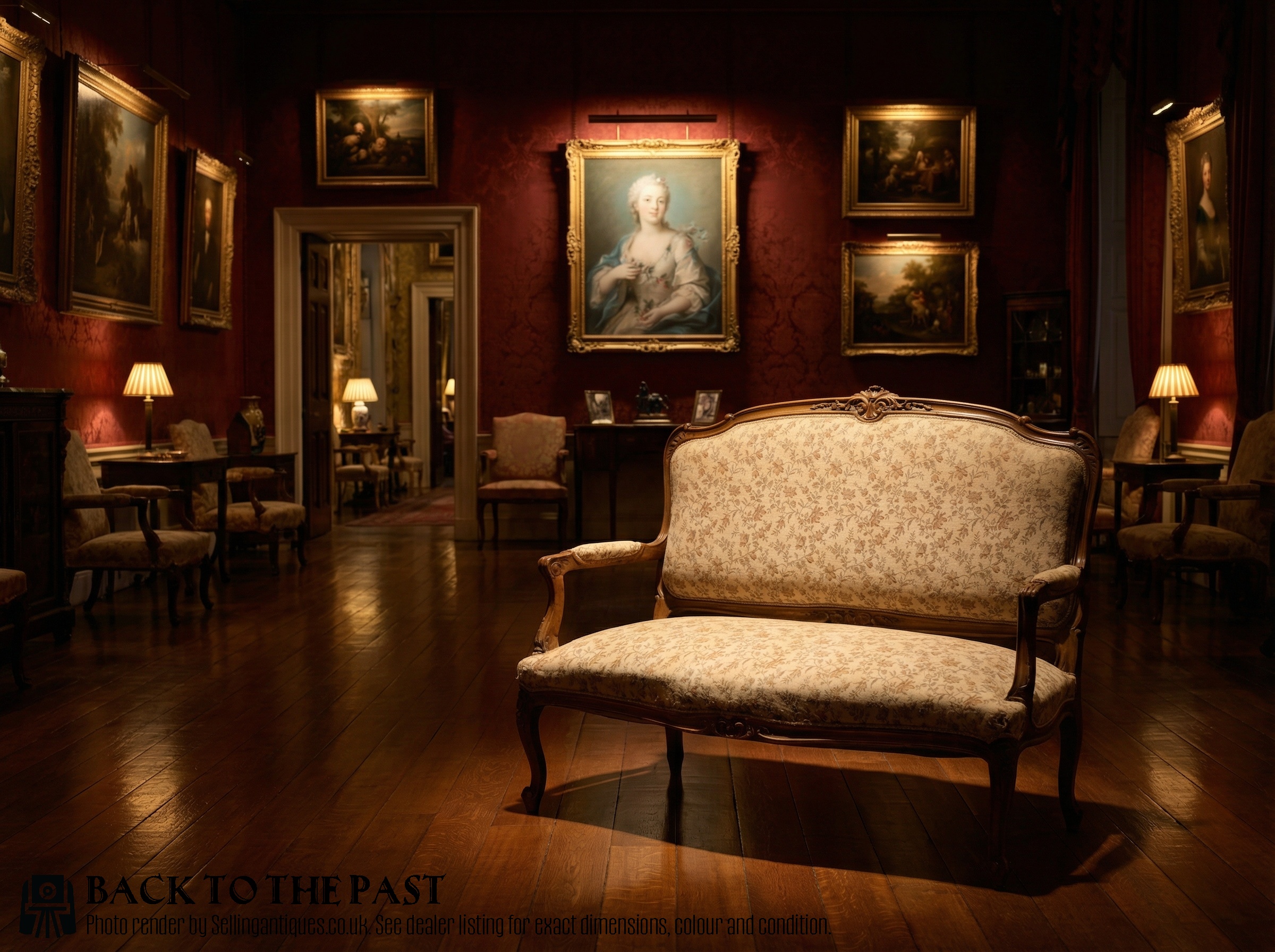
A walnut framed sofa is a seating piece defined by exposed timber framing, appearing across nineteenth and early twentieth century periods in diverse regional forms. Buyers seeking this phrase encounter Victorian show-wood settees, French canapés, Edwardian daybeds, and Queen Anne style settees.
The selection spans intimate two-seater settees, expansive three-piece salon suites, and deep Chesterfield designs. Frames range from restrained Arts and Crafts lines to heavily carved Rococo Revival and Louis XV style flourishes.
Origins stretch from English country houses to Continental workshops, creating variety in proportion and decorative carving. Upholstery materials vary widely, incorporating traditional cotton, plush velvet, and supple brown leather.

Materials and Construction
Makers utilised dense walnut for structural frames, taking advantage of the timber's stable grain to execute intricate hand-carved details and smooth show-wood contours. Brass hardware frequently supports mechanical daybed adjustments or caster fixings.
Upholstery techniques combined traditional stuffing materials with durable textile coverings, securing fabrics over sprung bases with sturdy cord and tacks. Leather and velvet upholstery finishes were tailored tightly to padded arms and deep-buttoned backrests.
At least one nineteenth-century daybed includes hidden mechanical reclining actions designed for an afternoon Victorian nap.
Assessing Quality and Execution
Quality rests in the crispness of the walnut carving and the integrity of the joinery within the show-wood frame. Superior pieces demonstrate meticulous hand-shaping in the cabriole legs or crest rails, maintaining rigidity without structural compromise.
The sophistication of the silhouette defines the upper tier of examples, where balanced proportions and harmonious upholstery choices elevate the piece. Finer upholstery execution involves careful alignment of textiles and resilient internal padding that supports long-term use.
Harry and Lou Epstein·Howard and Sons
The Walnut Framed Sofa Glossary
- Canapé
- An upholstered French settee with an exposed wooden frame. These pieces often feature carved cabriole legs and serpentine rails.
- Show-wood
- Exposed wooden framing on upholstered furniture designed to display the grain and carving. Walnut is frequently utilised for this purpose.
- Salon Suite
- A matched set of seating furniture comprising a sofa and matching armchairs. These groups were designed for formal entertaining rooms.
- Bergere
- An enclosed upholstered armchair or sofa with cane panels set into the wooden frame. The exposed walnut frame surrounds woven canework.
Walnut Framed Sofa: Frequently Asked Questions
How do I identify a Victorian walnut sofa?
Victorian walnut sofas typically display rich dark timber grain paired with elaborate carved ornamentation along the crest rail and legs. Common revival styles include Rococo influences with curved frames and floral motifs.
Upholstery often utilises deep buttoning or heavy velvet textiles. Dating is further supported by nineteenth-century construction methods visible beneath the frame.
Are these sofas suitable for daily sitting?
Most antique walnut framed sofas are robust enough for daily use when the internal webbing and springs remain stable. Selecting a piece with firm upholstery ensures adequate support for contemporary living spaces.
Care should be taken to protect antique leather and textile coverings from direct sunlight and heavy wear. Professional reupholstery can also restore structural comfort to historic frames.
What is the difference between a settee and a sofa?
Historically, a settee denotes a lighter, two-seater wooden or upholstered bench configuration often found in bedrooms or hallways. A sofa typically refers to a larger, fully upholstered seating piece designed for primary reception rooms.
However, nineteenth-century makers frequently used the terms interchangeably in their workshop records. The physical proportions and seating capacity remain the most reliable guide to daily function.
How should I care for antique walnut wood?
Antique walnut wood benefits from occasional treatment with appropriate wax to nourish the grain and maintain a natural sheen. Avoid silicone-based polishes that can build up a hazy residue over decades.
Keep wooden frames away from direct heat sources and dramatic humidity shifts to prevent timber splitting. Gentle dusting with a dry microfibre cloth preserves the original polish.