

Walnut Folding Table
When you search for a walnut folding table, you are looking at centuries of ingenious space-saving timber design built for card games, tea, and dining.
Walnut Folding Table
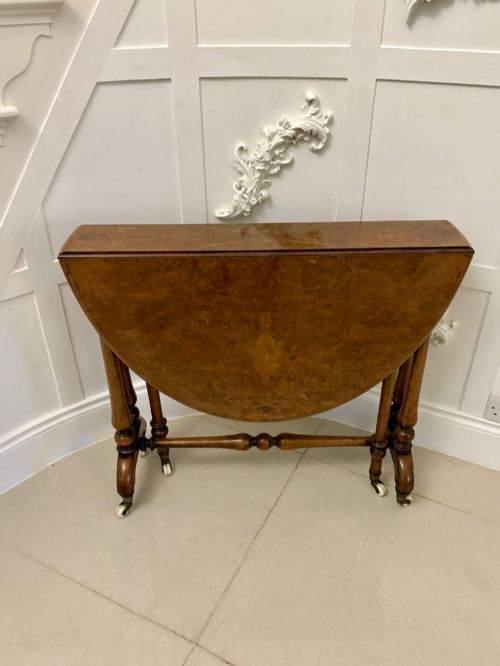
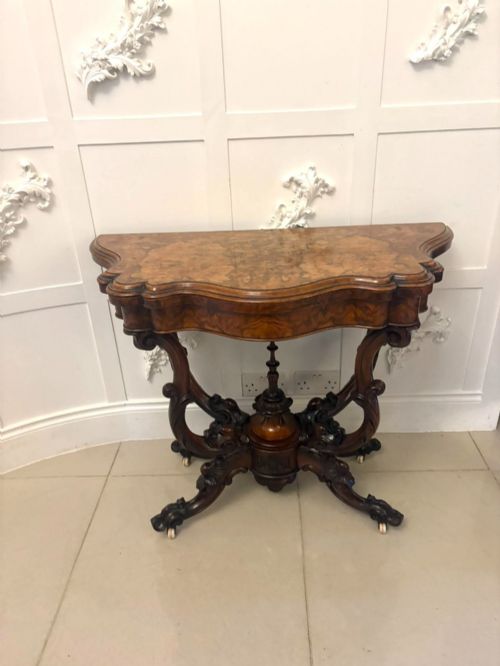
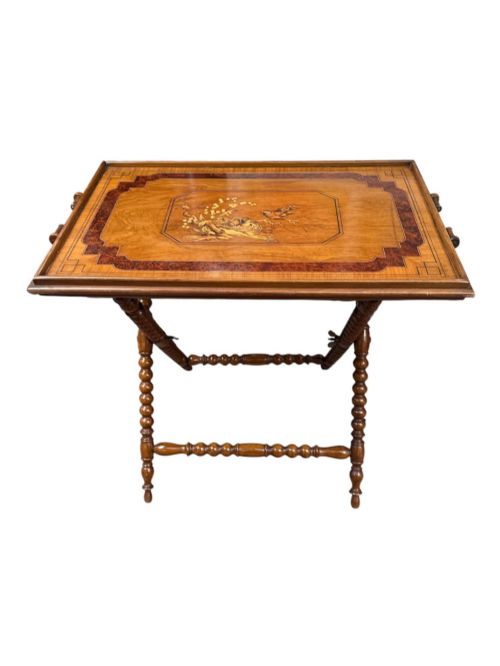
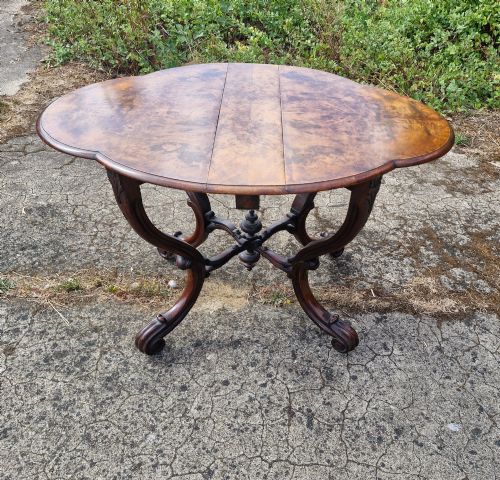
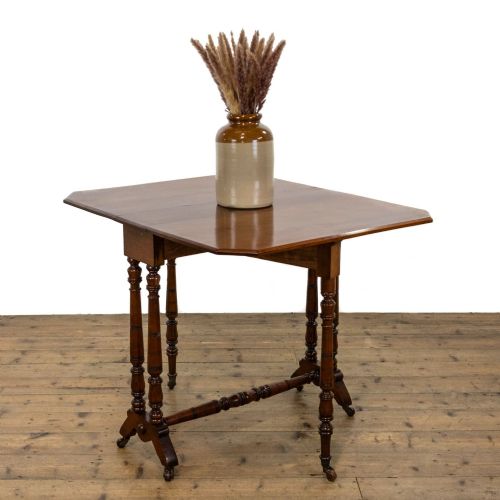
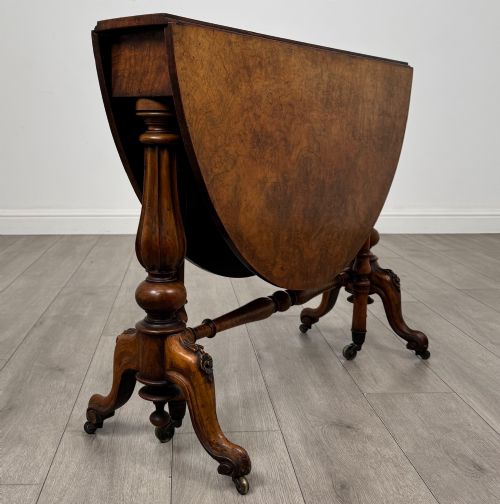
A walnut folding table spans several centuries of domestic English, French, and Irish furniture design, appearing most frequently in Victorian burr walnut card and games tables alongside drop-leaf Sutherland tables.
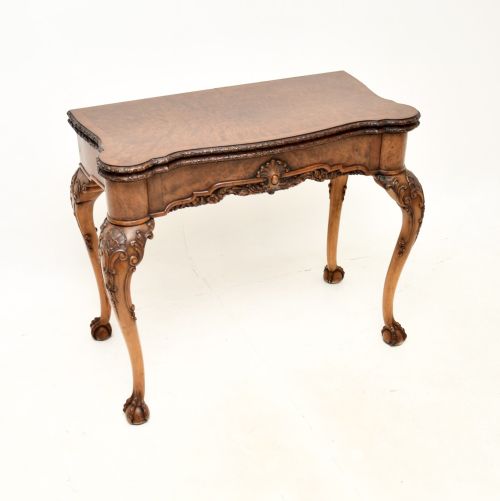
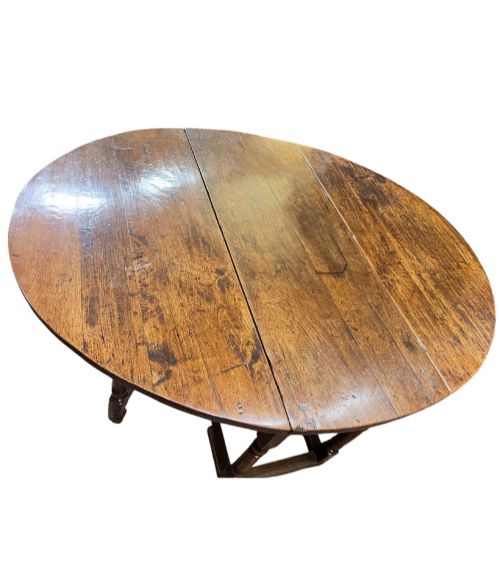
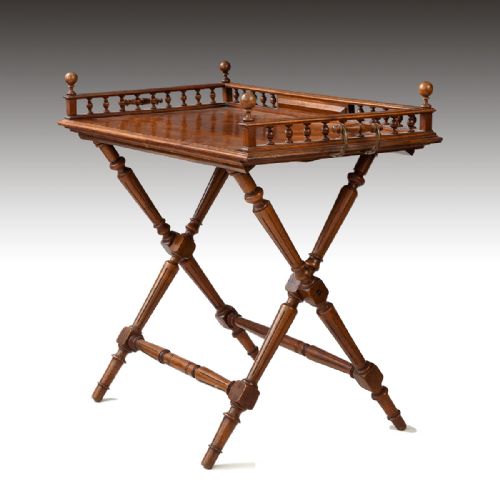
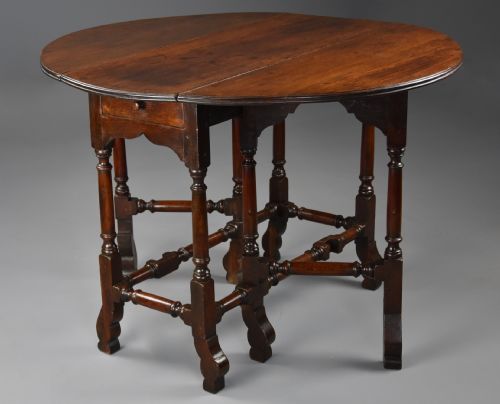
The selection here encompasses versatile forms ranging from 18th-century gateleg and tea tables to Queen Anne style demi-lune folding consoles and Edwardian cake stands.
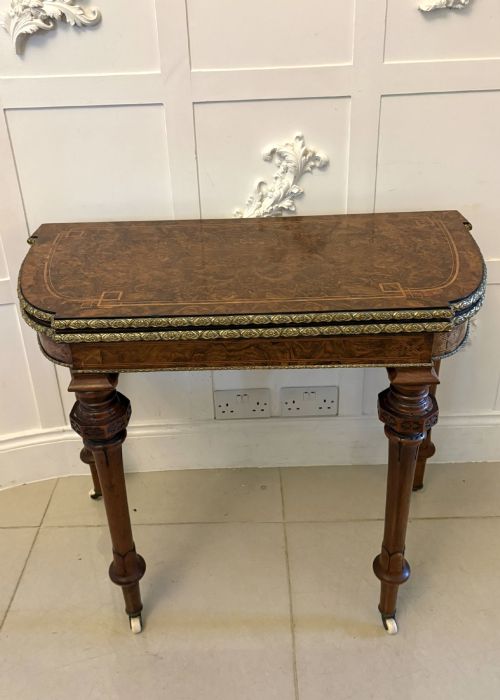
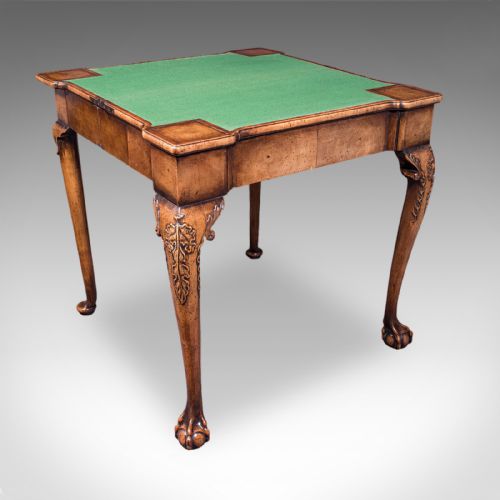
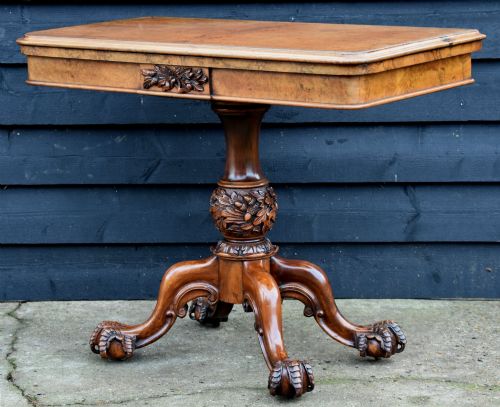
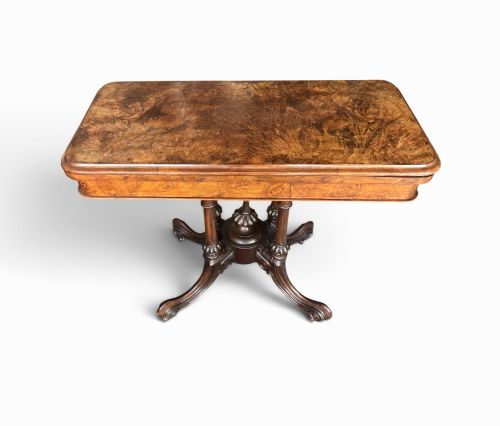
Buyers will encounter numerous fold-over tops designed for entertainment, featuring baize-lined playing surfaces that conceal themselves when closed against a wall as a side table.
What varies in quality
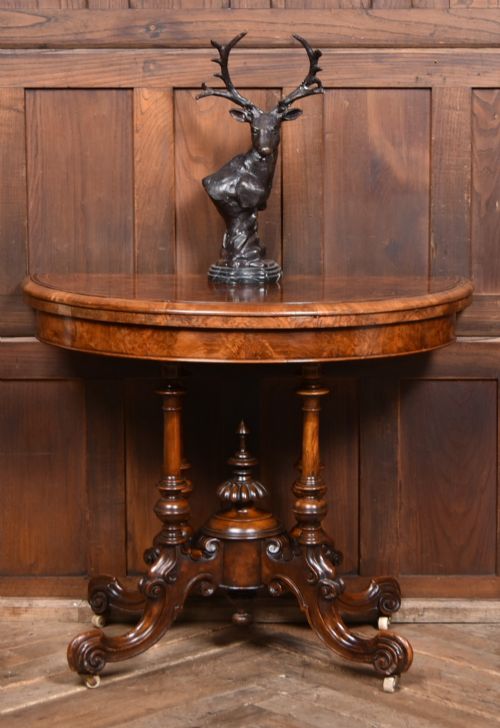
Quality rests upon the selection and matching of the walnut veneer, where symmetrical burr patterns across a fold-over top indicate a superior maker's hand.
The integrity of the folding mechanism dictates daily utility; superior examples operate with absolute stability and alignment whether open or closed, without sagging at the hinges.
Carved bases, intricate floral marquetry inlay, and retained original patination separate standard production items from exceptional conversation pieces.
Listings feature walnut folding tables spanning from the 17th century through the Art Deco period, encompassing card, tea, and Sutherland forms.
Epstein and Co
The Walnut Folding Table Glossary
- Burr walnut
- A veneer sliced from the knotty growths of walnut trees, prized for its swirling, highly decorative grain patterns. It creates a visually striking surface on Victorian tabletops.
- Gateleg table
- A drop-leaf table with hinged legs that swing out to support the extended leaves. This form dates back to the 17th century and provides sturdy dining surfaces.
- Sutherland table
- A narrow drop-leaf table with exceptionally small flaps and tall folding legs. It was designed in the Victorian era to fold completely flat for storage.
- Marquetry
- The art of applying decorative pieces of veneer to a structure to form intricate patterns or pictures. Floral motifs are common on Victorian examples.
- Demi-lune
- Half-moon shaped furniture designed to sit flush against a wall. Many folding card tables utilise this profile to save space when closed.
Walnut Folding Table: Frequently Asked Questions
How do I use a folding card table?
Most walnut card tables feature a swivel-top mechanism that rotates ninety degrees before opening out to reveal a baize-lined playing surface. The pivoting action uncovers a concealed shallow compartment beneath the top, traditionally used for storing playing cards and counters.
When not in use for gaming, simply fold the top back over and rotate it flush against the base to function as a compact side or console table against a wall.
Where should I place a Sutherland table?
Sutherland tables are exceptionally slim when fully folded, making them ideal for narrow hallways, landings, or beside a sofa where space is limited. Raising one or both leaves instantly provides a stable surface for tea or books.
Because the drop-leaves hang almost vertically when closed, these tables occupy minimal floor space while offering the flexibility of a larger occasional table when guests arrive.
How do I tell an 18th-century table from a Victorian copy?
Early pieces from the 18th century often display solid timber construction, hand-cut joinery, and a rich, deep patination developed through generations of wax polishing. Gateleg and tea tables from this period tend to show tool marks beneath and simpler, structural turning on the legs.
Victorian and later revival pieces frequently employ elaborate burr walnut veneers, complex mechanical hinges, and factory-produced brass components. The presence of machine-sawn timber and uniform internal framing usually points to the 19th century or later.
How do I care for walnut veneer?
Walnut veneer requires protection from direct sunlight and extreme humidity fluctuations to prevent the delicate upper layer from drying out or lifting. Dust regularly with a soft, dry cloth and apply a quality beeswax periodically to nourish the timber.
Avoid placing damp items directly onto antique polished surfaces, and use coasters beneath glasses or teacups to protect the historical finish from water rings.