
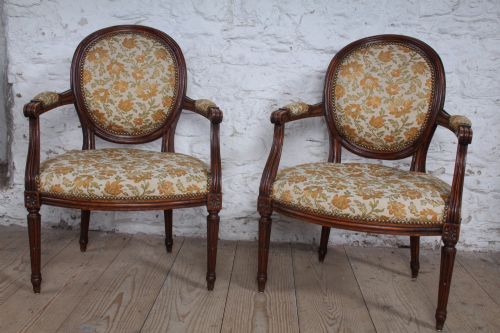
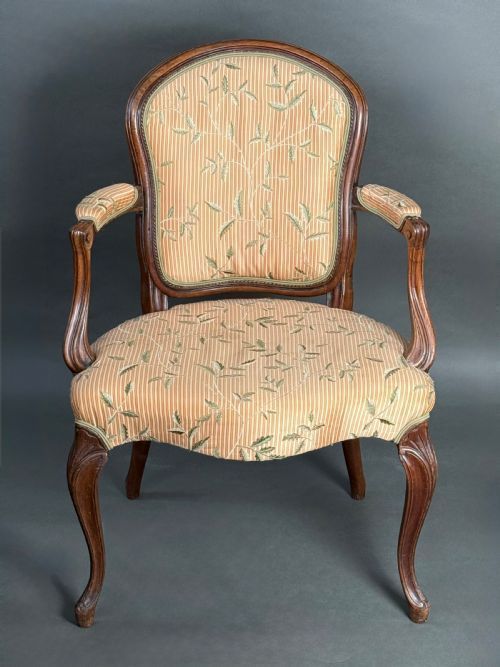
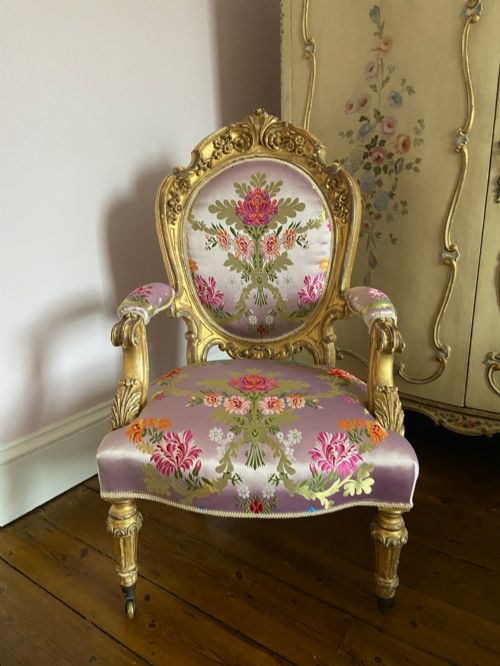
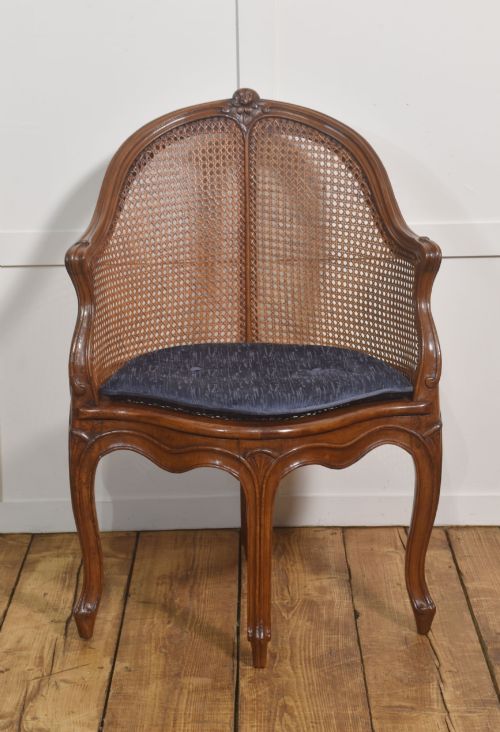
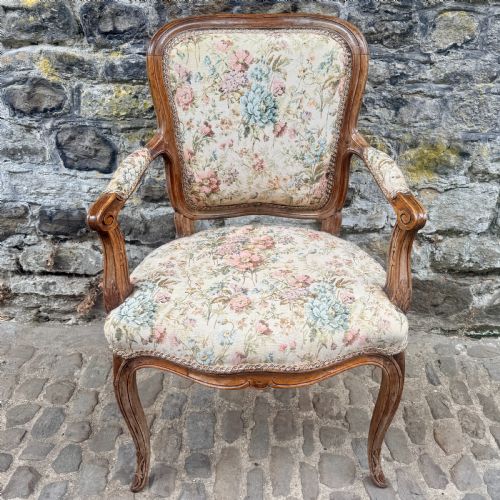
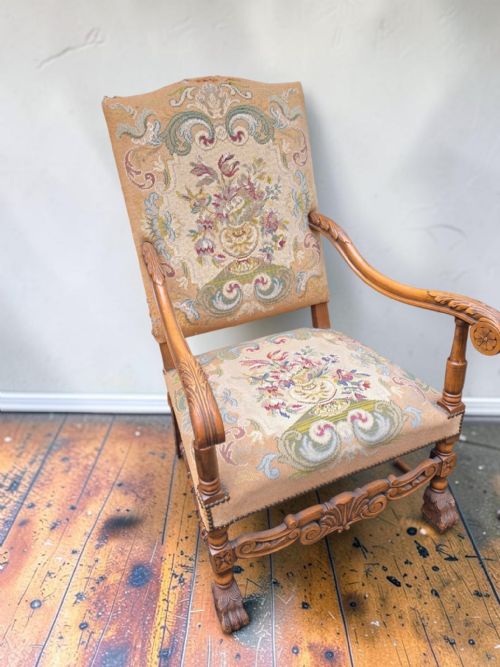
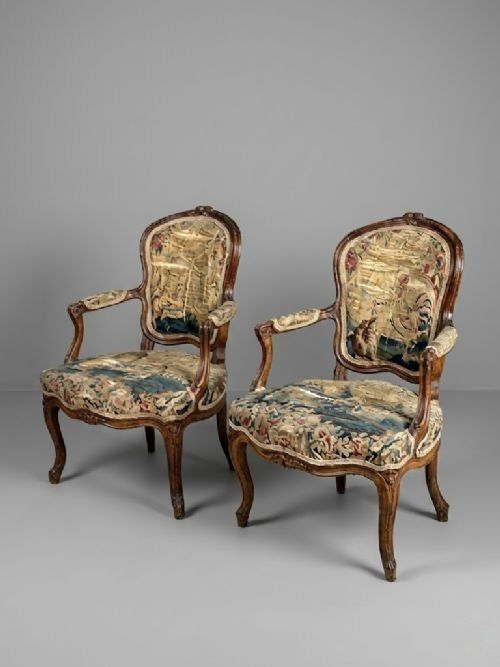
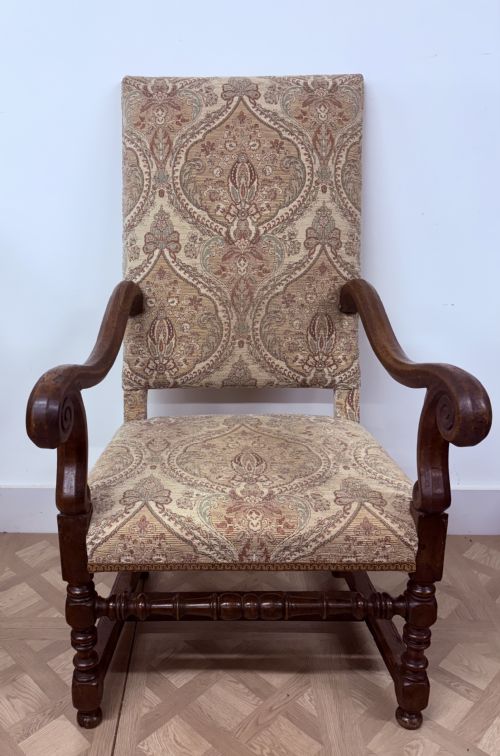
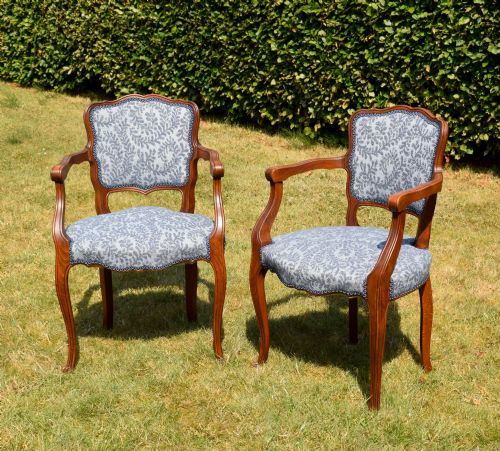
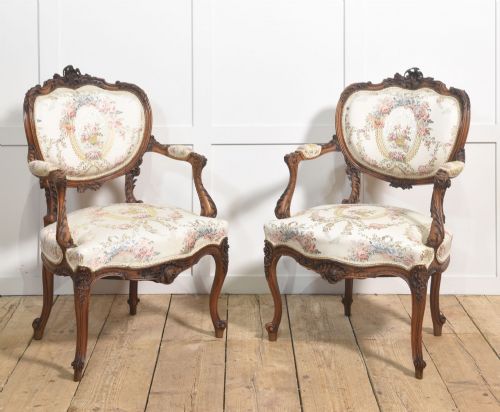
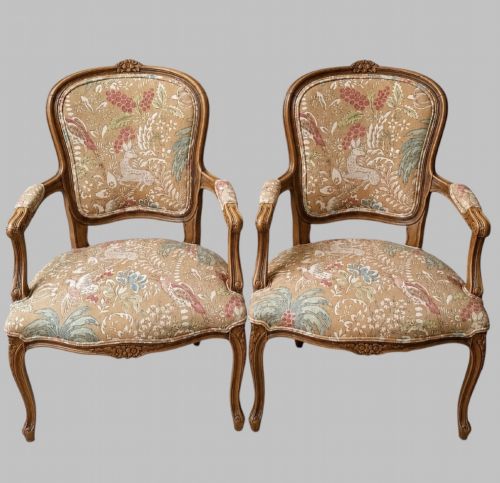
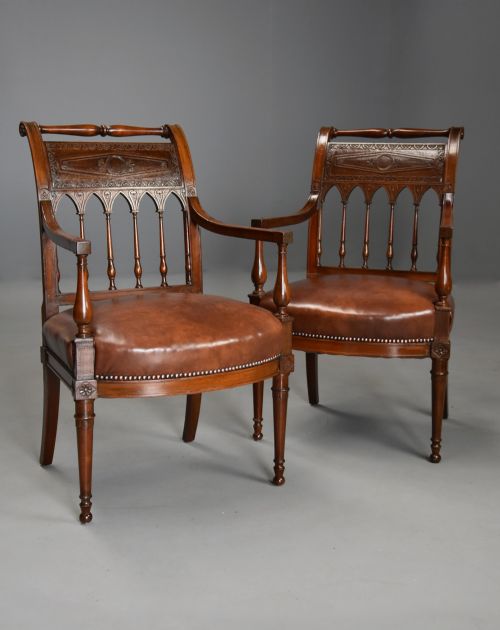
Walnut Fauteuil Armchairs
Walnut fauteuil armchairs combine open wooden frames with upholstered comfort, originating in France before finding favour across later European revivals.
Walnut Fauteuil Armchairs
When searching for walnut fauteuil armchairs, buyers encounter seating designed with exposed wooden arms and padded comfort. The selection spans centuries of craft, from original eighteenth-century pieces to later revival iterations.
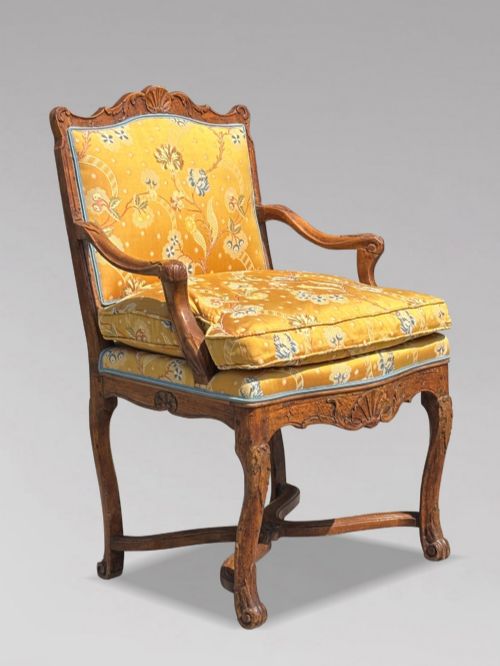
French regional and period influences dominate the inventory, notably Louis XV and Louis XVI styles. Buyers frequently find nineteenth-century interpretations alongside earlier examples.
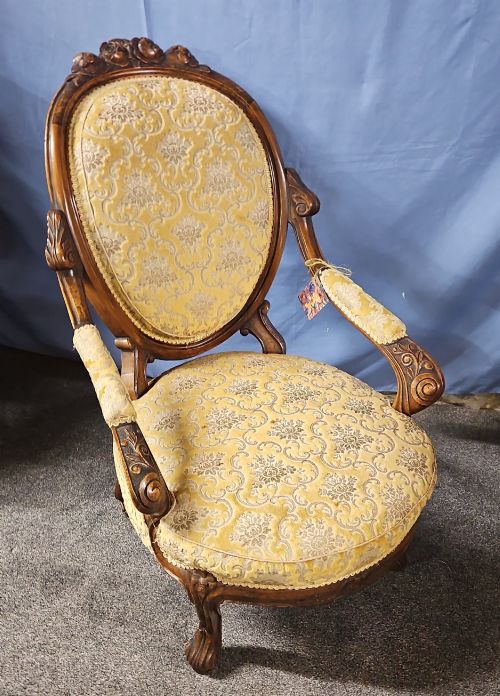
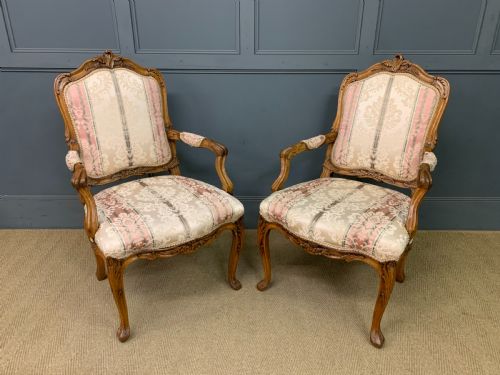
The form encompasses single library chairs, matched pairs, and larger salon suites. Frames range from restrained provincial models to heavily carved Rococo revivals.
How they were made
Makers utilised solid walnut for its strength and rich grain, allowing intricate hand-carving along the cabriole legs, armrests, and crest rails. Joinery relied on traditional mortise and tenon construction to support the open framework.
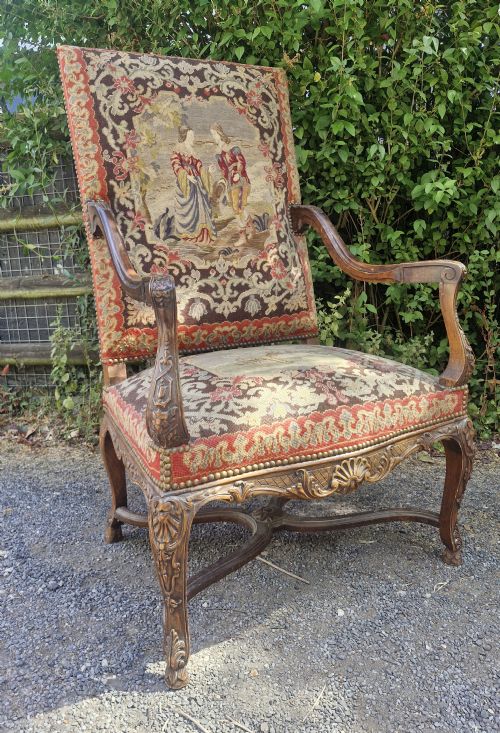
Upholstery techniques evolved from period needlework and Aubusson tapestries to later silk and velvet textiles. Frames often incorporated brass detailing or cane panels depending on the specific period and regional workshop.
Several pieces arrive wearing their original needlepoint tapestry covers, ready for the next century of quiet reading.
What varies in quality
The crispness of the wood carving distinguishes exceptional frames from simpler production. Skilled carvers achieved deep relief and fluid lines without losing structural integrity.
Proportion and the balance between the exposed walnut frame and the upholstered elements determine overall success. Original upholstery materials and period textiles further elevate a piece.
The Walnut Fauteuil Armchairs Glossary
- Fauteuil
- An open-armed upholstered armchair originating in France, typically featuring an exposed wooden frame. These chairs were designed for formal sitting rooms.
- Cabriole leg
- A furniture leg that curves outward and then tapers inward, mimicking an animal's limb. This feature is common on Louis XV style seating.
- Aubusson
- A hand-woven tapestry style produced in France, frequently utilised for period upholstery. These textiles depict floral or pastoral scenes.
Walnut Fauteuil Armchairs: Frequently Asked Questions
Are these chairs comfortable for daily use?
Most pieces offer supportive seating thanks to their padded backrests and upholstered armrests. Their upright posture suits reading or conversation rather than lounging.
Modern buyers often place them in studies, living rooms, or bedrooms as statement accent seating.
How do I identify a revival piece?
Nineteenth-century revival models often display mechanical saw marks and harder wood density compared to eighteenth-century originals. Stylistic cues mimic earlier reigns while employing industrial-era manufacturing techniques.
Examining the underside and joinery helps clarify the exact period of manufacture.
Can I reupholster a period armchair?
Upholstery can be updated using traditional webbing and horsehair to maintain historical accuracy. Many collectors preserve existing needlepoint or antique textile covers when structurally sound.
Professional restoration ensures the internal springs and frame support remain protected.
How do I care for walnut frames?
Regular dusting with a dry microfibre cloth prevents grime accumulation on carved wooden surfaces. Avoid placing furniture in direct sunlight to protect the walnut finish and fabric.
Applying occasional specialist wax helps maintain the natural sheen of the timber.