
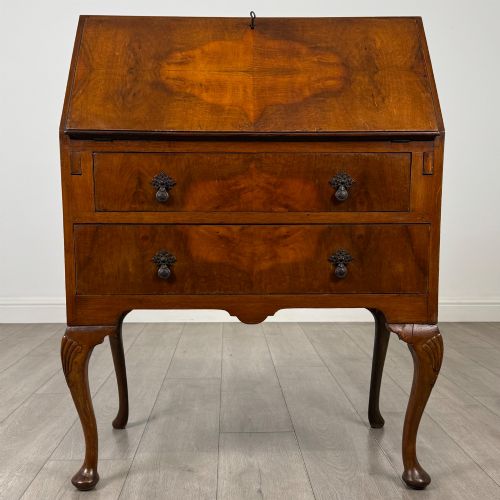
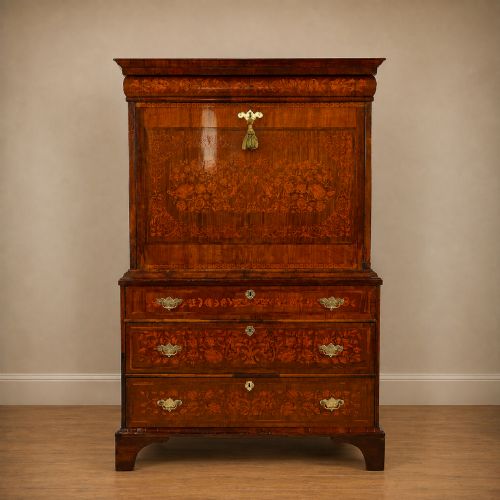
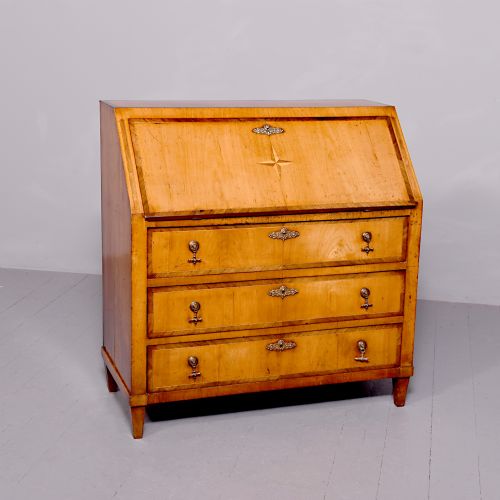
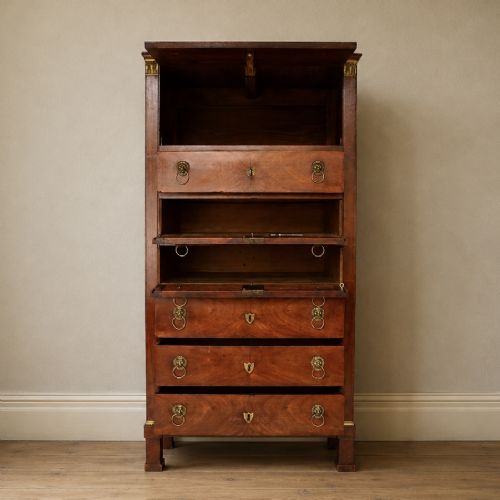

Walnut Drop Front Cabinet
A walnut drop front cabinet brings together rich timber and concealed writing surfaces, offering practical storage disguised as elegance.
Walnut Drop Front Cabinet
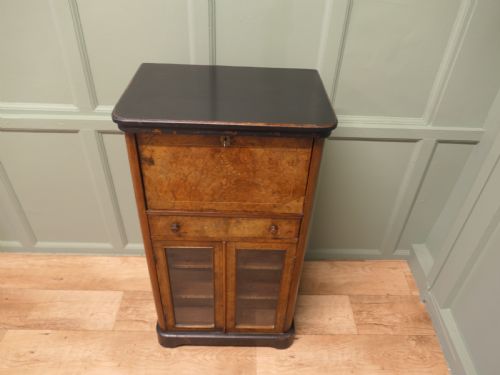
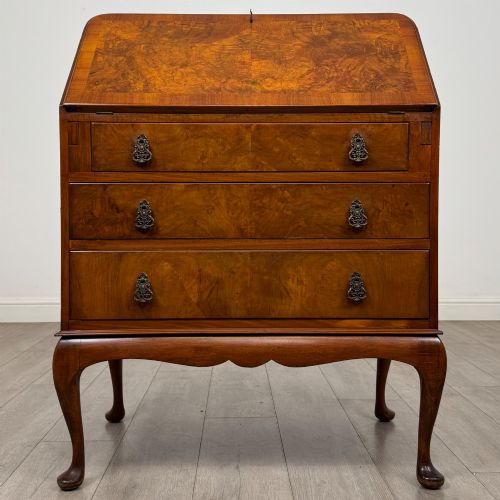
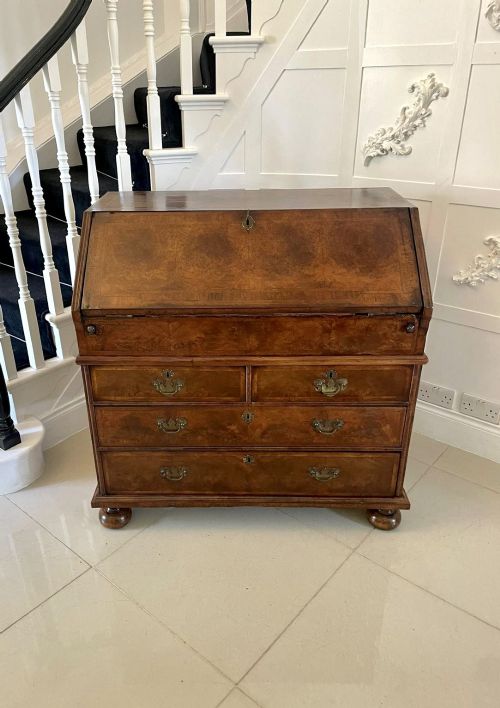
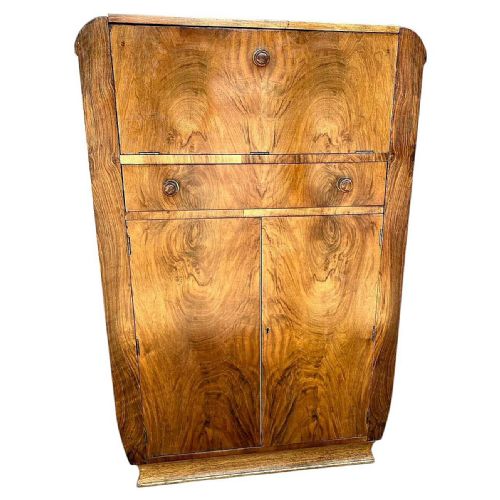
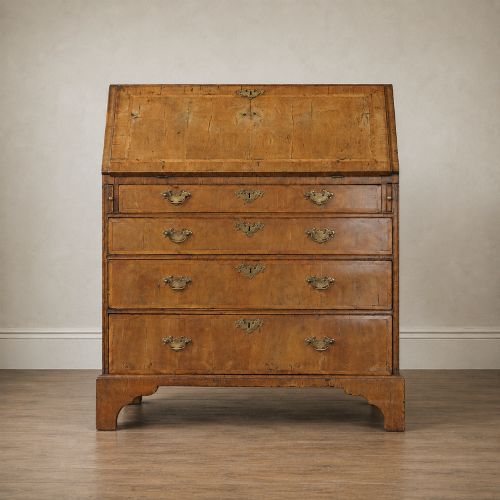
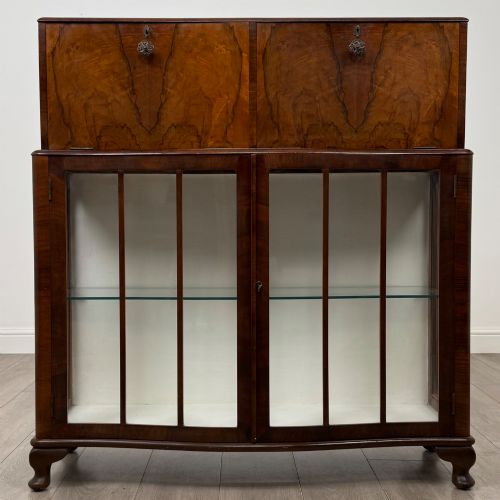
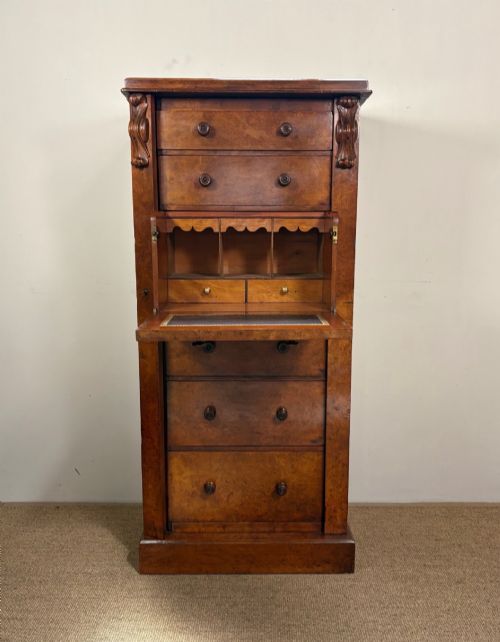
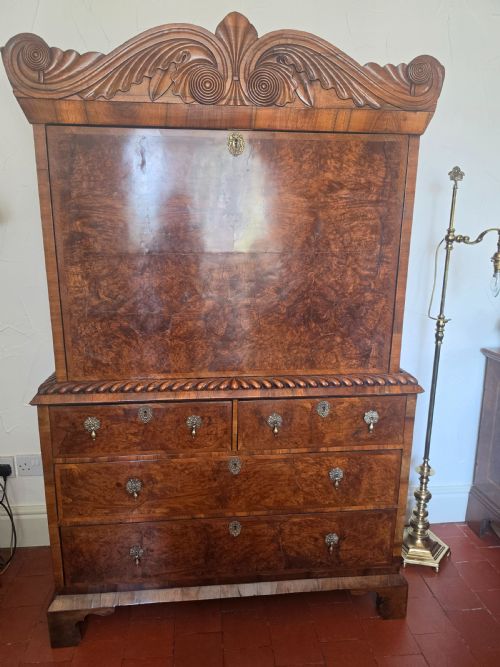
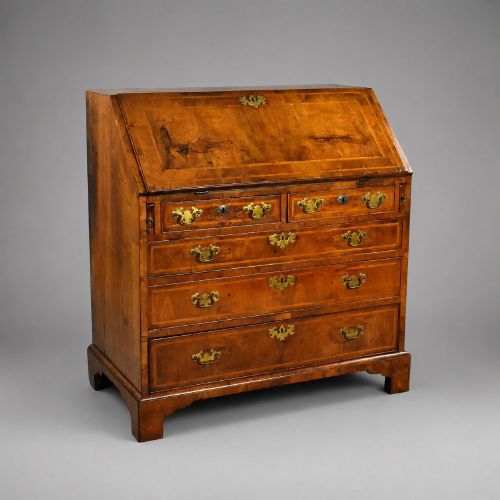
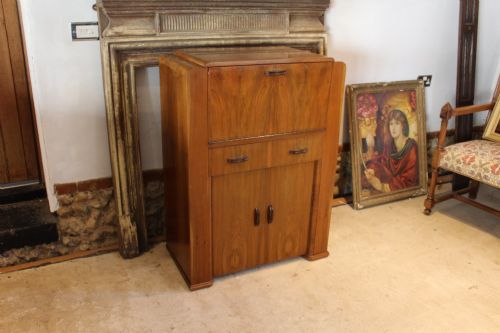
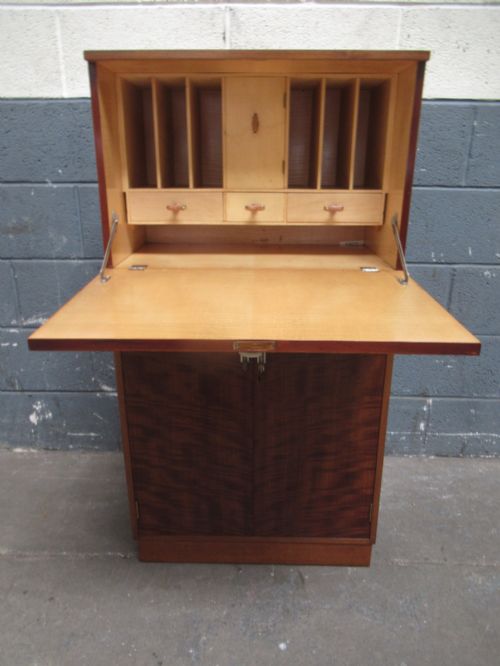
A walnut drop front cabinet encompasses forms such as bureaux, escritoires, and secretaire chests originating across centuries from the 17th century to the Art Deco period. These pieces function primarily as writing desks or storage cabinets featuring a hinged writing flap that drops down to reveal fitted interior compartments.
The selections on this page appear in numerous regional variations including English, French, Dutch, and Italian craftsmanship. Buyers most frequently encounter Georgian and Edwardian examples alongside earlier William and Mary and Queen Anne designs.
Materials and construction
Cabinet makers utilised solid walnut, burr walnut, and figured walnut veneers laid over secondary timbers such as oak, often enriched by herringbone inlay or floral marquetry. Brass handles, escutcheons, and gilt bronze mounts provide functional and decorative contrast against the dark timber.
Structural elements include dovetailed drawer construction and framed drop fronts that require precise joinery to balance the weight of the writing surface when open.
Listings span from the 17th century through the Georgian and Victorian periods up to 1930s Art Deco pieces.
Factors of quality
The distinction between tiers of quality rests on the selection and matching of walnut veneers, particularly the use of highly figured burr timber or intricate marquetry patterns. Superior examples display meticulous attention to interior fittings such as pigeonholes and secret drawers.
Overall proportion and the integrity of the original hardware and surface patination heavily influence the standing of an individual piece.
F.H. Marshall & Co Glasgow
The Walnut Drop Front Cabinet Glossary
- Bureau
- A desk with a sloping hinged lid that drops down to form a writing surface. It encloses a fitted interior of small drawers and pigeonholes.
- Marquetry
- Decorative inlay work using various woods or other materials to create pictorial patterns on furniture surfaces. It appears frequently on Dutch and English pieces.
- Burr walnut
- Timber taken from a tree growth resulting in intricate, swirling grain patterns. It serves as a prized veneer on high-end cabinet work.
- Secretaire
- A piece of furniture containing a drawer or compartment with a drop-down writing flap. It often disguises the workspace within the form of a chest of drawers.
Walnut Drop Front Cabinet: Frequently Asked Questions
How do I use a drop front cabinet?
The hinged front lowers to create a writing shelf supported by wooden arms or brackets. Inside, smaller drawers and compartments hold stationery and documents.
When closed, the drop front conceals the workspace entirely, maintaining a neat appearance in a living space or study.
Where should I place a walnut cabinet?
These cabinets suit studies, drawing rooms, or bedrooms where their dark timber tones contrast with lighter walls. Placing them out of direct sunlight preserves the walnut veneer.
Ensure adequate floor space in front of the piece for the drop flap to open fully.
How do I distinguish 18th century from Edwardian pieces?
Eighteenth-century pieces display hand-cut dovetails, older secondary woods like oak, and patination gained through centuries of use. Edwardian reproductions and adaptations often utilise machine-sawn elements and lighter internal construction.
Hardware styles and locking mechanisms also shift significantly between the Georgian era and the early 20th century.