
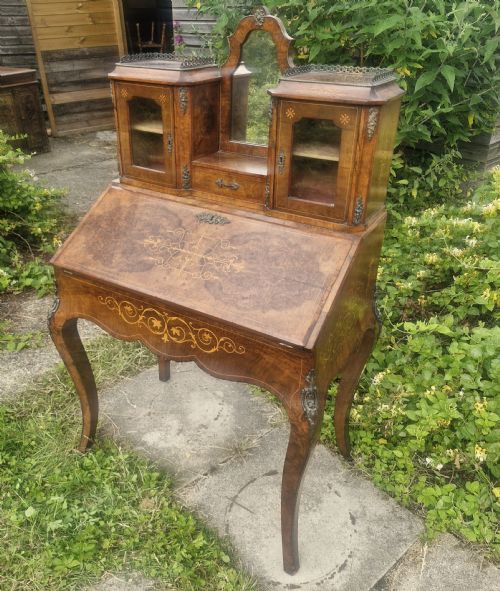


Brown Walnut Escritoire
A brown walnut escritoire brings rich timber figure and hidden writing drawers into a room, offering both display and clandestine workspace.
Brown Walnut Escritoire
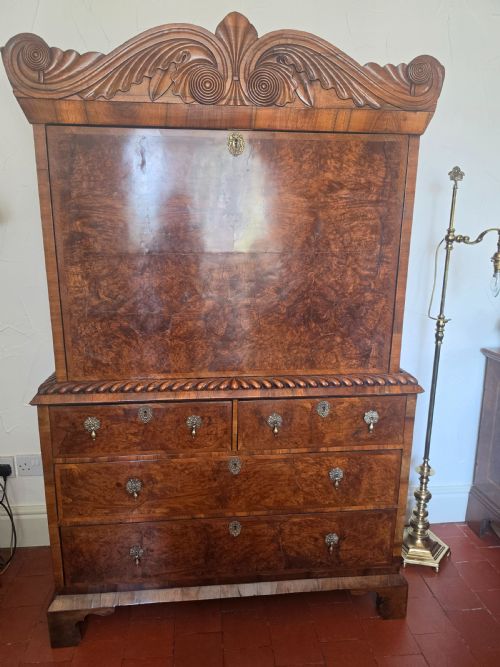
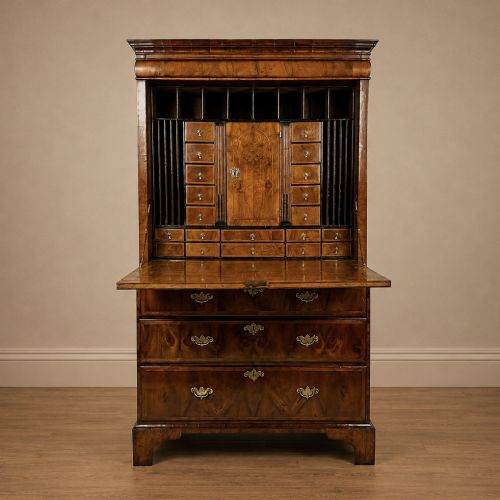
A brown walnut escritoire is a form of writing furniture designed with a drop-front or fall-front panel that conceals a fitted interior of small drawers and compartments. Buyers searching this phrase encounter examples ranging from 17th-century William and Mary pieces to 19th-century Victorian variations.
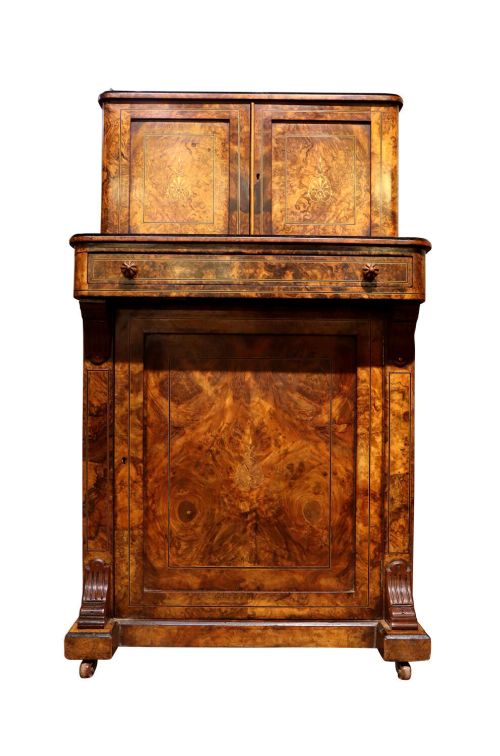
The selection on this page spans tall cabinets, bureau desks, tabletop cabinets, and ladies writing desks. Formats vary from early Georgian fall-front escritoires to later bonheur du jour and cylinder desk styles.
Origins include English workshops, continental European makers, and Dutch ateliers, with periods stretching across the Baroque, Queen Anne, and Victorian eras.
How they were made
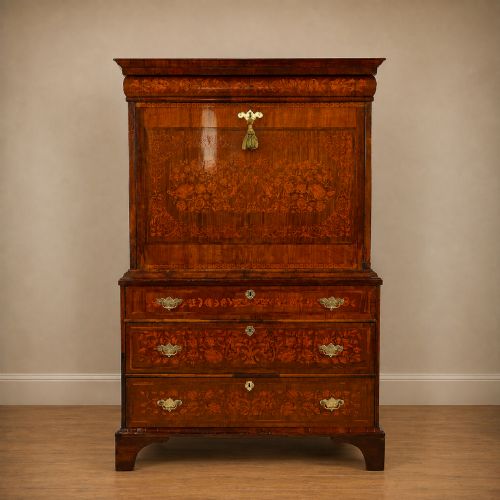
Cabinet makers utilised walnut timber, burr walnut, and figured walnut veneers applied over secondary woods such as oak. Surfaces frequently display elaborate floral marquetry, oyster veneer patterning, or delicate brass inlay.
Interiors incorporate fitted compartments and leather writing surfaces, whilst structural elements utilise glass and brass hardware to secure and elevate the cabinetry.
A revolving tabernacle hidden inside a tabletop escritoire offers a secret architectural spin for clandestine letter writers.
What varies in quality
The visual appeal of a brown walnut escritoire depends upon the selection of timber veneers, such as richly figured burr walnut or symmetrical oyster patterns. The intricacy of floral marquetry and the precision of brass inlay further distinguish finer examples from simpler provincial work.
Construction standards are evident in the internal arrangement of the writing cabinet and the retention of original brass hardware. The sophistication of period stylistic details, from William and Mary proportions to French Rococo Revival curves, shapes the character of each piece.
Gregory and Co of London
The Brown Walnut Escritoire Glossary
- Escritoire
- A writing cabinet featuring a fall-front or drop-front writing surface that conceals internal compartments. This term is often used interchangeably with secretaire.
- Burr walnut
- A specialised timber veneer harvested from walnut tree growths, prized for its swirling, highly figured grain patterns. It appears frequently on Victorian and Georgian cabinetry.
- Marquetry
- Decorative veneer work arranged in pictorial or floral patterns across the surface of the furniture. Dutch and English makers utilised this technique extensively during the 17th and 18th centuries.
- Oyster veneer
- Slices cut transversely from small branches or roots to create circular, oyster-like grain patterns. This technique is a hallmark of William and Mary period furniture.
- Bonheur du jour
- A light ladies writing desk featuring a small cabinet or set of drawers superstructure on top. These appear in Victorian interpretations of walnut writing furniture.
Brown Walnut Escritoire: Frequently Asked Questions
What is an escritoire?
An escritoire is a dedicated writing cabinet featuring a hinged drop-front flap that opens to reveal a fitted interior of small drawers and pigeonholes. It combines storage with a private writing surface.
Historically used for correspondence and document storage, these pieces transitioned from grand standing cabinets in the 17th century to lighter ladies writing desks by the Victorian era.
How do I date a walnut escritoire?
Dating relies on examining the construction methods, veneer types, and stylistic vocabulary. Pieces showing oyster veneers and geometric marquetry typically point to the William and Mary period.
Later Victorian examples introduce brass inlay, Davenport forms, and lighter proportions. Regional traits, such as Dutch floral marquetry, also help establish origin and era.
Where should I place an escritoire?
An escritoire suits reception rooms, studies, or bedrooms where its closed fall-front presents a clean timber cabinet facade. The drop-front provides an impromptu desk space when lowered.
Because these cabinets utilise figured walnut and delicate marquetry, placement away from direct sunlight preserves the timber colour and veneer integrity.
What is the difference between a bureau and an escritoire?
While both provide writing surfaces, an escritoire traditionally refers to a cabinet with a vertical facade concealing drawers, often raised on a stand or built as a tall chest.
A bureau more commonly denotes a slanted desk front that folds down at an angle. In practice, historical terminology often overlaps across these categories.