





17th Century Style Desk
These pieces give you a 17th century style desk for working space that carries centuries of robust character into a modern room.
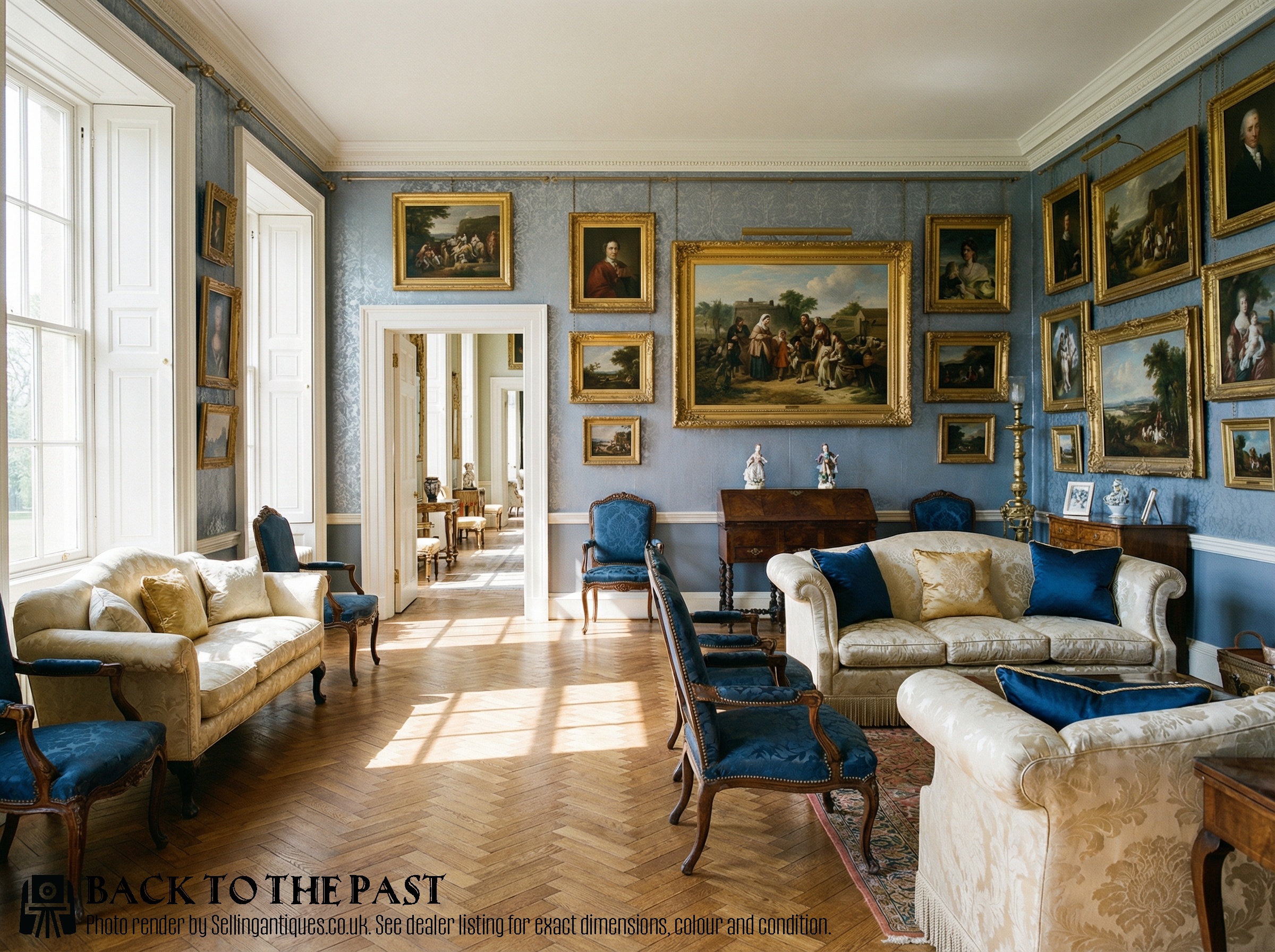
17th Century Style Desk
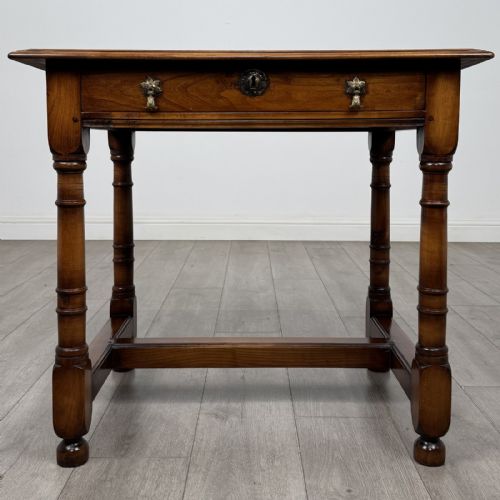
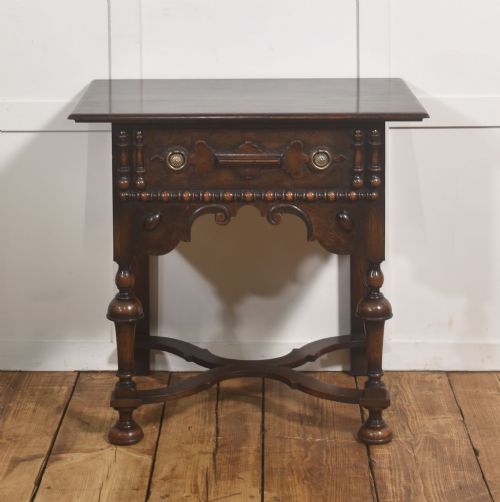
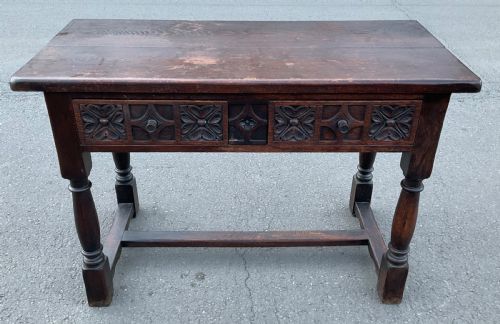
When you search for a 17th century style desk, you encounter heavy timber writing tables and fall-front writing cabinets built in later revival periods. These items draw on historical eras like the Jacobean, Carolean, and William and Mary styles, translating older architectural forms into functional furniture for writing and storage. You are most likely to meet pieces produced during the nineteenth and early twentieth centuries that imitate the heavy proportions and turned elements of the original epoch.
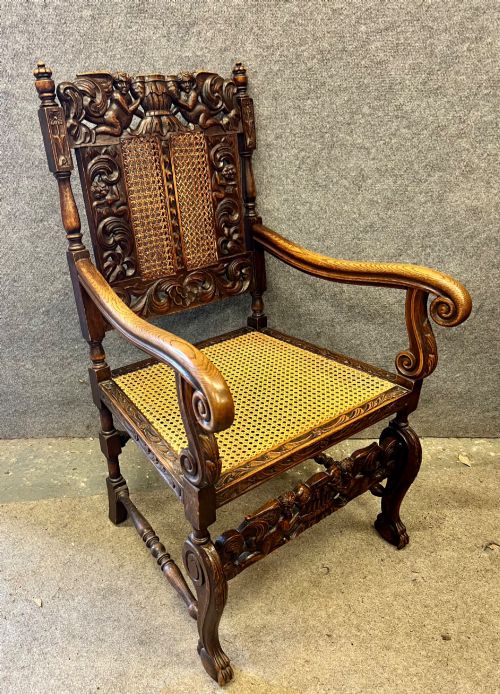
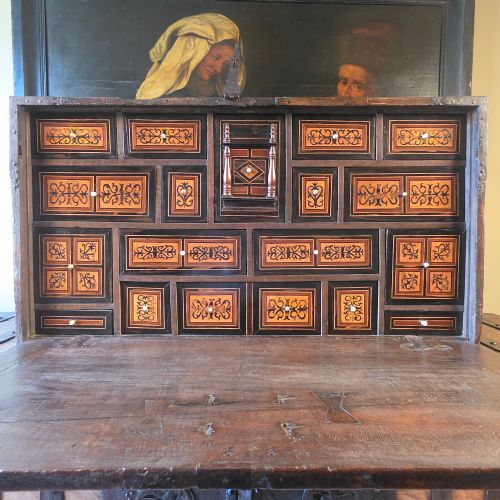
The material palette of these desks and writing cabinets relies heavily on oak and walnut, often enhanced with decorative veneers such as oyster cuts. Alongside larger desks, related seating and side tables frequently appear in the listings, sharing the turned legs and carved panels typical of the style. The forms range from simple writing tables to bureau cabinets fitted with numerous internal drawers for correspondence.
How they were made
Cabinet makers constructed these pieces primarily from solid oak and walnut, frequently selecting fruitwood or beech for secondary structural components. Joinery relied on traditional mortise and tenon frames, ensuring the heavy writing surfaces remained stable under daily use.
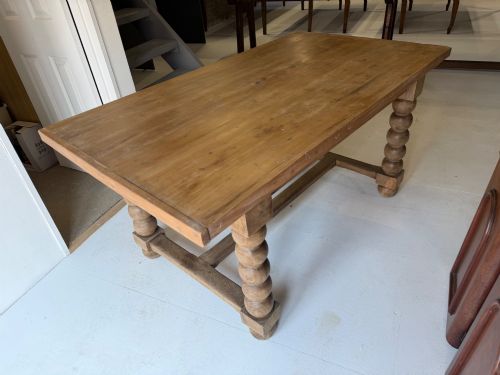
Decorative detailing involved intricate hand carving, geometric mouldings, and the application of contrasting wood veneers to drawer fronts and writing flaps. Turnery was executed on lathes to produce characteristic barley twist or bobbin legs, which were then pinned into the heavy underframes.
17th Century Style Desk Retail Price Guide 2026
Typical asking prices for 17th century style desk among the pieces listed under this phrase on Sellingantiques today, from the lower quarter to the upper quarter. They describe what is for sale here now, not the wider market.
Listings feature items spanning from the seventeenth century through the 1930s, utilising oak, walnut, beech, and brass.
What varies in quality
Quality in these desks is determined by the selection of timber figures and the crispness of the hand carving on panels and friezes. Superior examples feature carefully matched veneer patterns, such as oyster walnut, laid down with precision across expansive writing flaps and drawer fronts.
The construction of the internal drawers and the weight of the brass hardware distinguish finer pieces from standard revival items. Heavier gauge timbers and more complex turned legs indicate a maker who adhered closely to the demanding standards of seventeenth-century joinery.
The 17th Century Style Desk Glossary
- Escritoire
- A writing cabinet featuring a fall-front flap that drops down to reveal an inner arrangement of small drawers and pigeonholes. This form became highly fashionable during the late seventeenth century.
- Oyster walnut
- Small circular or oval pieces of walnut veneer sliced across the branch to expose the intricate growth rings. These veneers were arranged in geometric patterns across cabinet doors and desk surfaces.
- Barley twist
- A type of turned wooden leg resembling a spiralling rope. This decorative support is characteristic of furniture from the mid-seventeenth century onwards.
- Bureau
- A desk with a sloping hinged lid that covers a nest of pigeonholes and small drawers. It provides a dedicated surface for writing while keeping correspondence concealed.
- Bobbin leg
- A turned furniture leg shaped to resemble a string of rounded bobbins or spools. It adds texture and visual weight to tables and seating.
17th Century Style Desk: Frequently Asked Questions
Are these desks practical for daily work?
Most of these writing tables and cabinets offer generous surface areas suitable for contemporary laptops and paperwork. The lower storage drawers provide ample room for office supplies.
Because many examples originate from revival periods rather than the seventeen hundreds, their heights and proportions generally align well with modern seating.
How do I identify a revival piece?
Examination of the drawer linings, secondary woods, and tool marks usually reveals whether a piece dates to the seventeen hundreds or a later revival period. Machine-sawn timber and standardised screw threads point towards nineteenth or twentieth-century manufacture.
Stylistic markers such as William and Mary or Carolean details were frequently revived during the Victorian and Edwardian eras to satisfy a demand for historicism.
What woods were used for these desks?
Oak and walnut dominate the construction of these writing pieces, providing both structural strength and decorative grain patterns. Beech and fruitwood also appear frequently in framing and secondary parts.
Finishes typically emphasise the natural grain of the timber through polishing rather than heavy painting, highlighting the quality of the wood.
How should I care for a walnut surface?
Regular dusting with a soft, dry cloth prevents the accumulation of abrasive particles on veneered and carved surfaces. Periodic application of traditional wax helps nourish the timber and maintains a protective sheen.
Keep these items away from direct heat sources and strong sunlight to prevent the decorative veneers from drying out or lifting over time.