
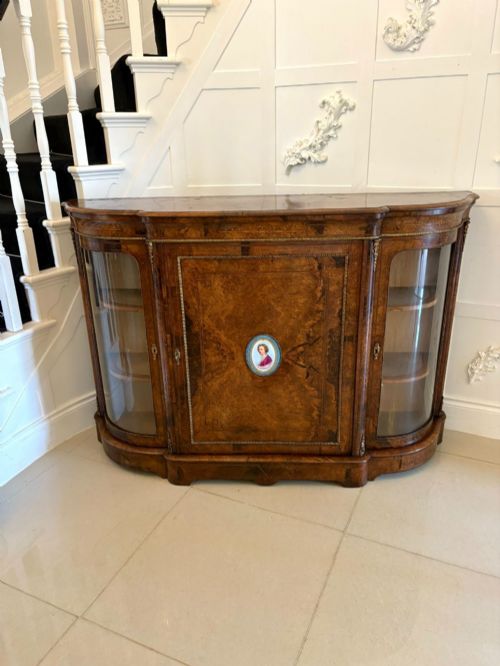
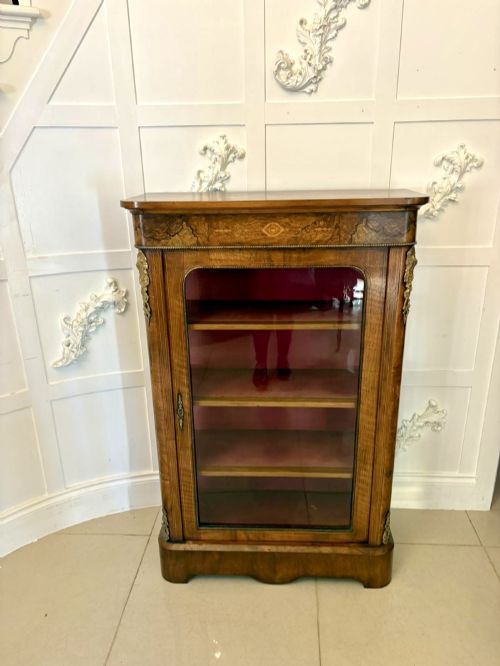
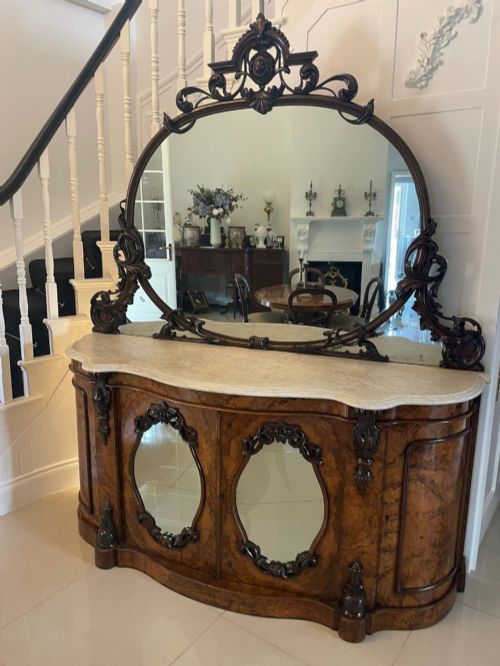


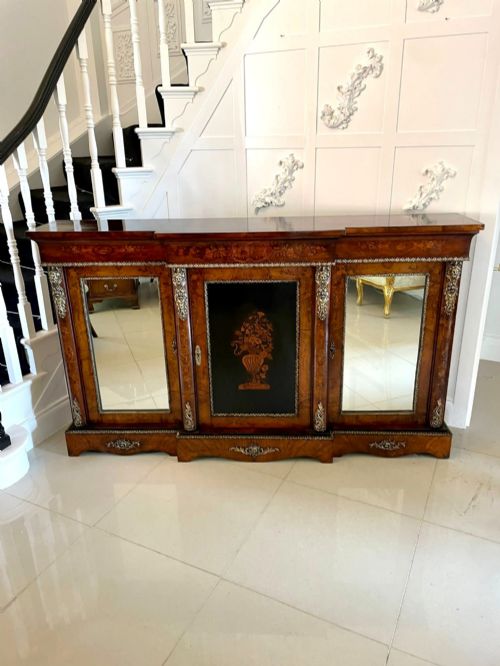
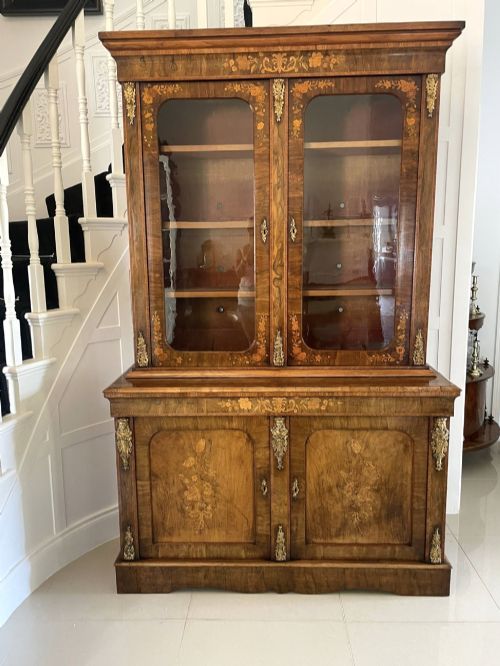
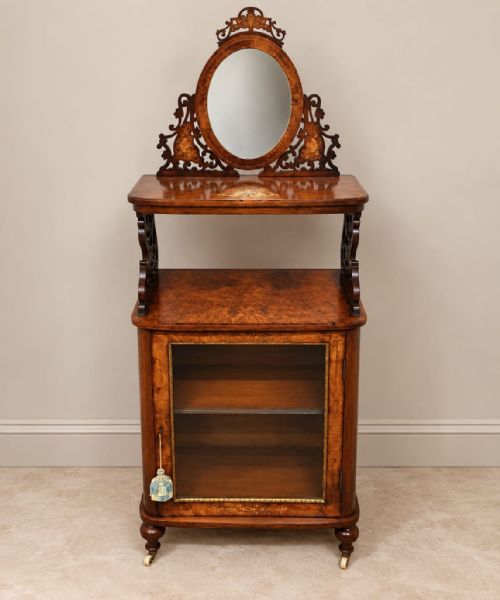
Walnut Display Credenza
These walnut display credenza pieces bring mid-nineteenth-century elegance and polished timber grain into a room, offering display space and enclosed storage.
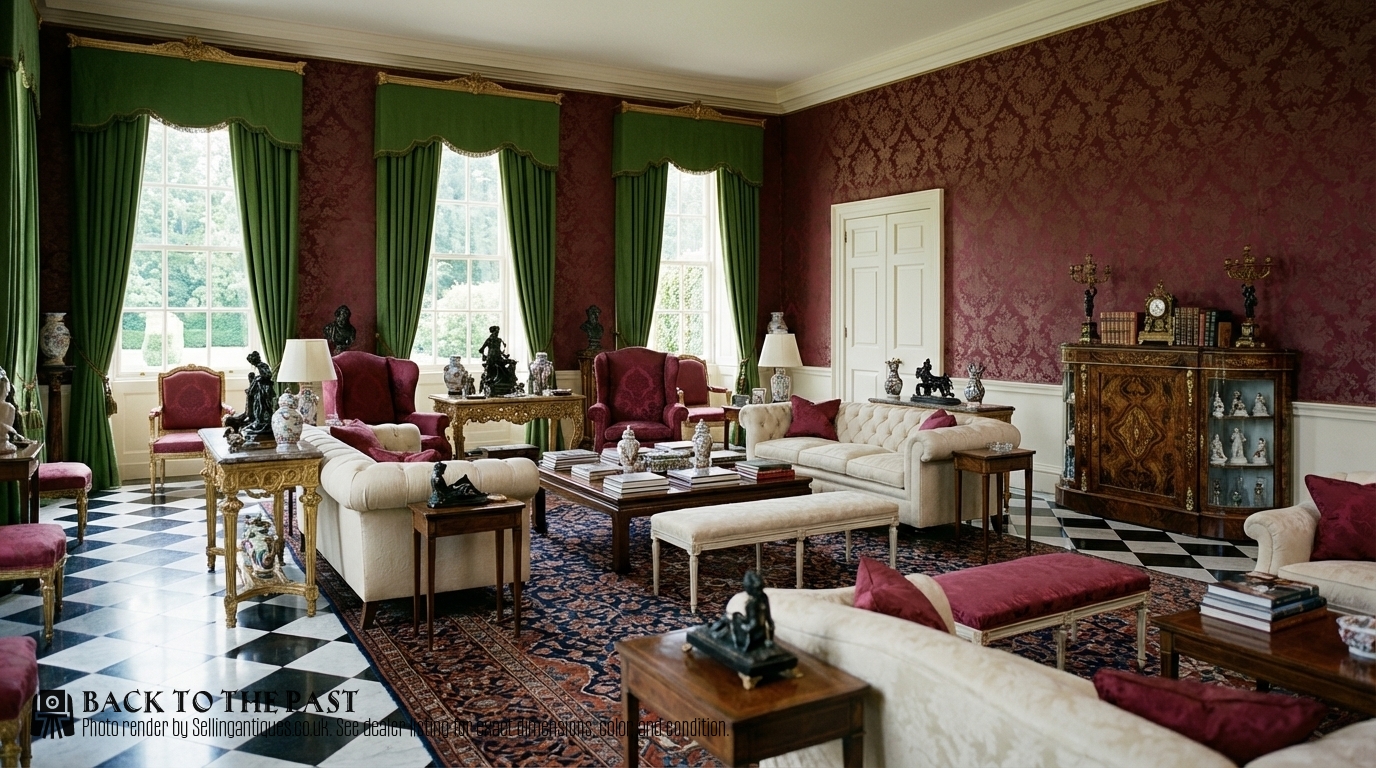
Walnut Display Credenza
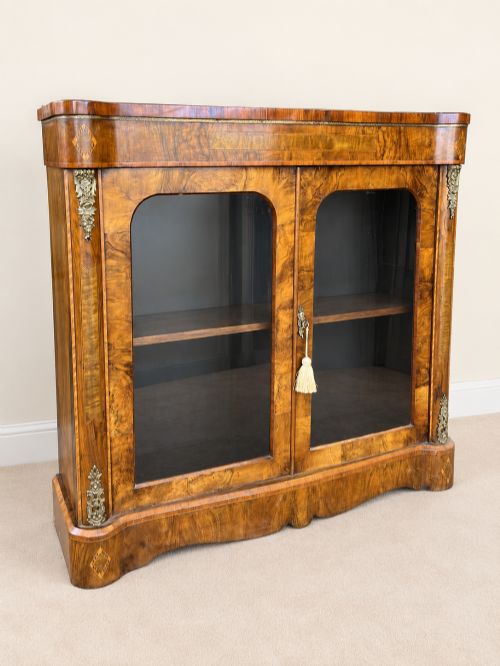
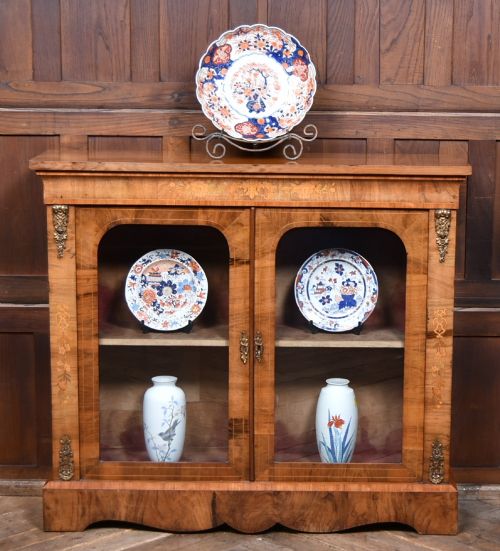
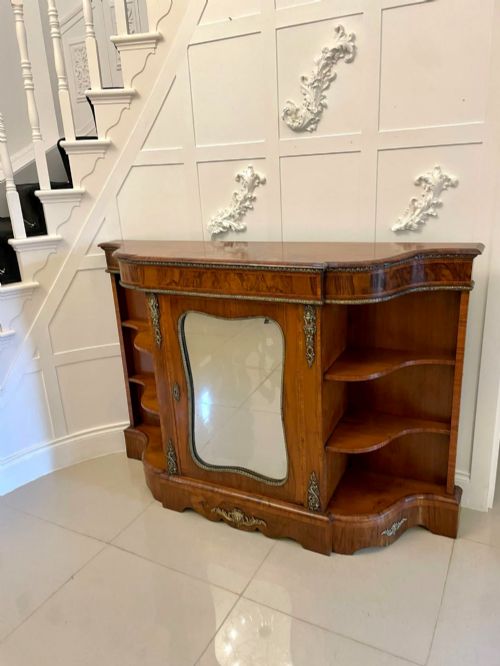
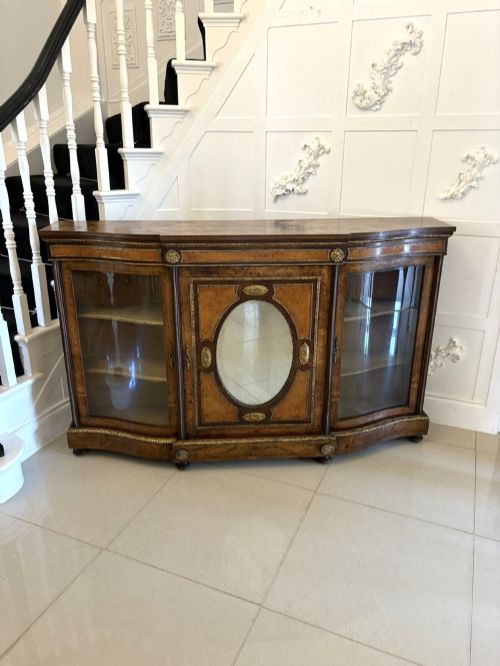
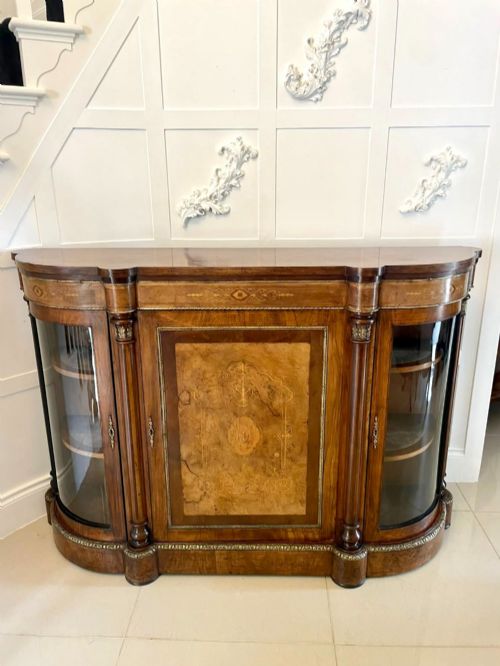
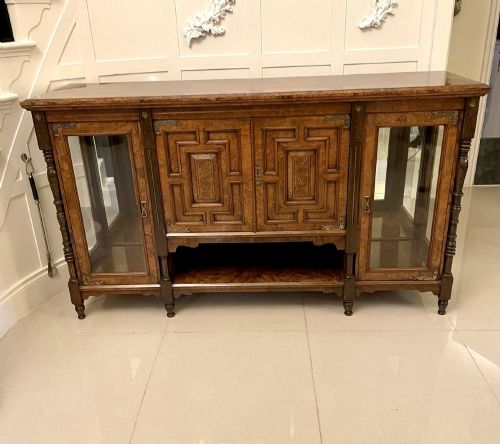
A walnut display credenza combines enclosed cabinet storage with glass-fronted display sections, originating primarily in the nineteenth century. These forms include serpentine credenzas, low side cabinets, and compact pier cabinets designed for principal reception rooms.
Victorian examples dominate the selection, spanning decades from the eighteen-fifties through to eighteen-eighty. Makers built these low-profile cabinets using figured timbers to anchor formal drawing rooms and morning rooms.
Later twentieth-century iterations, including Art Deco variants from the nineteen-thirties, translate the form into cleaner lines while retaining walnut as the primary structural and decorative medium.
How they were made
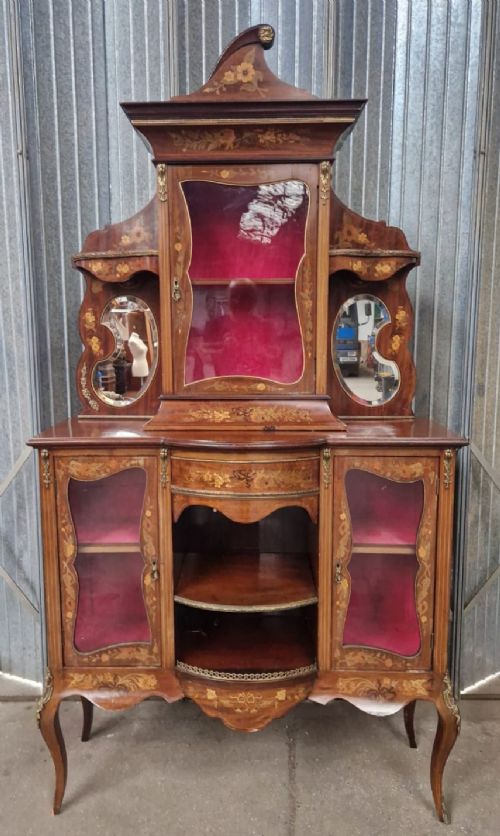
Cabinet makers selected burr walnut and figured walnut veneers for their swirling grain patterns, laying them over solid secondary timbers to create patterned surfaces on doors and friezes. Marquetry inlay, utilising satinwood and floral motifs, often decorates the central panels.
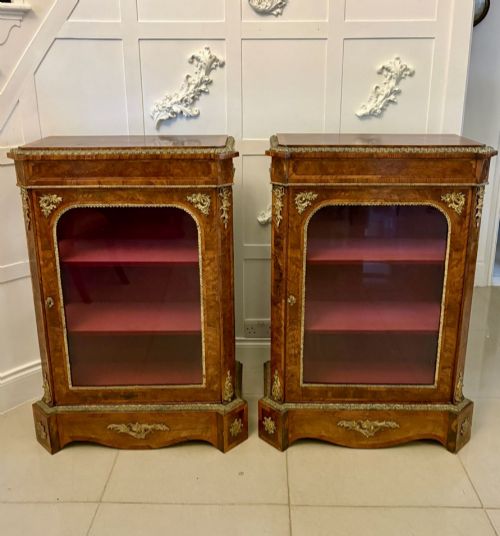
Gilt bronze and ormolu mounts frame the glazed doors and corners, while brass details reinforce structural edges. Ebonised wood trims provide sharp contrast against the warm brown tones of the walnut timber.
Materials recur consistently across the decades, combining burr walnut veneer, glass, velvet linings, and cast ormolu mounts.
What varies in quality
The precision of the marquetry inlay and the symmetry of the burr walnut veneer patterns dictate the visual tier of a piece. Finer examples feature continuous grain wrapping across the doors and intricate floral motifs without lifting or warping.
Mounting hardware ranges from heavy, crisply chased ormolu down to plain cast brass. Cabinet proportions, glass clarity, and the integration of curved serpentine doors also separate standard production items from workshop pieces bearing maker stamps.
Gillows·Lamb of Manchester·Maison Gagneau
The Walnut Display Credenza Glossary
- Credenza
- A low cabinet featuring cupboards, often flanked by glazed display sections and topped with a marble or timber surface.
- Ormolu
- Gilt bronze mounts applied to furniture edges and door fronts for decorative accent during the nineteenth century.
- Marquetry
- Fitted wood veneers arranged in pictorial or geometric patterns across the main body of a cabinet.
- Burr Walnut
- Timber taken from walnut tree growths, prized for its dense, swirling grain patterns used on high-status cabinet doors.
Walnut Display Credenza: Frequently Asked Questions
Where did people place credenzas?
These cabinets traditionally stood against the main walls of Victorian drawing rooms or dining spaces. Their low height left wall space above free for mirrors or artwork.
Today, they function similarly in modern living areas, providing a surface for lamps while keeping books and objects visible behind glass doors.
How do I clean walnut veneer?
Dust the timber regularly with a dry, soft cloth to prevent grit accumulation on the delicate grain. Avoid chemical sprays that strip the polished finish.
Feed the wood periodically with appropriate wax to maintain the moisture and sheen of the nineteenth-century polish.
What is a pier cabinet?
A pier cabinet is a narrow, single-door display case designed specifically to fit the wall space between two windows. They share the same burr walnut and ormolu vocabulary as larger credenzas.
These smaller pieces suit compact rooms where a full-length credenza overwhelms the floor plan.
How are different periods told apart?
Mid-nineteenth-century pieces from eighteen-fifty to eighteen-eighty rely on heavy Victorian ormolu mounts, floral marquetry, and serpentine curves. Later pieces from the nineteen-thirties adopt simpler geometry and Swedish satin birch contrasts.
Examining the internal secondary timbers and backboards also helps confirm the period of construction.