


Victorian Glass Display Credenza
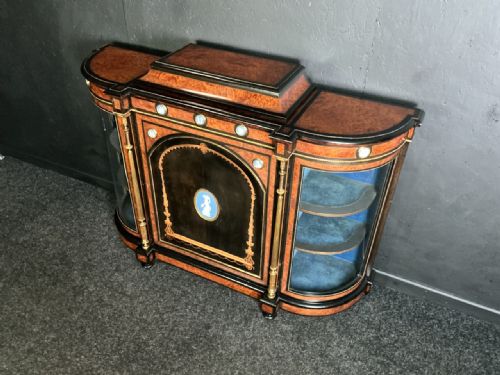
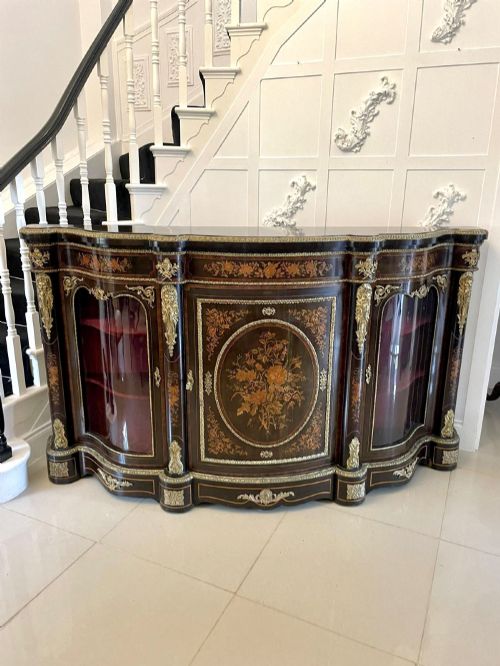
A victorian glass display credenza combines architectural timber work with glazed central cabinets to anchor a formal interior.
Victorian Glass Display Credenza
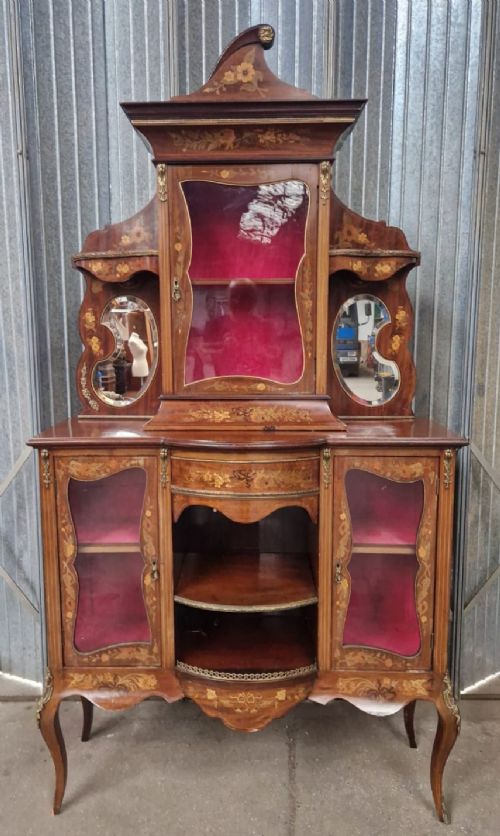
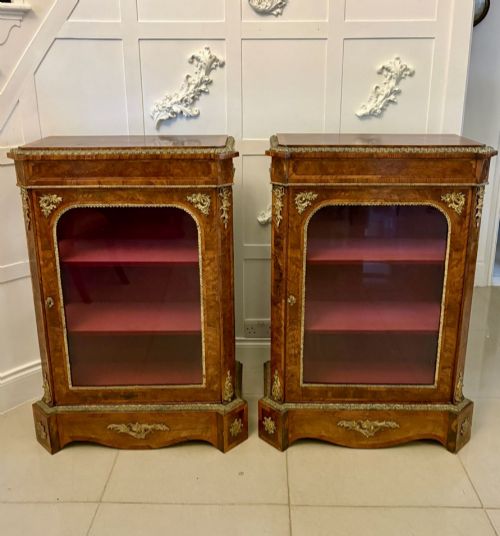
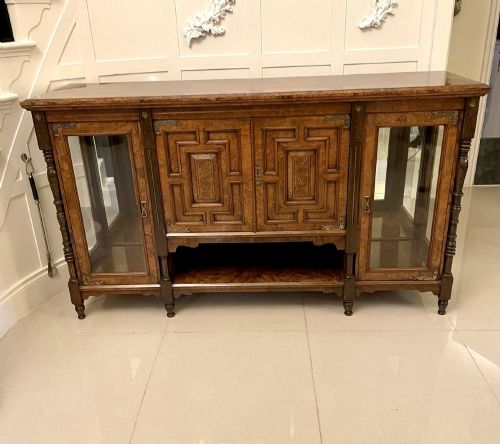
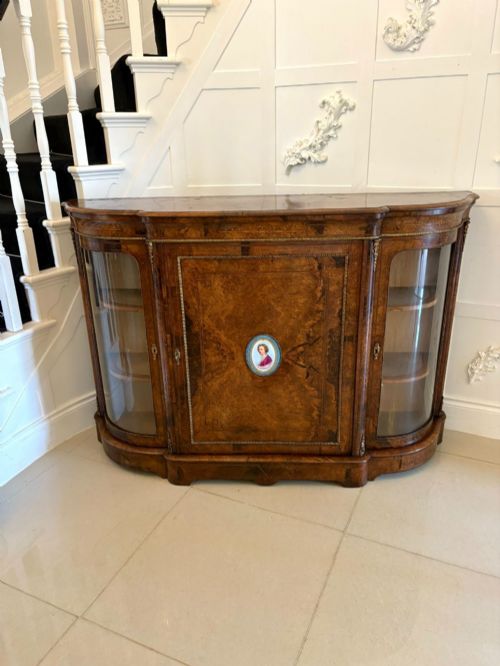
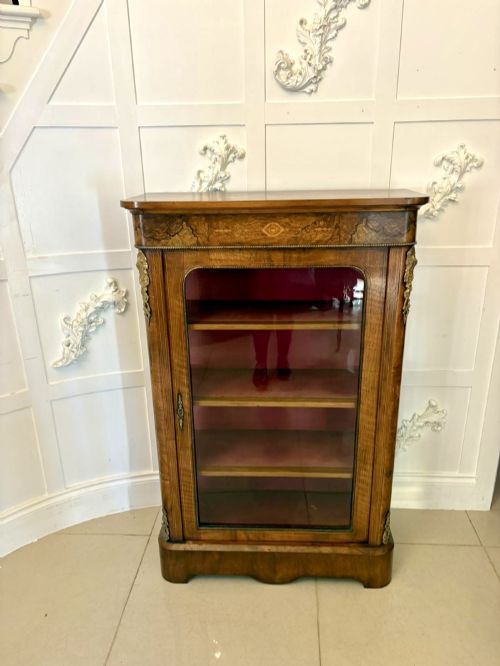
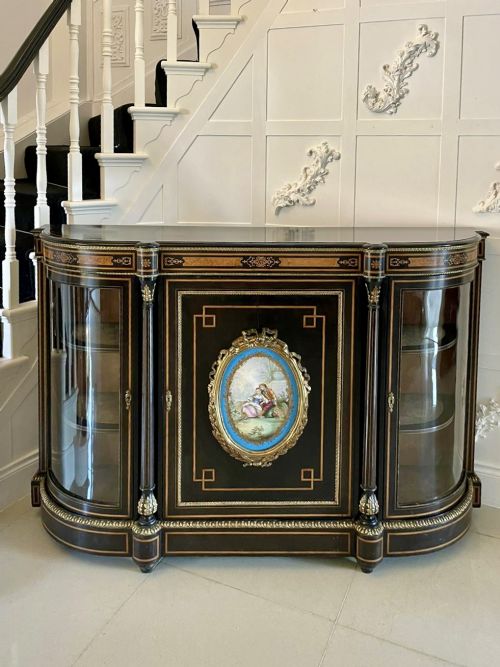
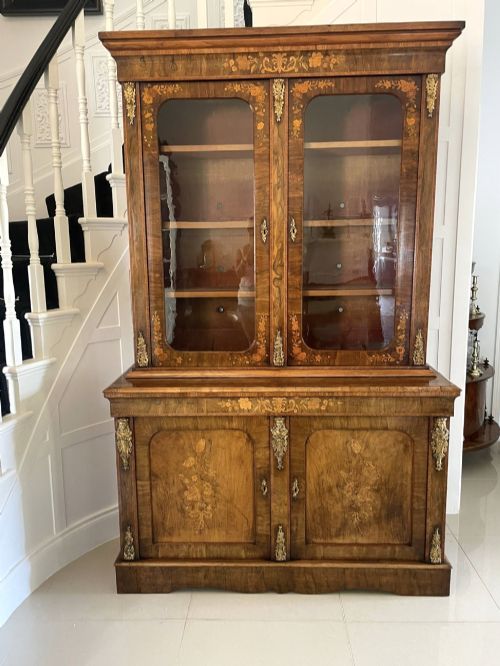
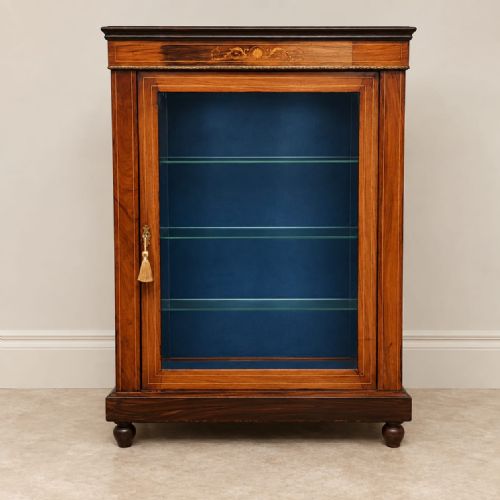
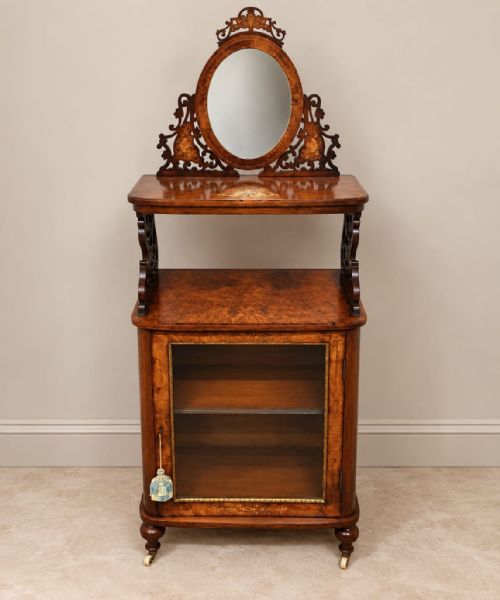
A victorian glass display credenza is a substantial nineteenth century low cabinet designed to display porcelain and ornaments in a drawing room or formal parlour. The pieces seen on this page span the Victorian period from the mid nineteenth century through to the late eighteen nineties, encompassing related forms such as pier cabinets, side cabinets, and bookcase cabinets.
Materials and Construction
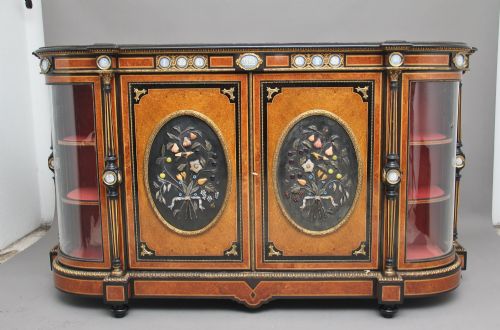
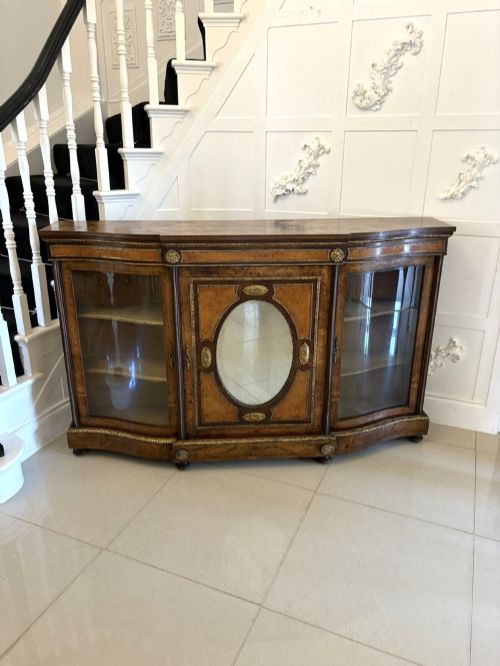
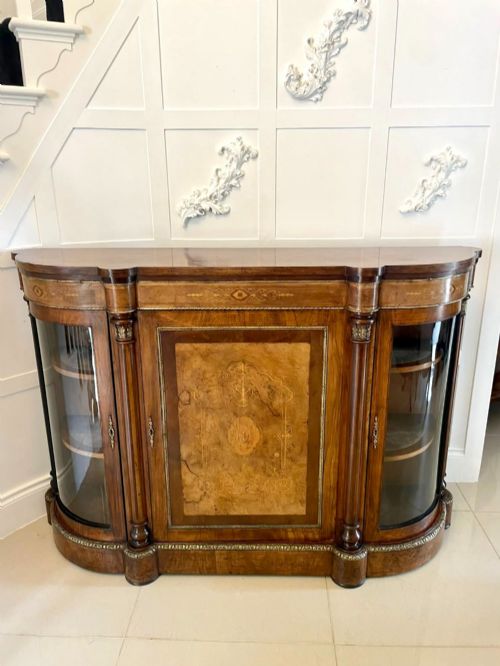
Makers built these cabinets using supportive carcass timbers overlaid with decorative figured veneers such as burr walnut, amboyna, and kingwood, complemented by contrasting boxwood inlay and marquetry foliage. The polished wooden surfaces provide a rich background for cast ormolu mounts, which frame the panels, doors, and cornices.
Glass panels are fitted into doors that enclose velvet lined display shelves, while certain grander examples incorporate marble tops or hand painted porcelain plaques set directly into the wooden frieze. Ebonised finishes appear alongside natural grain walnut to satisfy the diverse aesthetic demands of the nineteenth century interior.
Listings feature burr walnut, amboyna, kingwood, and ebonised wood, spanning the Victorian period from eighteen fifty to eighteen ninety.
Craftsmanship and Detailing
The distinction between standard production and exhibition quality pieces lies in the complexity of the timber veneers, the precision of the boxwood marquetry, and the weight of the cast ormolu mounts. Finer examples display meticulous matching of burr walnut grain across multiple doors and panels, accompanied by deeply chased gilt bronze hardware.
Structural harmony also separates grades, with superior credenzas exhibiting serpentine shaped fronts and balanced proportions rather than flat, repetitive facades. The integration of specialised materials like amboyna wood, marble tops, and inset porcelain indicates higher workshop status.
Maison Gagneau
The Victorian Glass Display Credenza Glossary
- Credenza
- A low nineteenth century display cabinet featuring glazed central and side sections used for storing and exhibiting decorative objects. It sits low to the ground compared to a tall bookcase.
- Pier Cabinet
- A narrow freestanding display cabinet designed to fit the wall space between windows. These upright units often share the glass panels and ormolu mounts of larger credenzas.
- Ormolu
- Gilded bronze mounts applied to furniture edges and panels for decorative contrast. Higher quality pieces feature finely chased detail on these metal elements.
- Marquetry
- Decorative patterns formed by fitting contrasting thin veneers into a wood ground. Floral motifs and geometric banding appear frequently across these surfaces.
Victorian Glass Display Credenza: Frequently Asked Questions
What is a credenza?
A credenza is a low nineteenth century cabinet featuring a combination of glazed display doors and wooden cupboards. It evolved as a formal piece for the Victorian drawing room.
Unlike tall sideboards used in dining rooms, a credenza sits lower and emphasises the exhibition of ceramics, glass, and decorative ornaments behind curved glass panels.
Where do you put a credenza?
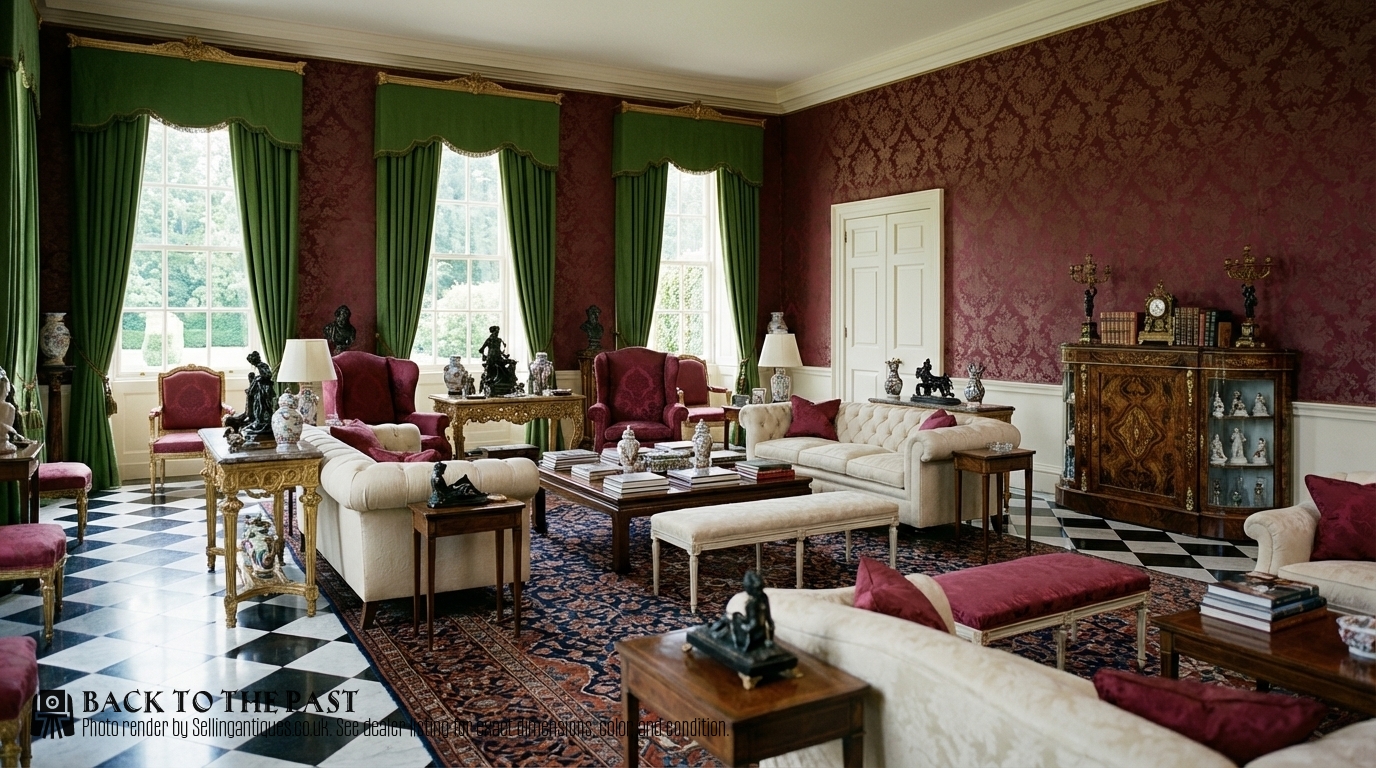
These cabinets suit large reception rooms, formal hallways, and spacious living areas where wall space allows their long silhouettes to stand unobstructed. They serve as focal points in period interiors.
Position them away from direct sunlight and heat sources to protect delicate nineteenth century wood veneers and antique glass from environmental stress.
How do I date a Victorian cabinet?
Dating relies on observing timber choices, decorative styles, and construction methods characteristic of different decades within the nineteenth century. Mid century pieces often feature rich burr walnut and heavy ormolu mounts.
Later Victorian examples may incorporate ebonised finishes and Aesthetic Movement geometric motifs, reflecting shifting tastes towards the end of the century.
What woods were used?
Cabinet makers utilised burr walnut as the primary decorative veneer, prized for its swirling grain patterns. Amboyna, kingwood, and mahogany also appear frequently across these listings.
Ebonised wood provides a black finish that mimics ebony, often contrasted with lighter boxwood inlay and gilt bronze hardware to create striking visual depth.