


Walnut Credenza Sideboard
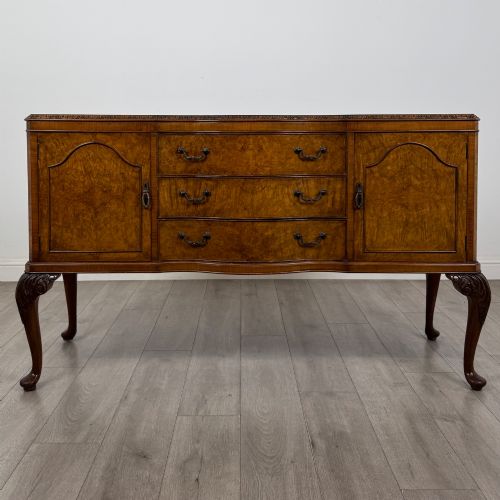
When you search for a walnut credenza sideboard, you are looking at substantial Victorian and Art Deco display furniture designed to anchor a principal room.

Walnut Credenza Sideboard
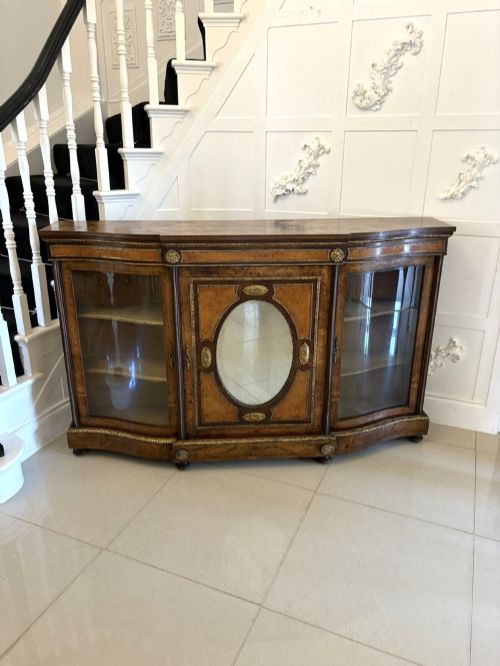
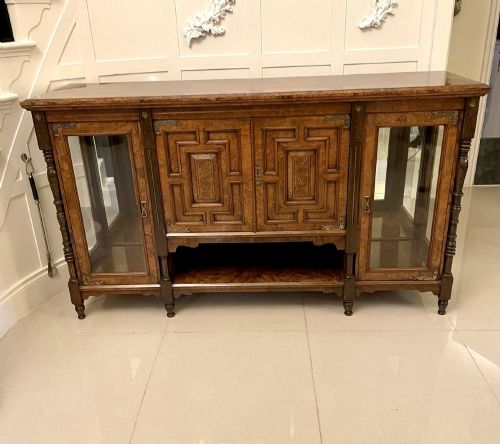
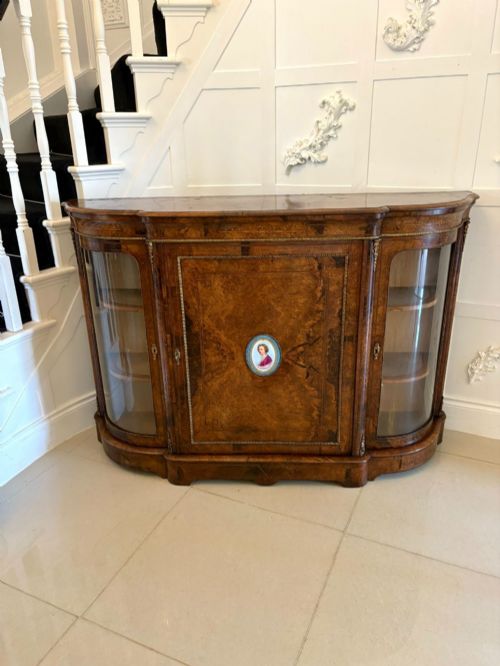
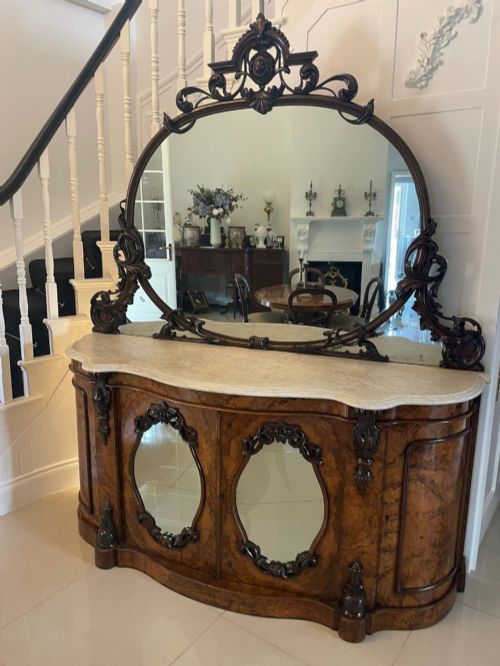
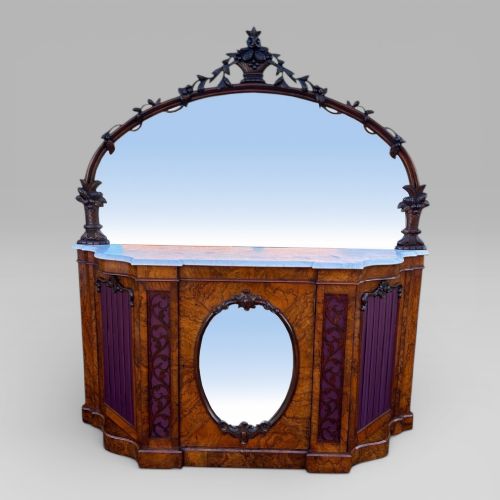
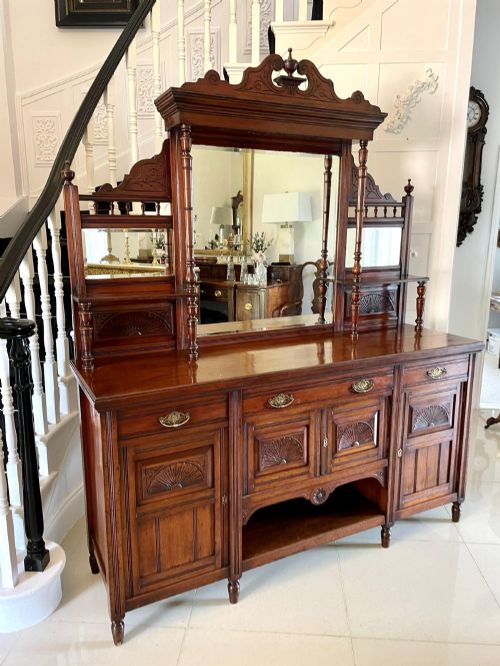
A walnut credenza sideboard bridges the gap between low display cabinets and formal dining room storage, originating primarily from Victorian parlours and later twentieth-century dining spaces. These pieces combine enclosed cupboard space with central shelving, often featuring glazed doors or mirrored backs intended to reflect light and display ceramics.
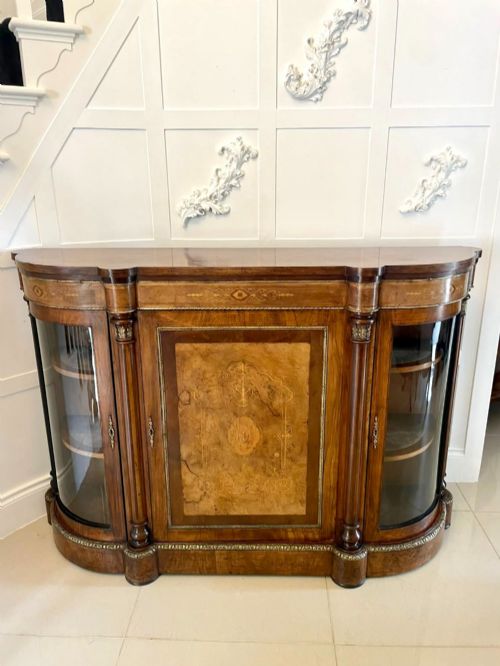
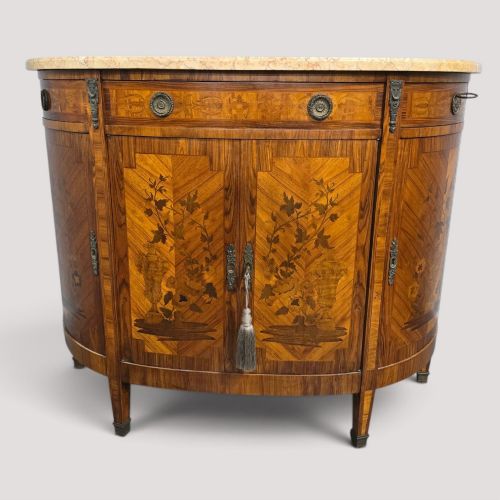
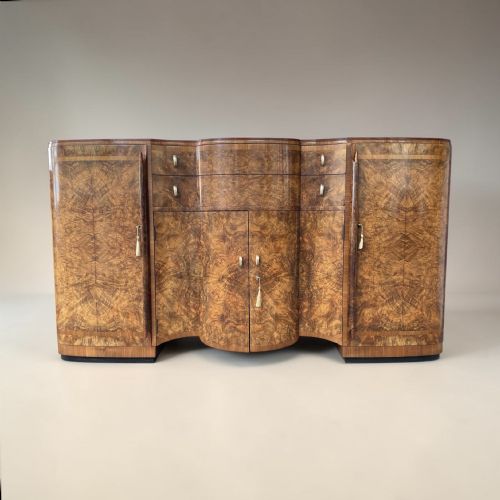
Victorian examples frequently incorporate porcelain plaques, intricate marquetry, and gilt bronze mounts, whereas later Art Deco iterations rely on clean geometric lines and figured wood grain for visual impact. You will encounter low serpentine fronted formats alongside tall mirror-backed variations depending on the period.
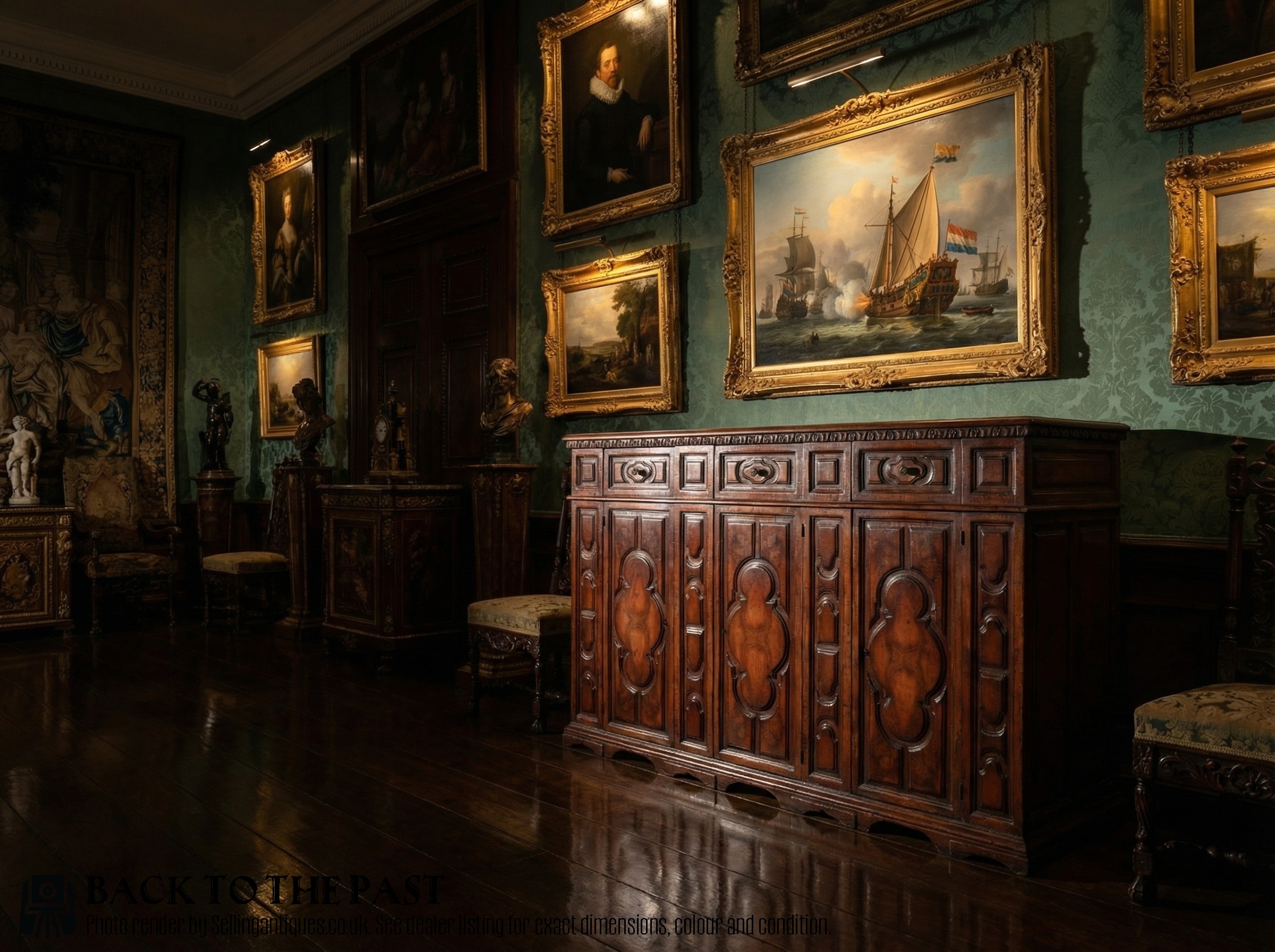
How They Were Made
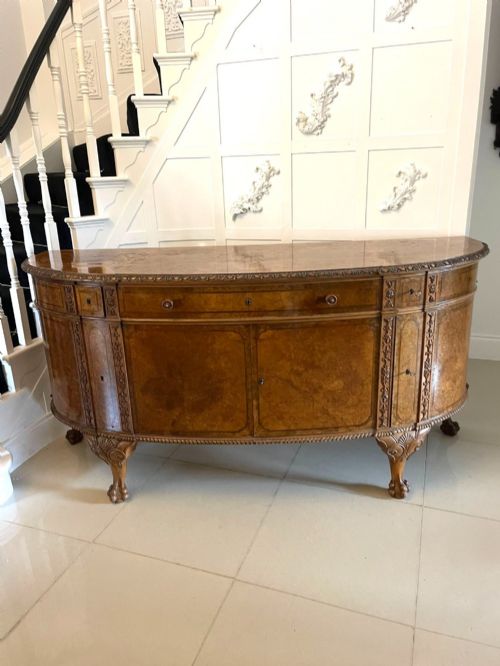
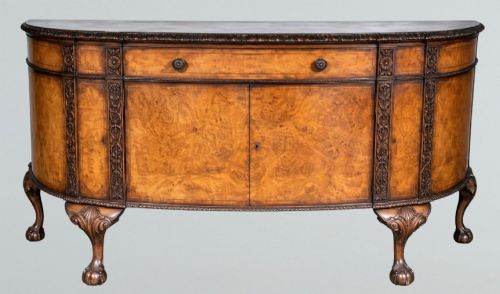
Cabinet makers utilised solid walnut frameworks overlaid with highly figured burr walnut veneers to achieve complex swirling grain patterns across large flat surfaces. Boxwood and floral marquetry inlay provided precise linear contrast against the dark timber.
Gilded ormolu mounts and brass details reinforced the corners and doors of mid-nineteenth-century iterations, while later designs employed contrasting light timbers such as sycamore to frame the darker walnut bodies.
Walnut Credenza Sideboard Retail Price Guide 2026
Typical asking prices for walnut credenza sideboard among the pieces listed under this phrase on Sellingantiques today, from the lower quarter to the upper quarter. They describe what is for sale here now, not the wider market.
Listings span from the Regency period through Victorian and Aesthetic Movement eras to Art Deco designs of 1930.
What Varies in Quality
The refinement of the marquetry and the choice of veneer dictate the baseline quality, with dense, symmetrical burr patterns demanding superior craftsmanship to apply without splitting. Secondary timbers used inside drawers and carcases indicate whether a workshop maintained rigorous standards out of sight.
The precision of cast ormolu mounts and the integration of hand-painted porcelain plaques separate standard production items from those produced by prominent cabinet makers.
Shoolbred and Co·Maurice Adams·Edward Barnsley·Harry and Lou Epstein·Gillows·Hille·Maison Gagneau·Edwards and Roberts
The Walnut Credenza Sideboard Glossary
- Burr Walnut
- A timber harvested from the gnarled growths of walnut trees, yielding complex swirling grain patterns prized for decorative veneer work. This wood forms the primary visual signature of mid-nineteenth-century display pieces.
- Credenza
- A low cabinet originating in Italy and adapted by Victorian makers for formal reception rooms, typically featuring a central door flanked by curved side compartments. It serves primarily to display ornaments rather than store heavy dining wares.
- Marquetry
- The art of applying small pieces of veneer to form decorative pictures or geometric patterns on a wooden surface. Craftsmen often utilised boxwood and fruitwoods for this detailed work.
- Ormolu
- Gilded bronze mounts cast in relief and applied to the corners and friezes of Victorian furniture. These metal ornaments provide structural accent and period decoration.
- Serpentine Front
- A furniture front characterised by a double curve, sweeping inward then outward towards the edges. This shape requires advanced woodworking skill to match the grain across the bends.
Walnut Credenza Sideboard: Frequently Asked Questions
What is the difference between a credenza and a sideboard?
A credenza is traditionally a low display piece with glass doors or open shelving designed for a parlour, whereas a sideboard tends to be taller and built for dining room storage.
Many nineteenth-century examples blur these definitions by combining glazed display sections with heavy timber serving surfaces.
How do I date a walnut sideboard?
Victorian iterations often feature carved mirror backs, porcelain mounts, and floral marquetry, whereas 1930s pieces showcase streamlined geometric shapes and figured grain without traditional ornamentation.
Examining the construction methods inside the drawers and cupboards provides further confirmation of the period of manufacture.
Are these pieces suitable for modern living rooms?
Their low profiles and generous surface areas make them effective media consoles or statement storage units in contemporary reception spaces.
Internal shelving accommodates modern items while the burr walnut exterior adds warmth and texture to minimalist interiors.
How should I care for burr walnut veneer?
Burr walnut requires stable indoor humidity away from direct sunlight and heat sources to prevent the delicate veneer from drying out or lifting.
Applying a traditional beeswax polish maintains the natural lustre of the timber without building up synthetic residue.