

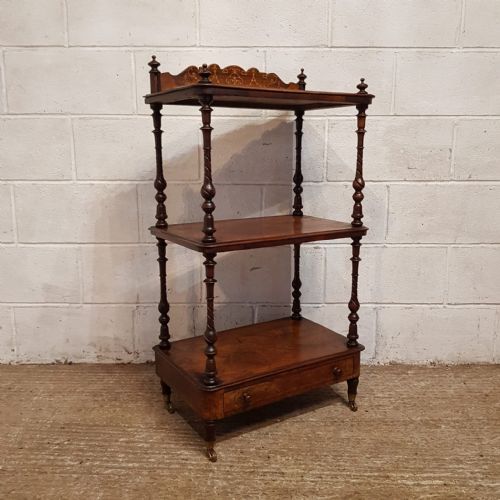
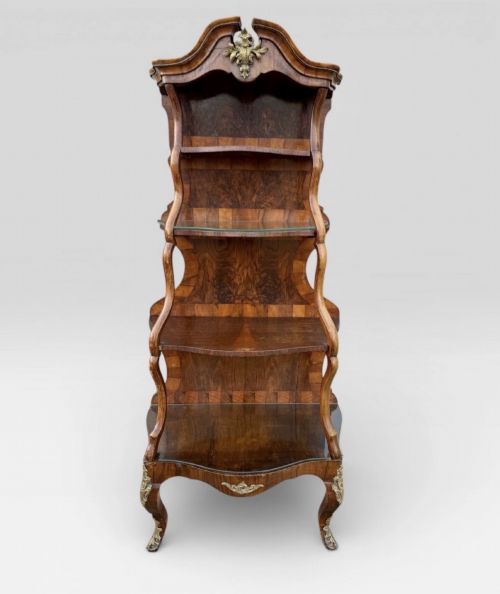


Walnut Corner Whatnot
A walnut corner whatnot uses wasted room to display treasures, bringing tiered shelving and rich timber figures into neglected spaces.
What a walnut corner whatnot is
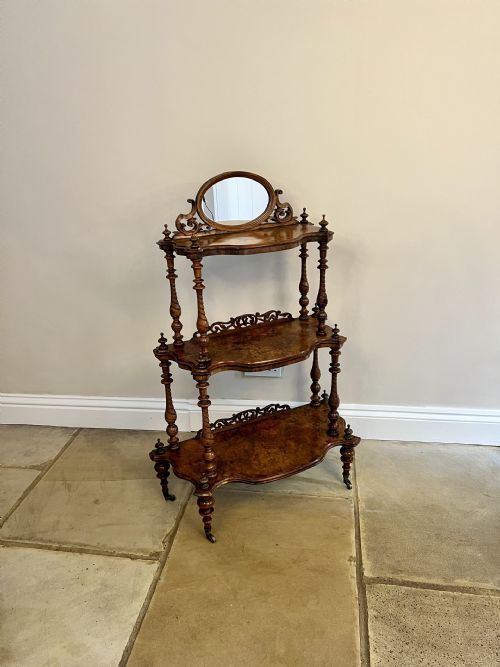
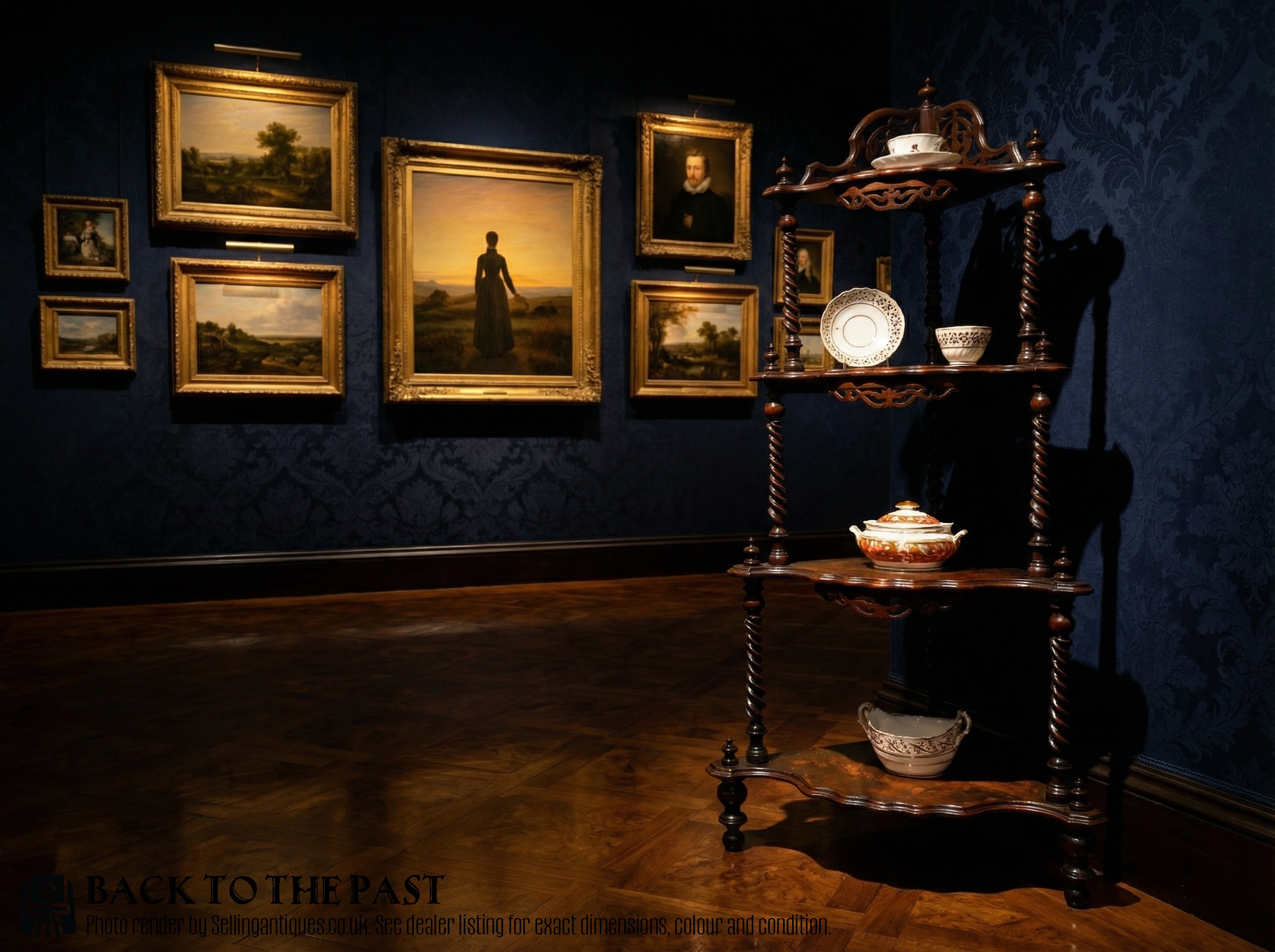
A walnut corner whatnot sits snugly into the junction of two walls, offering multiple tiers of open shelving for display. These pieces belong to the Victorian era, appearing frequently in nineteenth-century country houses and parlours.
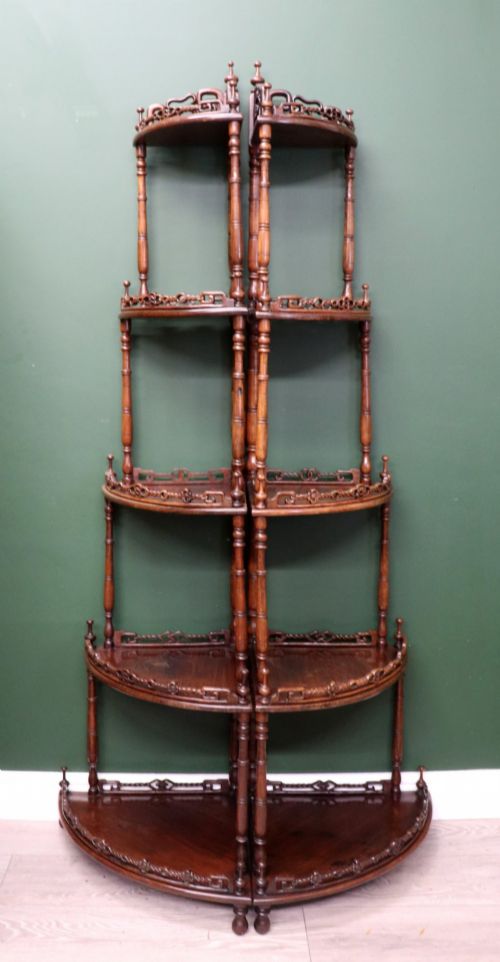
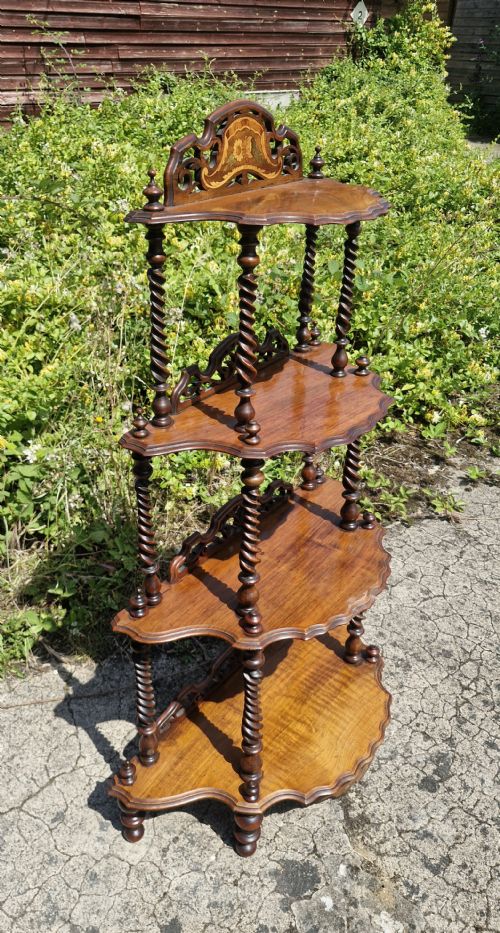
The most common version met here is a four-tier or five-tier corner stand designed to hold decorative objects. Surviving examples span from eighteen hundred and sixty to the late nineteenth century.
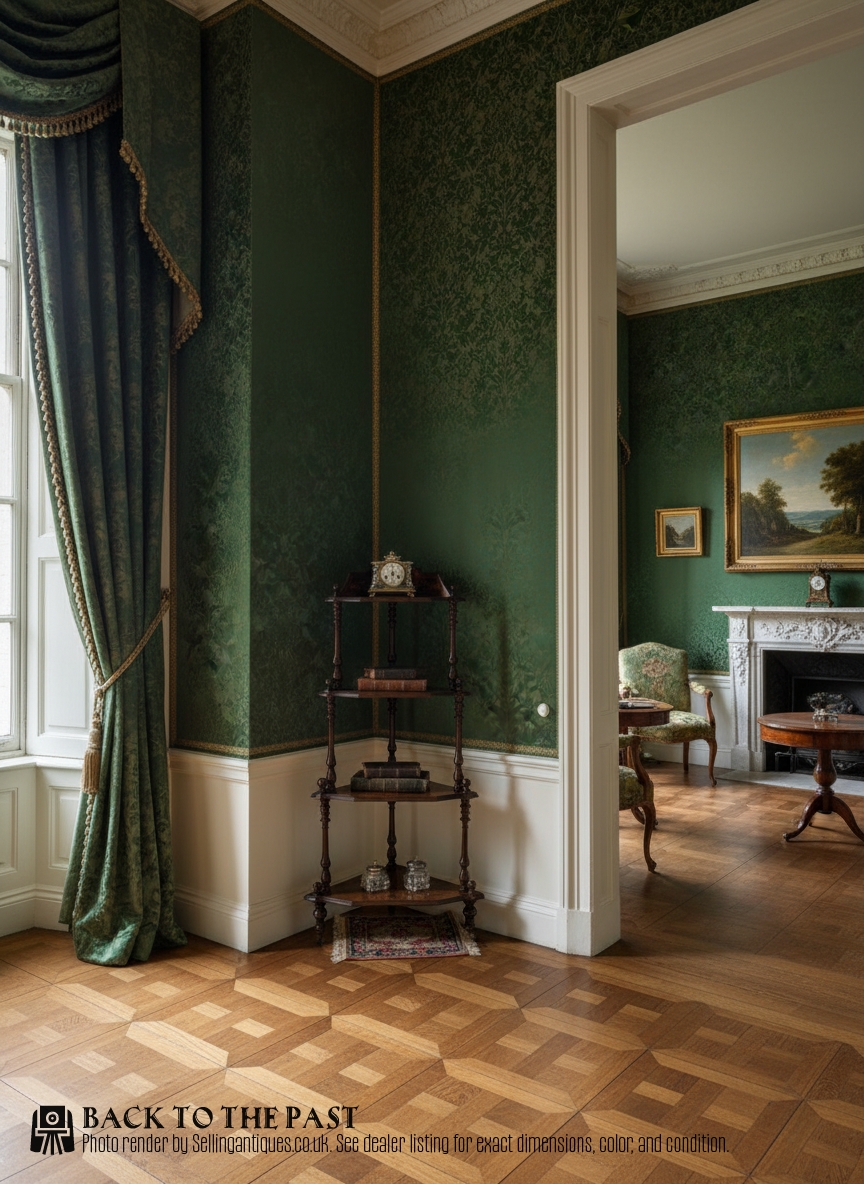
Makers shaped these stands specifically to fit room angles, combining practical storage with decorative presence. They function as corner display units, shelving units, and traditional whatnots.
Materials and construction
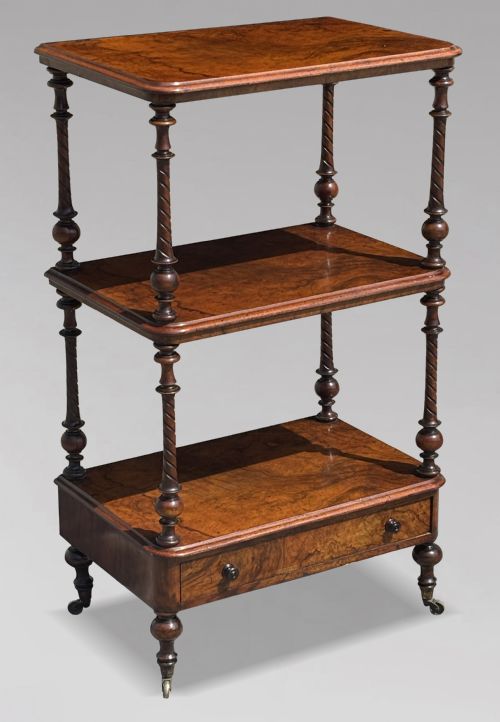
Walnut, burr walnut, and figured walnut form the primary visible surfaces, often paired with mahogany frameworks. Marquetry and boxwood inlay decorate the tiers, alongside turned wood elements and occasional brass details.
Craftspeople constructed multi-tiered shelving units supported by turned uprights or columns. Marquetry panels and contrasting inlay work distinguish the more elaborate surfaces.
Retail Price Guide 2026
Typical UK retail prices for walnut corner whatnot, calculated from the Sellingantiques database of over a million retail prices indexed since 2003. This retail price guide relies exclusively on Sellingantiques data; no external sources or auction records are used, so the figures do not describe the wider market.
Even corners need somewhere to show off their best side.
Variations in standard
The choice of timber creates the primary distinction between standards, with figured and burr walnut commanding attention for its striking grain patterns. Plain walnut finishes present a quieter appearance.
The presence of intricate marquetry inlay and boxwood stringing elevates a piece above standard utility versions. Turned supports and careful jointing distinguish the more ambitious nineteenth-century items.
The Walnut Corner Whatnot Glossary
- Whatnot
- An open set of tiered shelves designed for displaying ornaments and small objects. These pieces became popular in nineteenth-century interiors for showcasing collections.
- Burr walnut
- A prized timber harvested from walnut tree growths, producing swirling and mottled grain patterns. Cabinet makers valued this wood for decorative veneer work on prominent surfaces.
- Marquetry
- The art of applying decorative pieces of veneer to a structure to form geometric or floral patterns. Craftsmen utilised contrasting timbers like boxwood to achieve detailed motifs.
- Turned wood
- Timber shaped on a lathe to create rounded spindles, columns, or upright supports. This technique provided structural framing for the multiple tiers.
- Victorian
- The period spanning the reign of Queen Victoria, covering the nineteenth century. Furniture from this era encompasses various revivals and distinct display forms.
Frequently Asked Questions
What is a corner whatnot?
A corner whatnot is a tiered shelving unit designed to fit into the angle of a room. Victorian households used them to display ornaments and collectibles.
These stands maximise room layout by utilising empty corners. They provide open shelving without dominating floor space.
How were these stands used?
Victorian homes utilised these units for displaying ceramics, silver, and decorative objects. They served as prominent display stands in parlours and drawing rooms.
The multiple tiers allowed owners to arrange collections visibly. Their open design kept objects accessible and on view.
What woods are typical?
Walnut, burr walnut, and figured walnut dominate these pieces. Mahogany and turned wood also appear in the construction.
Inlay work often incorporates boxwood and marquetry details. These materials define the nineteenth-century aesthetic.
How many tiers do they have?
Most examples feature four or five open tiers for display. These levels decrease in size toward the top.
The tiered structure allows varied placement of ornaments. Corner stands range from simpler four-shelf models to taller shelving units.