




Walnut Corner Display
A walnut corner display uses neglected angles to present treasured objects, bringing grain and tiered surfaces into rooms.
Walnut Corner Display
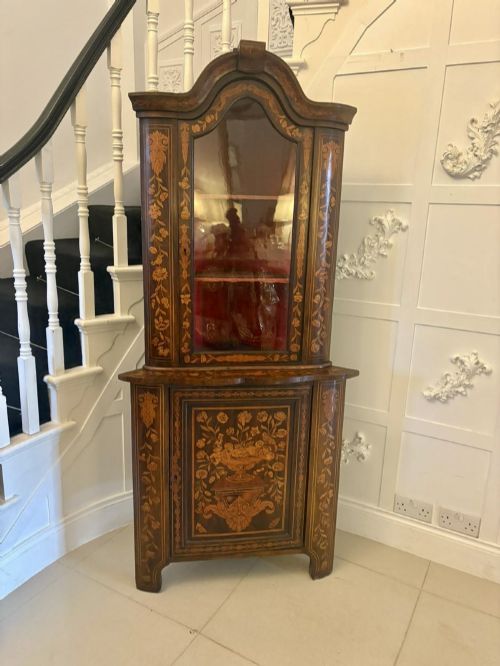
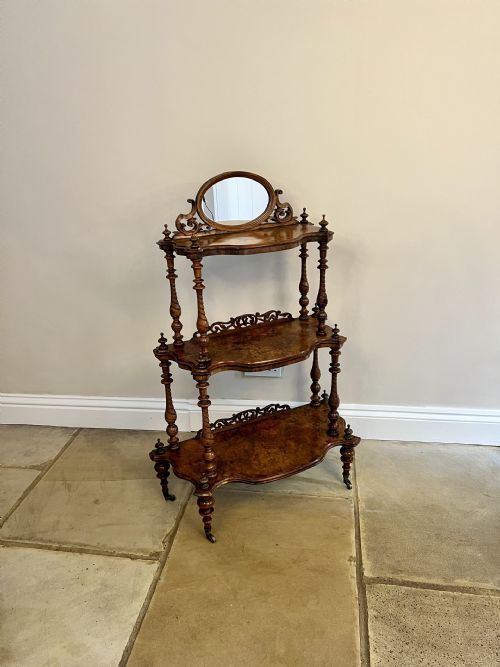
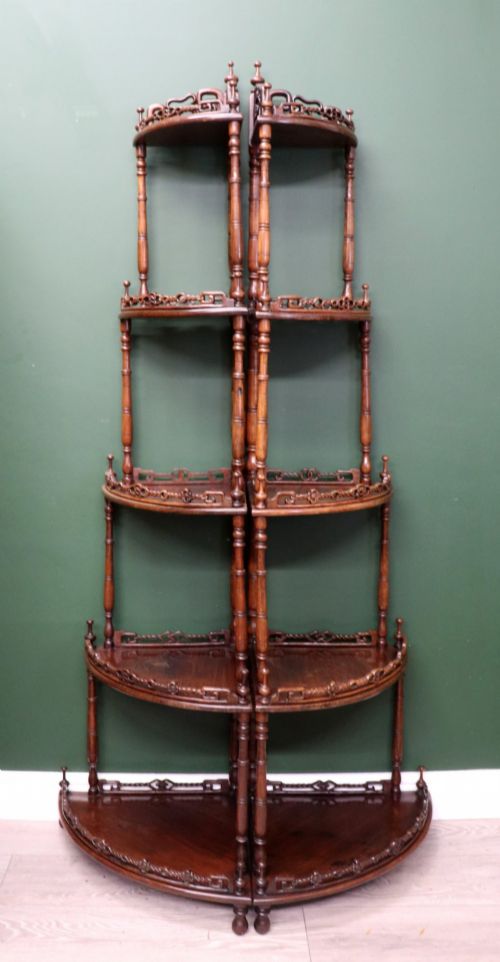
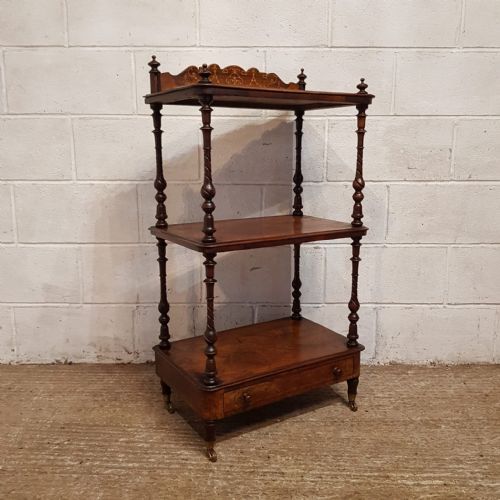
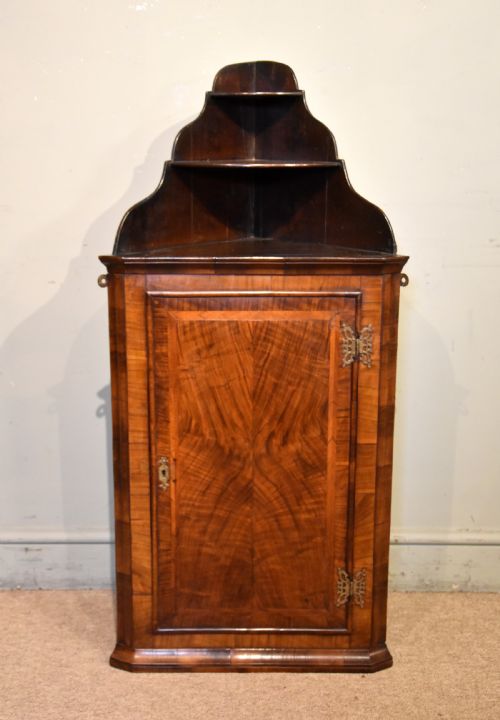
A walnut corner display gathers cabinets, cupboards, and tiered whatnots designed to fit room angles. When searching for a walnut corner display, buyers encounter pieces configured as enclosed hanging cupboards, glazed display units, and open tier shelves.
The material appears in plain timber, burr grain, and Dutch marquetry inlay. Victorian and eighteenth-century examples dominate the selection, offering multiple tiers or glazed doors for holding objects.
How they were made
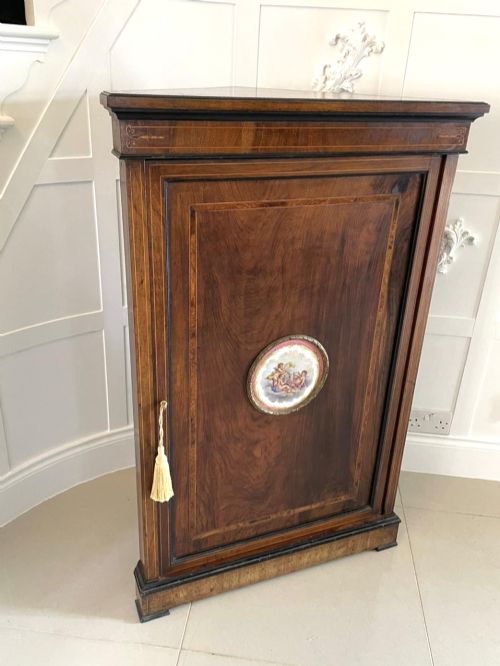
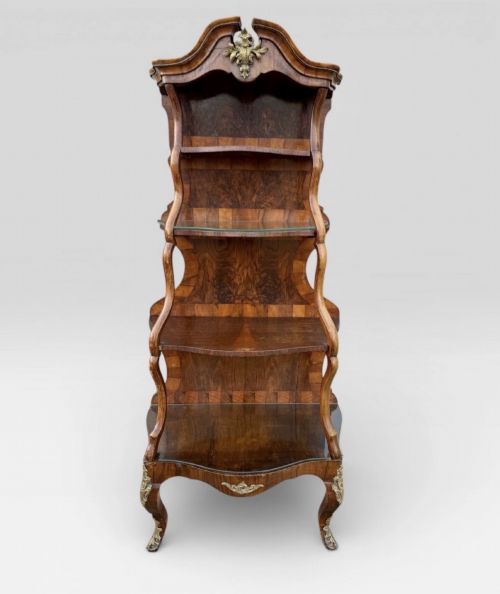
Makers utilised solid walnut and burr walnut veneers over secondary timbers, often framing glazed doors with brass fittings and gilt metal mounts. Inlaid surfaces combine boxwood and fruitwood for floral and geometric marquetry motifs.
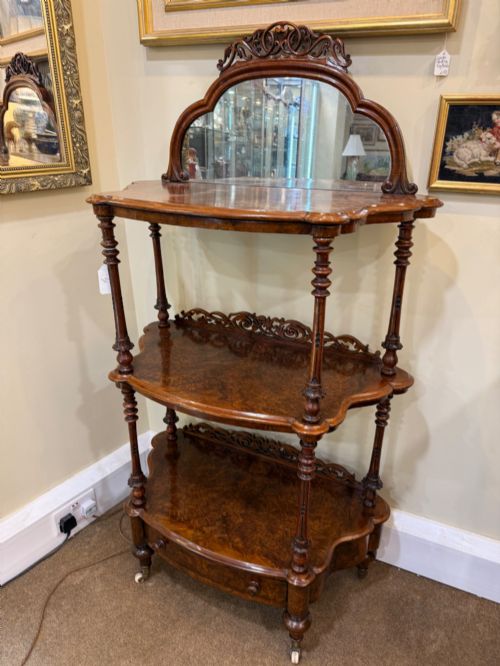
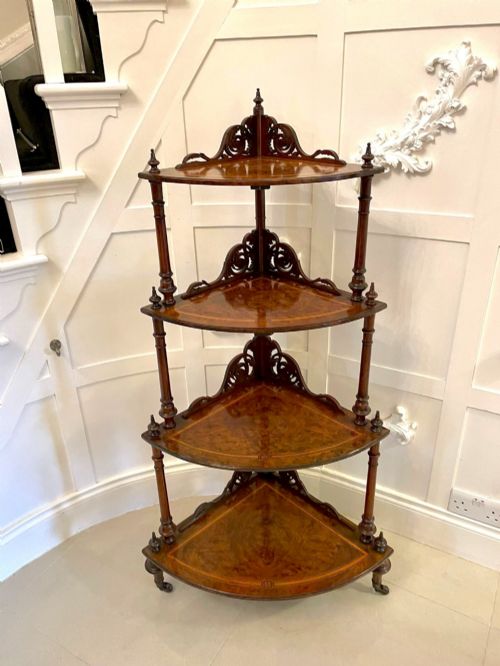
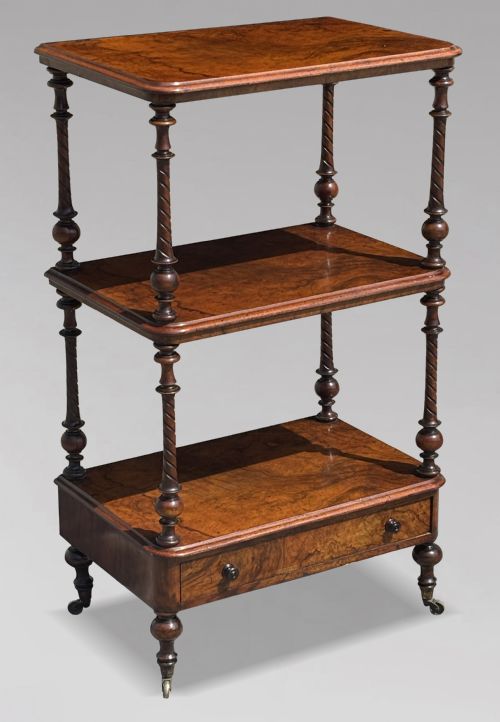
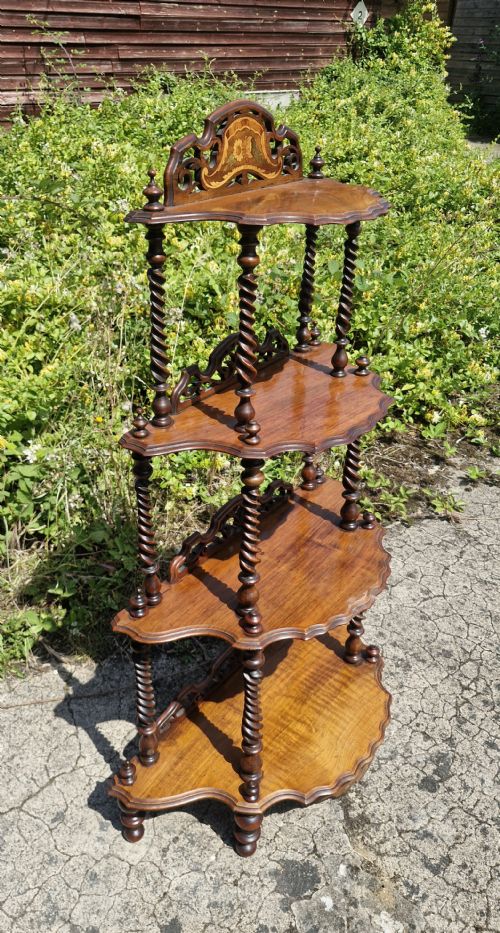
Structural elements include pierced fretwork panels, turned barley twist supports, and multi-tiered platforms fixed into rigid corner angles.
Listings span periods from the eighteenth century to the twentieth, featuring Victorian whatnots, Queen Anne cupboards, and Art Deco display units.
What varies in quality
Quality rests in the selection of timber figure, particularly the richness and movement found in burr walnut veneers. The crispness of marquetry inlay and the delicacy of pierced fretwork separate standard items from finer works.
Joinery execution at the wall joints and the retention of original glass, brass, and gilt metal hardware determine the integrity of each piece.
Maurice Adams
The Walnut Corner Display Glossary
- Burr walnut
- A figured timber harvested from tree growths, producing swirling grain patterns used on cabinet doors.
- Whatnot
- An open set of tiered shelves designed for displaying ornaments and small objects.
- Marquetry
- Decorative inlay work using various woods fitted together to form pictorial or geometric designs.
- Fretwork
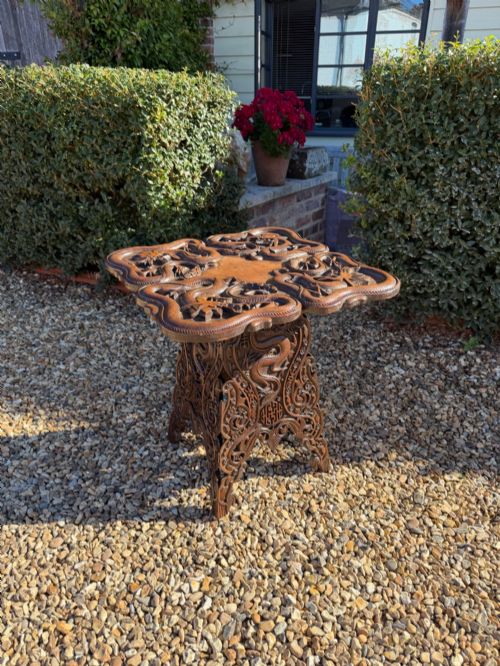
- Open ornamental patterns carved or pierced through thin wood panels.
- Demi-lune
- A half-moon shape used for the footprint of console tables and display cabinets.
Walnut Corner Display: Frequently Asked Questions
What is a walnut corner whatnot?
A walnut corner whatnot is an open, tiered shelving unit designed to fit into room angles for displaying small objects and ornaments.
These pieces feature multiple tiers supported by turned columns or pierced fretwork panels, originating primarily in the Victorian period.
How do I date an eighteenth-century corner cupboard?
Eighteenth-century corner cupboards display period construction methods, such as hand-cut dovetails, pegged joints, and primary timbers like figured walnut.
Stylistic cues such as Queen Anne proportions and candle slides also help identify pieces from the seventeen-hundreds.
Where should I place a corner display cabinet?
Corner display cabinets fit directly into unused room intersections, making efficient use of floor space while drawing the eye upward.
Enclosed cabinets protect ceramics and glass behind glazed doors, whereas open whatnots keep decorative objects accessible.
What is Dutch marquetry inlay?
Dutch marquetry inlay involves detailed botanical and floral designs cut from contrasting woods like boxwood and fruitwood, pressed into walnut backgrounds.
This technique appears on eighteenth and nineteenth-century cabinets, creating light-toned patterns across dark surfaces.