


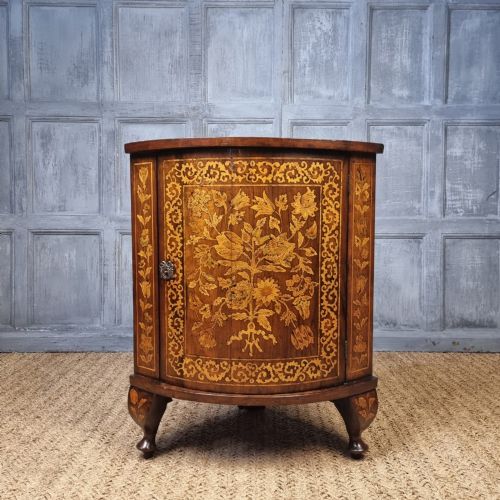
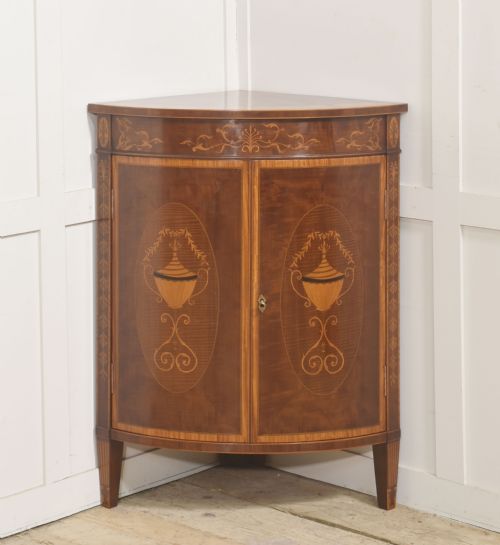


Marquetry Corner Stand
These marquetry corner stands combine fitted display surfaces and decorative wood inlay to utilise awkward room angles.
Marquetry Corner Stand
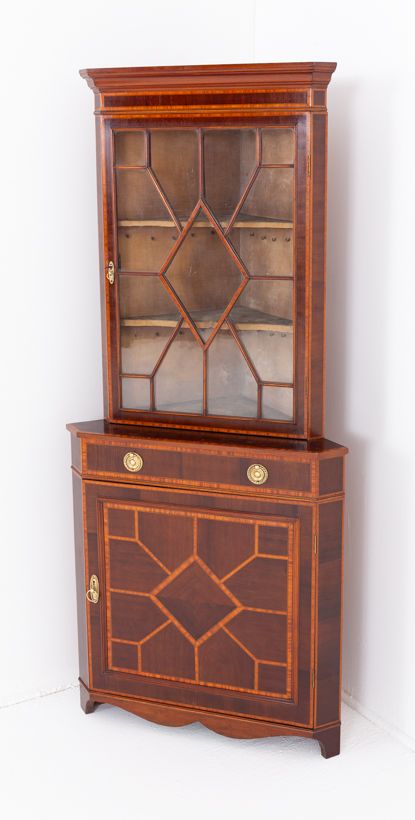
A marquetry corner stand utilises timber surfaces shaped to fit room angles, frequently appearing as glazed display cabinets, open shelving, or small tables.
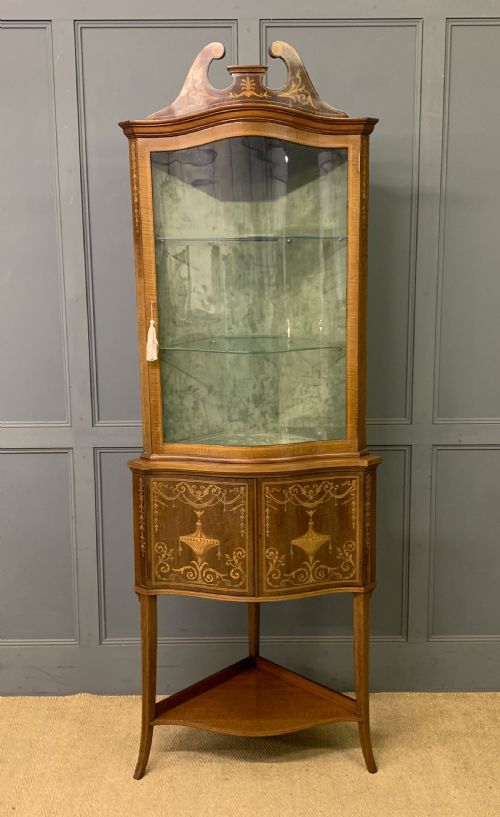
Most examples date from the Victorian and Edwardian eras, incorporating Sheraton Revival influences alongside older 18th Century Dutch and Georgian forms.
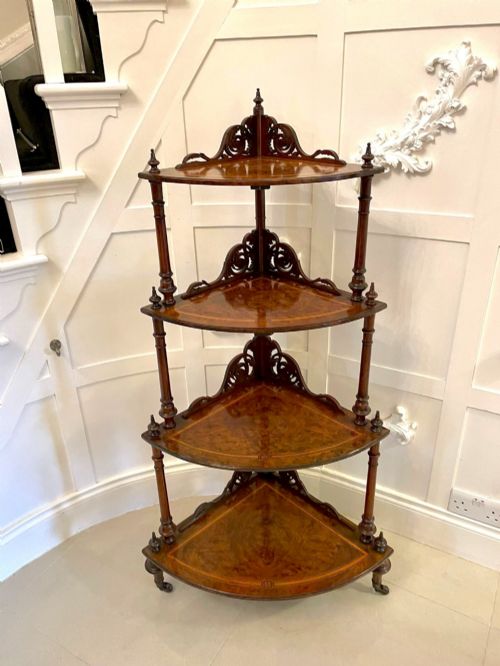
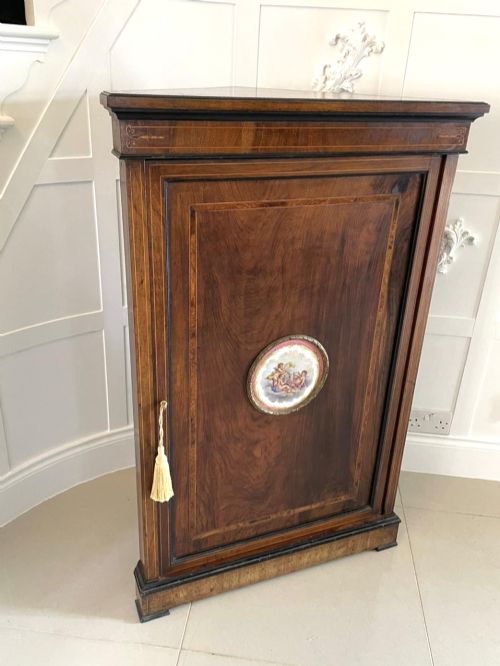
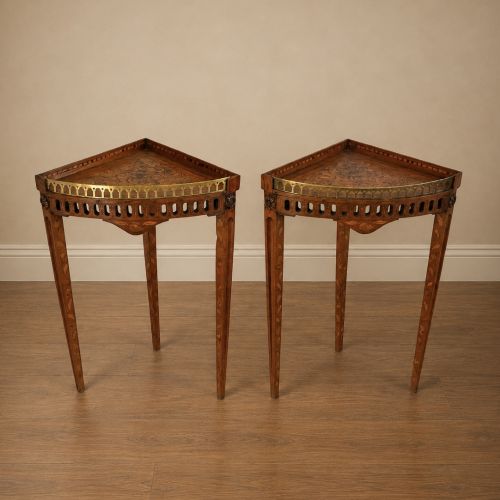
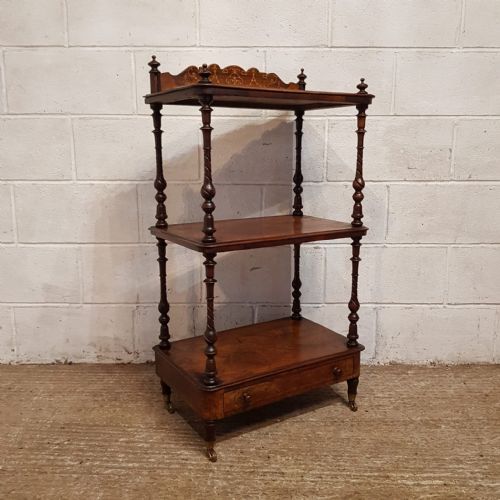
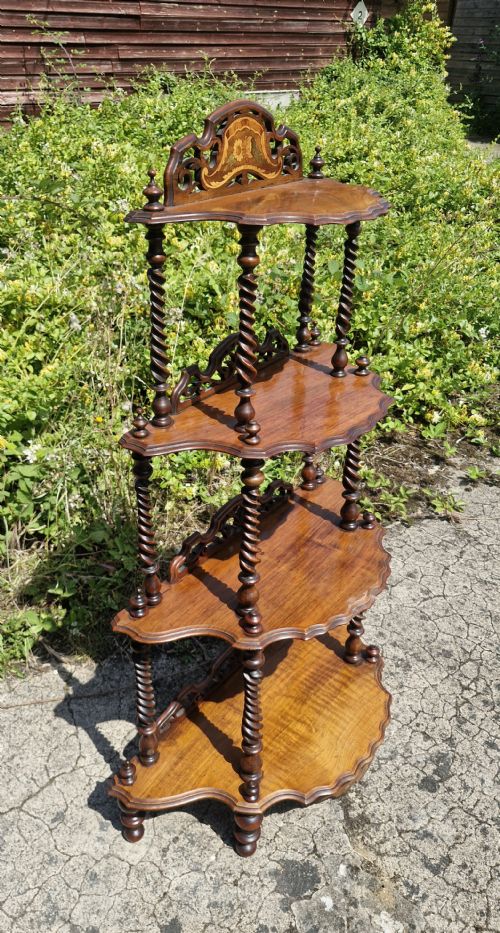
Buyers encounter standing floor cupboards, multi-tiered whatnots, and occasional tables designed specifically for room perimeters.
Materials and construction
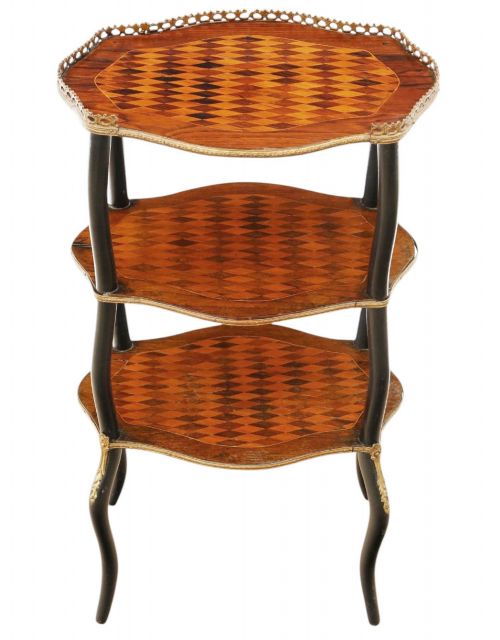
Cabinet makers utilised foundational timbers like mahogany, walnut, and rosewood, applying satinwood and marquetry inlay to create pictorial or geometric surface patterns.
More elaborate pieces integrate brass galleries, glass doors, and ebonised details, pairing structural joinery with delicate decorative veneers.
Materials recorded across the inventory include mahogany, walnut, rosewood, satinwood, brass, and glass.
Distinguishing quality
The standard of a marquetry corner stand rests upon the precision of the timber inlay and the depth of the foundational wood, such as burr walnut or figured mahogany.
Superior construction involves serpentine shaped fronts, double height proportions, and integrated maker signatures which elevate standard storage pieces into decorative focal points.
Edwards And Roberts·Liberty And Co
The Marquetry Corner Stand Glossary
- Marquetry
- Decorative veneer work arranged in intricate patterns or pictorial designs using various coloured woods. This technique defines the primary visual appeal of the pieces.
- Whatnot
- An open set of tiered shelves designed for displaying ornaments or books. These freestanding stands fit neatly into room corners.
- Sheraton Revival
- A late 19th Century design movement drawing inspiration from the lighter furniture styles of the 18th Century. Pieces often feature satinwood inlay and refined proportions.
- Etagere
- A set of tiered display shelves used for ornaments. The form provides multiple levels for arrangement.
- Serpentine
- A furniture front curving inward and outward in a continuous wave. This undulating shape requires advanced cabinet making skill.
Marquetry Corner Stand: Frequently Asked Questions
Where should I place a corner stand?
These pieces fit directly into unused room angles, turning dead space into functional display areas.
Tall cupboards work well in dining rooms or hallways, while smaller tables suit drawing rooms.
How do I care for marquetry inlay?
Keep wooden furniture away from direct sunlight and sudden temperature shifts to protect delicate veneers.
Regular dusting with a dry cloth preserves the polished surface without damaging the inlaid details.
What is the difference between a cabinet and a whatnot?
Cabinets feature enclosed doors, sometimes glazed, to protect contents from dust.
Whatnots provide open tiered shelving primarily intended for ornament display.
How can I date my corner stand?
Examine the primary timbers, construction methods, and decorative styles to determine the era.
Victorian and Edwardian pieces frequently display Sheraton Revival motifs and machine cut veneers.