

Walnut Chest of Drawers Desk
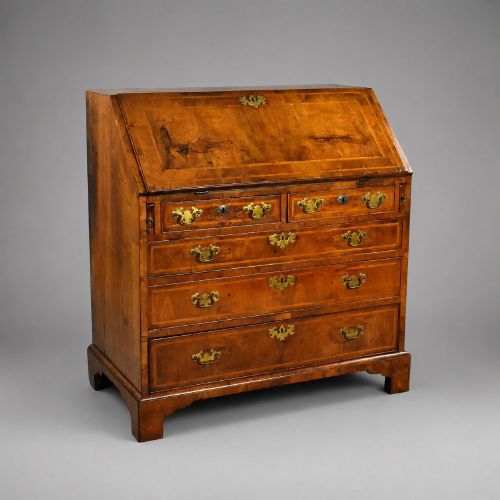
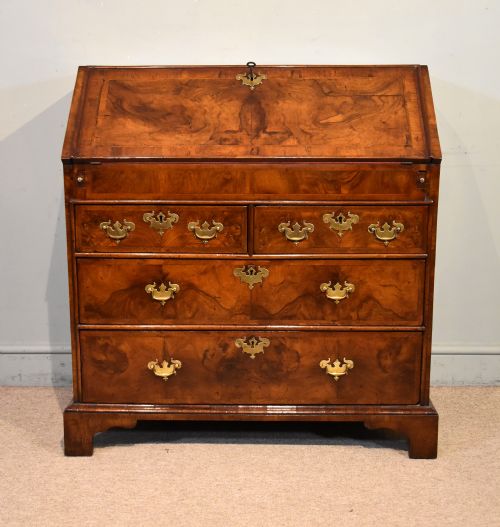
These pieces combine domestic storage with a writing surface, bringing together a walnut chest of drawers desk for daily correspondence and secure storage.
Walnut Chest of Drawers Desk
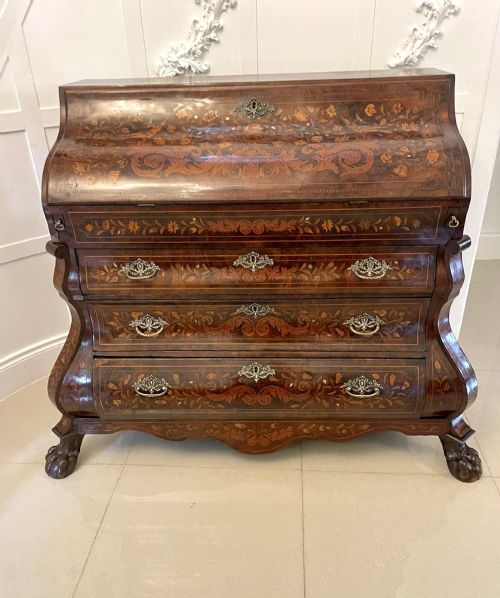
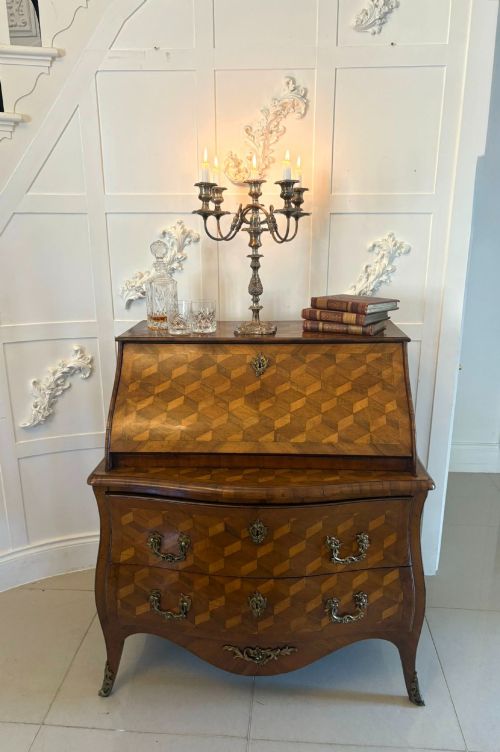
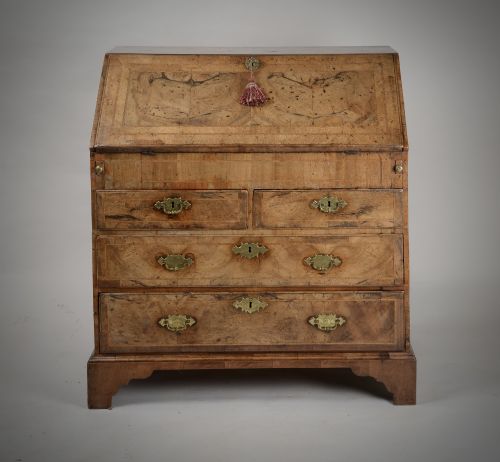
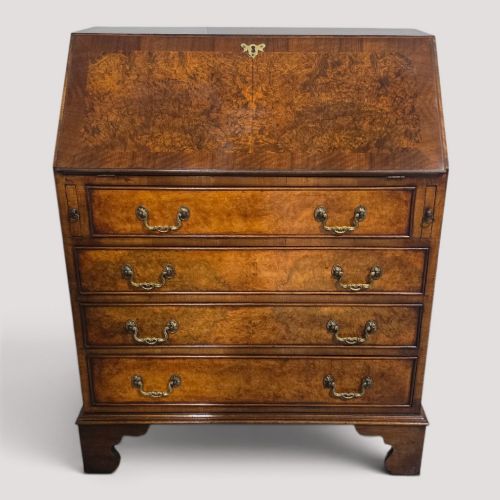
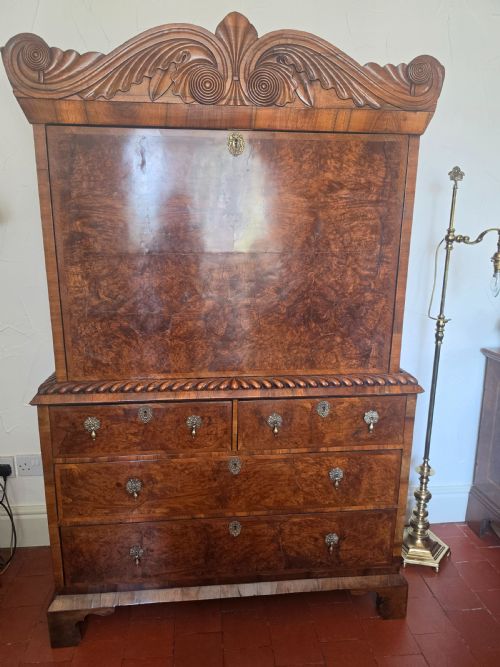
When a buyer searches for a walnut chest of drawers desk, they are looking at case furniture that integrates drawers with a fall-front writing flap or secretaire drawer. The examples seen here range from seventeenth-century William and Mary escritoires to eighteenth-century Georgian bureaux and later revival pieces.
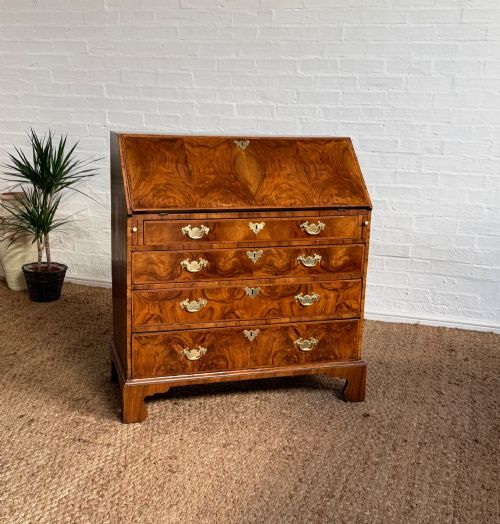
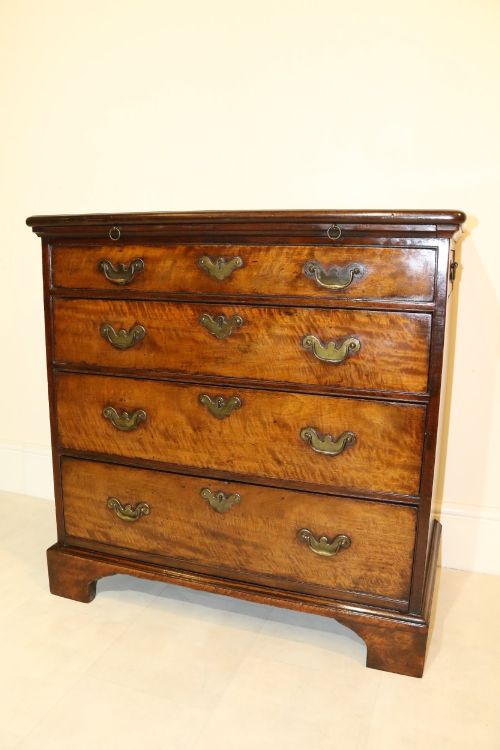
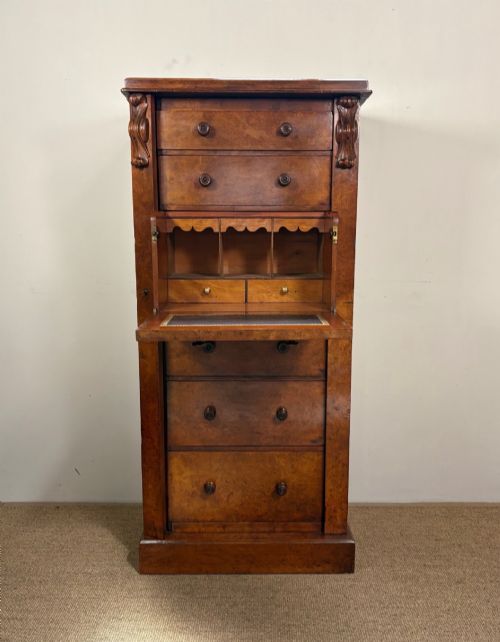
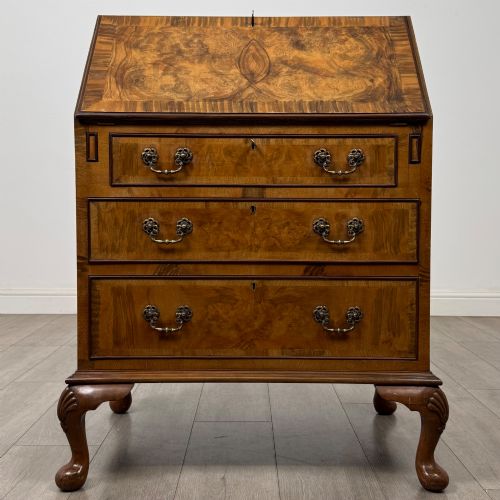
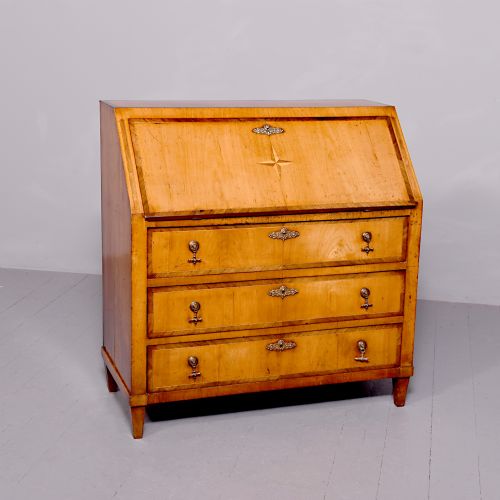
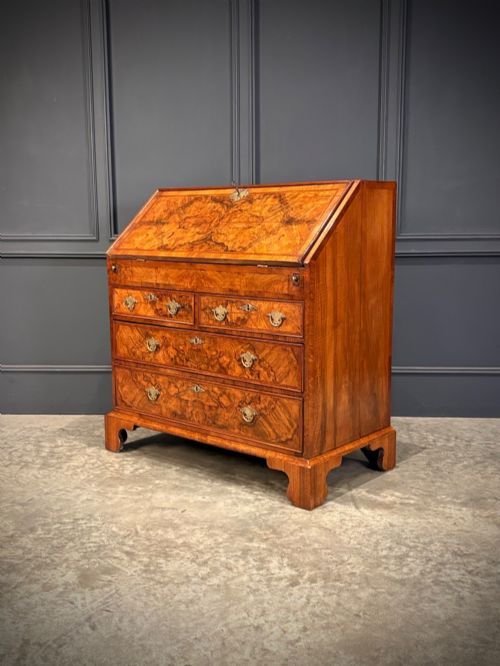
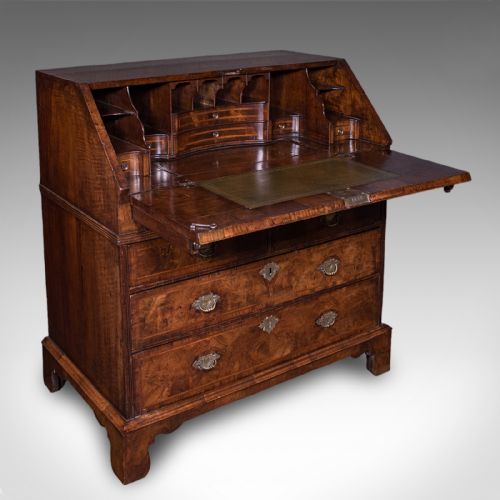
The most common form met on this page is the bureau, where a sloping lid drops down to reveal a fitted interior of small drawers and pigeonholes above three or four graduated long drawers. Alternative forms include kneehole desks, escritoires, and bachelor chests that incorporate writing surfaces into a compact chest of drawers format.
Origins span English workshops of the Georgian era alongside Continental makers producing Dutch marquetry and French bombe shapes. Periods represented stretch from the seventeen hundreds through the Victorian age and into twentieth-century revivals.
Materials and Construction
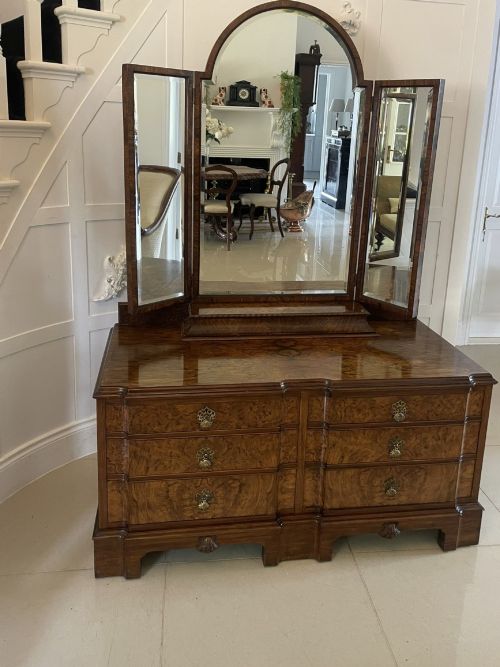
Makers utilised solid timber carcases faced with figured walnut or burr walnut veneers, selected for lively grain patterns and enriched through fruitwood marquetry, parquetry, and satinwood stringing. Secondary timbers such as oak provide structural stability to drawer linings and internal divisions.
Hardware consists of brass handles, escutcheons, and original ironwork, while writing surfaces frequently incorporate inset leather panels. Drawer construction relies on hand-cut dovetails, and fall-front writing flaps are supported by lopers or hinges designed to bear weight during use.
A specialised dental cabinet sits quietly among the writing desks, holding centuries of professional secrets behind burr walnut drawers.
Evaluating Quality
Quality rests upon the choice of veneer and the continuity of grain across the drawer fronts, where matching figures demonstrate careful planning by the maker. The crispness of marquetry inlay and the survival of original brassware or ironwork distinguish finer examples from standard production.
Internal complexity also separates pieces, with fitted desk interiors containing secret compartments and sliding wells representing higher skill. Structural integrity, clean movement of drawers, and undisturbed patination on the walnut surfaces complete the standard of the upper range.
Shoolbred and Co·Gregory and Co
The Walnut Chest of Drawers Desk Glossary
- Bureau
- A desk featuring a sloping fall-front that opens to reveal a fitted interior of small drawers and pigeonholes above graduated drawers.
- Escritoire
- A tall cabinet with a fall-front writing flap that conceals an architectural arrangement of internal compartments, originating in the seventeenth century.
- Burr Walnut
- Timber taken from the abnormal growth of a walnut tree, yielding a swirling, highly figured grain pattern prized for veneering.
- Marquetry
- Decorative inlay work using various tinted woods and botanical materials to form pictorial or floral patterns across the surface.
- Loper
- A wooden slide pulled out from the carcase to support the weight of a dropped bureau writing flap.
Walnut Chest of Drawers Desk: Frequently Asked Questions
How do I use a bureau desk?
The sloping lid drops forward to rest upon wooden supports, creating a flat writing surface above the internal compartments.
Papers and writing implements remain stored inside the fitted interior when the flap is closed and locked.
What is the difference between a bureau and an escritoire?
A bureau uses a sloping lid that opens at an angle to provide a writing surface above standard chest drawers.
An escritoire typically stands taller with a vertical fall-front panel that opens outward from a cabinet format.
How can I date an antique walnut desk?
Dating relies on observing construction methods, timber choices, handle designs, and the overall architectural style of the piece.
Early eighteenth-century examples feature distinct oak linings and feather-banding, whereas later revivals adopt twentieth-century manufacturing markers.
Where should I place a walnut desk in a room?
These pieces function well against a study wall or within a living space where the figured walnut grain provides a decorative focal point.
Care should be taken to avoid direct sunlight and intense heat sources that might dry out walnut veneers.