



19th Century Walnut Secretary
A 19th century walnut secretary brings rich timber figure and practical writing space together in one handsome cabinet.
19th Century Walnut Secretary
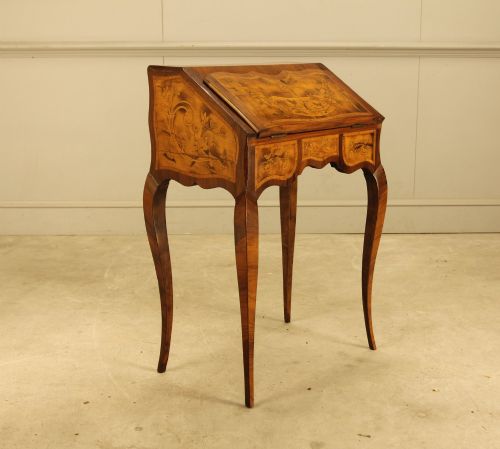
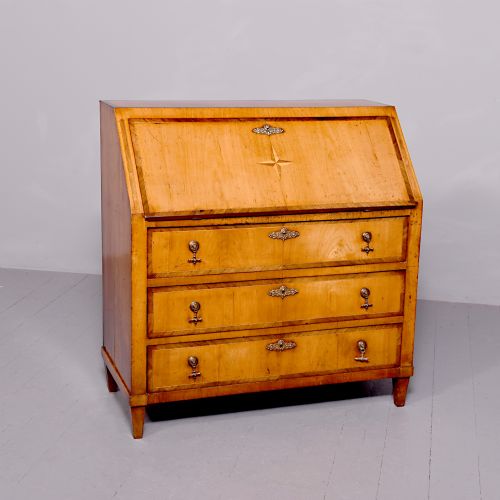
A 19th century walnut secretary covers a diverse group of writing furniture, from fall-front cabinets to cylinder desks and diminutive ladies writing tables. These pieces originate from various regions including Britain, France, Italy, Germany, and the Netherlands.
The selections span distinct continental and British revivals, featuring French Louis styles alongside robust Dutch bombé forms and Biedermeier execution. Burr walnut veneers and detailed marquetry frequently define the exterior surfaces across these varied writing desks and bookcases.
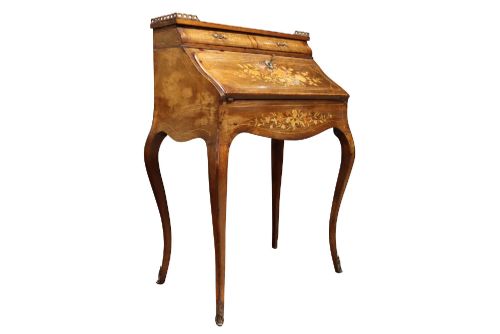
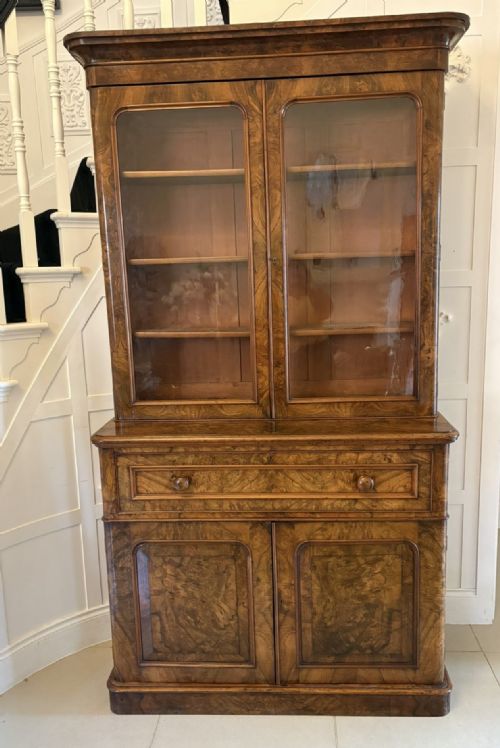
Buyers encounter everything from tall secretaire bookcases to compact bonheur-du-jour desks equipped with glass doors or fitted writing compartments. Walnut remains the dominant timber, often enhanced by contrasting inlay work or decorative mounts.
Materials and construction
Cabinetmakers utilised solid walnut and decorative burr walnut veneers applied over secondary structural timbers to create highly figured exterior surfaces. Marquetry and parquetry panels incorporated contrasting woods to form intricate floral or geometric patterns across the fall fronts and drawer faces.
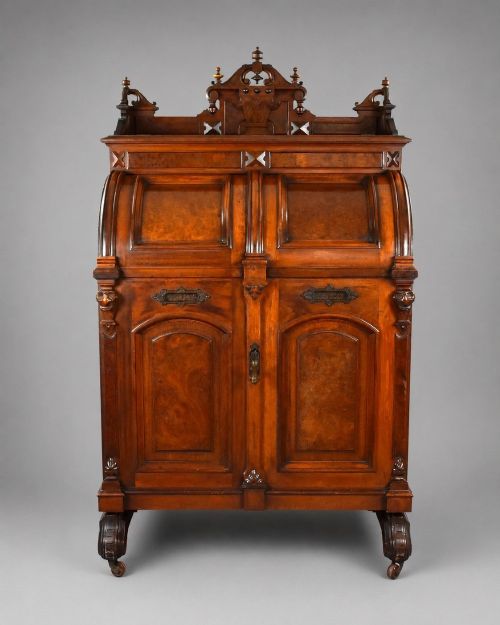
Mounts in ormolu, gilt bronze, and brass accented key architectural points, drawer pulls, and escutcheons on French and Continental examples. Marble tops occasionally appeared on upright secretaire cabinets, adding a heavy stone counterpoint to the timber framework.
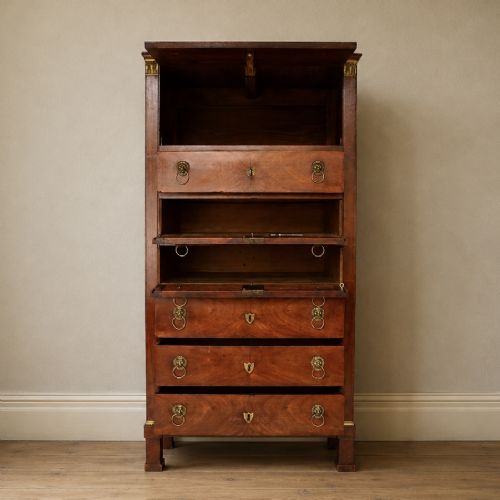
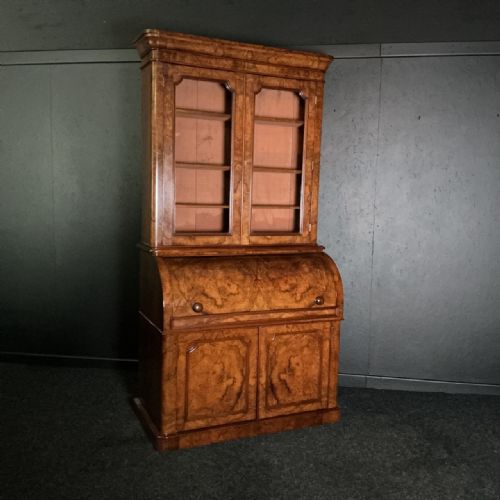
The documented examples encompass cylinder bookcases, bonheur-du-jour tables, and fall-front secretaire abattant cabinets.
Qualities of execution
The selection of the walnut veneer dictates the visual impact, with tightly swirled burr figures commanding greater attention than plain grain. Precision in the marquetry cutting and the integration of contrasting inlays reveal the artisan's competence.
Internal drawer configuration and the smoothness of the drop-front mechanism separate standard utility pieces from exceptional cabinetmaking. The integration of metal mounts, such as cast gilt bronze or ormolu, shows whether secondary decorative elements were cast and chased with care.
The 19th Century Walnut Secretary Glossary
- Secrétaire abattant
- An upright cabinet featuring a drop-front writing surface that conceals a fitted interior of small drawers and pigeonholes. This vertical format saves floor space while providing ample storage.
- Burr walnut
- Timber taken from a tree growth or burl, yielding swirling, knotty grain patterns prized for decorative veneer work. It forms the striking patterned surfaces seen on many bureau fronts.
- Bonheur-du-jour
- A light ladies writing desk featuring a small cabinet or set of shelves superstructure upon the writing surface. These dainty tables gained popularity during the nineteenth century.
- Bombe
- A swollen or bulging convex shape characteristic of Dutch furniture designs. This sweeping profile requires advanced woodworking skill to construct.
- Marquetry
- The art of applying small pieces of veneer to a structure to form decorative pictures or patterns. Craftsmen use various coloured woods to achieve pictorial depth.
19th Century Walnut Secretary: Frequently Asked Questions
What is a secretary desk?
A secretary desk is a writing cabinet that includes a hinged writing flap or drop front, usually concealing internal compartments for paperwork.
These pieces combine enclosed storage with a functional writing surface in one unified item of furniture.
How do I identify a 19th century bureau?
Look for construction traits, wood types like burr walnut, and stylistic indicators such as Louis XV revival curves or Dutch marquetry.
Hardware styles, dovetail construction methods, and secondary woods inside the drawers also help confirm the production period.
Where were these desks made?
Cabinetmakers produced these writing desks across Britain, France, Italy, Germany, and the Netherlands during the nineteenth century.
Regional preferences shaped the distinct aesthetic, resulting in French marquetry tables, Dutch bombé bureaus, and Italian walnut cabinets.
How do I clean walnut furniture?
Dust surfaces regularly with a soft, dry cloth to prevent grit accumulation on the polished wood and delicate marquetry.
Avoid harsh chemical cleaners and excessive moisture, maintaining the finish with appropriate wax formulations designed for antique timber.