
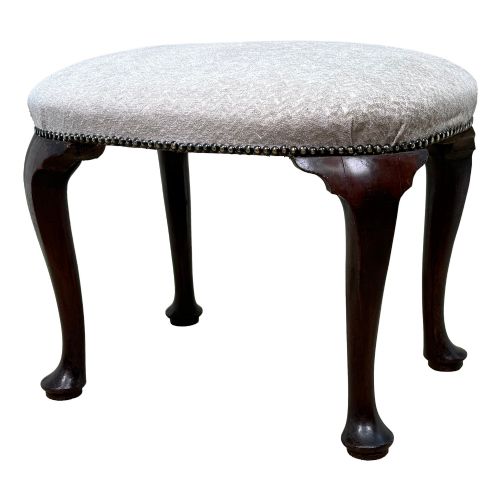
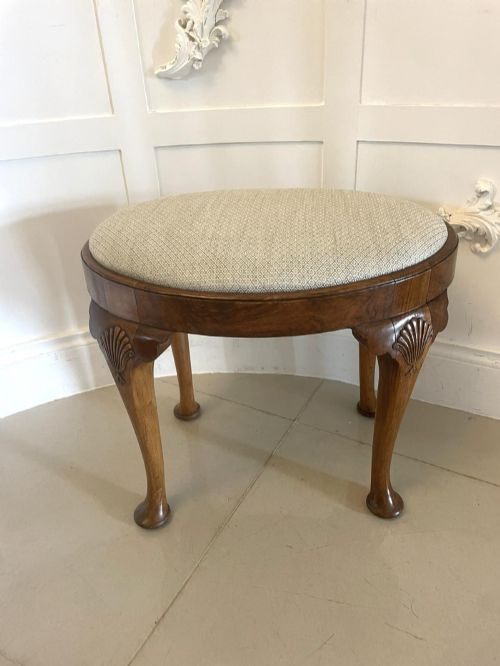
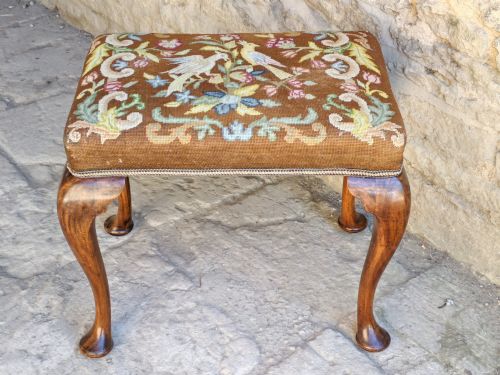
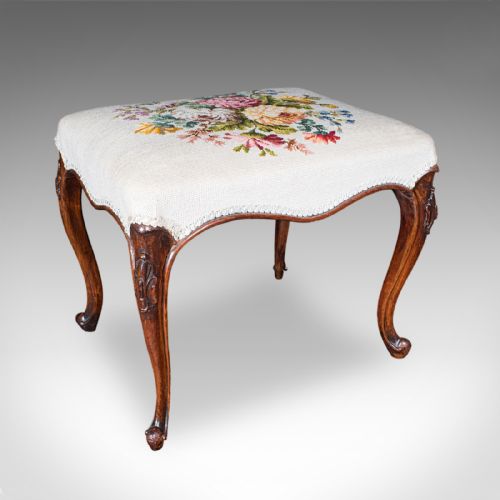
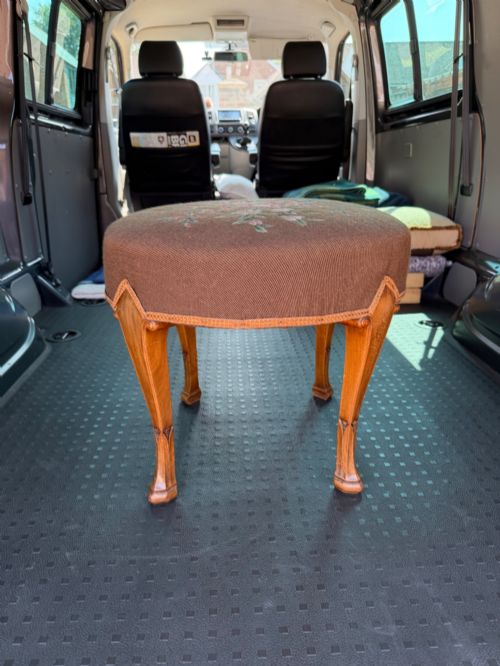
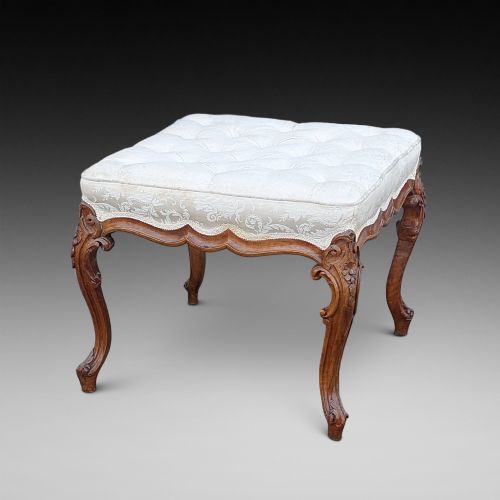
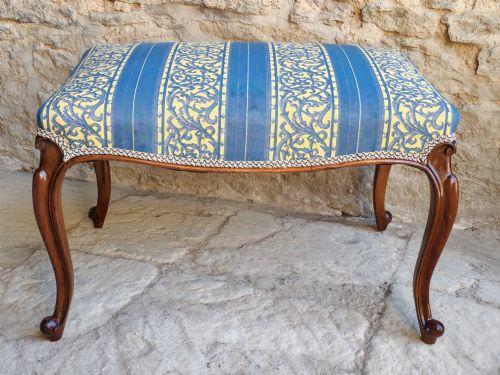
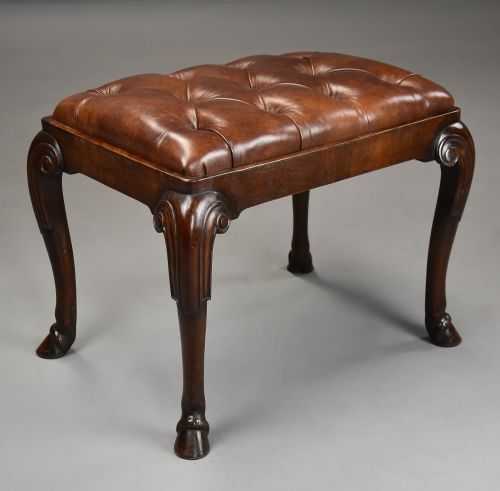
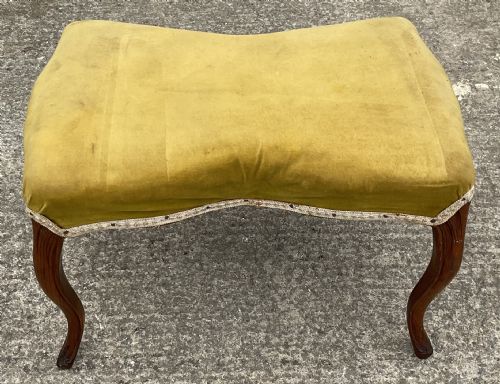
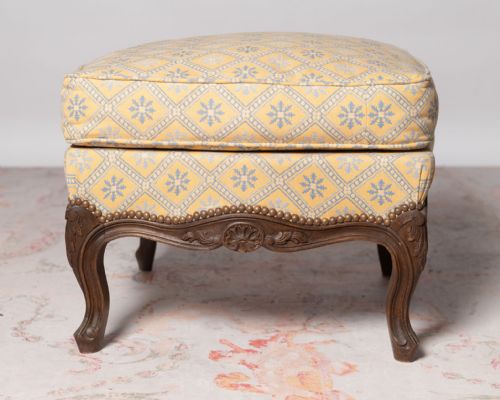
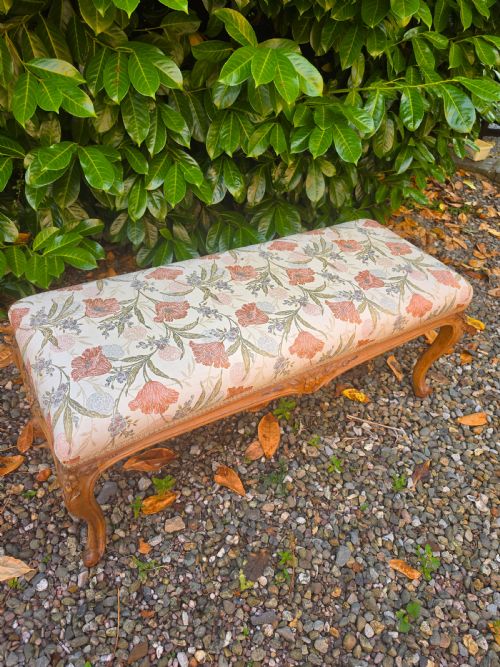
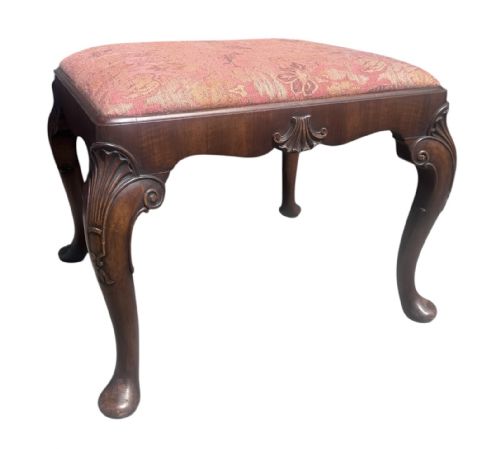
Walnut Cabriole Leg Stool
When a search brings up a walnut cabriole leg stool, collectors encounter pieces defined by curving lines and rich timber frames.
Walnut Cabriole Leg Stool
The walnut cabriole leg stool category covers low seats designed for firesides, dressing tables, and salons, spanning Victorian production through to early twentieth-century revivals. Buyers most frequently meet pieces from the nineteenth century and the decades around nineteen hundred, reflecting the sustained popularity of earlier revival styles.
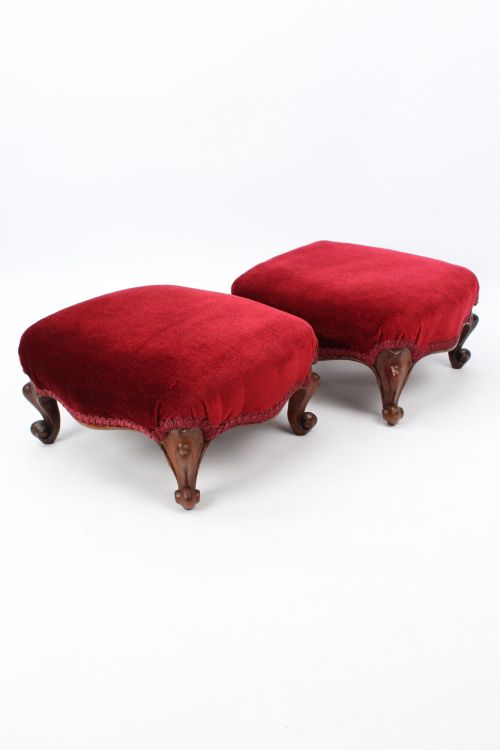
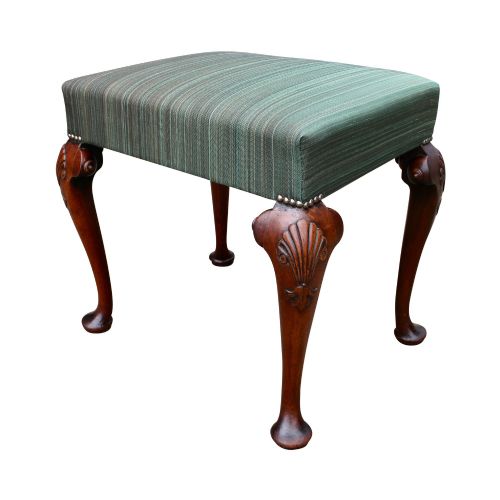
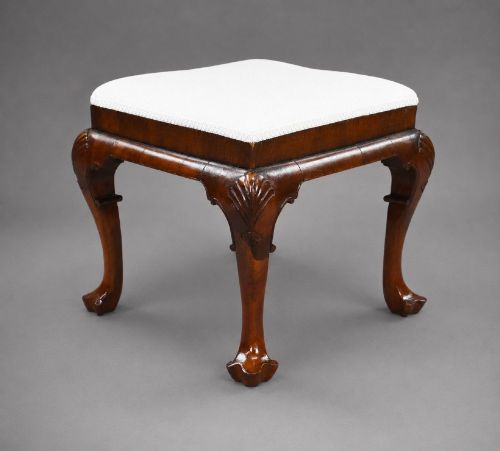
Forms range from small footstools and adjustable piano seats to large rectangular salon stools and oval dressing table variants. Many follow the Queen Anne and George styles, adopting the characteristic double-curved leg that tapers to a pad or claw foot.
Origins trace primarily through English and French workshops, utilising native and imported timbers shaped into domestic seating. These pieces served functional roles in period rooms, often matching larger suite arrangements such as armchairs or dressing tables.
Materials and construction methods
Cabinetmakers constructed the frames using solid walnut, sometimes utilising burr veneers over secondary woods to achieve figured surfaces on the seat rails and aprons. Turning and carving shaped the timber into the sweeping profiles characteristic of the cabriole leg.
Upholstery forms an integral part of the construction, utilising traditional stuff-over techniques secured with brass tacks or webbed bases. Covering materials recorded across the evidence include needlepoint, tapestry, velvet, leather, and woven wool fabric.
Several stools retain adjustable rise-and-fall mechanisms, proving that nineteenth-century pianists also appreciated custom ergonomics.
Assessing quality in period examples
Quality rests upon the depth and crispness of the carving on the knees and feet, where superior examples display fluid hand-cut detail rather than shallow moulding. The choice of timber grain and the joinery of the frame corners further distinguish standard domestic output from more ambitious commissions.
The integrity of the upholstery foundation and the retention of original covering materials, such as period needlework or leather, influence the character of the piece. Proportion between the height of the frame and the sweep of the leg dictates the visual balance of the finished stool.
The Walnut Cabriole Leg Stool Glossary
- Cabriole leg
- A furniture leg that curves outward at the knee and tapers inward toward the foot, imitating an animal's leg. This form became prominent during the early eighteenth century and returned frequently in later revival pieces.
- Needlepoint
- A type of canvas work embroidery used extensively for historical seat covers. It provides a durable and decorative surface executed in wool threads.
- Salon stool
- A larger freestanding seat intended for principal rooms rather than bedchambers. These often feature decorative carving and generous proportions.
- Rise and fall mechanism
- An internal screw or ratchet system operated by turning the seat top to adjust the height. This is commonly found on music and piano stools.
- Stuff-over upholstery
- A method where the covering material is brought directly over the wooden frame to conceal the edge. Tacks or galloon trim secure the fabric to the rails.
Walnut Cabriole Leg Stool: Frequently Asked Questions
How do I date a walnut cabriole leg stool?
Dating relies on examining the timber construction methods, tool marks on hidden surfaces, and the style of the carving. Revival pieces from the late nineteenth and early twentieth centuries often employ machine-sawn components alongside traditional joinery.
Comparing the profile of the cabriole leg against established eighteenth-century prototypes helps determine whether a piece is an authentic period survival or a later interpretation.
Were these stools used at dressing tables?
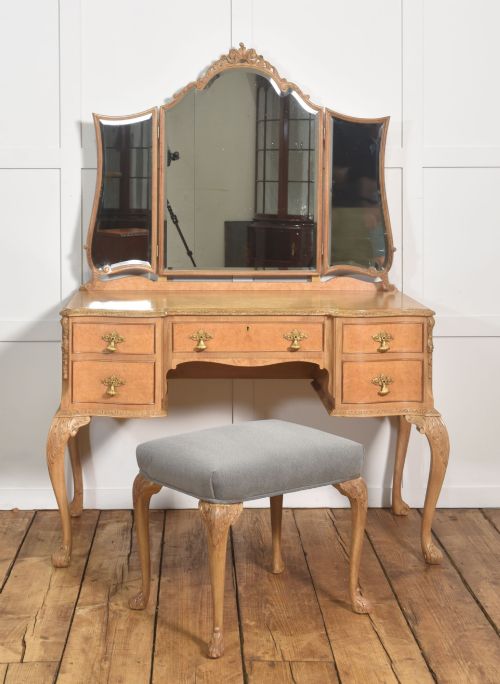
Many examples served specifically as dressing or vanity seating, often pairing with mirrors and tables in nineteenth-century bedchambers. Their compact proportions allowed them to slide neatly underneath furniture when not in use.
Surviving pieces frequently show adjustments or upholstery heights suited for grooming and seated tasks.
What is the difference between a footstool and a centre stool?
Footstools are built with lower profiles intended to support the feet while seated in an armchair. Centre stools stand taller and possess finished sides designed to be viewed from any angle in an open room.
Proportion and structural rigidity mark the distinction between pieces meant for weight-bearing footrests and those built as standalone seats.
How should I care for antique walnut wood?
Maintaining walnut frames involves keeping them away from direct heat sources and fluctuating humidity to prevent timber shrinkage. Regular dusting with a dry, soft cloth preserves the polished surface without building up residue.
Applying occasional appropriate wax feeds the grain and protects the patina accumulated over the centuries.