




Shell Carved Footstool
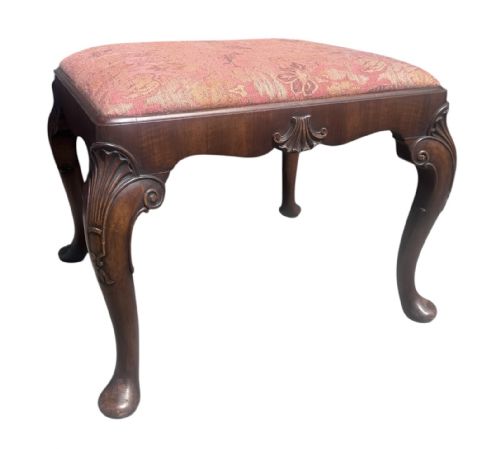
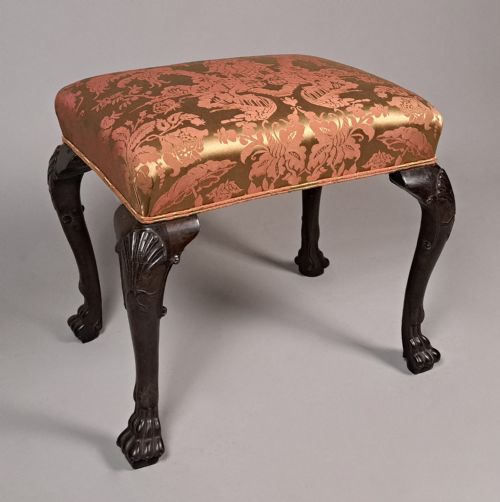
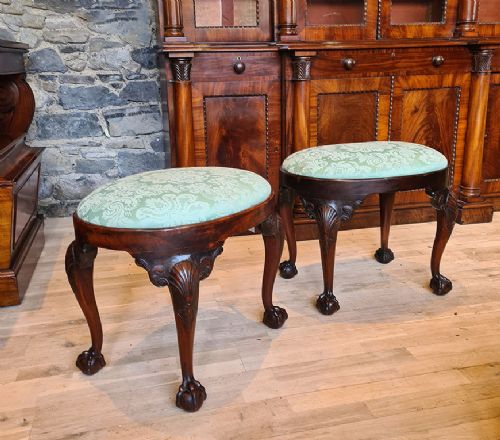
A shell carved footstool brings period walnut and mahogany into a room, offering low seating shaped by eighteenth-century and revival hands.
Shell Carved Footstool
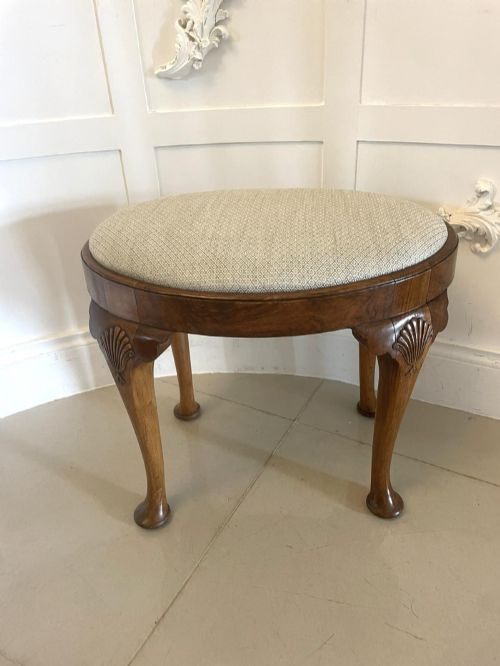
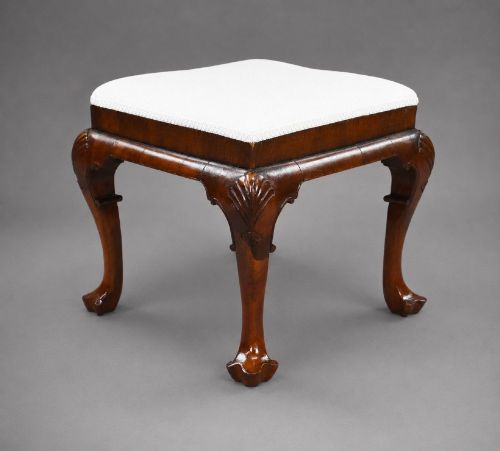
A shell carved footstool is a low seat defined by woodwork featuring carved shell motifs, drawing on eighteenth-century design traditions. The pieces appearing here span from the eighteenth century through the nineteenth century, with Edwardian and later revival examples also represented.
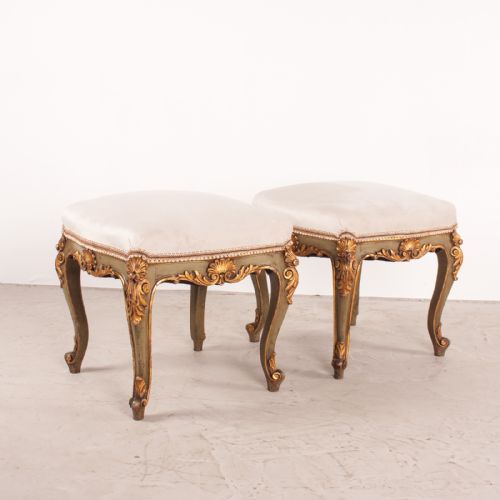
Makers and workshops from various periods adopted styles such as Queen Anne, George II, and Continental Rococo. These diverse origins create a varied selection of low seating for dressing tables and drawing rooms.
Materials and construction
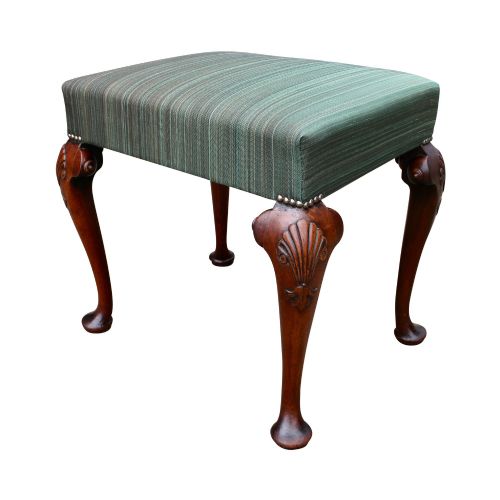
Solid walnut and mahogany form the structural framework for these pieces, providing the dense timber required for detailed hand-carving. Artisans shaped the wood to create cabriole legs and framed top sections ready for upholstery.
Upholstery fabric and textiles complete the top surface, secured in place using traditional methods including brass tacks. Painted and gilded finishes also appear on Continental examples, adding decorative surface detail to the carved wood.
Periods represented span from the eighteenth century through Edwardian revivals.
Assessing quality and character
Quality rests in the crispness and depth of the carved shell detail on the knees and frame. Sharper execution in the timber work distinguishes finer examples from simpler production.
The choice of dense, richly figured walnut or mahogany and the integrity of the original framing elevate certain pieces. Subtlety in the proportions of the cabriole legs and the harmony of the upholstery finish further separate the tiers.
The Shell Carved Footstool Glossary
- Cabriole leg
- A furniture leg that curves out and then in, resembling the leg of an animal. This form is typical of eighteenth-century and revival seating.
- Brass tacks
- Small decorative metal nails used to secure fabric edges to wooden frames. They provide a neat finish around the upholstered border.
- Queen Anne style
- A design movement characterised by curved lines, pad feet, and graceful proportions. It heavily influences many of these walnut stools.
- George II
- A mid-eighteenth-century English period known for robust carved ornamentation and rich mahogany timbers. Pieces from this era display confident craftsmanship.
- Continental Rococo
- A decorative style featuring asymmetric scrollwork, shell motifs, and elaborate curves. It appears on painted and gilded imported pieces.
Shell Carved Footstool: Frequently Asked Questions
What rooms suit a shell carved footstool?
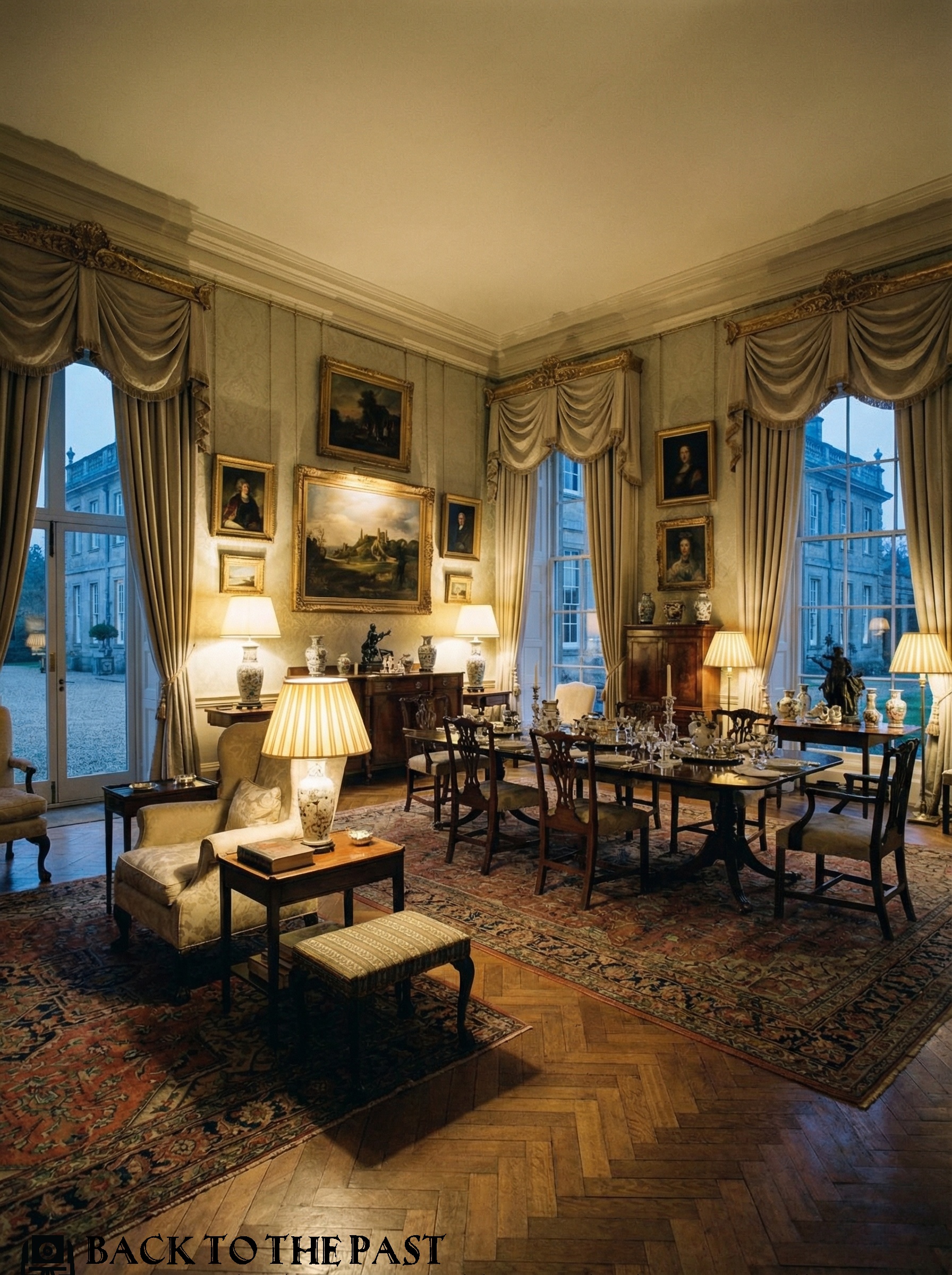
These low seats function well beside armchairs in drawing rooms or in front of dressing tables in bedrooms. Their compact scale allows them to fit easily into smaller spaces.
They also pair effectively with period furniture, adding a touch of carved woodwork and traditional upholstery without dominating the layout.
How do I care for the wooden frame?
Keep the walnut or mahogany timber away from direct heat sources and strong sunlight to prevent the wood from drying out. Occasional dusting with a soft cloth maintains the surface.
Avoid using harsh chemical polishes that can damage antique finishes. A gentle application of quality wax preserves the natural lustre of the timber.
Are these stools comfortable for daily use?
Many of these pieces feature traditional textile upholstery over supportive padding designed for resting feet. They provide a firm, stable surface.
While built for practical use, their antique or revival nature means they benefit from gentle treatment rather than heavy-handed wear.
How can I tell an older piece from a revival?
Dating relies on examining the timber grain, tool marks, and construction methods visible beneath the frame. Eighteenth-century examples show specific hand-working techniques.
Revival pieces from later periods often mimic these historic styles closely, using similar walnut and mahogany materials but with different interior framing signs.