



Wooden Piano Stool
These wooden piano stool examples range from revolving Victorian designs to Edwardian inlaid duet seating, offering the functional height adjustment and sturdy timbers that musicians require.
Wooden Piano Stool
A wooden piano stool serves the practical purpose of providing stable, adjustable seating for keyboard players, often featuring swivel mechanisms or rise-and-fall screws. These pieces appear across the nineteenth century and into the Edwardian period, reflecting changing domestic musical habits.
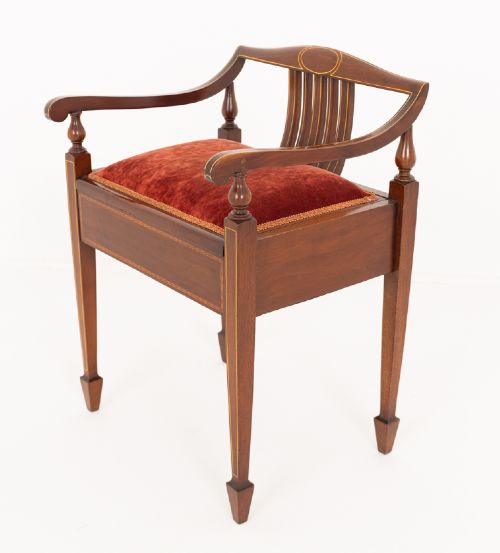
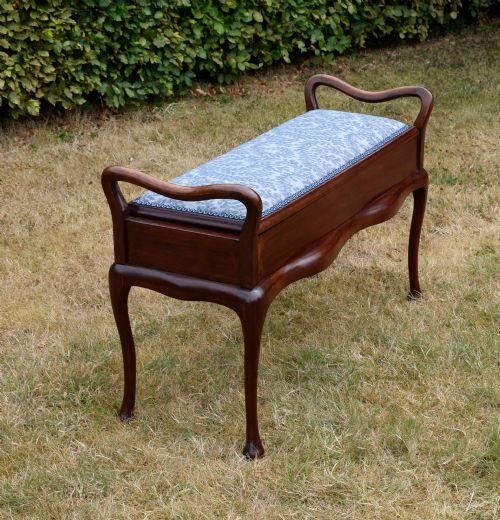
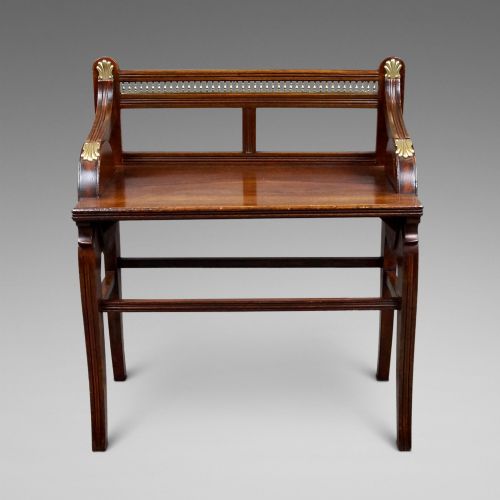
The selections available here include single seats, duet benches for four-hand performances, and music chairs with backrests. Mahogany, walnut, and rosewood form the primary body timbers, frequently paired with contemporary upholstery, fabric, or velvet.
Victorian and Edwardian versions dominate the selection, bringing specific revival styles like Queen Anne and Sheraton into the music room. Buyers also encounter simpler country swivel stools and taller revolving pedestal forms designed for upright or grand instruments.
Materials and Construction
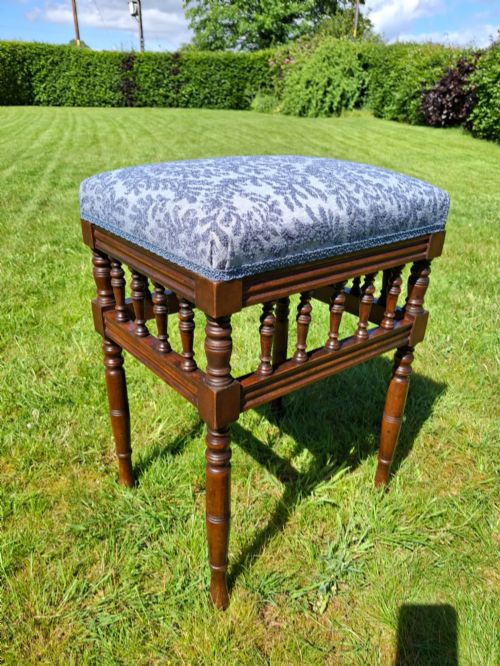
Cabinetmakers utilised dense hardwoods such as mahogany, walnut, and rosewood to construct the frames and legs, ensuring the stability required for frequent height adjustments. Ebonised finishes and inlaid veneers also appear on later nineteenth-century examples.
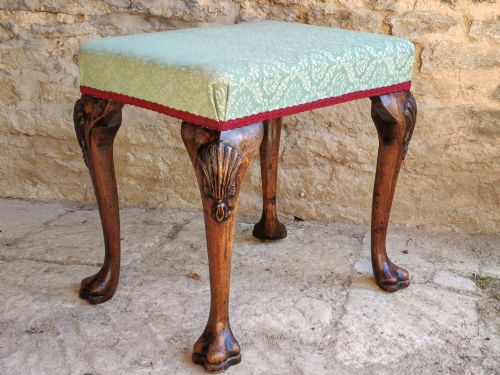
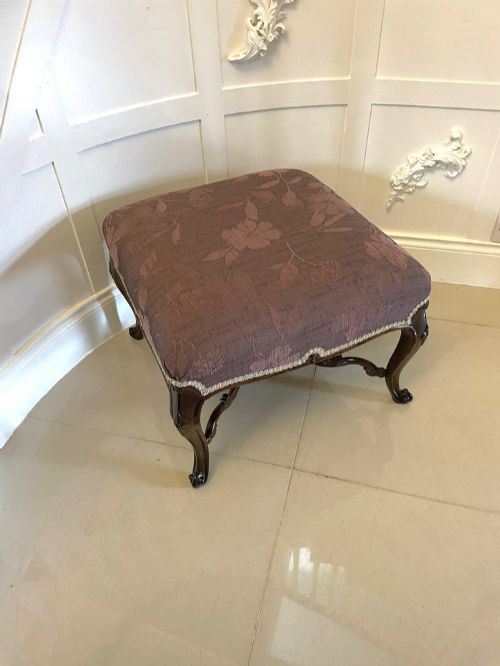
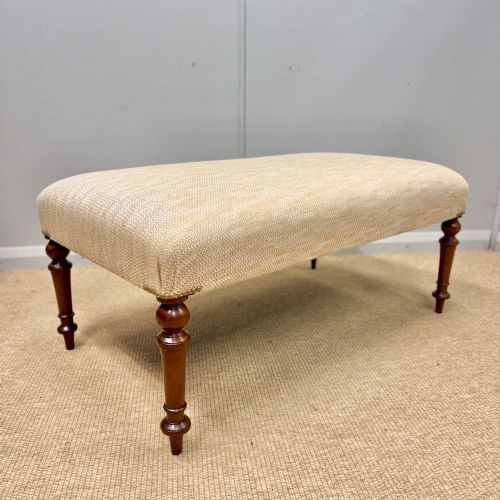
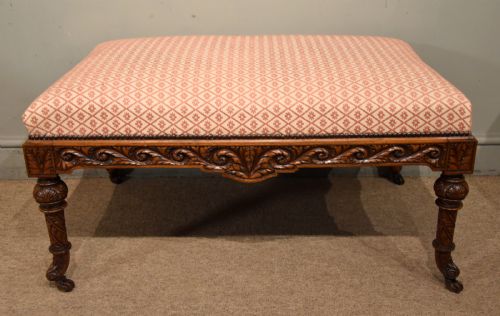
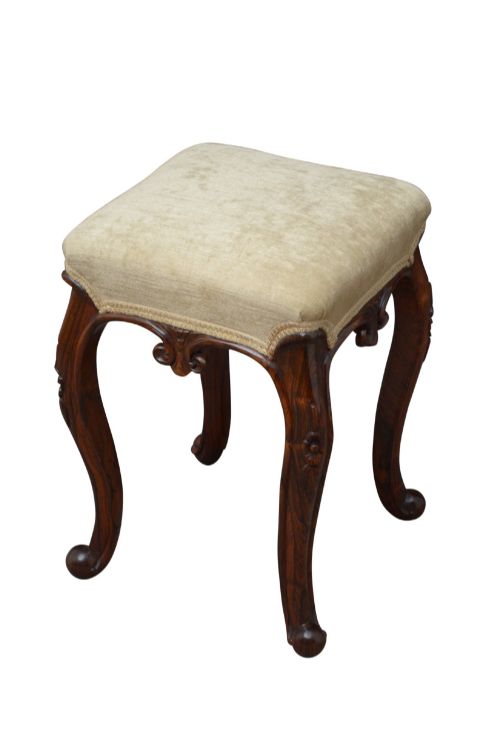
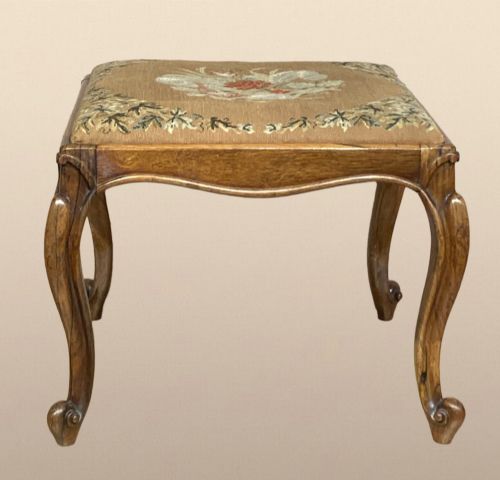
Turning and carving define the legs, with cabriole forms, reeded columns, and X-frame supports appearing across different periods. Brass mechanisms facilitate the rise-and-fall action, while horsehair or modern stuffings support the original needlepoint, fabric, or velvet upholstery.
Several Victorian music chairs feature concealed swivel screws that occasionally require a gentle morning stretch to get moving.
Assessing Quality and Craftsmanship
The precision of the mechanical height adjustment separates standard pieces from superior examples, particularly in the smooth operation of the central screw or swivel pivot. Solid timber turned legs and crisp hand-carving indicate a higher grade of workshop production compared to simpler factory-made alternatives.
The integrity of the frame joints and the quality of the secondary timbers dictate long-term durability. Original needlepoint or well-chosen velvet upholstery that complements the period style enhances the finished integrity of the piece.
Jas Shoolbred·Harry & Lou Epstein·Gillows
The Wooden Piano Stool Glossary
- Duet Stool
- A wider seating bench designed to accommodate two players simultaneously during piano duets.
- Rise and Fall
- A mechanical system using a threaded screw or ratchet to alter the height of the seat surface.
- Cabriole Leg
- A furniture leg that curves outward at the knee and tapers inward toward the foot, typical of revival styles.
- Ebonised
- Wood treated with a dark finish to imitate expensive ebony, frequently seen on nineteenth-century seating.
- Needlepoint
- Stitched canvas embroidery commonly used as traditional upholstery for period stool tops.
Wooden Piano Stool: Frequently Asked Questions
How do I adjust the height?
Many examples feature a central wooden screw mechanism that allows the seat top to revolve upward or downward when turned by hand.
Other variants use side levers or internal ratchets to raise the platform to the desired playing position.
Were these made for duets?
Wider benches designated as duet stools provide sufficient length for two pianists to sit side by side during shared practice sessions.
These typically date from the late nineteenth and early twentieth centuries when home music rooms grew in popularity.
What wood types should I expect?
Mahogany, walnut, and rosewood form the majority of the structural timber frames, often matched to the finish of the accompanying instrument.
Ebonised hardwood and oak also appear among the later Victorian and Edwardian examples.
How do I identify the period?
Stylistic clues such as carved cabriole legs point to Victorian production, while inlaid veneers often indicate Edwardian manufacture.
Turned columns and X-framed rosewood supports frequently signal earlier nineteenth-century Regency or Victorian origins.