


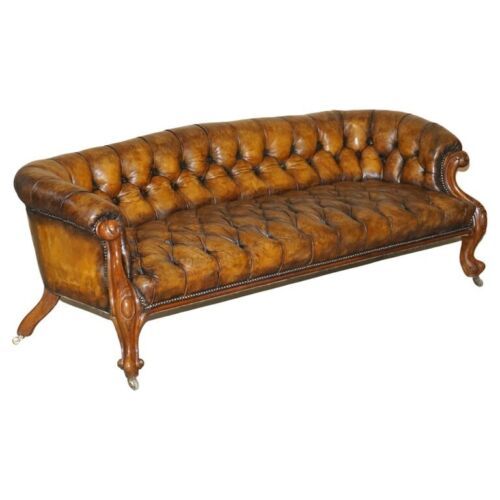


Walnut Button Back Settee
A walnut button back settee brings deeply carved timber and deep buttoning together, offering a stately seat for a drawing room.
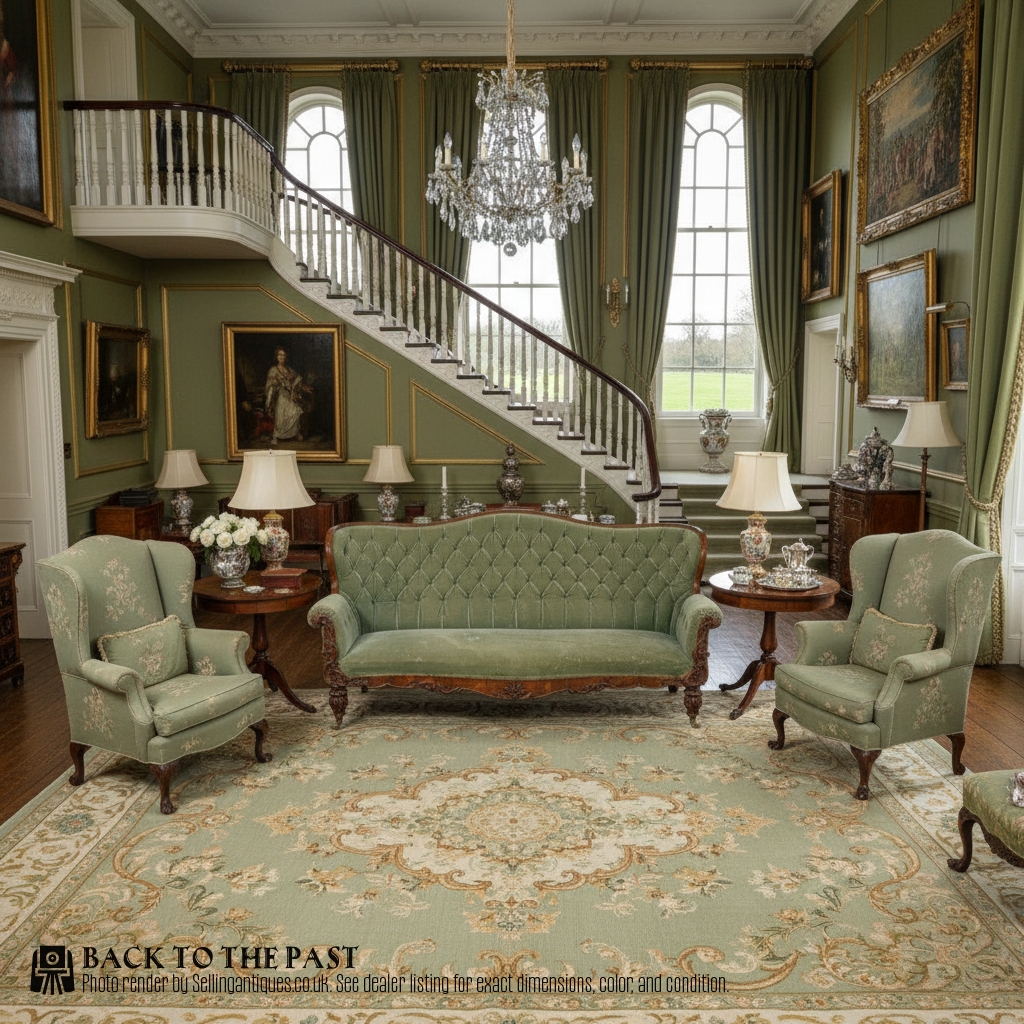
Walnut Button Back Settee
A walnut button back settee is a drawing room or salon seat built from rich timber and featuring distinct upholstered buttons. These pieces emerge primarily from the Victorian period, though examples stretch from the Regency era into the early twentieth century.
The version most commonly encountered on this page is the Victorian walnut framed settee, often shaped with carved show frames and double end or cameo backs. They appear alongside related salon suites and chaise longues, sharing the same polished timber framework.
Makers and craftsmen of the nineteenth century shaped these settees in Revival styles, particularly Rococo Revival, lending curved lines and floral motifs to the walnut structure. Buyers select them to anchor a traditional room with substantial timber and textiles.
Materials and construction
Construction relies heavily on solid walnut and hardwood frames, shaped with carved details along the show frames and cabriole legs. These wooden structures support deep upholstery secured with textile or velvet fabrics.
Upholstery techniques involve traditional button backing, where fabric is pulled tight and secured with buttons to create distinct geometric indentations. Brass elements and interior stuffing complete the build of these nineteenth century sofas.
Victorian sitters relied on deep buttoning not just for show, but to keep horsehair stuffing firmly from sliding south during a long recitation.
Quality variations
Quality rests in the crispness of the timber carving on the walnut frame and the depth of the button back upholstery. Finer examples display deeply moulded show frames and balanced proportions across double end or cameo shapes.
The integrity of the hardwood structure and the selection of covering textiles, from velvet to traditional fabric, separate standard production from more ambitious drawing room suites.
The Walnut Button Back Settee Glossary
- Button Back
- An upholstery technique where textile is pulled deep into the padding and secured with covered buttons to form a quilted, diamond pattern. This method creates the characteristic texture seen on Victorian seating.
- Show Frame
- A wooden structural framework left exposed around the upholstered portions of a settee. It displays the carved walnut timber.
- Rococo Revival
- A nineteenth century design style inspired by eighteenth century French motifs, characterised by C-scrolls, asymmetric curves, and floral carvings on walnut furniture.
- Double End Settee
- A sofa design featuring scrolled or raised upholstered ends at both sides, allowing a person to recline in either direction. These forms are typical of Victorian drawing room suites.
- Cameo Back
- A chair or settee back shaped like an oval portrait medallion, framed by carved wood.
Walnut Button Back Settee: Frequently Asked Questions
Where did these settees sit?
These settees served primarily in the formal drawing rooms and large parlours of nineteenth century homes. They provided ample seating for entertaining guests.
Today, they occupy similar central spaces in living rooms or studies, functioning as statement seating pieces.
How do I care for walnut wood?
Walnut timber requires gentle dusting and protection from direct sunlight and extreme humidity changes. Keeping the wood nourished maintains the polish of the carved frame.
Avoid harsh chemical cleaners on both the timber and the surrounding velvet or textile upholstery.
How do I spot a Victorian piece?
Victorian seating is identified through its heavy use of walnut timber, deep buttoned upholstery, and Revival styling. Characteristics include curved show frames and distinct nineteenth century proportions.
Comparing the carved motifs and frame construction helps date these settees accurately.