

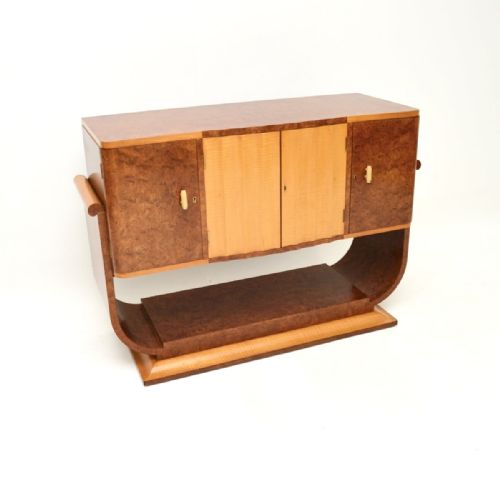
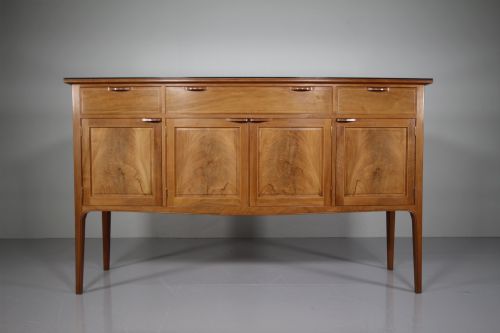
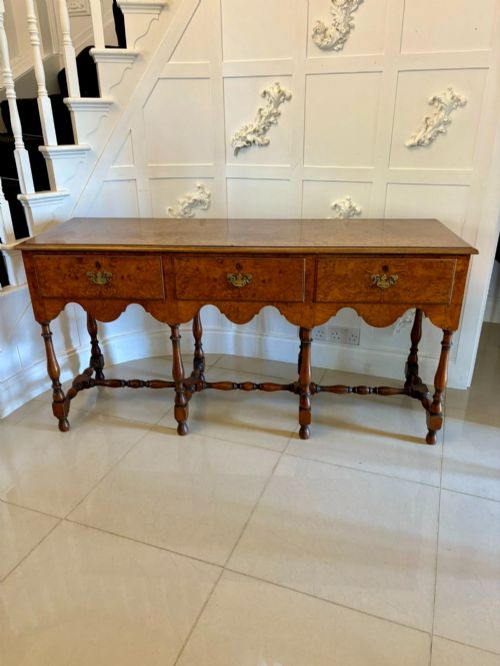
Walnut Buffet Server
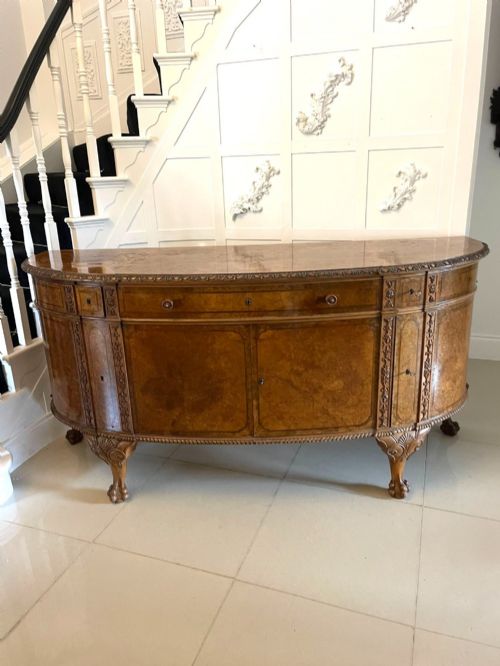
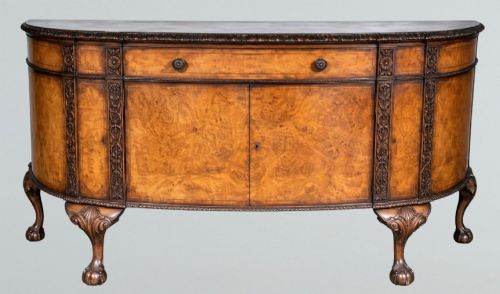
A walnut buffet server brings substantial presence and rich grain to a dining room, combining practical storage with period display.
Walnut Buffet Server
When you search for a walnut buffet server, you encounter a diverse group of dining and serving furniture spanning the nineteenth and twentieth centuries. These pieces function primarily as sideboards, serving tables, credenzas, and tiered dumbwaiters designed for the dining room.
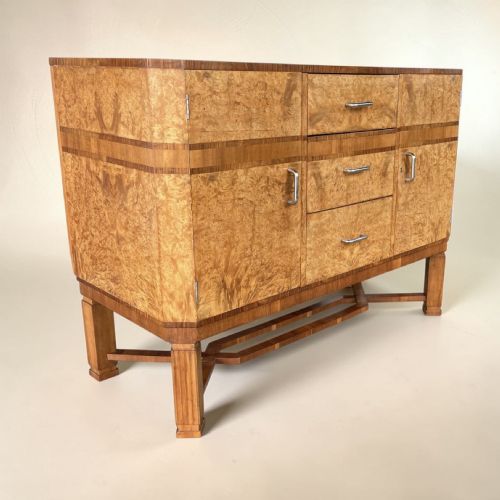
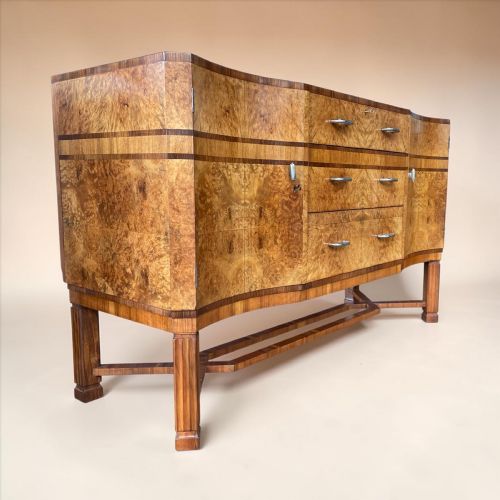
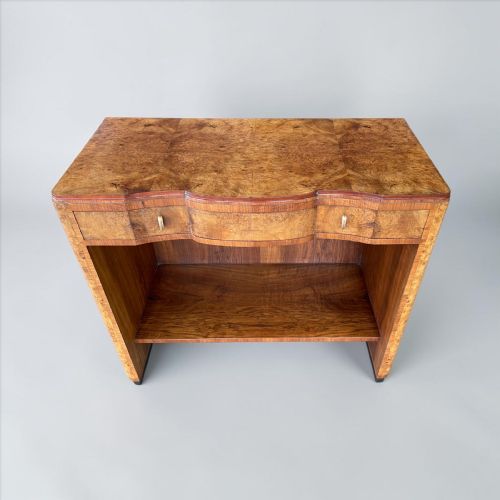
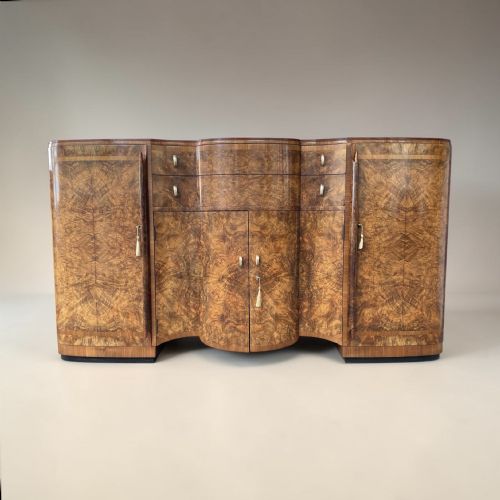
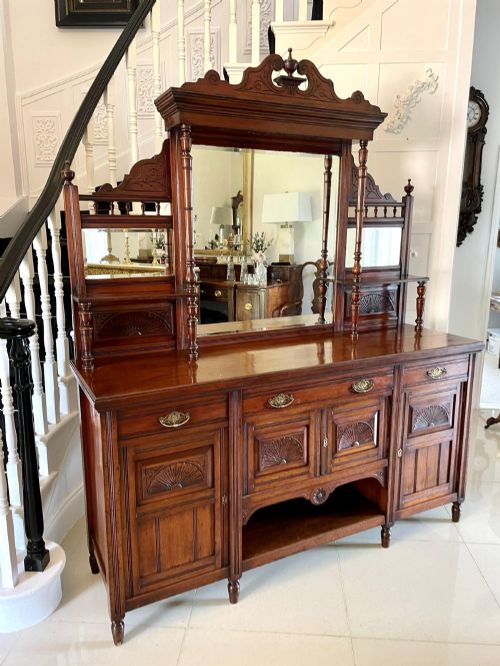
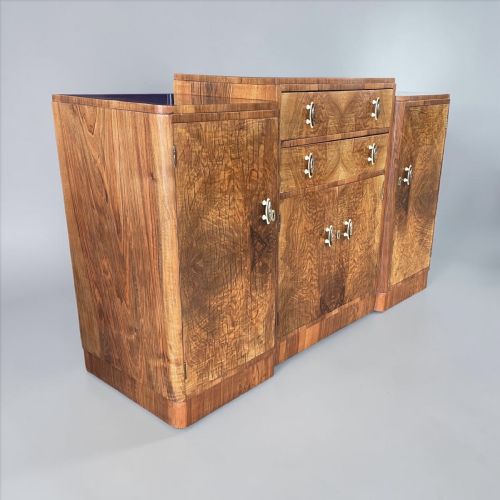
The selections available here range heavily toward the 1930s Art Deco period, alongside robust Victorian examples and earlier nineteenth-century forms. Buyers meet everything from streamlined geometric cabinets to ornate mirror-backed sideboards with heavy carving.
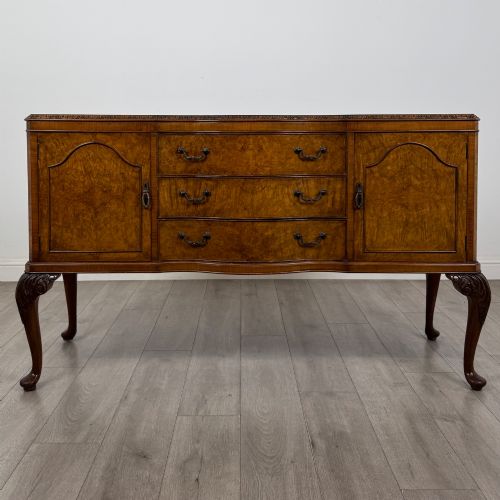
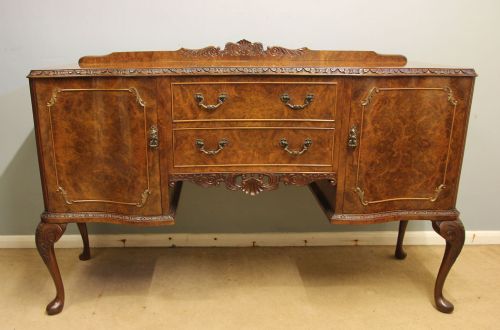
Origins stretch across English workshops and continental makers, incorporating regional styles such as Queen Anne revival, French Provincial, and the Cotswold School. The common thread remains the use of walnut timber, deployed across servers, buffets, and dresser bases.
How they were made
Maker construction relies heavily upon solid walnut and figured burr walnut veneers applied over secondary timbers to create dramatic grain patterns on large surfaces. Craftsmen enhanced these exteriors with contrasting details including sycamore inlay, brass hardware, ormolu mounts, and mother-of-pearl.
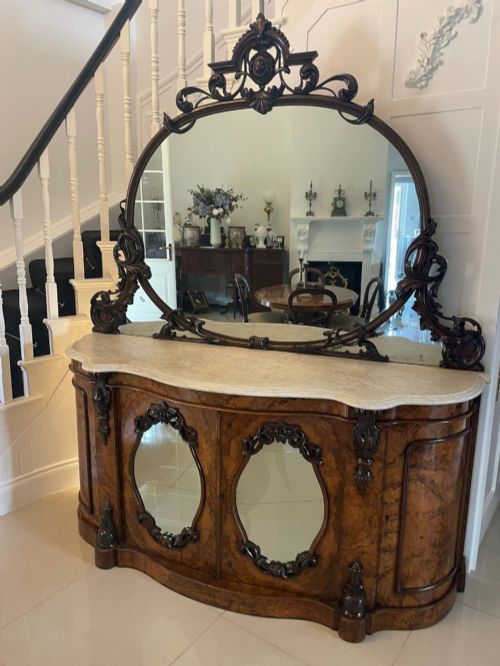
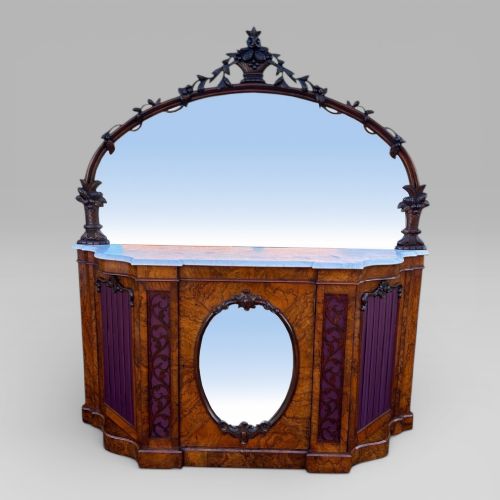
Many mid-to-late nineteenth-century examples incorporate heavy carved mirror backs and panelled doors, whilst later Art Deco pieces emphasise smooth curves, serpentine fronts, and clean geometric lines. Marble tops appear frequently on continental and Victorian servers, paired with sturdy hardwood framing.
The listings demonstrate a strong representation of 1930s Art Deco design alongside Victorian burr walnut mirror-backed credenzas and Edwardian dresser bases.
What varies in quality
The calibre of a walnut buffet server depends fundamentally on the selection and matching of the veneer. Pieces featuring symmetrical, highly figured burr walnut across wide drawer fronts and cabinet doors represent the upper tier of craftsmanship.
Construction integrity and secondary detailing separate standard production from superior work. Stamped signatures from notable makers, precise joinery in the drawers, and the integration of substantial brass or marble components elevate the status of an individual server.
Maurice Adams·Edward Barnsley·Epstein·Harry and Lou Epstein·Hille of London·Hamptons of Pall Mall London·Eadon and Son Sheffield
The Walnut Buffet Server Glossary
- Burr Walnut
- A specialised wood cut from the abnormal growth of a walnut tree, yielding highly complex and swirling grain patterns. It was frequently utilised by cabinet makers for decorative veneer on high-end sideboards and servers.
- Credenza
- A dining room storage cabinet originating in Italy, typically low to the ground and used for serving food or displaying items. Victorian examples often incorporate carved mirror backs above the main surface.
- Dumbwaiter
- A tiered serving table featuring multiple revolving or stationary shelves used to hold dishes and cutlery beside a dining table. Examples in the archive span the mid-Victorian era.
- Serpentine Front
- A cabinet or sideboard profile featuring a convex central section flanked by concave curves. This contour requires advanced woodworking skill to shape accurately.
- Ormolu
- Gilt bronze mounts applied to the corners, feet, or panels of decorative furniture. This technique appears on continental and French-influenced pieces.
Walnut Buffet Server: Frequently Asked Questions
What is the difference between a buffet and a sideboard?
Buffets and sideboards both serve dining rooms for storage and food presentation, though traditional terminology often distinguishes them by leg height and proportions. Sideboards typically feature enclosed cupboards reaching closer to the floor, whereas buffets frequently display longer legs and a lighter serving surface.
In practical modern usage, makers and dealers frequently overlap the terms. Many pieces in this inventory carry multiple designations to cover both serving tables and enclosed cabinets.
How do I identify an Art Deco walnut server?
Art Deco walnut servers, predominantly dating from the 1930s, emphasise clean geometric lines, rounded waterfall edges, and symmetrical burr walnut veneers. They often dispense with traditional period carving in favour of unadorned, streamlined silhouettes.
Many pieces from this era bear stamps or plaques from prominent London cabinet makers. Contrasting veneers such as sycamore frequently highlight the handles and interior compartments.
Where were these servers used historically?
Historically, these servers stood in formal dining rooms to hold silver, serving dishes, and linens during large meals. Servants placed completed courses upon the top surface before transferring them to the main dining table.
Tiered dumbwaiters allowed diners to help themselves to extra plates and wine without interrupting conversation. Today, these pieces transition easily into modern living spaces as media consoles or hallway storage.