


Tiered Walnut Server
A tiered walnut server combines practical staging space with rich timber grain, offering a functional centrepiece for entertaining.
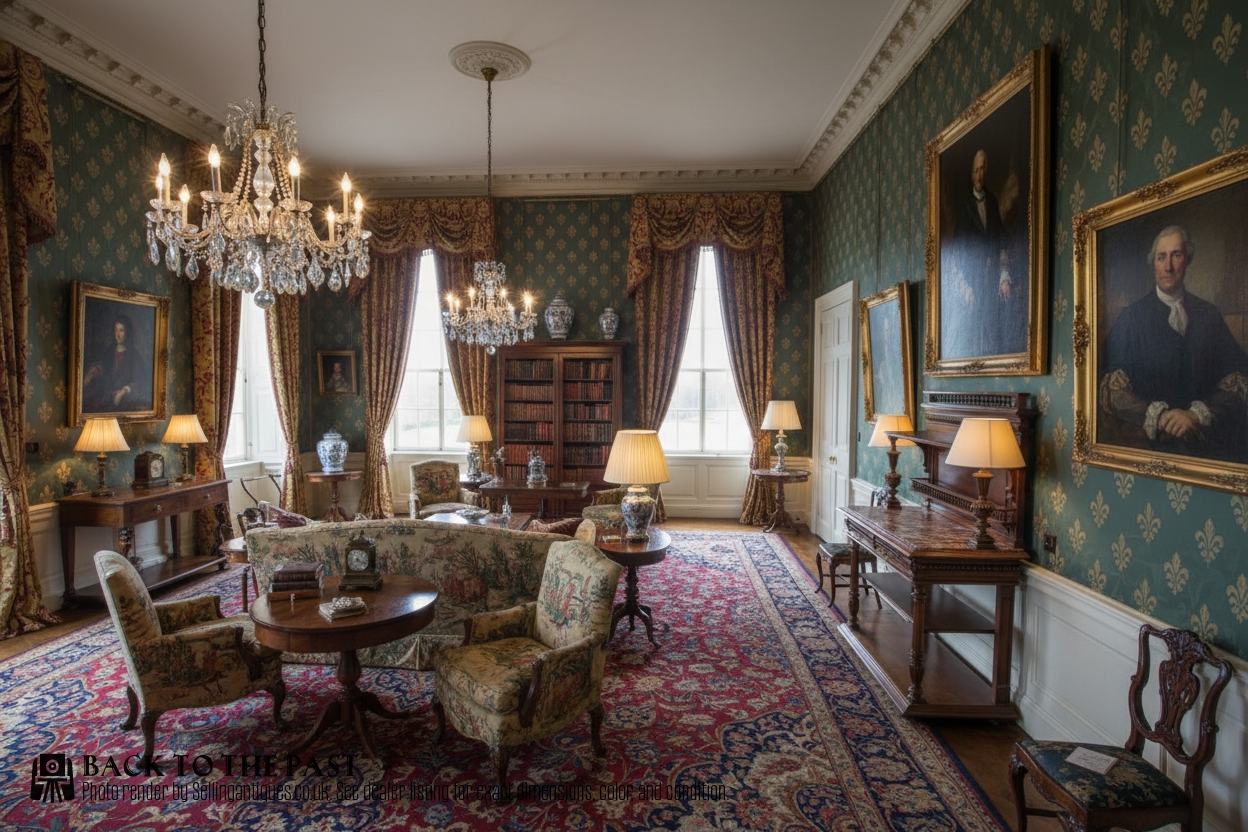
Tiered Walnut Server
A tiered walnut server provides multiple levels for display and service, appearing across styles from Victorian and Edwardian periods down to the 1930s. Buyers searching for a tiered walnut server encounter forms ranging from dumb waiters and étagère tables to architectural buffets and metamorphic serving trolleys.
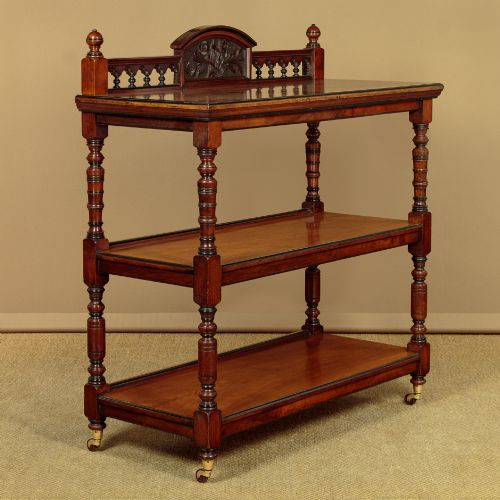
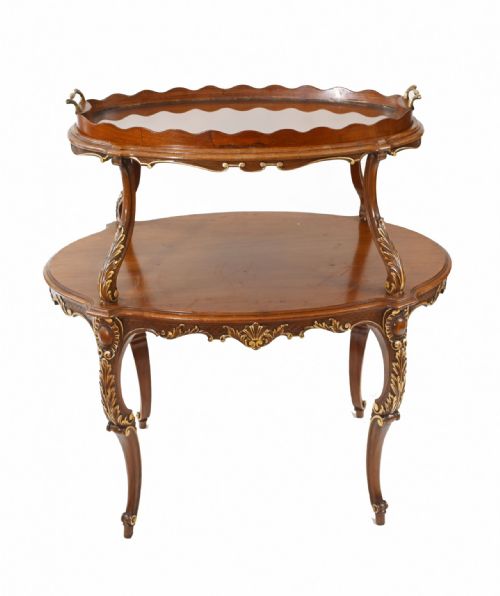
The pieces draw on design influences such as the Aesthetic Movement, French Renaissance Revival, Gothic Revival, Rococo Revival, and Art Deco. Origins span English workshops and continental makers, incorporating functional mechanisms like telescopic stems and metamorphic transformations.
How they were made
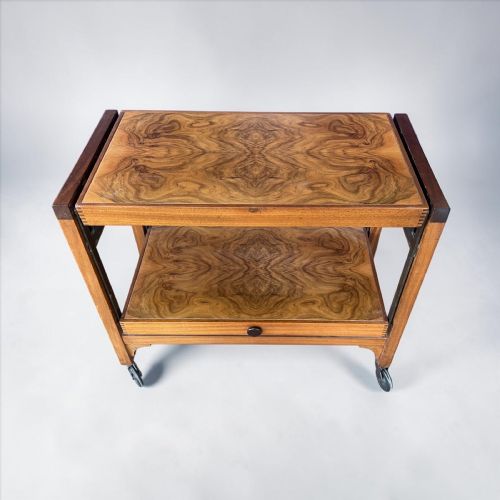
Makers utilised solid walnut and burr walnut veneers, often selecting figured timber for visual depth on top surfaces and door panels. Supplementary materials such as brass fittings, ebonised wood, marble inserts, glass panels, and giltwood details accent the primary wood.
Construction methods involve structured joinery to support multiple tiers, with specialised hardware enabling adjustable heights and folding or pivoting mechanisms. Carved ornamentation appears on Gothic and Renaissance revival examples, while clean geometric lines define the later Art Deco items.
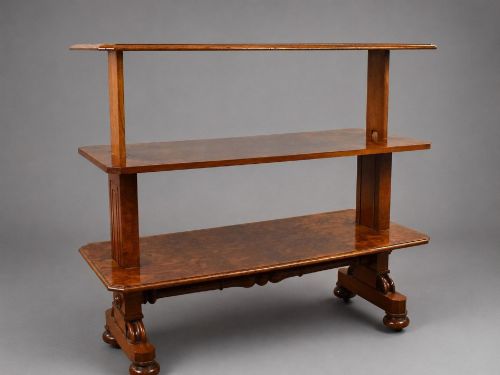
Some Victorian dumb waiters adjust their height telescopically, ready to rise to the occasion when dinner gets ambitious.
What varies in quality
The refinement of the timber selection distinguishes standard items from superior examples, particularly in the figuring of burr walnut veneers and the crispness of carved wooden details. Well-chosen grain matching across tiers creates a cohesive visual rhythm that lesser pieces lack.
Mechanical integrity defines the upper tier of server design, seen in the smooth operation of telescopic stems, adjustable shelves, and folding serving trays. Original hardware, solid brass components, and intact structural joins maintain the piece's intended utility and aesthetic balance.
The Tiered Walnut Server Glossary
- Burr walnut
- A wood veneer taken from the growth deformations of a walnut tree, prized for its swirling, highly figured grain patterns. It provides a decorative surface on the primary display tiers.
- Dumb waiter
- A tiered piece of furniture designed to hold dishes or drinks without the need for a servant present in the room. These frequently feature multiple graduating circular or rectangular trays.
- Etagere
- A piece of furniture consisting of a set of open shelves for displaying small objects. This form offers light-framed vertical storage across several levels.
- Metamorphic
- Describing furniture that transforms from one shape or function into another through hinges, pivots, or sliding tracks. Such mechanisms allow a compact table to expand its serving capacity.
- Telescopic
- Built with concentric sliding tubes or shafts that allow the height of a tier or column to adjust. This engineering feature appears on adjustable dumb waiters from the Victorian era.
Tiered Walnut Server: Frequently Asked Questions
How do I use one in a modern home?
You can utilise a tiered walnut server as a bar cart for bottles and glassware, a side table in a living room, or a display stand for plants and ceramics. The graduating shelves keep items organised and accessible.
Because many pieces feature castors, pivoting trays, or adjustable heights, they adapt easily to different rooms and occasions. Their rich timber tones complement both traditional interiors and minimalist modern spaces.
How do I tell Victorian servers from later ones?
Victorian and Edwardian servers typically exhibit heavier proportions, turned columns, and rich burr walnut veneers influenced by historic revival styles. Gothic and Renaissance revival pieces often incorporate deep wood carving.
Later servers from the 1930s lean towards Art Deco aesthetics, featuring streamlined silhouettes, fewer carved ornaments, and innovative metamorphic mechanisms. Examining the joinery, hardware style, and secondary woods helps confirm the period of manufacture.
Did these servers have specific dining room uses?
Historical dumb waiters and buffets held extra courses, cutlery, and wine bottles near the dining table so diners could serve themselves. Telescopic and multi-tier models allowed servants to adjust shelf heights depending on the dishes.
Serving trolleys and étagères evolved to handle mobile entertaining, letting hosts wheel drinks and glassware between rooms. Their tiered construction ensured maximum capacity for service items during social gatherings.