

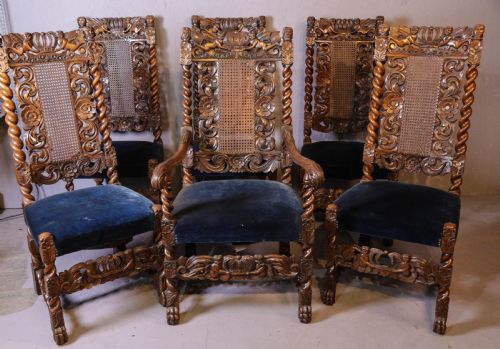


Walnut Barley Twist Chair
A walnut barley twist chair brings robust seventeenth-century lineage and sculptural turned supports directly into a Victorian or revival interior.
Walnut Barley Twist Chair
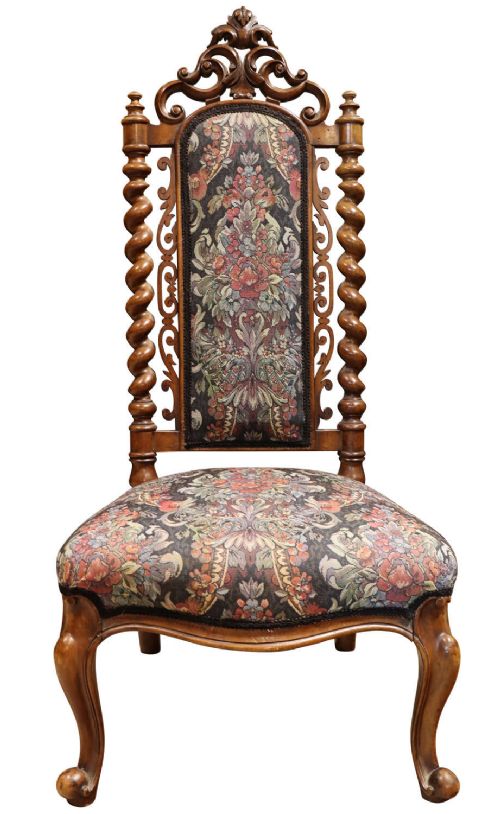
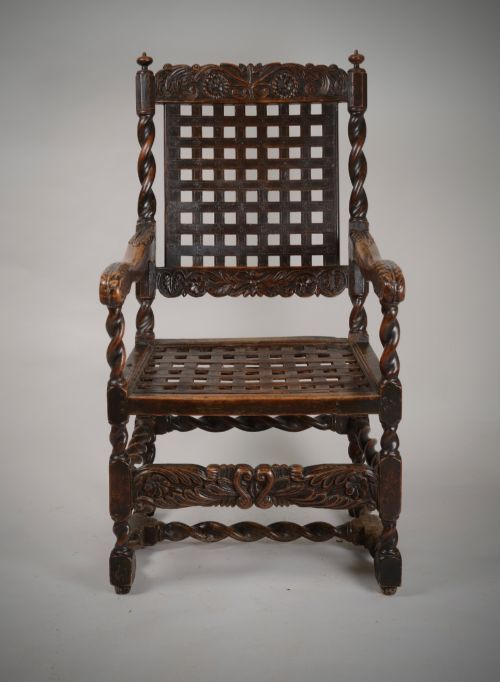
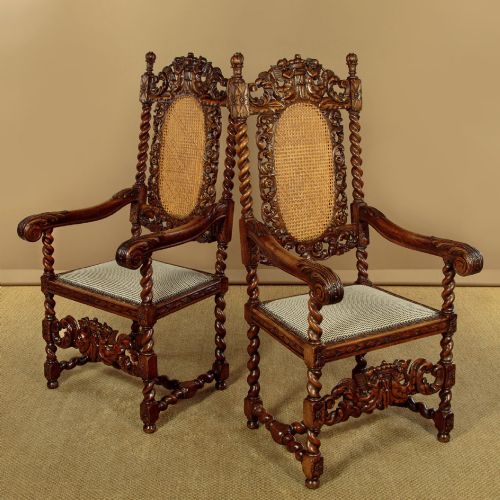
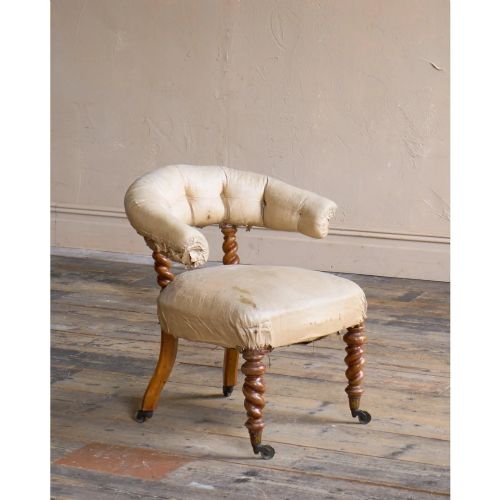
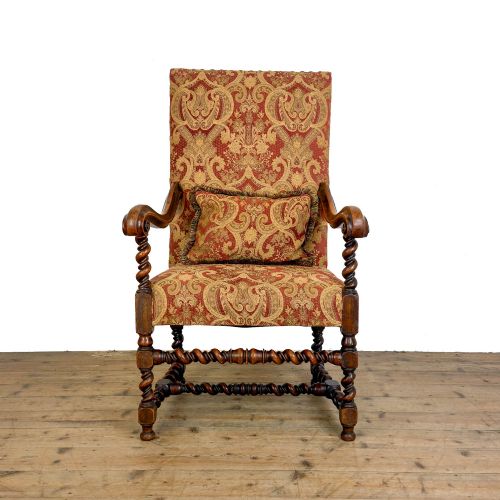
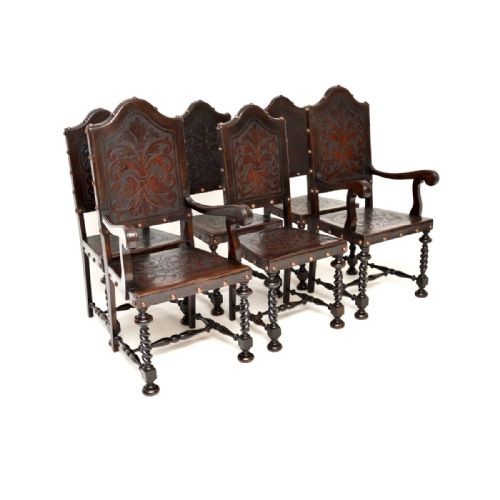
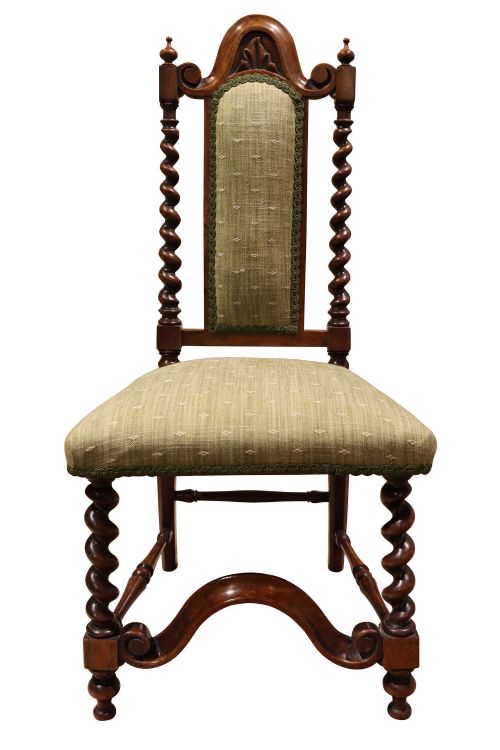
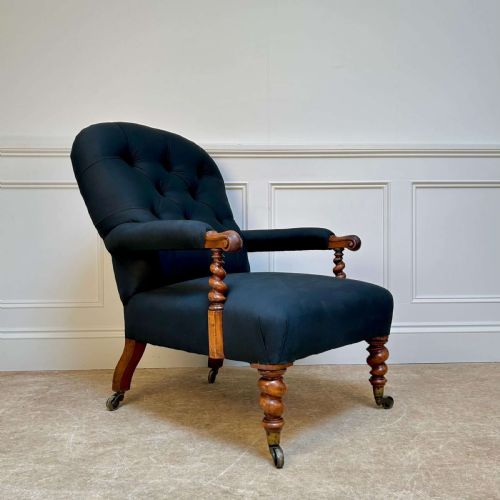
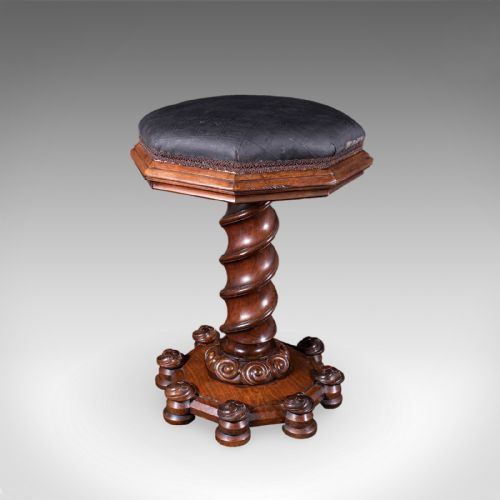
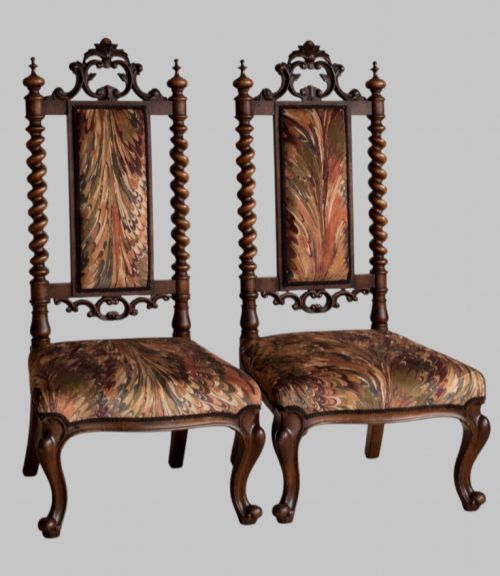
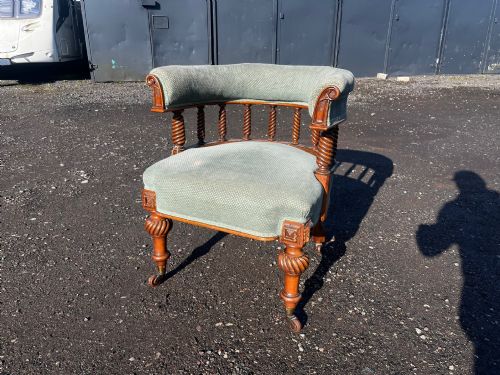
A walnut barley twist chair combines rich timber with helical wooden turnings, appearing most frequently in Victorian and nineteenth-century revivals of earlier seventeenth-century Carolean and Charles II models. Buyers searching for a walnut barley twist chair encounter an array of forms, ranging from single dining chairs and hall chairs to substantial armchairs, elbow chairs, and low child's seats.
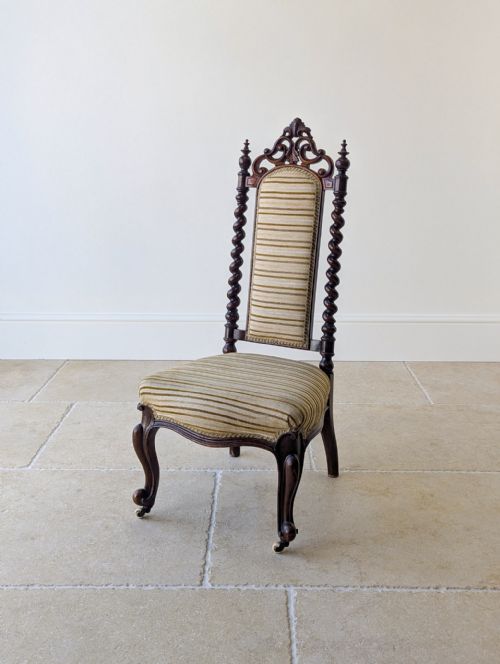
The styles span authentic seventeenth-century origins alongside Victorian, Carolean Revival, and Portuguese Baroque interpretations. Makers adapted the distinctive twisted supports for diverse seating types, including desk chairs, nursing chairs, and prie-dieu prayer seats, maintaining the characteristic turned wooden members throughout the frames.
Materials and Construction
Makers utilised solid walnut for the primary structural frames, exploiting the dense timber's ability to hold crisp, deep hand-carving and smooth helical turnings. The distinctive twist was shaped using lathe-turning and hand-chiselling techniques to create the continuous spiral profile.
Frames incorporate secondary supporting elements in brass, alongside traditional upholstery materials such as cane, leather, velvet, tapestry fabric, and woven textiles secured to seat pads and high backs.
Walnut Barley Twist Chair Retail Price Guide 2026
Typical asking prices for walnut barley twist chair among the pieces listed under this phrase on Sellingantiques today, from the lower quarter to the upper quarter. They describe what is for sale here now, not the wider market.
Listings feature walnut, cane, leather, and tapestry fabric across Victorian, Carolean, and nineteenth-century periods.
Assessing Quality and Execution
Quality rests primarily in the sharpness of the timber carving and the precise symmetry of the helical twist across the legs and stretchers. Superior examples display tight, uniform spirals carved directly from the structural uprights rather than applied mouldings.
The integrity of the walnut grain and the proportion of the joinery distinguish finer workshop output from simpler vernacular production. Original upholstery remnants or sympathetic period-appropriate textile choices further separate standard commercial pieces from higher-grade cabinet work.
C Hindley and Sons
The Walnut Barley Twist Chair Glossary
- Barley twist
- A helical wooden turning resembling a coiled rope, popularised in English furniture during the seventeenth century and revived in the Victorian period. It adds dynamic visual movement to vertical supports and stretchers.
- Carolean
- Pertaining to the reign of King Charles II, noted for lavishly carved walnut frames, high backs, and rich upholstery. This aesthetic heavily influenced nineteenth-century revival seating.
- Elbow chair
- An armchair featuring lower arm supports, frequently used at dining tables or desks. They match larger suites of single chairs.
- Prie-dieu
- A low-backed devotional chair designed for kneeling and prayer, often fitted with an upper rail for resting arms or books. They frequently incorporate turned uprights.
- Bergère
- An enclosed upholstered armchair with exposed wooden framing and woven cane panels. It offers a lighter aesthetic within nineteenth-century seating.
Walnut Barley Twist Chair: Frequently Asked Questions
Are these chairs comfortable for daily use?
Many nineteenth-century iterations feature padded squabs, buttoned backs, or sprung seats designed for extended sitting in parlours and studies.
Early seventeenth-century prototypes prioritised upright posture and formal presentation over cushioned lounging.
How do I distinguish seventeenth-century originals from Victorian revivals?
Original seventeenth-century pieces exhibit distinct tool marks, pegged joinery, and patinated walnut timber consistent with early cabinet-making methods.
Victorian revivals often utilise machine assistance, standardised screw fixings, and denser nineteenth-century hardware alongside period styling.
What rooms suit a barley twist chair best?
These pieces function effectively as striking desk chairs, fireside reading armchairs, or decorative corner seating in studies and drawing rooms.
Dining chairs and hall chairs work well paired around a central table to highlight the rhythmic turning of the frames.
How should I care for the walnut and fabric?
Maintain the timber by applying traditional wax polish sparingly to nourish the walnut grain without building up heavy residue.
Protect upholstery textiles from direct sunlight and dust gently with a soft brush to preserve woven tapestries and leather.