



Barley Twist Accent Chair
A barley twist accent chair brings sculptural turned timber and period presence into a room, spanning styles from seventeenth-century revivals to Victorian sitting rooms.
Barley Twist Accent Chair
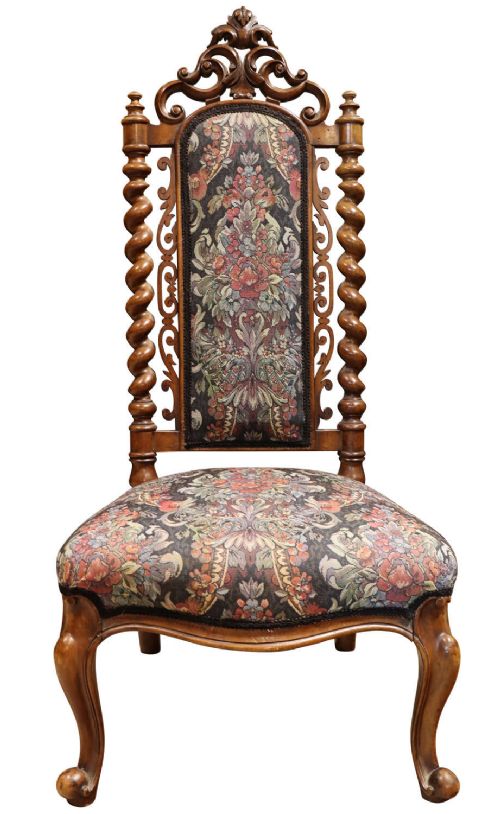
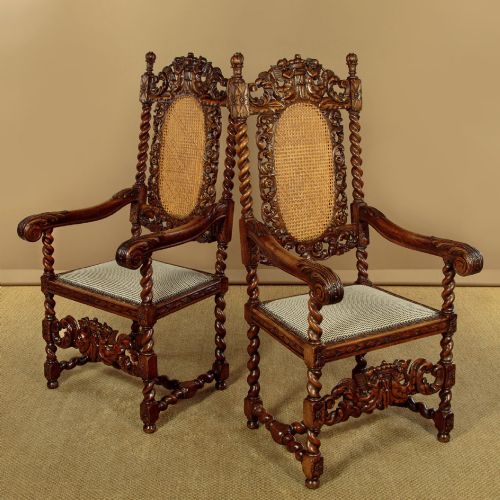
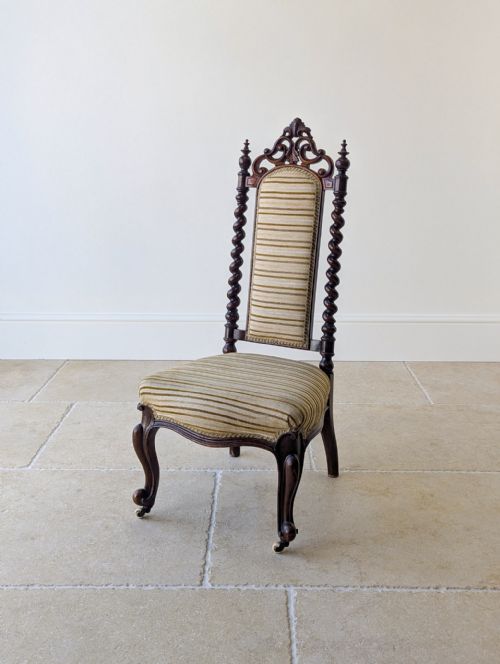
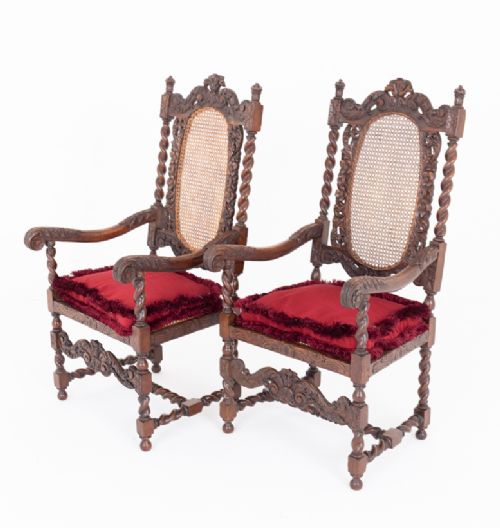
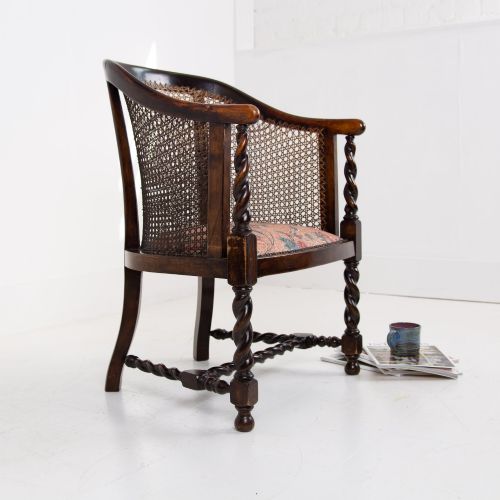
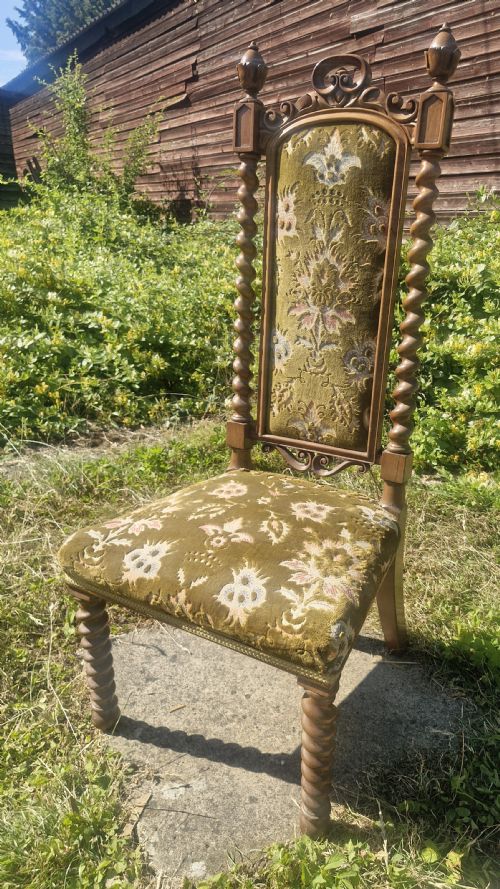
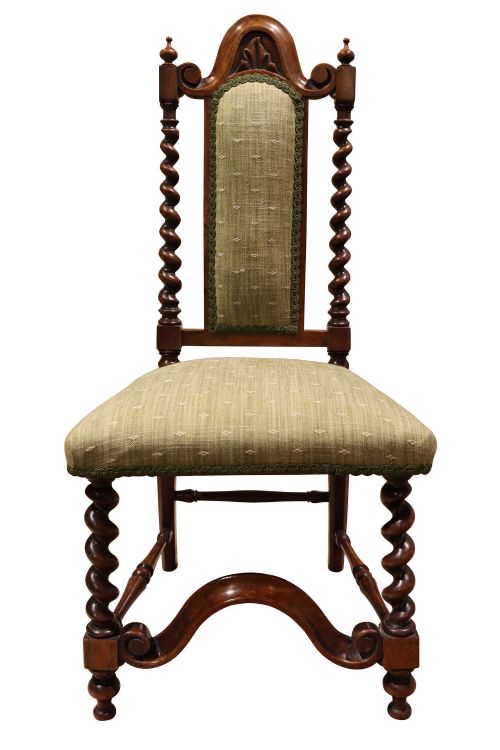
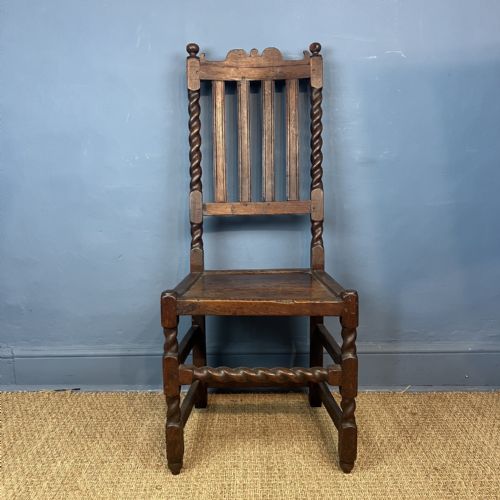
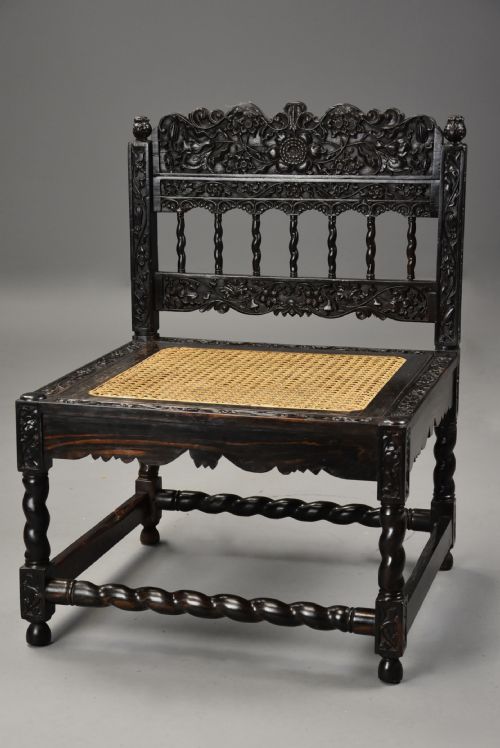
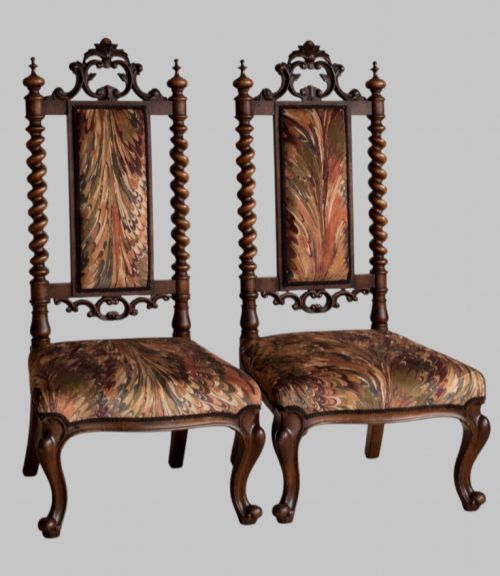
When searching for a barley twist accent chair, buyers encounter seating designed around distinctive helical turned wooden supports, most frequently appearing in nineteenth-century Victorian pieces alongside seventeenth-century revivals. These items range from compact nursing chairs and side chairs to substantial oak armchairs and hall chairs.
The selection includes specific regional and stylistic variants, such as Ceylonese satinwood hall chairs, solid ebony carved low chairs, and pairs of upholstered armchairs. Forms vary from high-back parlour seating to low stools and child's chairs, drawing on Jacobean, Carolean, and Gothic revival movements.
What varies in quality
Distinctions in quality rest upon the crispness of the hand-carved turning, the density and selection of the timber, and the integrity of the frame construction. Solid ebony, satinwood, and finely figured walnut represent higher tiers of material choice compared to standard utility oaks.
The harmony of proportions between the turned uprights, arms, and backrests determines visual success. Original upholstery or sympathetic reupholstery using period-appropriate textiles also separates standard examples from exceptional pieces.
Barley Twist Accent Chair Retail Price Guide 2026
Typical asking prices for barley twist accent chair among the pieces listed under this phrase on Sellingantiques today, from the lower quarter to the upper quarter. They describe what is for sale here now, not the wider market.
Listings feature woods including oak, walnut, rosewood, mahogany, ebony, satinwood, and ash paired with cane, velvet, and leather upholstery.
Liberty & Co
The Barley Twist Accent Chair Glossary
- Barley twist
- A form of woodturning resembling a helical screw or twisted rope. This profile appears extensively on the legs, arms, and structural stretchers of seventeenth-century and revival furniture.
- Backstool
- An early form of chair without arms, predating standard upholstered dining or parlour seating. These pieces typically feature a solid wooden seat and an upright back.
- Carolean revival
- A nineteenth-century stylistic movement imitating the ornate carved woodwork and turned details of the reign of Charles II. Pieces in this mode often utilise walnut and incorporate deep relief carving.
- Cane
- Woven rattan material utilised for chair seats and backs. This technique provides flexible support and a lighter visual weight in hardwood frames.
Barley Twist Accent Chair: Frequently Asked Questions
What periods do these chairs date from?
The selection spans authentic seventeenth-century examples alongside nineteenth-century Victorian revivals and early twentieth-century interpretations.
Craftsmen across these eras reused traditional turning techniques, making stylistic details essential for dating individual frames.
How do I identify a revival piece?
Revival pieces draw on seventeenth-century motifs like Carolean or Jacobean carving while employing nineteenth-century timber preparation and assembly methods.
Examination of the wood grain, tool marks, and joinery inside the frame helps separate seventeenth-century originals from Victorian copies.
Where were these chairs placed originally?
Armchairs and side chairs served in parlours, hallways, and drawing rooms as both functional seating and decorative accents.
Hall chairs stood in entrance spaces to display family status, while nursing chairs provided lower seating for domestic tasks.
Are replacement covers acceptable?
Many period chairs feature new fabric, leather, or cane seats resulting from maintenance over the decades.
Restoration using appropriate textiles preserves the usability of the frame without diminishing its historical character.