
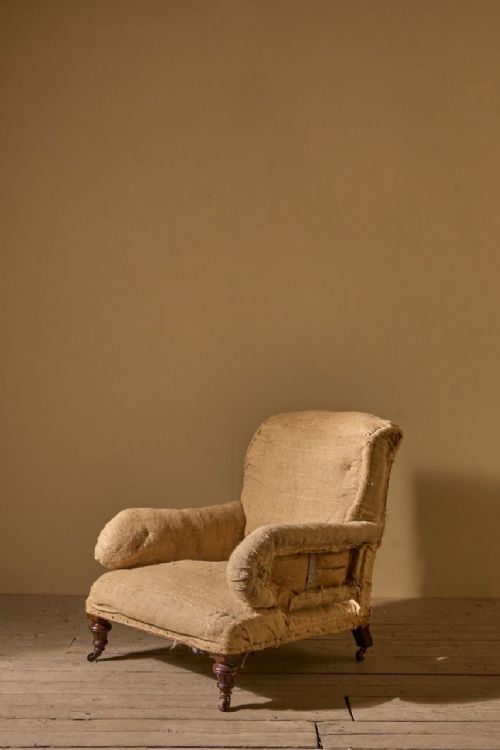
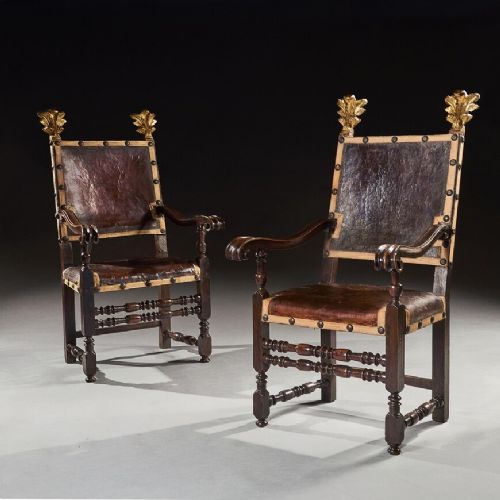
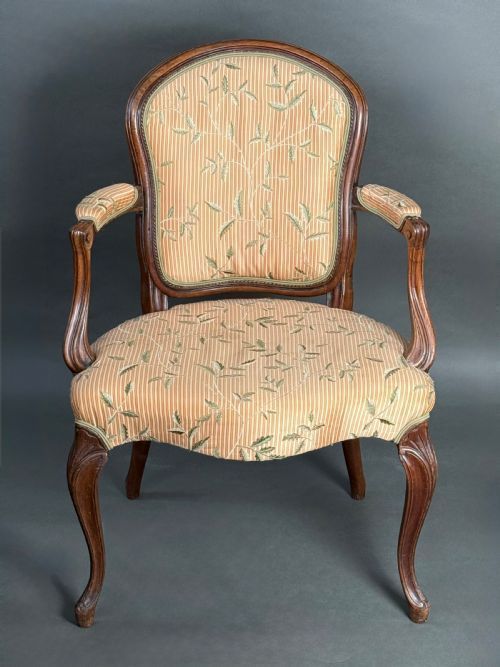
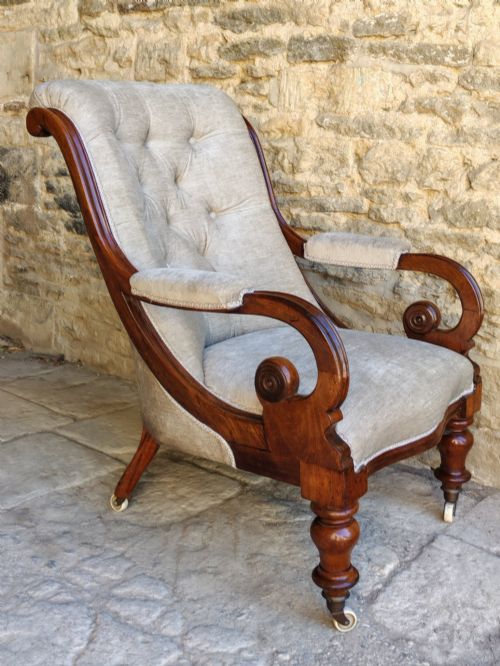
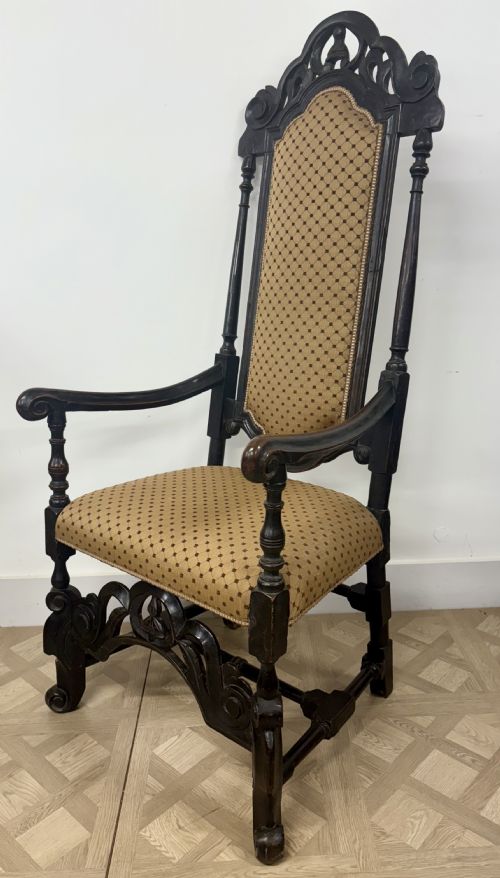
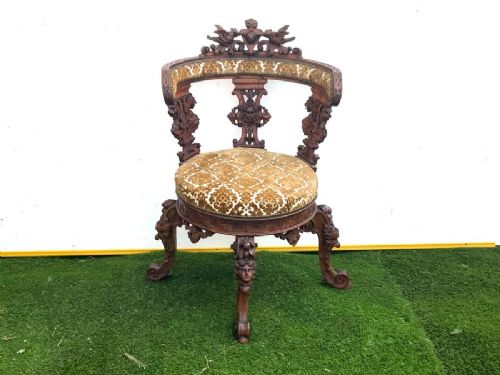
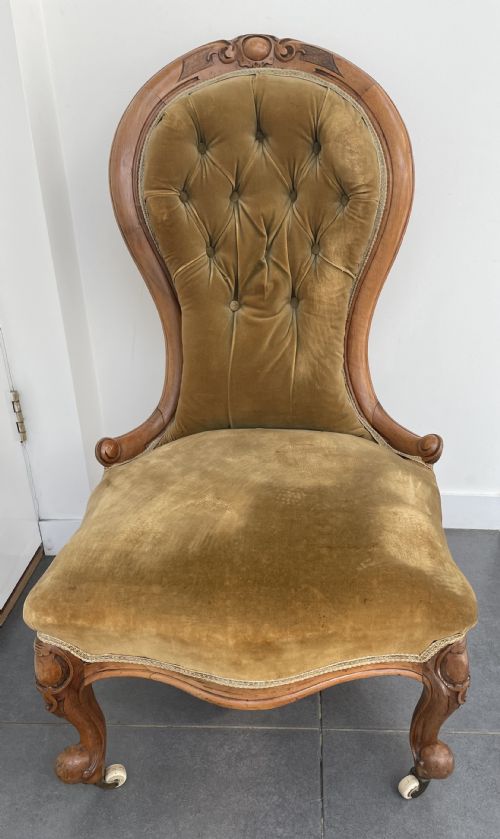
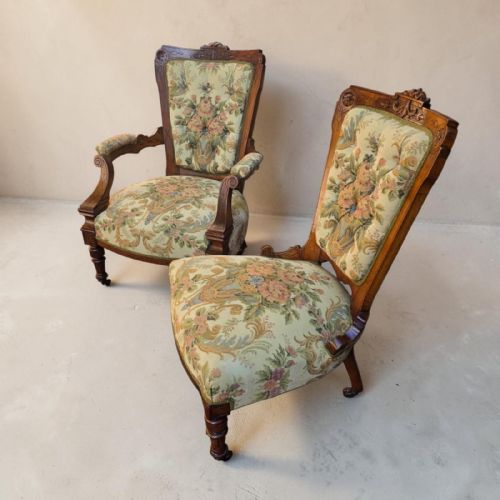
Walnut Accent Armchairs
Walnut accent armchairs bring dark timber frames and rich upholstery together, offering substantial seating with distinct period presence.
Walnut Accent Armchairs
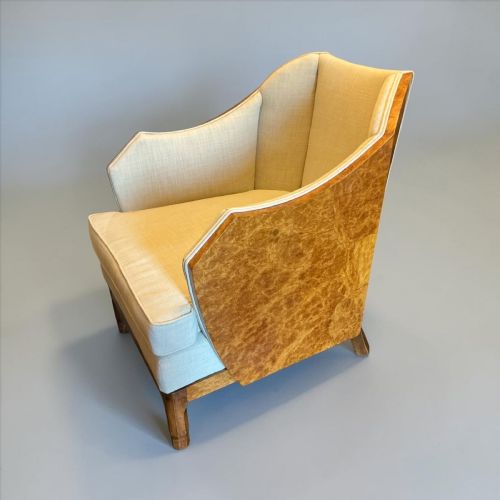
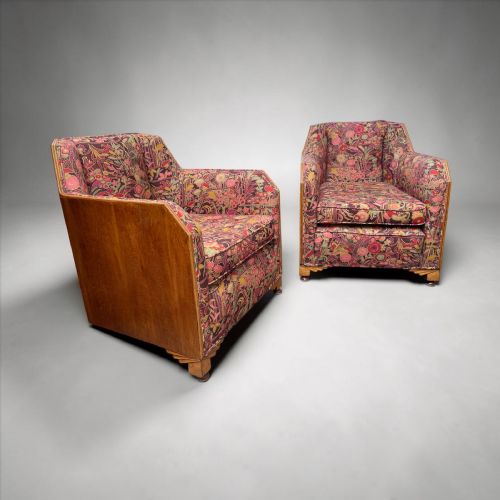
Walnut accent armchairs span several centuries of seating design, ranging from seventeenth-century Italian Baroque forms to nineteen-thirties Art Deco models. These chairs function as focal seating in a room, combining exposed wooden frames with textile, leather, or cane coverings.
Origin points vary widely across the inventory, encompassing English, French, Italian, and Syrian workshops. Buyers encounter carved high-backed audience chairs, low nursing seats, and streamlined geometric lounge chairs.
Materials and construction
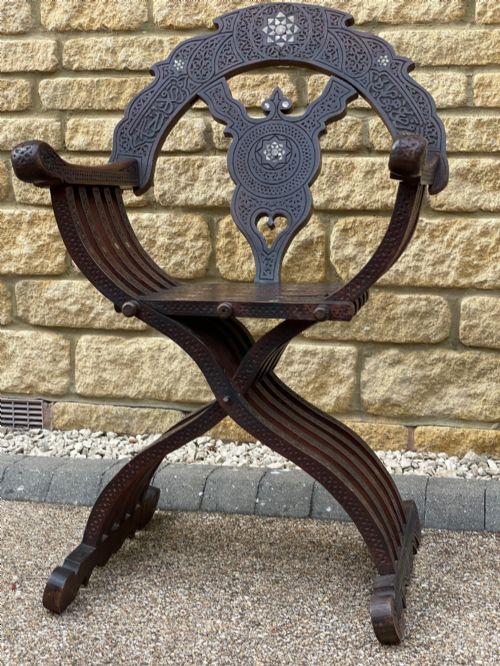
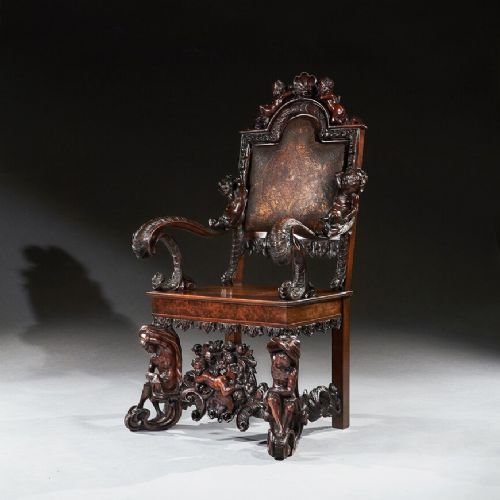
Makers utilised solid walnut for structural frames, sometimes applying parcel-gilt highlights, brass details, or mother-of-pearl and parquetry inlay to the exposed timber surfaces. Woodcarving traditions appear across many periods, from elaborate Italian Baroque figures to restrained Victorian curves.
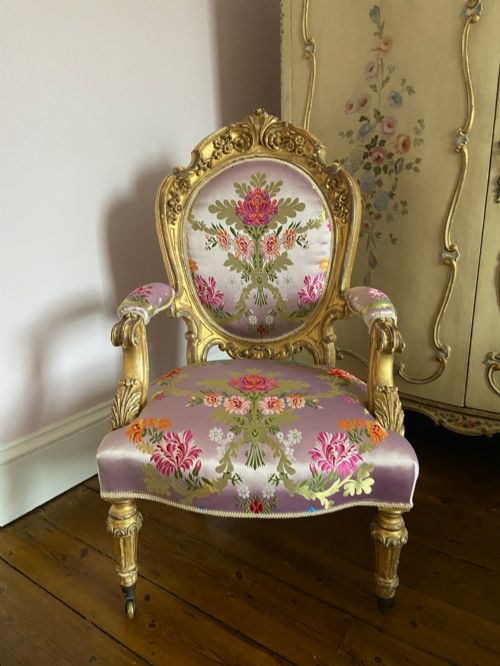
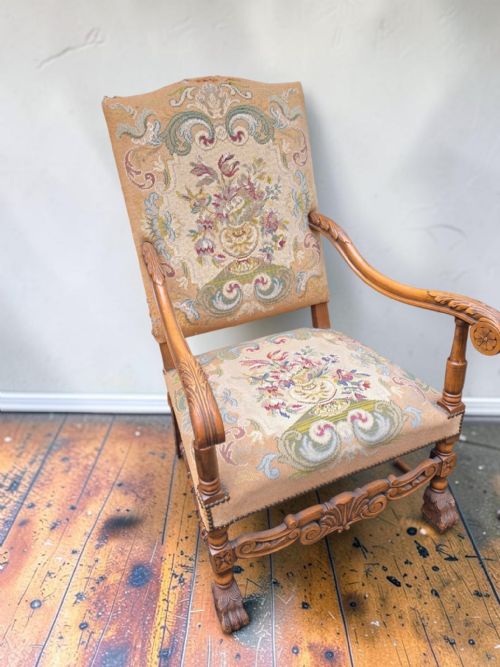
Upholstery materials range from silk, velvet, and tapestry to needlework, leather, calf suede, and textile, while other frames incorporate split cane panels. Traditional stuffing and webbing support the seating surfaces in earlier periods, shifting to streamlined sprung or padded structures by the nineteen-thirties.
Listings span eight distinct periods, stretching from the seventeenth century through Victorian and Edwardian eras to nineteen-thirties Art Deco.
Distinctions in quality
The standard of carving defines the upper tier of walnut accent armchairs, where deep relief work and sculptural detail display exceptional hand skill. Pieces associated with named makers or specific regional traditions command greater attention for their documented provenance and refined proportions.
The integrity of the timber frame and the authenticity of the surface finish dictate long-term worth. Original upholstery schemes using period textiles elevate a piece, while well-executed contemporary reupholstery in appropriate silk or leather preserves the usability of older frames.
Andrea Brustolon·Hille·Harry and Lou Epstein·Howard and Sons
The Walnut Accent Armchairs Glossary
- Bergere
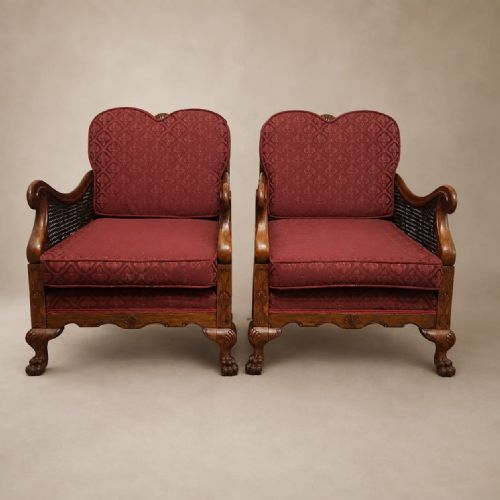
- An enclosed upholstered armchair with wooden framing, frequently featuring cane panels on the back and sides.
- Baroque
- An ornate European design style characterised by dramatic curves, rich surface carving, and grand proportions originating in the seventeenth century.
- Parquetry
- Geometric mosaic woodwork created by fitting small veneer tiles together to form decorative patterns on furniture surfaces.
- Spoonback
- A Victorian chair design featuring an oval, concave wooden-framed back that resembles the bowl of a spoon.
- Carolean
- A seventeenth-century English style associated with the reign of Charles II, known for scrolling woodwork and rich textiles.
Walnut Accent Armchairs: Frequently Asked Questions
What is a walnut accent armchair?
These pieces are standalone seating furniture built with exposed walnut timber frames and soft upholstery. They add visual weight and texture to a room layout.
Buyers select them for their combination of sturdy wooden construction and decorative fabric or leather coverings. They serve as functional seats that also display historical cabinetmaking styles.
How do I date a walnut armchair?
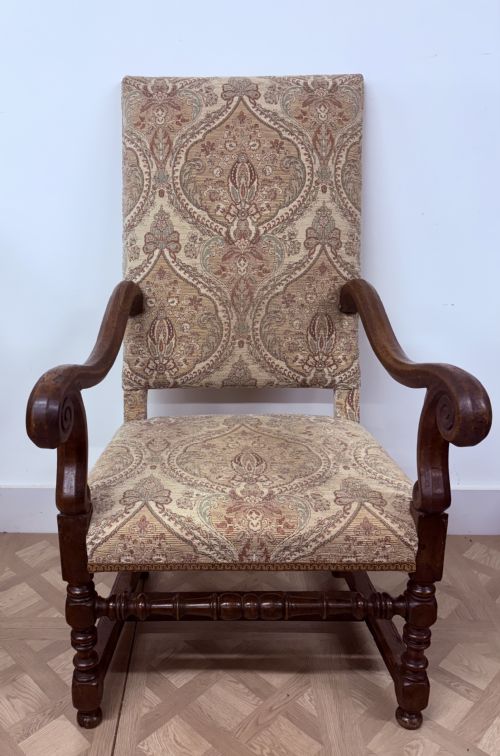
Dating relies on observing the interplay of structural forms, carving styles, and assembly methods. Seventeenth-century chairs show heavy turnings and high backs, whereas Victorian examples often feature curved spoonbacks.
Twentieth-century pieces introduce streamlined geometry and modern upholstery profiles, particularly in Art Deco designs. Comparing the joinery and wood patination against known period examples clarifies the age.
Where should I place an accent chair?
These chairs fit well in corners, beside fireplaces, or paired opposite a sofa in a main living space. Their decorative frames look best when viewed from multiple angles.
Bedrooms and studies also accommodate smaller occasional or nursing chairs, providing a convenient secondary seat. The rich tone of the walnut complements both neutral and patterned interior backdrops.
How do I care for antique walnut wood?
Maintenance requires keeping wooden frames away from direct heat sources and strong sunlight to prevent timber shrinkage and fading. Dusting with a soft dry cloth removes surface particles safely.
Applying occasional specialist wax feeds the timber and maintains the natural lustre of the grain. Avoid chemical sprays that can degrade historic French polish or wax finishes.