
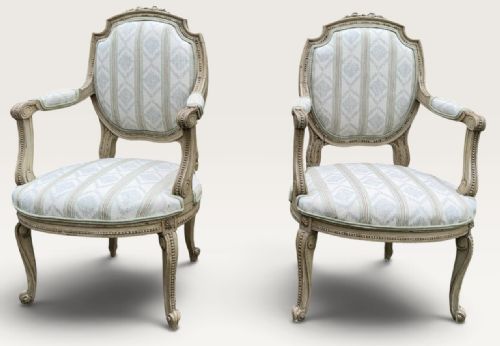
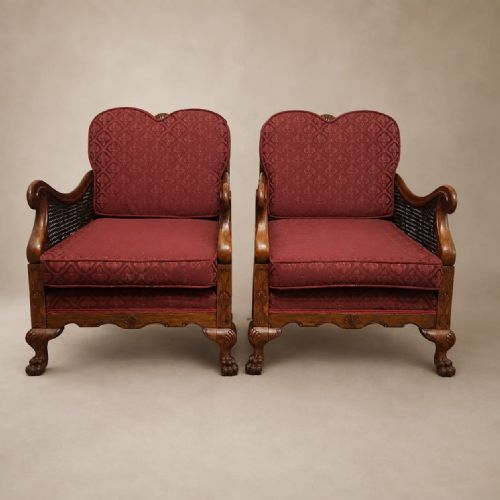
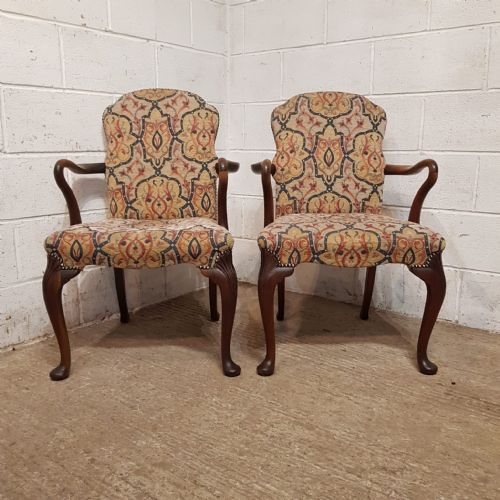
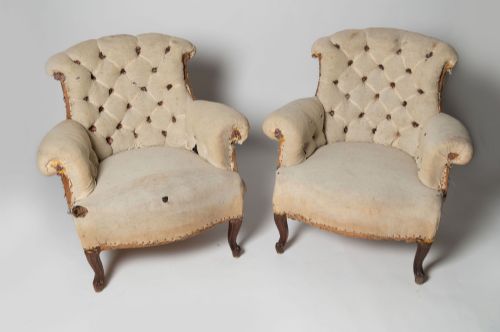
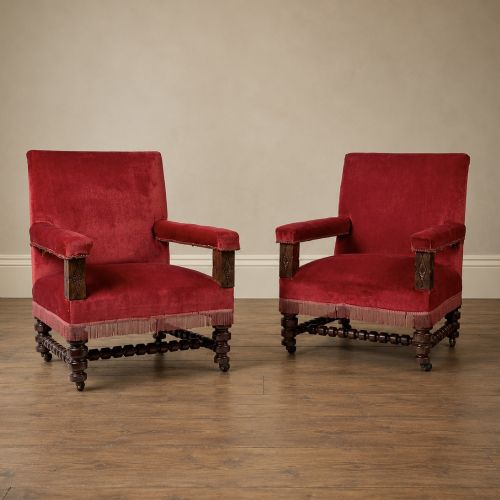
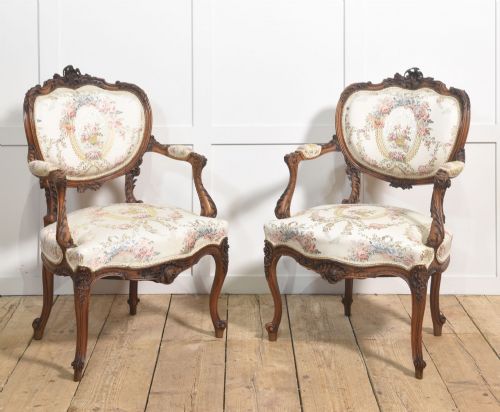
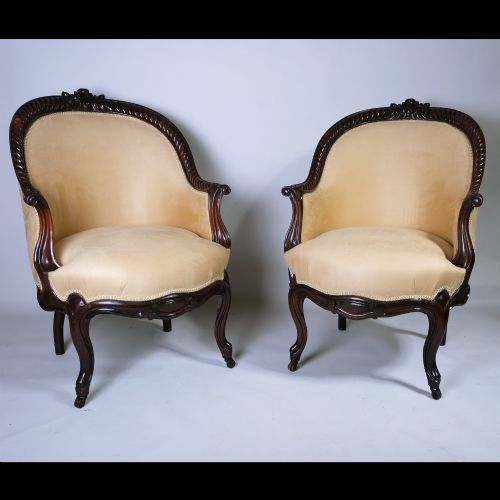
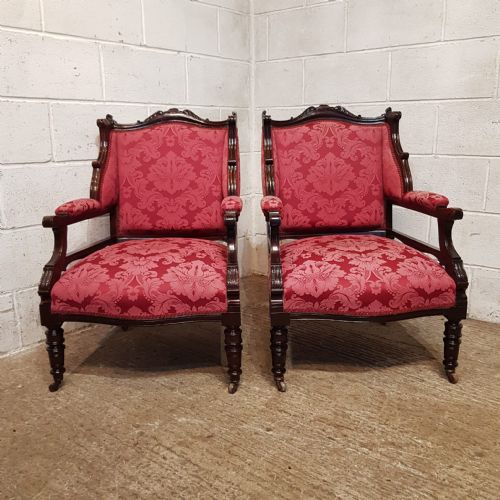


Carved Frame Armchair Pair
A carved frame armchair pair brings matched historical seating into a room, offering both decorative presence and comfortable proportion.
Carved Frame Armchair Pair
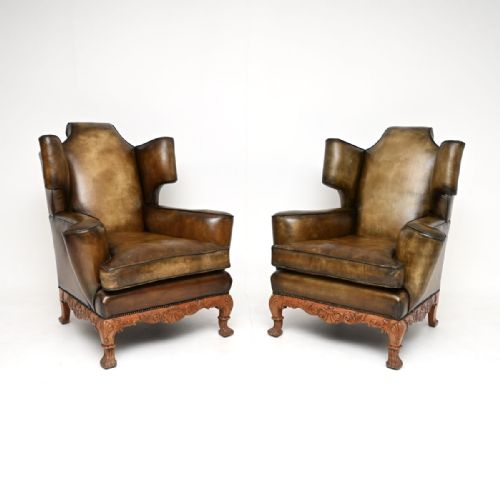
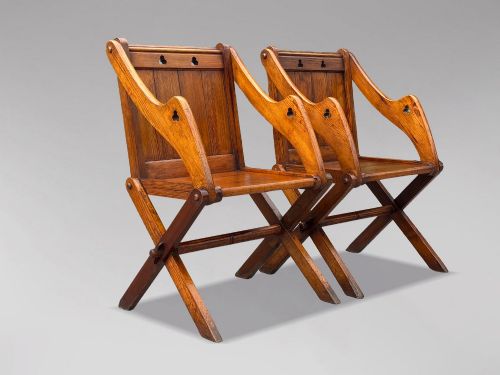
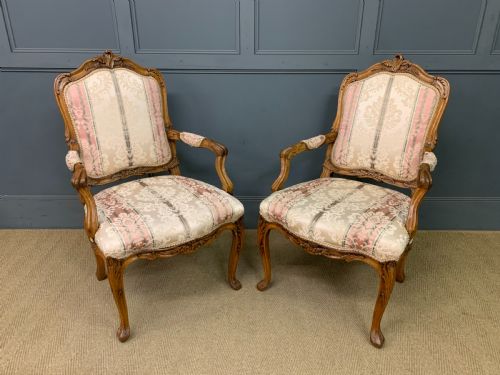
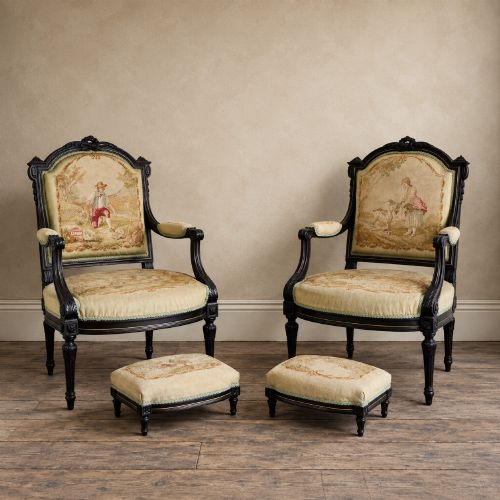
A carved frame armchair pair consists of two matching seats designed with sculpted wooden frameworks, frequently appearing from the nineteenth century through the early twentieth century. These seating pairs emerge in various historical aesthetics, including French revival styles, Victorian designs, and Edwardian interpretations.
The selections span distinct forms such as library chairs, open armchairs, bergere seats, and occasional salon chairs. Walnut and oak dominate the structural frames, paired with upholstery that includes leather, velvet, silk, and woven cane panels.
Materials and construction methods
Cabinet makers utilised dense hardwoods such as walnut, mahogany, oak, and beech to construct structural frames capable of supporting detailed hand carving. Artisans shaped these timbers using traditional joinery before applying surface treatments ranging from original paint and ebonisation to polished natural grains.
Seating support relied on traditional webbing, horsehair stuffing, and sprung interiors secured beneath textile, leather, or split cane. Decorative elements often incorporated applied brass details, carved gilt accents, and tailored upholstery fabric secured with decorative tacks.
Judging quality in carved seating pairs
Quality rests in the crispness of the hand-carved detail along the wooden framework and the structural integrity of the joints. Superior examples display balanced proportions, symmetrical carving across both chairs, and timbers selected for deep grain definition.
The grade of materials used for upholstery and internal stuffing distinguishes standard production from finer workshop pieces. Original surviving surfaces, intact caning, and traditional joining methods indicate higher craftsmanship during the manufacturing process.
White, Allom & Co.
The Carved Frame Armchair Pair Glossary
- Bergere
- An enclosed upholstered armchair with wooden framing, often featuring cane panels on the back and sides.
- Fauteuil
- An open-arm armchair originating in France, characterised by exposed wooden framing and upholstered arm pads.
- Glastonbury
- A traditional folding chair design featuring intersecting wooden supports and a sloping backrest.
- Curule
- An ancient chair shape utilising crossed curved legs, frequently revived during the nineteenth century.
Carved Frame Armchair Pair: Frequently Asked Questions
How are matching armchair pairs typically arranged?
These seating pairs function effectively when placed opposite a fireplace, flanking a central cabinet, or positioned together in a reading room.
Matching chairs create visual symmetry within a room layout while providing balanced seating for conversation areas.
What periods do these carved armchairs represent?
The available selection spans the nineteenth century through the early decades of the twentieth century, encompassing Victorian, Edwardian, and revival periods.
Craftsmen during these eras drew inspiration from French design movements, Gothic revival styles, and traditional English cabinetry.
How do I maintain antique upholstered armchairs?
Routine maintenance involves gentle dusting of the carved wooden frames with a soft cloth and professional cleaning for sensitive textiles like silk or velvet.
Avoiding direct sunlight helps protect delicate fabrics and polished wood surfaces from fading over time.
Are these chairs suitable for daily use?
Sturdy hardwood frames and traditional construction allow these chairs to withstand regular sitting when placed in domestic settings.
Selecting pieces with sound internal webbing and durable upholstery materials ensures long-term practical utility.