
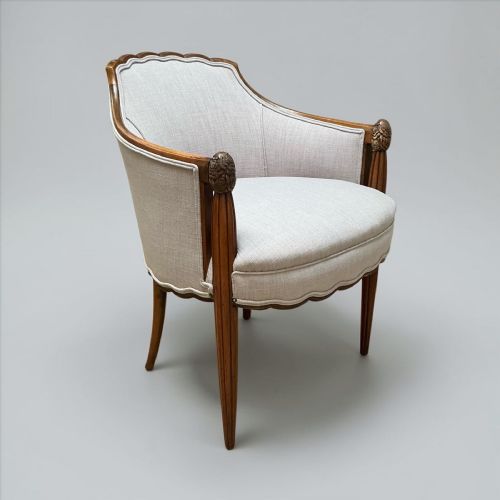
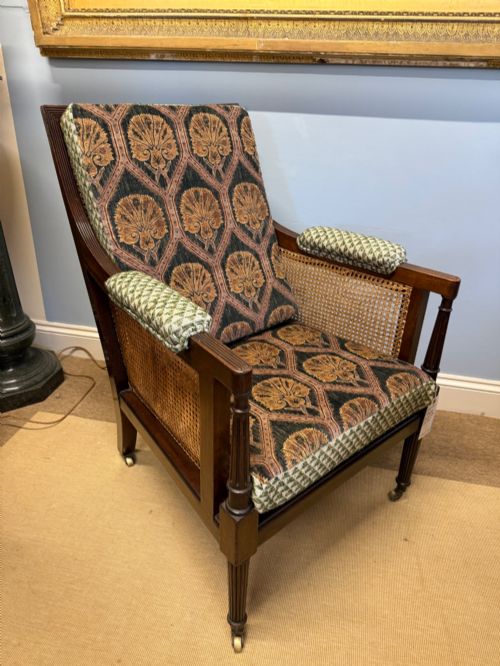

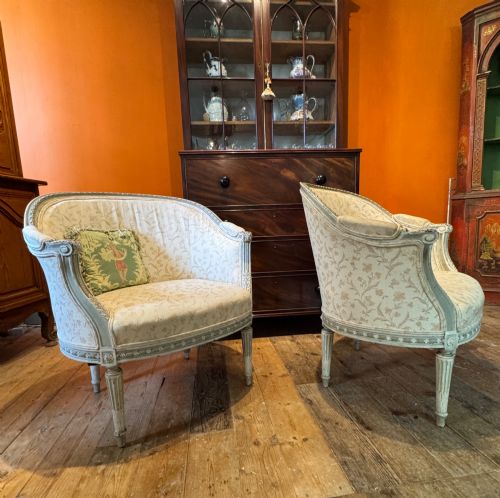
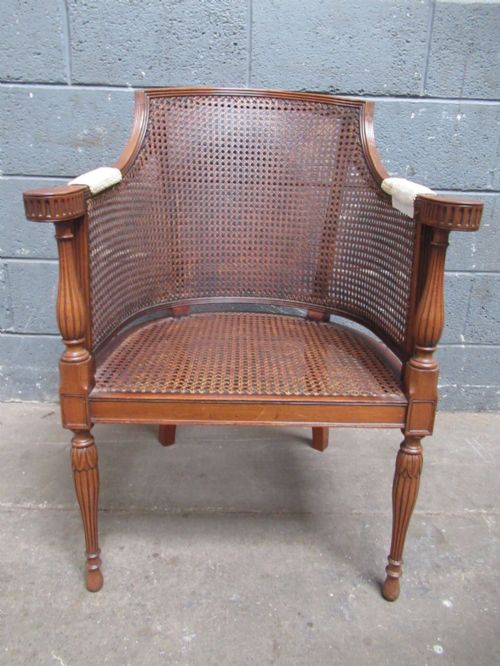
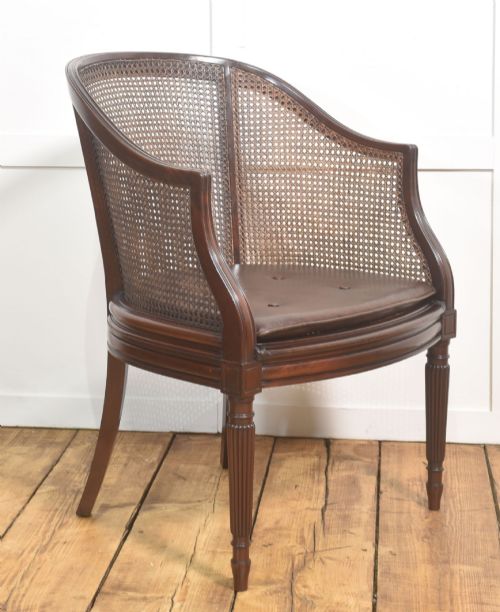
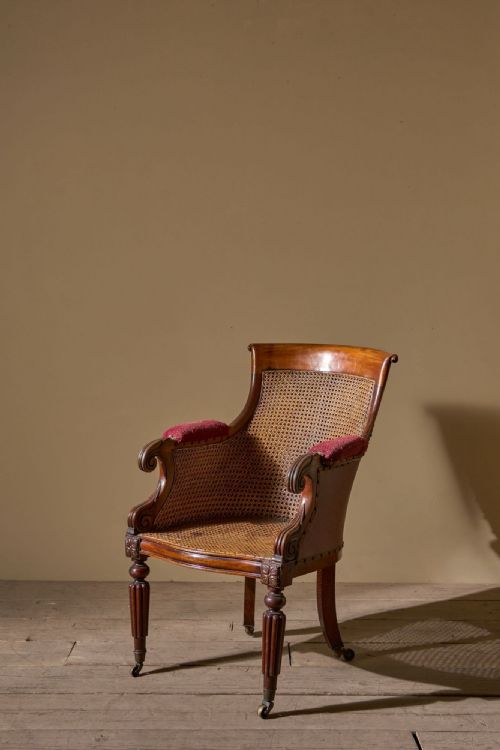
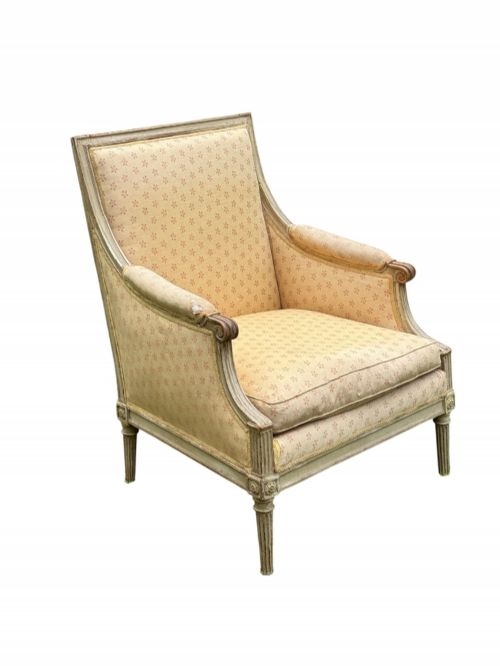


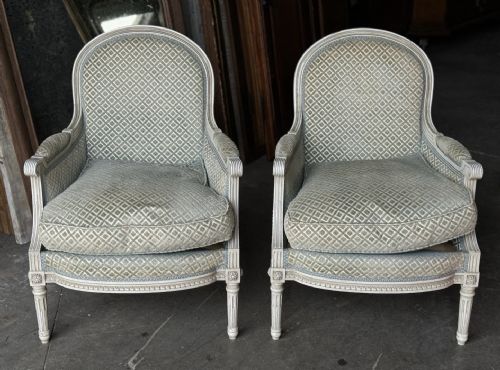

Fluted Leg Bergere Chairs
Fluted leg bergere chairs are elegant tub armchairs defined by open cane panels and classical frames, offering deep seating and enduring French style.
Fluted Leg Bergere Chairs
Fluted leg bergere chairs combine deep, upholstered or caned tub-shaped seating with exposed wooden frames that reflect classical architectural motifs. When exploring fluted leg bergere chairs, a buyer will most frequently encounter nineteenth-century and early twentieth-century French interpretations, particularly those embracing the Louis XVI style.
The selections range from robust Victorian country house library chairs to gilded salon sets and pairs in original paint. These armchairs bridge formal reception rooms and relaxed sitting spaces, offering both decorative presence and comfortable proportions.
Originating predominantly from French and English traditions, the inventory spans the eighteenth century through to the interwar period. Beech, mahogany, walnut, and giltwood form the structural backbones of these pieces, often paired with cane work and fabric upholstery.
Craftsmanship and materials
The construction of these armchairs relies on solid hardwoods such as beech, mahogany, and walnut, alongside gilded wood and occasionally painted finishes. Artisans shaped these timbers to create the characteristic curved tub profiles and straight, channel-carved supports.
Caning forms an integral part of the construction, with woven panels fitted into the backrests and sides to provide flexible, breathable support. Upholstery techniques complete the seating, utilising traditional fabrics like damask to line the seats and inner backs.
Several pairs of armchairs linger on this page, proving that even antique seating prefers not to sit alone.
Distinctions in quality
Quality rests in the crispness of the carving upon the wooden frame and the precision of the joinery connecting the components. Finer examples display deeply struck fluting, harmonious proportions, and integrated structural elements rather than purely decorative additions.
The integrity of the woven cane panels and the authenticity of original surfaces, whether giltwood, paint, or polished mahogany, significantly elevate the standing of a piece. Finer seating balances structural robustness with delicate detailing in the arm supports and leg turnings.
Henri Jacob
The Fluted Leg Bergere Chairs Glossary
- Bergere
- An enclosed upholstered armchair with a low seat and wooden frame, often featuring cane sides and back.
- Fluting
- Shallow, parallel concave grooves cut vertically into a column or furniture leg for classical ornamentation.
- Caning
- A method of weaving peeled rattan or cane strips to form a resilient, patterned mesh for seats and backs.
- Giltwood
- Timber that has been coated with a thin layer of gold leaf or gilt powder for a decorative metallic finish.
- Tub armchair
- A comfortable chair featuring a continuous curved back and arms that form a deep, rounded enclosure.
Fluted Leg Bergere Chairs: Frequently Asked Questions
What is a bergere chair?
A bergere chair is a French-style upholstered armchair featuring a closed upholstered or caned back and sides. It typically includes a loose seat cushion and a visible wooden frame.
These chairs were designed for indoor lounging and reading, bridging the gap between heavy ceremonial seating and relaxed domestic comfort.
How do I spot Louis XVI style?
Louis XVI style is marked by a return to classical straight lines, symmetry, and geometric forms. You will notice rectangular backs, exposed carved framing, and straight fluted legs.
This aesthetic contrasts sharply with the earlier curved exuberance of the Rococo period, offering a restrained and architectural appearance.
Where should I place a bergere?
Bergere chairs suit drawing rooms, studies, and bedrooms where their decorative frames and deep seating can be appreciated. They work well as paired seating beside a fireplace or as a statement reading chair.
Ensure adequate clearance around the chair so the carved wooden details and caned sides remain visible in the room layout.
How do I care for cane work?
Caned panels require gentle dusting with a soft brush and should be kept away from direct heat sources that dry the material. Occasional light dampening of the underside helps maintain the natural elasticity of the rattan.
Avoid placing excessive localized weight on the caned sections to preserve the interwoven tension over time.