


French Chateau Style Chairs
French chateau style chairs bring substantial nineteenth-century presence to a room through carved woodwork and traditional upholstery.
French Chateau Style Chairs
French chateau style chairs encompass a range of nineteenth-century and early twentieth-century seating inspired by traditional court and provincial designs. Buyers searching this phrase typically encounter variations from the Louis XV and Louis XVI periods, alongside later revival pieces.
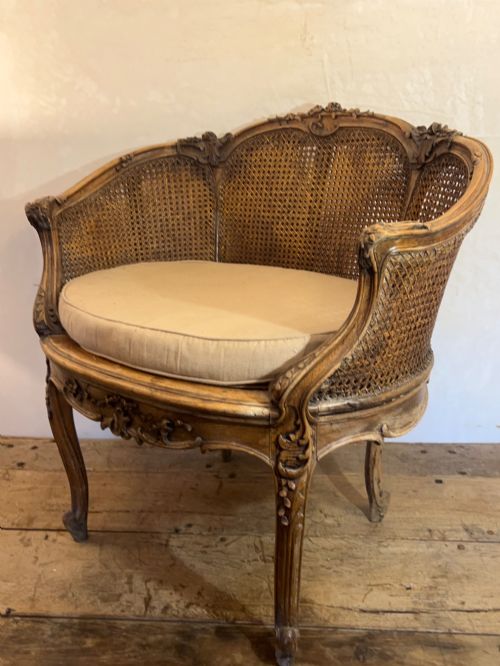
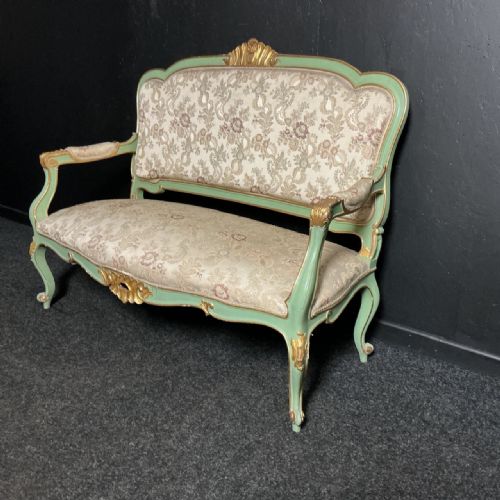
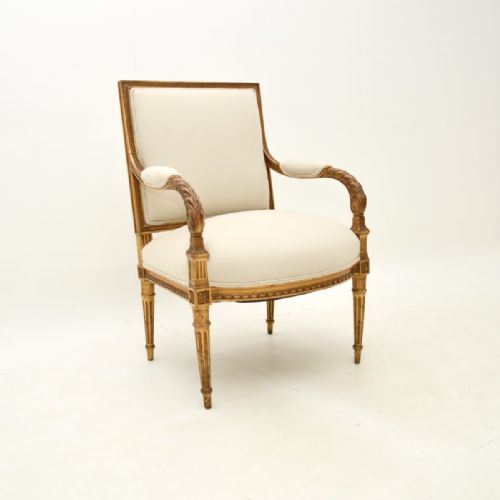
The inventory on this page consists predominantly of armchairs, dining chairs, and settee forms originating from the eighteen-eighties onward. Fauteuils, bergères, and caned side chairs dominate the selection, reflecting domestic seating arrangements of past centuries.
Origins trace primarily to French workshops, though related English walnut pieces also appear. The forms range from gilded salon chairs to painted dining sets intended for daily domestic use.
What varies in quality
The crispness of the hand-carved ornamentation distinguishes finer frames from simpler productions. Deep relief work on walnut or beech indicates superior craftsmanship compared to shallow, machine-routed detailing.
Original surface treatments, such as untouched period paint or patinated giltwood, elevate an item's standing. Subsequent repainting or heavy restoration alters the historic integrity of the wood and finish.
Listings feature nineteenth-century beech and walnut frames alongside painted and gilded surfaces.
The French Chateau Style Chairs Glossary
- Fauteuil
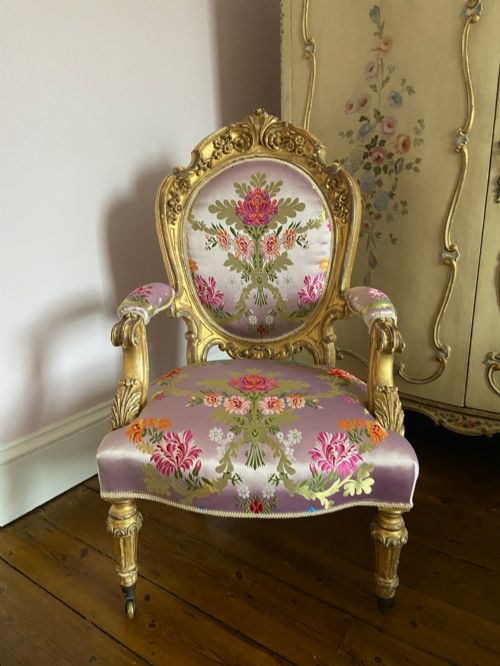
- An open-armed upholstered armchair with exposed wooden framing around the back and sides. This form originated in seventeenth-century France.
- Bergère
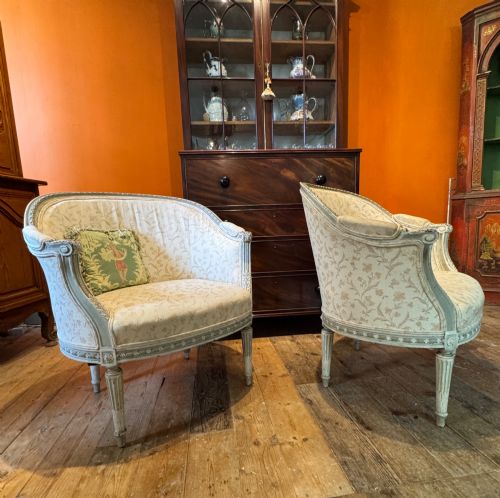
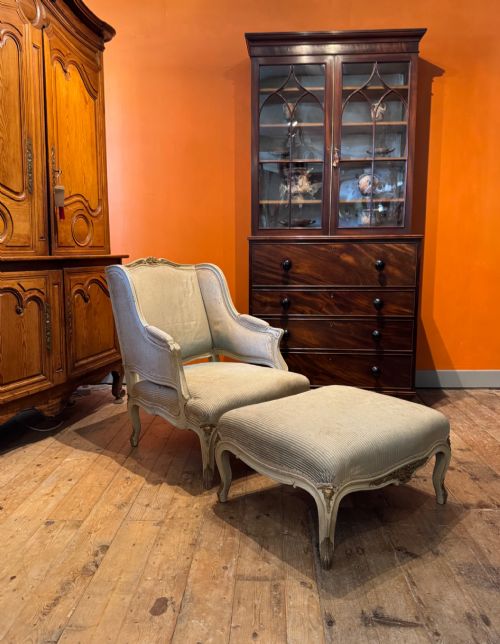
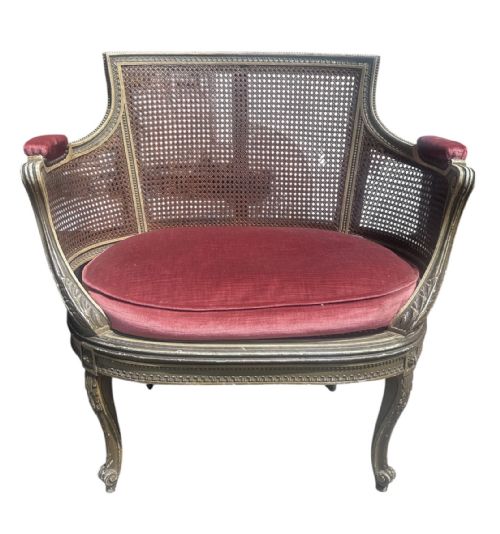
- A closed armchair featuring upholstered sides filled with padding or cane work. It typically includes a loose squab cushion for the seat.
- Giltwood
- Timber coated with a thin layer of gold leaf applied over a prepared gesso ground. This finish was common on formal salon seating.
- Caning
- Woven rattan material used for chair backs and seats. It provides a flexible and decorative surface on nineteenth-century dining chairs.
- Duchesse brisée
- A long chaise longue split into two or three components, often comprising an armchair and matching stool. These pieces allowed for reclining in formal chambers.
French Chateau Style Chairs: Frequently Asked Questions
How do I identify a Louis XV style chair?
Louis XV style chairs feature characteristic asymmetric curves, cabriole legs, and naturalistic floral carvings. The overall silhouette avoids straight lines in favour of flowing serpentine contours.
These pieces often display cartouche-shaped backs and moulded wooden frames without excessive ornamentation. The aesthetic prioritises comfort and organic movement over rigid symmetry.
What is the difference between fauteuil and bergère chairs?
A fauteuil is an open-arm chair with visible wooden sides between the armrest and the seat rail. This design allows for voluminous garments popular in historic periods.
By contrast, a bergère has enclosed upholstered sides, creating a deeper and more cocooning seat. Bergères usually incorporate a separate feather or down cushion.
Can I use antique dining chairs daily?
Nineteenth-century dining chairs in beech, oak, or walnut remain structurally robust for regular use if joints are sound. Periodic checks of the frame stability ensure safe seating during meals.
Caned panels and upholstered seats may require occasional tightening or reupholstery depending on wear. Careful handling preserves the historic timber and finish.
How should I clean painted wooden frames?
Painted wooden frames require gentle dusting with a dry, soft cloth to remove surface particles. Moisture and harsh chemical cleaners damage historic paint layers and underlying gesso.
Preserving original paint involves avoiding abrasive materials and keeping pieces away from direct heat sources. Professional conservation protects fragile finishes from flaking.