
Carved Neoclassical Chairs
When you handle carved neoclassical chairs, you see how strict lines and classical ornament hold a room together.
Carved Neoclassical Chairs
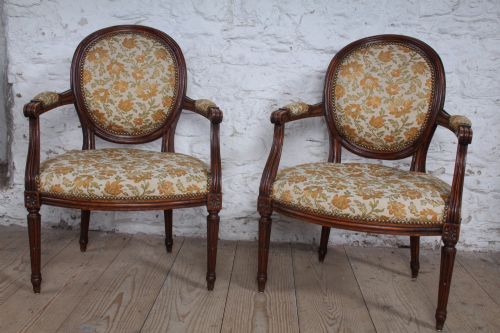
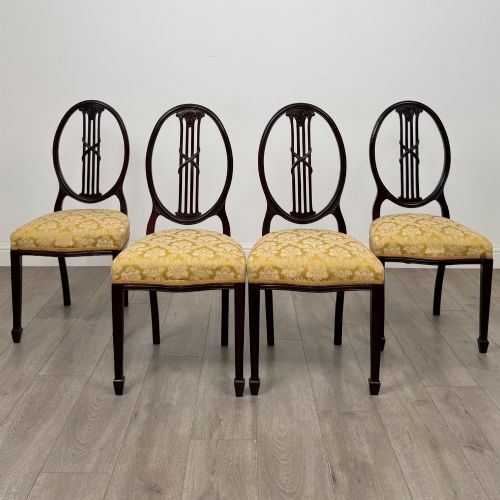
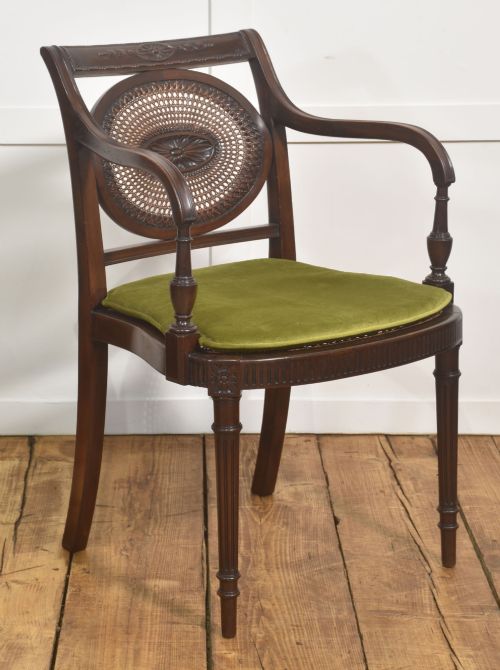
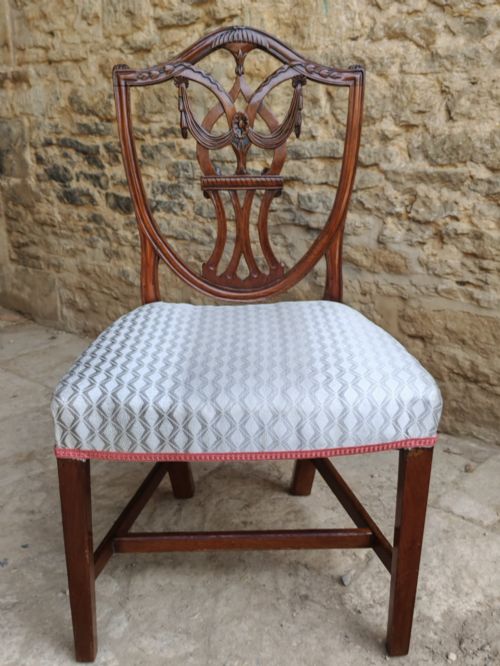
Carved neoclassical chairs encompass seating built across the eighteenth, nineteenth, and twentieth centuries, drawing on the restrained geometry and antique motifs of the classical revival. You will frequently encounter dining chairs, armchairs, and side chairs bearing the influence of Louis XVI, George III, and Hepplewhite designs.
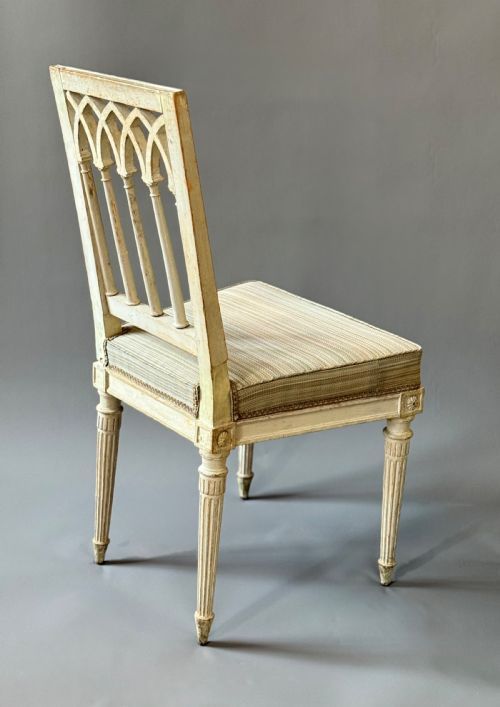
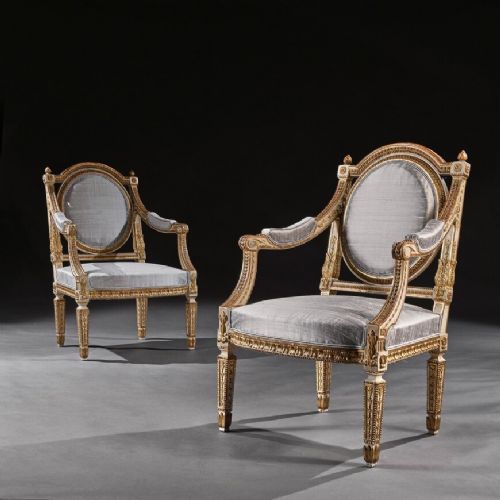
The form relies on straight tapered legs, urn or lyre motifs, and symmetrical carved details rather than the curved exuberance of earlier rococo work. Makers adapted these classical rules for domestic spaces, producing salon chairs and desk chairs in both English mahogany and continental painted finishes.
How they were made
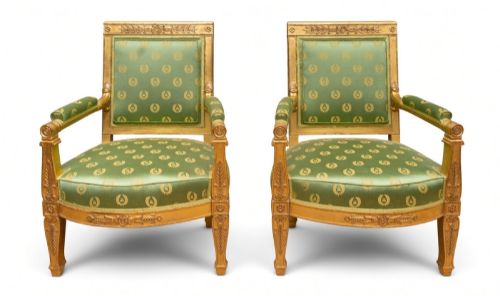
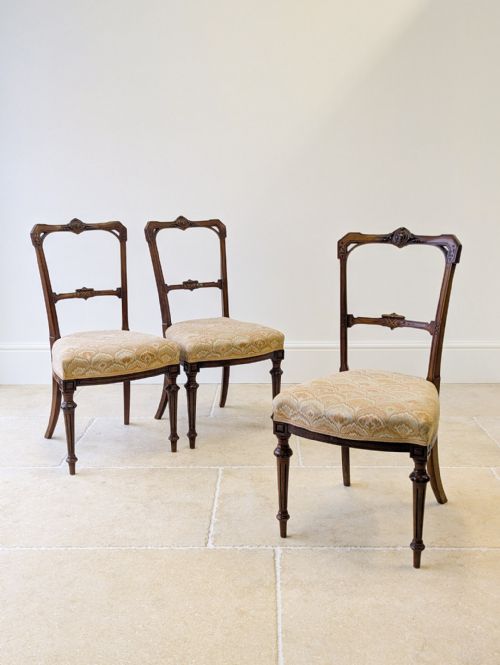
Carpenters shaped these forms from solid timbers like mahogany, walnut, and rosewood, applying hand-carving to create fluted legs, paterae, and ribbon ties. Many continental examples use giltwood or painted wood surfaces, sometimes heightened with parcel gilt over gesso grounds.
Upholstery techniques varied from simple drop-in seats to complex sprung frames covered in fabric, leather, velvet, tapestry, or cane work. Frame construction relied on traditional mortise and tenon joints, designed to withstand daily use while supporting delicate decorative carving.
Some nineteenth-century makers built children's salon chairs, perfectly scaling down grand neoclassical forms for tiny nobility.
What varies in quality
Quality rests in the crispness of the hand-carving and the choice of primary timbers, where deep, clean incisions in mahogany or well-gilded surfaces outshine soft, shallow machine work. The architectural proportions dictate the visual success of the piece, separating balanced formal seating from stiff copies.
Original surface finishes, whether untouched old paint or aged patinated wood, hold greater integrity than later stripping and repainting. Structural joinery that remains tight without excessive modern pinning shows the care taken by the original workshop.
Thomas Chippendale·Jacob-Desmalter
The Carved Neoclassical Chairs Glossary
- Fauteuil
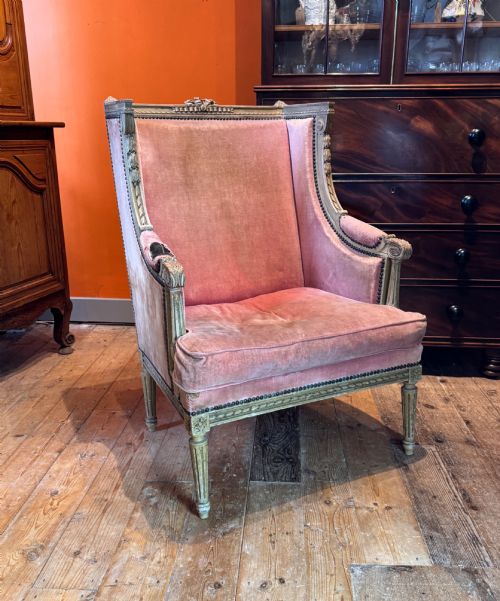
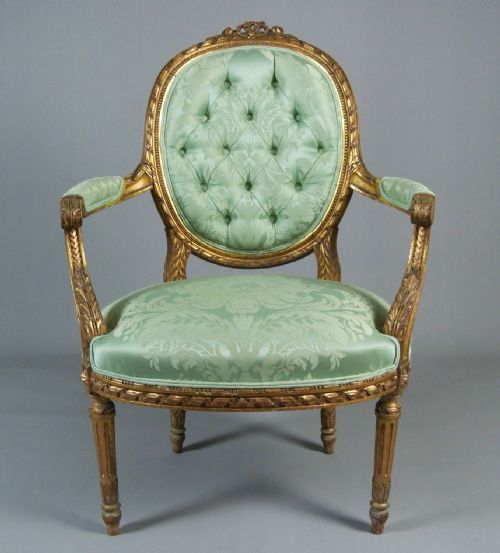
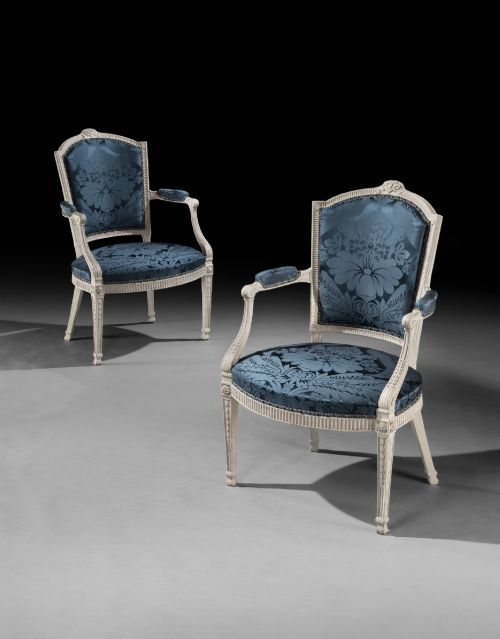
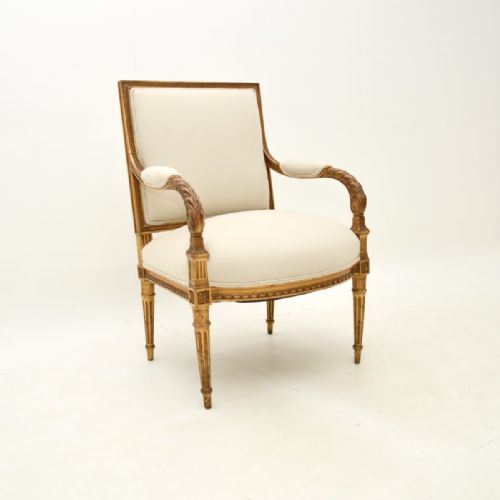
- An open-armed upholstered armchair originating in France, typically featuring exposed wooden framing around the back and armrests. These pieces often display carved giltwood or painted finishes.
- Klismos
- An ancient Greek chair design revived in neoclassical periods, characterised by curved sabre legs and a concave, sweeping backrest. It provides an ergonomic curve suited to the body.
- Lyre Back
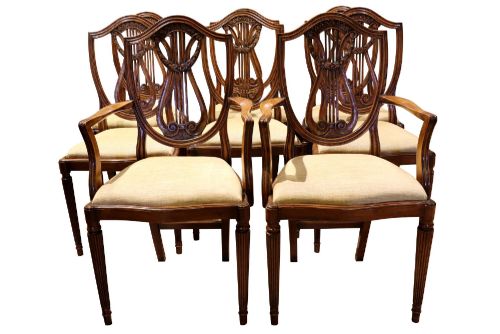
- A chair backrest centred on an open splat shaped like an ancient stringed musical instrument, common in Hepplewhite and Regency designs. The brass or wood strings add linear detail.
- Giltwood
- Timber coated with thin gold leaf applied over a prepared gesso base, common on high-status continental and English salon seating. It catches ambient light in formal rooms.
- Medallion Chair
- A seat featuring an oval or circular padded backrest framed by carved wood, strongly associated with Louis XVI aesthetics. The medallion shape creates a distinct silhouette against a wall.
Carved Neoclassical Chairs: Frequently Asked Questions
How do I identify a neoclassical chair?
Look for straight lines, symmetrical ornamentation, and motifs drawn from ancient architecture, such as fluting, swags, and acanthus leaves. The overall silhouette favours geometric rectilinearity over curved rococo asymmetry.
Check the legs for straight tapered forms rather than cabriole shapes. This architectural discipline separates neoclassical work from earlier eighteenth-century designs.
Are painted chairs original?
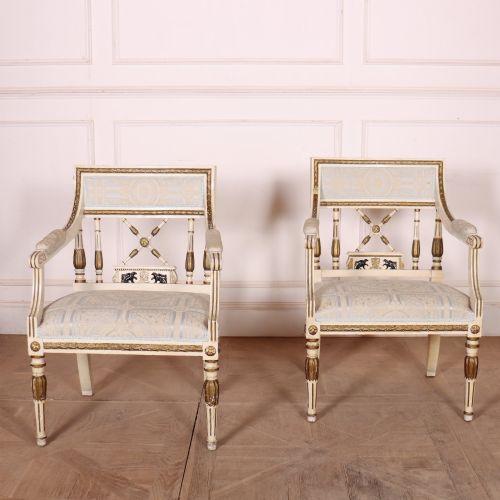
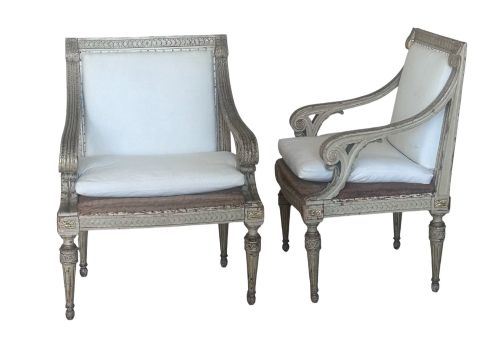
Many continental European chairs, particularly French and Italian examples, were originally finished in white, grey, or polychrome paint with gilt highlights. This finish was chosen to complement interior wall panelling.
Examine the paint surface under magnification to check for layered age and wear beneath modern touch-ups. Original paint adds significant character to salon and dining seating.
Can I use these chairs daily?
Most sturdy mahogany and walnut examples remain entirely suitable for everyday domestic seating, provided the frame joints are secure. Lighter giltwood or antique caned chairs require more mindful placement to prevent structural strain.
Consider having the internal webbing and upholstery professionally checked if you intend to sit in them regularly. Sound joinery matters more than age when assessing daily utility.
What is a carver chair?
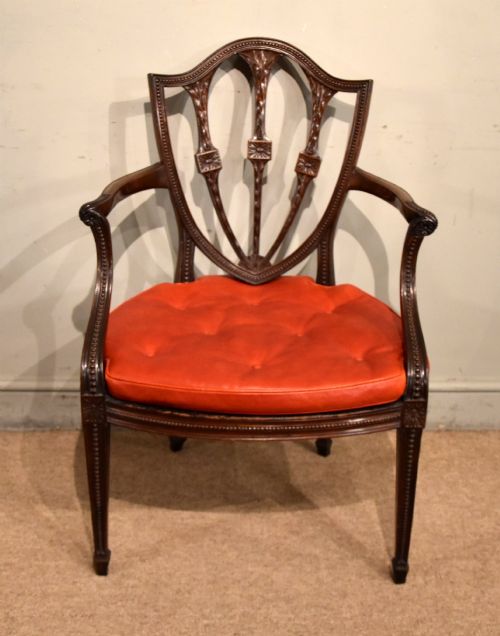
A carver is an armchair designed to match a set of smaller side chairs, traditionally placed at the head of a dining table. They offer broader proportions and armrests for the host.
Pairs or single carvers turn up alongside dining chair sets to create a complete formal arrangement. Their scaled-up framing accommodates the same decorative carving as the matching side chairs.