


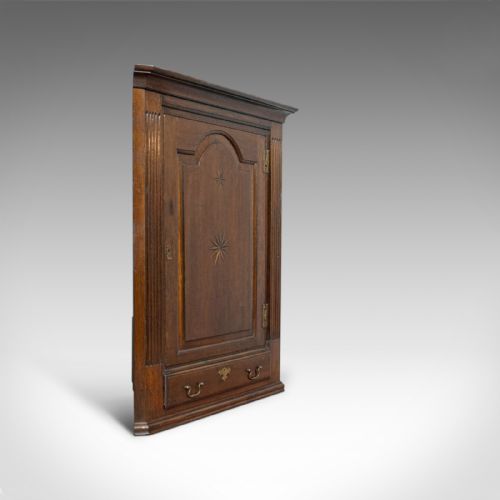

Wall Mounted Oak Cupboard
A wall mounted oak cupboard is a practical piece of period storage designed to utilise empty corners and wall space, bringing rich timber grain and traditional craftsmanship into any room.
Wall Mounted Oak Cupboard
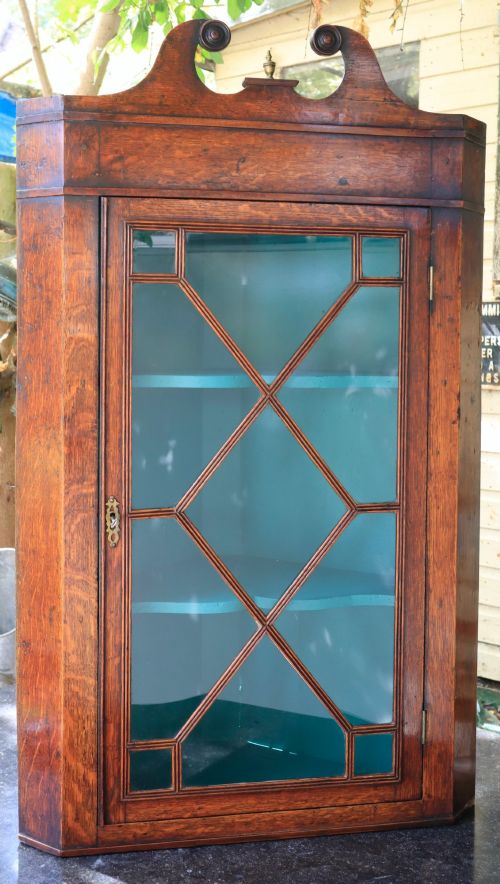
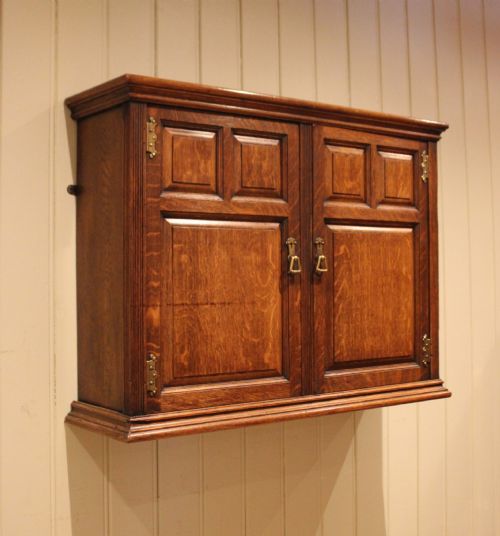
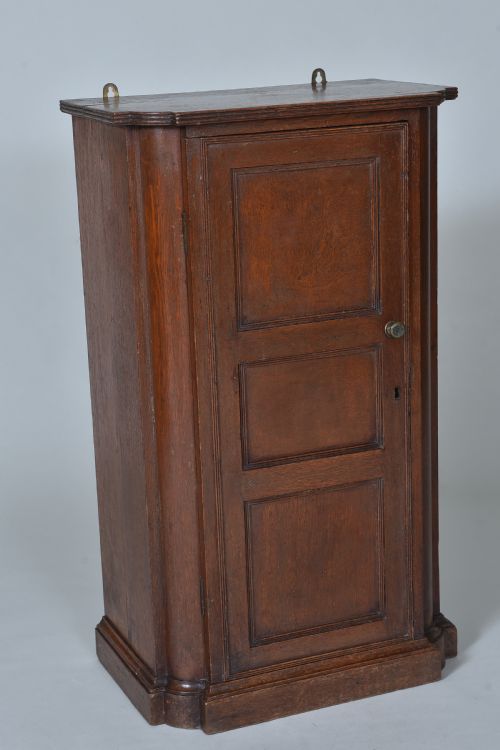
A wall mounted oak cupboard is a functional storage form primarily encountered as corner cabinets and hanging cupboards spanning the eighteenth and nineteenth centuries. These pieces utilise domestic wall space efficiently, often featuring single panelled doors enclosing interior shelving.
The selections span distinct historical eras, with Georgian examples featuring classical proportions and eighteenth century origins alongside later Victorian and Arts and Crafts interpretations. Buyers searching for a wall mounted oak cupboard will frequently find corner variants designed to fit room angles cleanly.
Origins range across English country pieces, Welsh workshops, and French provincial examples, demonstrating regional vernacular variations in timber selection and hardware. These wall cabinets serve both display and concealed storage functions within domestic interiors.
How they were made
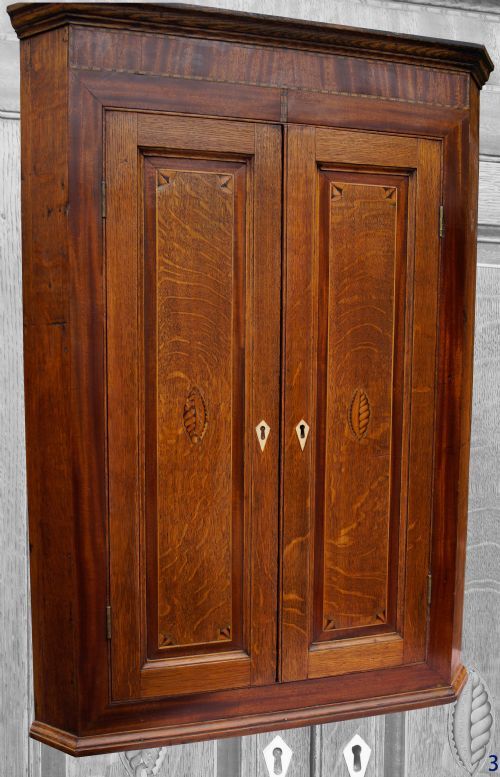
Construction relies heavily on solid oak timbers, occasionally accented with mahogany crossbanding, fruitwood inlay, and contrasting wood details. Joinery techniques include traditional panel construction and dovetailing for drawers where present.
Surface treatments incorporate natural wood finishes that highlight the grain, alongside decorative pokerwork seen in later Arts and Crafts iterations. Brass hinges, escutcheons, and latches provide both functional support and visual contrast against the timber.
Listings feature oak predominantly, supplemented by mahogany, fruitwood inlay, and brass hardware across Georgian and Victorian periods.
What varies in quality
Quality differentiates through the choice of timber and the crispness of execution in raised panels, mouldings, and inlay work. Superior examples demonstrate thoughtful grain matching and well-proportioned cornices that reflect the maker's competence.
Hardware integrity and the preservation of original brass fittings or hinges contribute substantially to the standing of an individual piece. The integration of secondary woods and the precision of the corner joinery further distinguish standard country workshop production from finer cabinetmaking.
The Wall Mounted Oak Cupboard Glossary
- Crossbanding
- A decorative border technique where thin strips of veneer are laid perpendicular to the surrounding grain, often utilising mahogany on oak bodies.
- Pokerwork
- A pyrogravure technique involving heated tools to burn designs into wood surfaces, characteristic of Arts and Crafts decorative work.
- Raised Panel
- A central door panel with bevelled edges designed to fit within a grooved frame, allowing the timber to expand and contract naturally.
- Bow Front
- A convex curved cabinet front that softens room angles and provides additional interior depth compared to flat designs.
- Escutcheon
- A protective metal plate surrounding a keyhole, frequently cast in brass and shaped in period vernacular styles.
Wall Mounted Oak Cupboard: Frequently Asked Questions
How do I hang a heavy oak corner cabinet safely?
These cupboards require secure fixing directly into wall studs or masonry using appropriate load-bearing brackets rather than relying on plaster alone.
Given the substantial weight of solid oak and internal timber shelving, professional installation ensures the piece remains stable and secure.
Are these cupboards suitable for modern walls?
They integrate well into modern spaces by utilising vertical and corner areas that otherwise remain empty, providing useful enclosed storage.
Their traditional timber tones and patination contrast effectively against neutral contemporary plaster and decor.
How can I distinguish an eighteenth century cupboard from a nineteenth century piece?
Eighteenth century examples often exhibit hand-cut joinery, pegged tenons, and simpler vernacular mouldings associated with Georgian country workshops.
Nineteenth century variations may introduce machine-sawn elements, mahogany crossbanding, or revival styles such as Jacobean and Arts and Crafts pokerwork.