
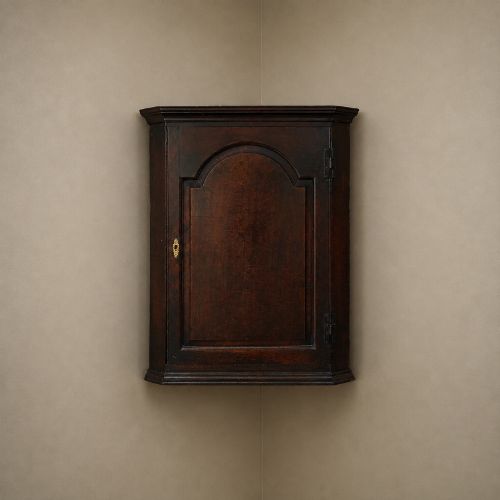
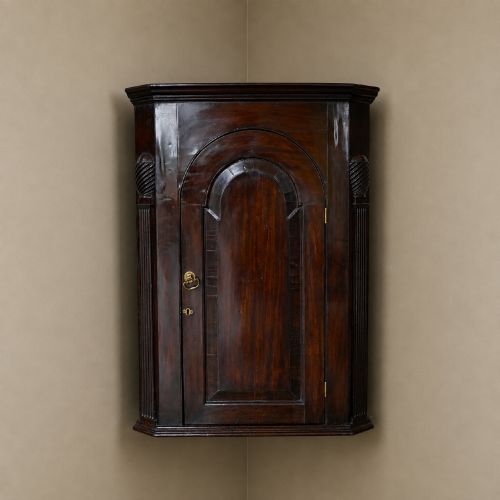
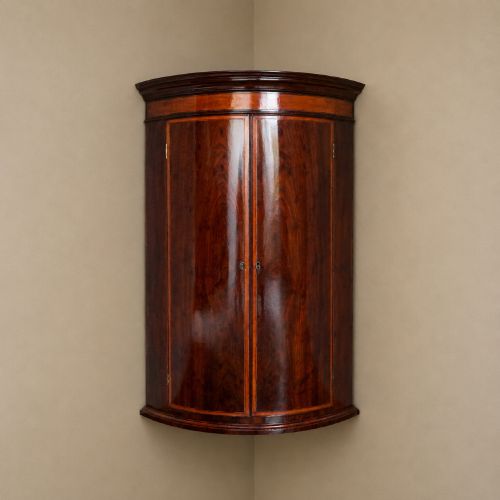
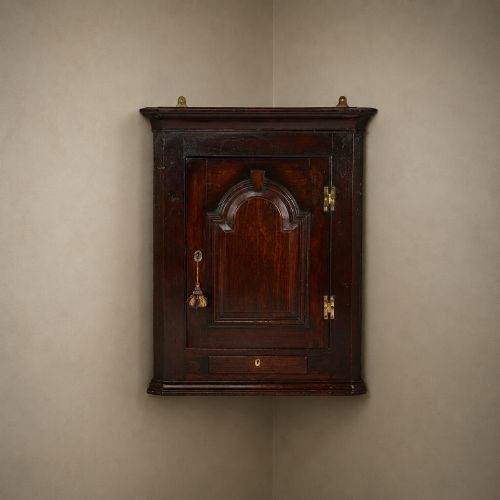
Wall Hanging Corner Cabinet
A wall hanging corner cabinet turns empty rooms into display space, offering clever storage that makes the most of awkward corners.
Wall Hanging Corner Cabinet
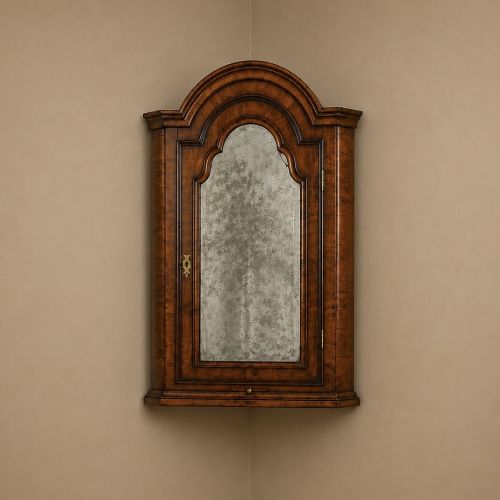
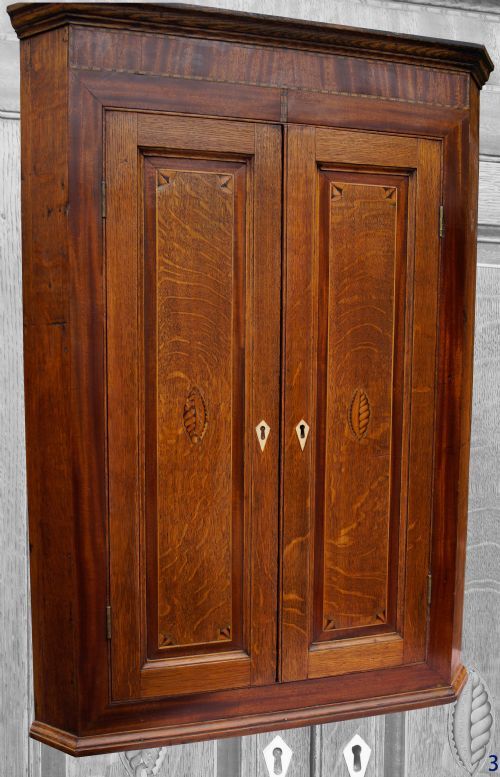
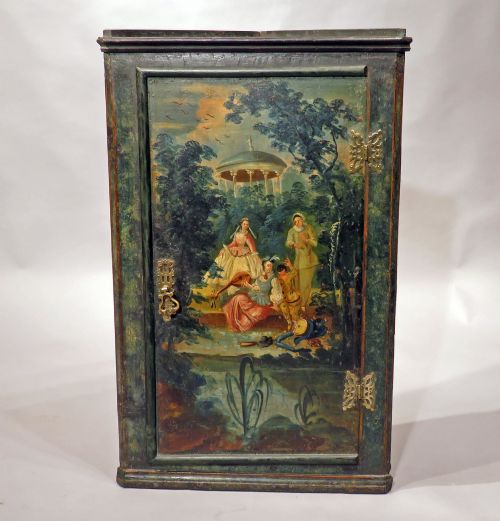
A wall hanging corner cabinet serves to utilise otherwise wasted domestic angles by mounting securely onto room junctions. The search phrase covers functional timber receptacles designed to keep domestic rooms tidy while presenting prized china or glassware.
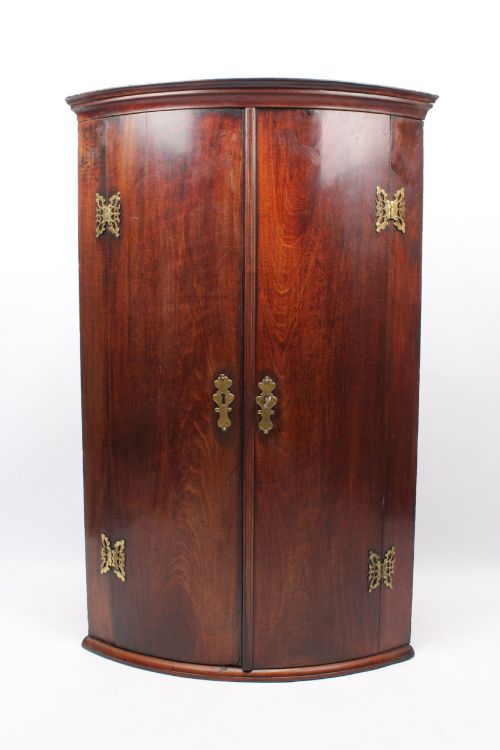
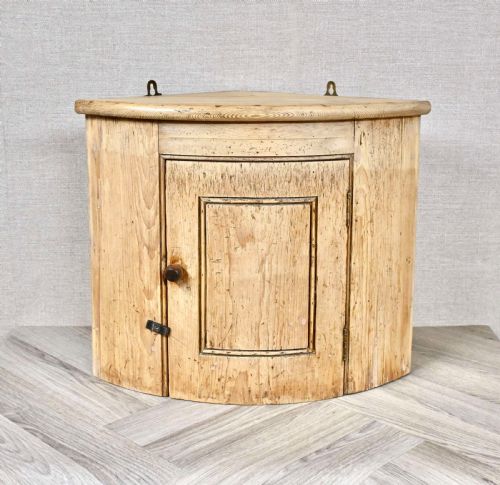
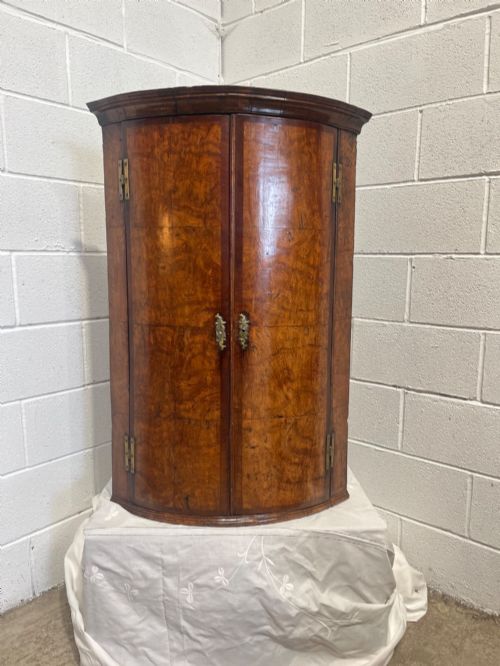
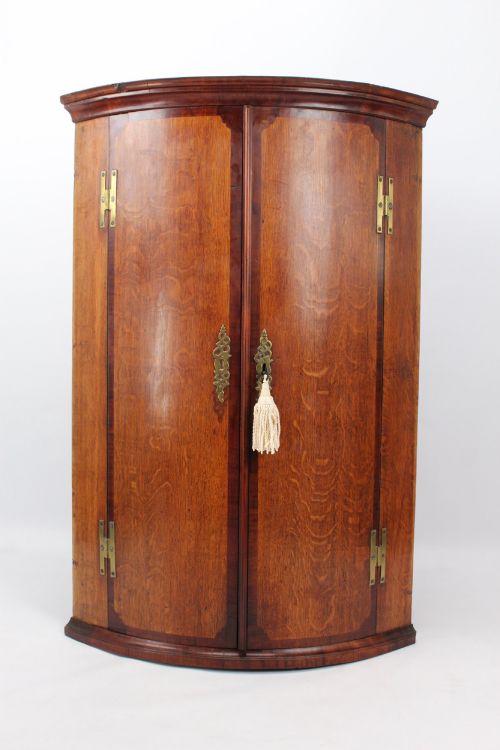
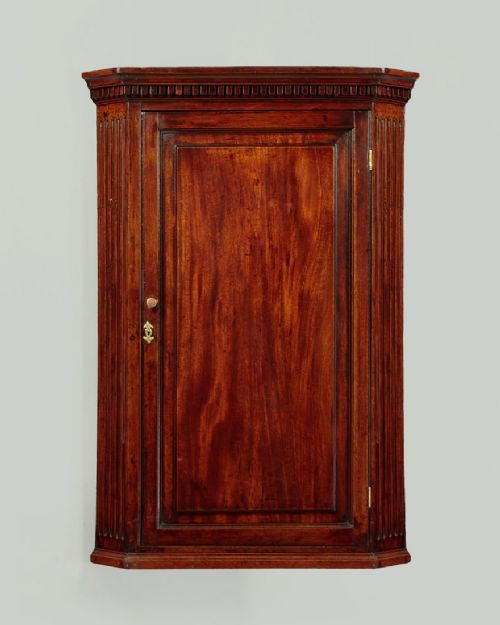
Georgian examples dominate the selection, spanning simple oak country pieces to refined mahogany bow fronts fitted with brass hardware. Edwardian and Victorian iterations introduce lighter display functions alongside rustic pine models built for everyday utility.
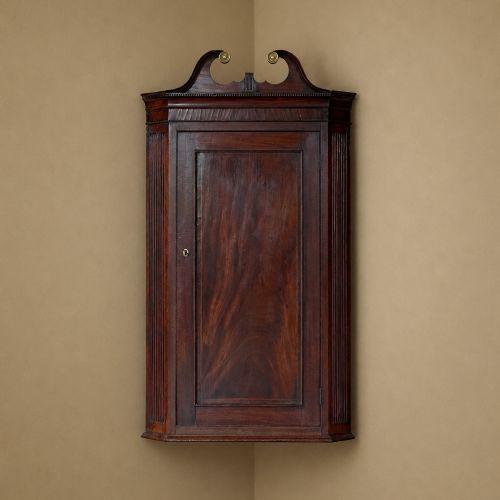
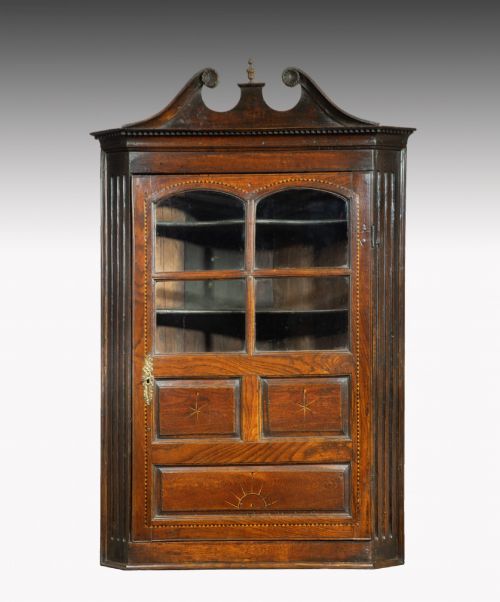
Makers often shaped these fixtures with flat or curved doors, sometimes incorporating glazed upper sections for display or internal drawers for small items. The overarching purpose remains consistent across eras: practical storage tailored to room geometry.
Distinguishing Quality
Superior quality rests in the selection of figured timber grains, such as flame mahogany or burr oak, paired with crisp hand-cut mouldings. Lesser pieces rely on plain, utility-grade pine or heavy, uninspired joinery intended purely for basic storage.
Original glass panes, intact painted interiors and fine brass fixtures elevate a piece significantly above standard workshop output. Construction methods like dovetail joints in the drawers demonstrate the underlying skill invested by the original maker.
Periods represented stretch from early 18th-century walnut pieces to mid-20th-century Georgian revival items.
The Wall Hanging Corner Cabinet Glossary
- Bow front
- A convex curved cabinet door projecting outward from the flat wall lines, popular during the Georgian period. This shape softens rigid room angles.
- Astragal glazed
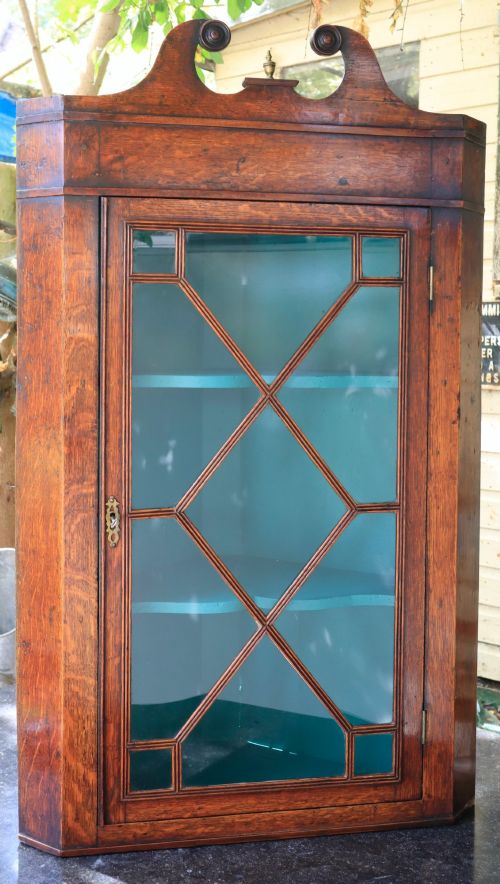
- A glass door divided into smaller panes by narrow wooden bars called astragals. It allows contents to be viewed while keeping them enclosed.
- Japanned
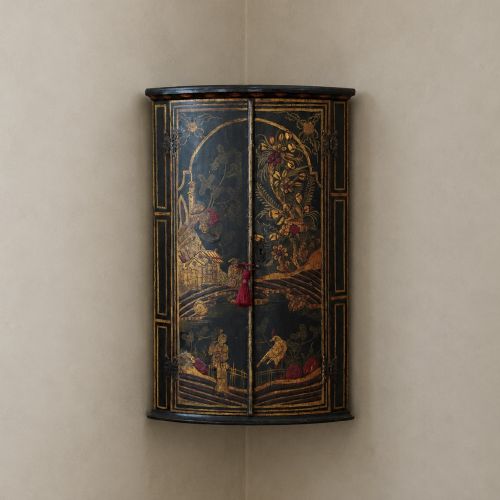
- European imitation of East Asian lacquerwork, created by building up layers of varnish and decorative motifs. It provides a glossy, dark surface finish.
- Escutcheon
- A protective plate surrounding a keyhole, usually cast in brass. It prevents the surrounding wood from wearing down through repeated use.
Wall Hanging Corner Cabinet: Frequently Asked Questions
Where should I hang a corner cabinet?
These cabinets suit dining rooms, hallways or kitchens where floor space is limited and dead corners need purpose. Hanging height depends on eye level and whether the cabinet contains display items or everyday kitchen goods.
Ensure the wall structure can support the weight of solid timber carcases, particularly when loaded with heavy ceramics or glass bottles. Fixing directly into wall studs or using heavy-duty fixings provides necessary security.
How do I date a wooden corner cupboard?
Dating relies on examining timber species, construction joints, backboards and surface hardware styles. Georgian pieces often feature hand-sawn oak timbers and pegged joints, whilst later Victorian and Edwardian examples show mechanical sawing marks.
Secondary woods used inside, such as pine versus oak, also offer clues to regional British workshop origins. Drawer construction provides further evidence, with hand-cut dovetails preceding mass-produced joinery.
Did these cabinets always have locks?
Most antique hanging corner cupboards featured working brass locks to secure valuable contents like tea, spirits or fine porcelain. Keys were essential accessories in period households where domestic goods required safekeeping.
Many surviving pieces retain their original locks and escutcheons, though replacement keys are common. A functioning lock adds historical completeness to the piece.
What is astragal glazing?
Astragal glazing refers to glass doors divided into individual panes by slender wooden bars called astragals or glazing bars. This technique allowed cabinet makers to create elegant geometric patterns across the front of the display space.
Georgian and Edwardian makers favoured this style to showcase books, china or glassware while protecting items from dust. The fineness of the wooden bars often indicates the quality of the workshop.