
Vintage Wooden Writing Table
A vintage wooden writing table offers a dedicated surface for correspondence, bringing solid timber construction and period character to a room.
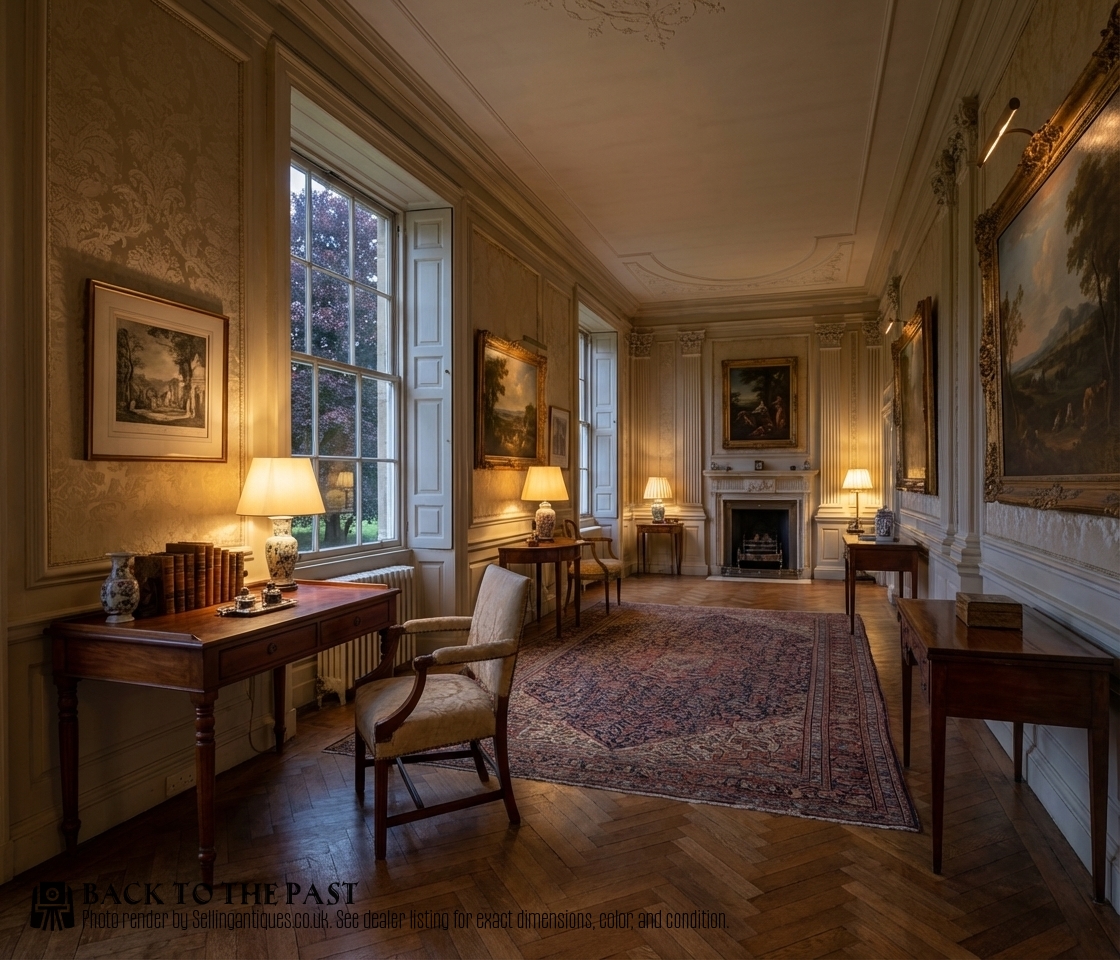
Vintage Wooden Writing Table
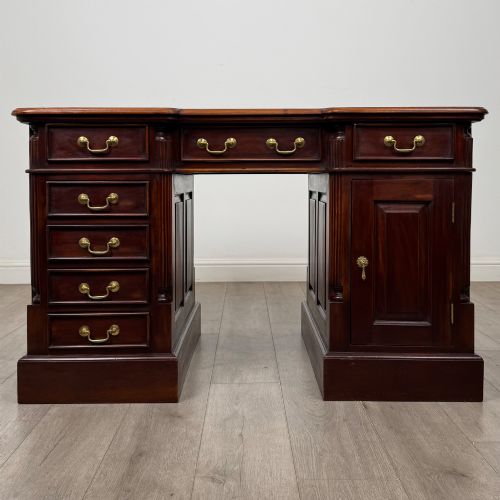
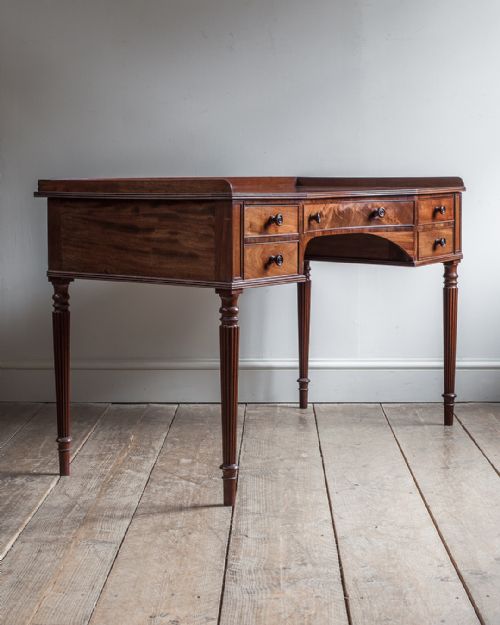
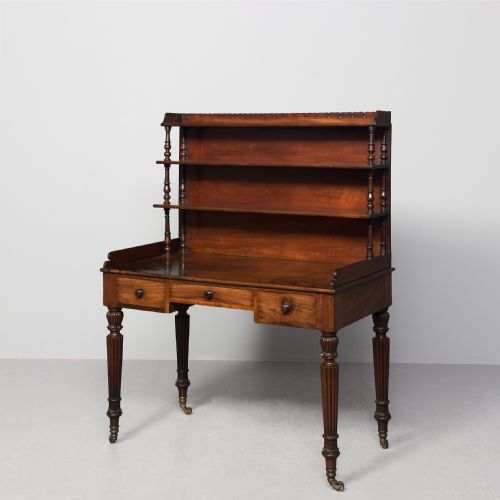
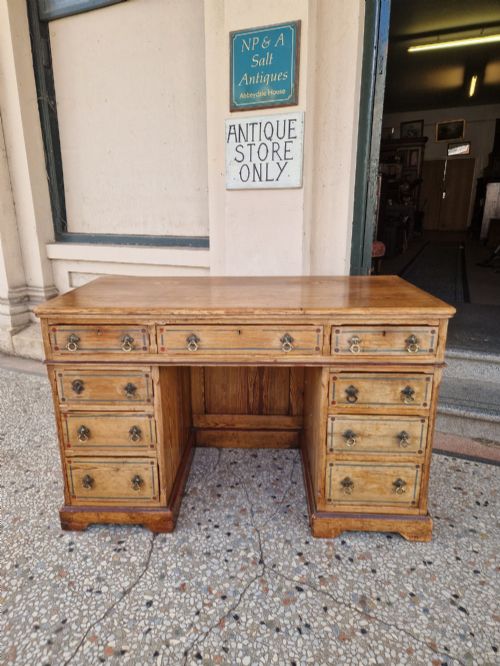
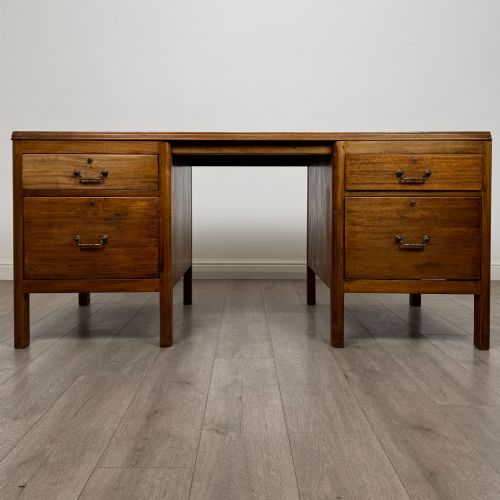
A vintage wooden writing table is a practical workspace designed for letters and administration, appearing across periods from the eighteenth century to the art deco era. These pieces span compact kneehole desks, fall-front bureaus and larger library tables intended for domestic or institutional studies.
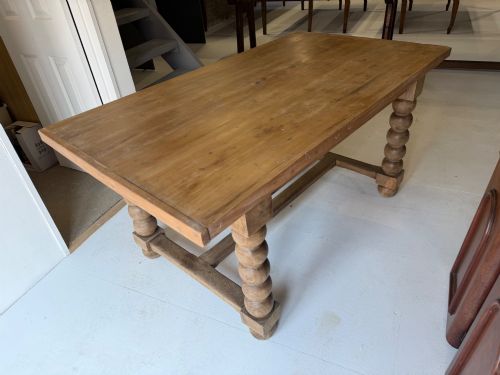
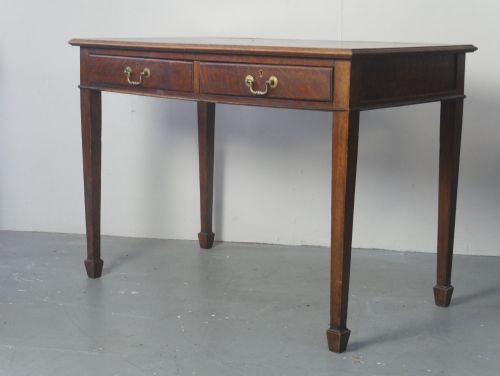
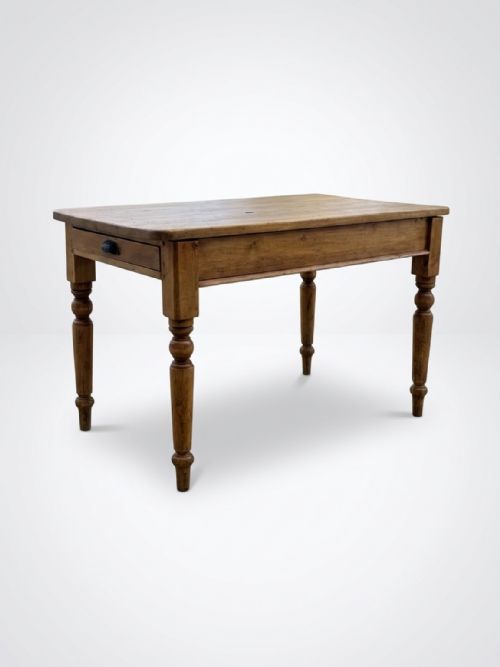
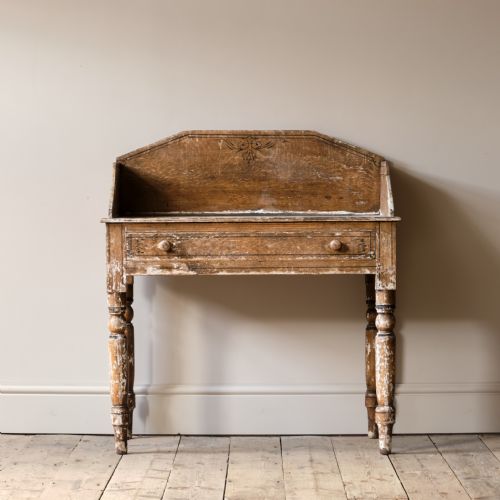
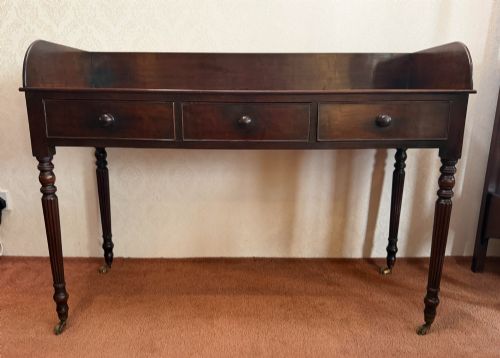
The most common examples on this page date from the Victorian and Edwardian periods, often constructed in mahogany, oak or walnut. Simple side tables and washstands also appear alongside dedicated pedestal desks, reflecting how writing furniture was utilised in period homes.
Materials and construction
Cabinetmakers built these tables primarily using hardwoods such as mahogany, oak and walnut, frequently selecting burr walnut veneers for decorative surfaces. Secondary timbers like pine appear on drawer linings and structural framing.
Writing surfaces often incorporate inset panels of leather to provide a suitable texture for writing. Brass handles, hinges and castors complete the hardware on finer pieces.
Listings feature writing furniture in mahogany, oak, walnut and pine across Georgian, Victorian, Edwardian and Art Deco periods.
Judgments of quality
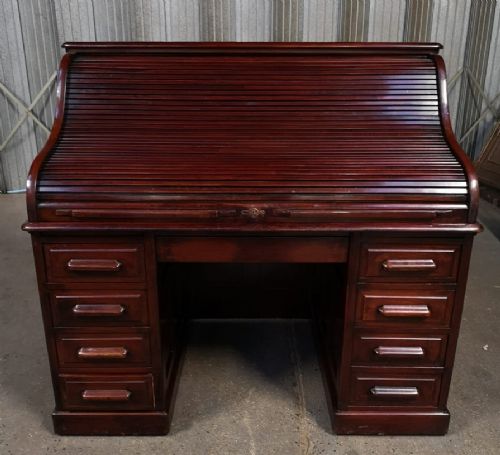
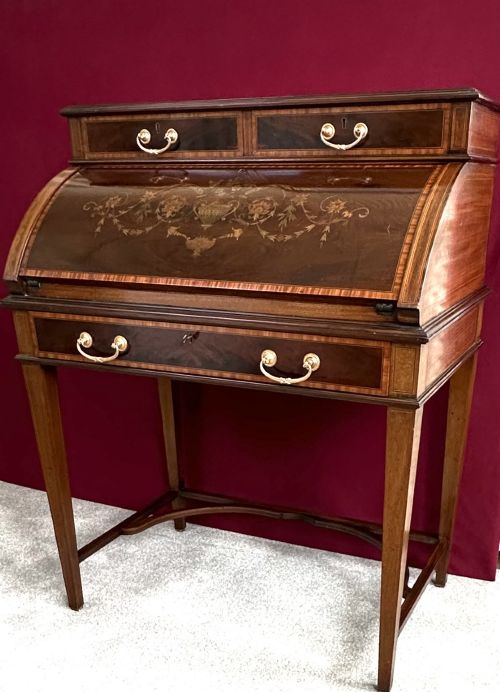
Quality rests on the selection of timber and the precision of the cabinetwork, from secret drawers and tambour cylinders to solid structural joints. Finer pieces demonstrate careful grain matching, particularly on burr walnut and mahogany surfaces.
Provenance and maker attribution elevate certain desks, as seen in pieces bearing the stamps of established firms like Hobbs and Co., James Mein of Kelso or Heal's. Original brass hardware, fitted interiors and well-preserved leather inserts also distinguish superior examples.
James Mein of Kelso·Hobbs & Co.·Heal's
The Vintage Wooden Writing Table Glossary
- Kneehole desk
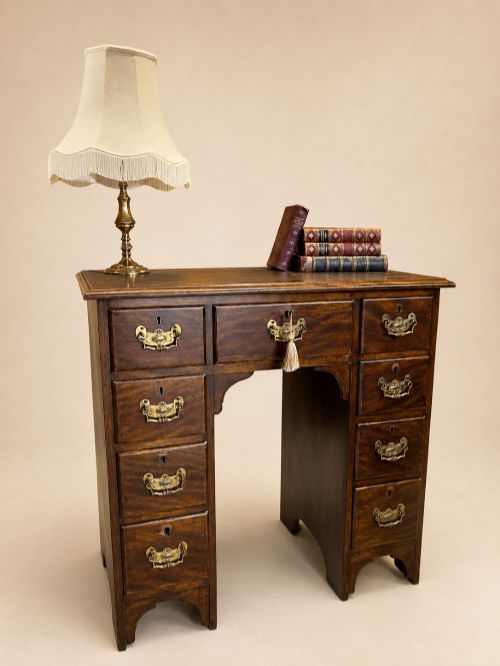
- A compact pedestal desk featuring a central recess for the user's legs, flanked by banks of small drawers.
- Fall-front bureau
- A desk with a hinged flap that folds down to create a sloping writing surface, concealing pigeonholes and small drawers inside.
- Tambour
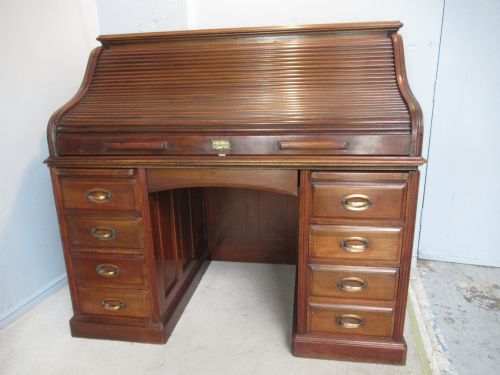
- A flexible shutter made of narrow vertical strips of wood glued to a canvas backing, used to slide smoothly around a curve and enclose a desk interior.
- Lowboy
- A small seventeenth or eighteenth-century dressing table or side table fitted with one or more tiers of drawers beneath the top.
- Pedestal desk
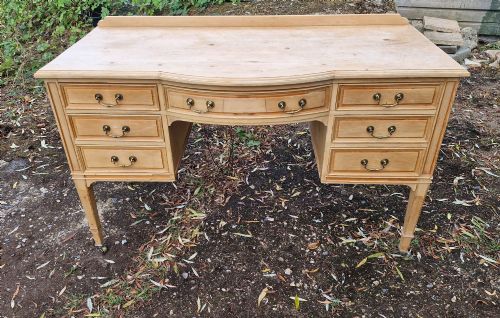
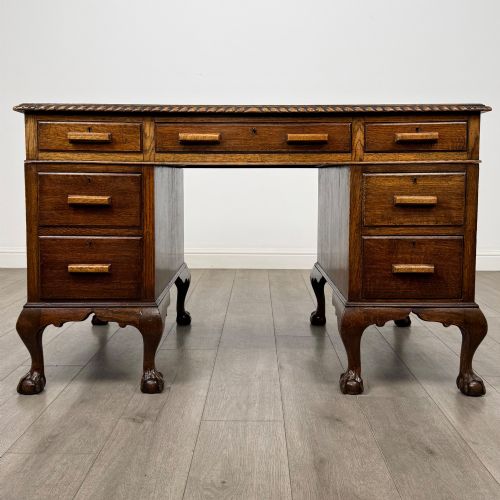
- A heavy freestanding desk comprising two supporting pedestals of drawers with a central desktop across them.
Vintage Wooden Writing Table: Frequently Asked Questions
What is a vintage wooden writing table?
A vintage wooden writing table is a period piece of furniture designed specifically for writing, correspondence and administrative tasks.
These tables range from simple single-drawer side tables to elaborate pedestal desks and roll-top designs made from timbers like mahogany, oak and walnut.
Where should I place a writing table?
These tables adapt well to studies, living rooms or bedrooms, functioning as functional workspaces or decorative console surfaces.
Freestanding pedestal desks look striking positioned in the centre of a room, while smaller side tables fit neatly against walls.
How do I care for a leather writing surface?
Leather desk inserts require gentle dusting and occasional treatment with appropriate leather balms to prevent drying and cracking.
Avoiding direct sunlight and excessive moisture helps preserve both the leather top and the surrounding wooden frame.