
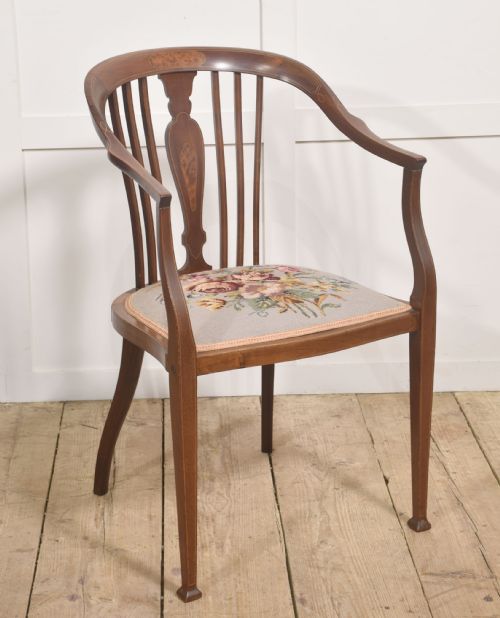


Vintage Wooden Tub Chair
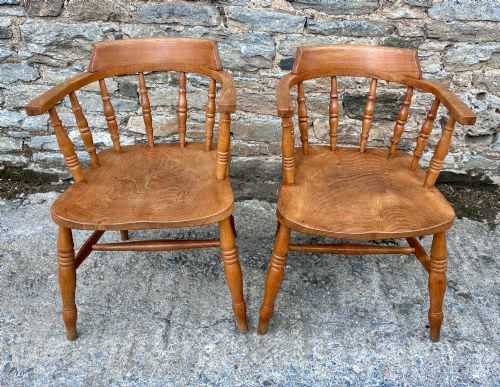
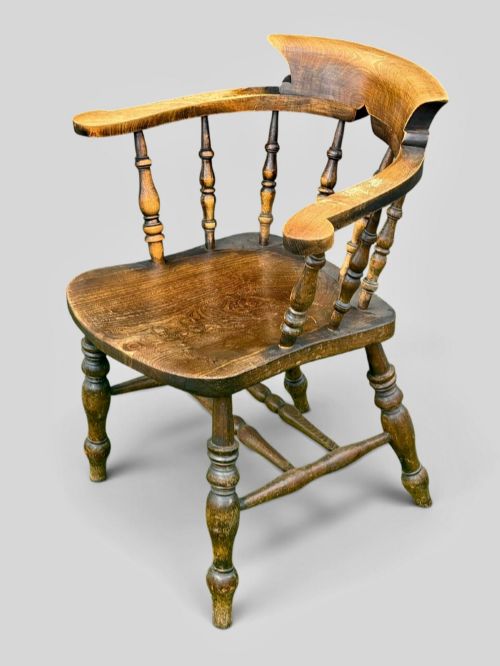
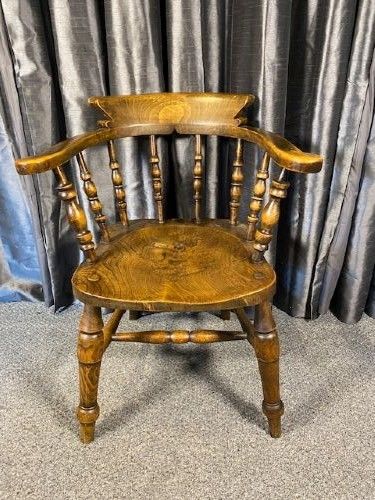
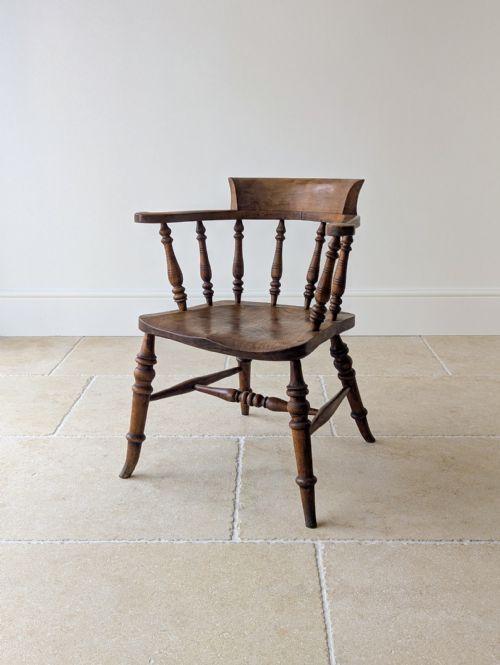
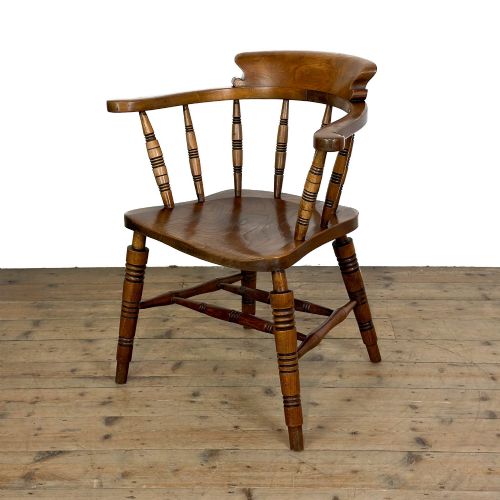
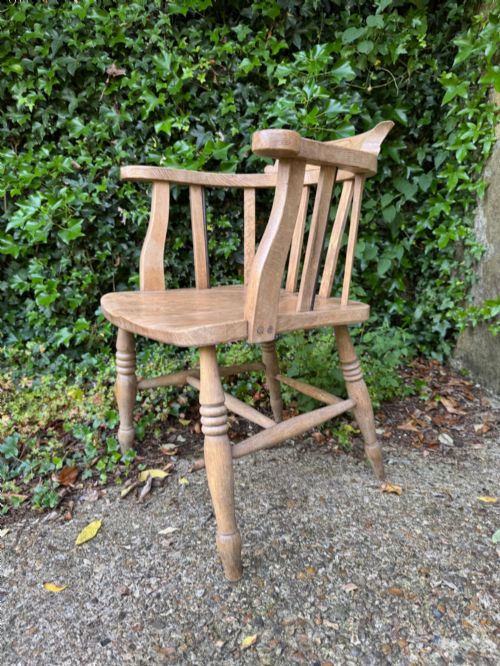
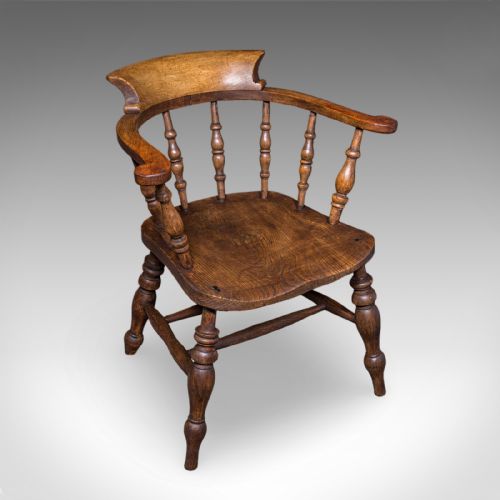
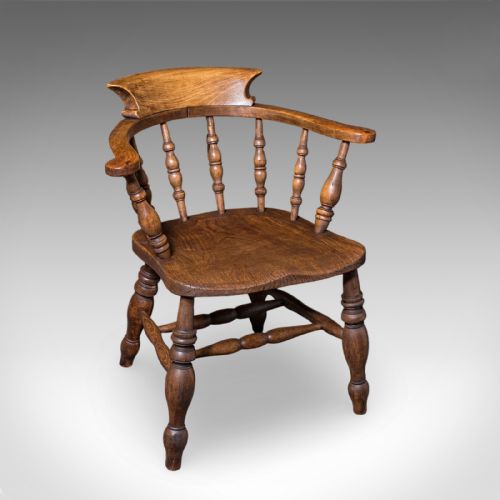
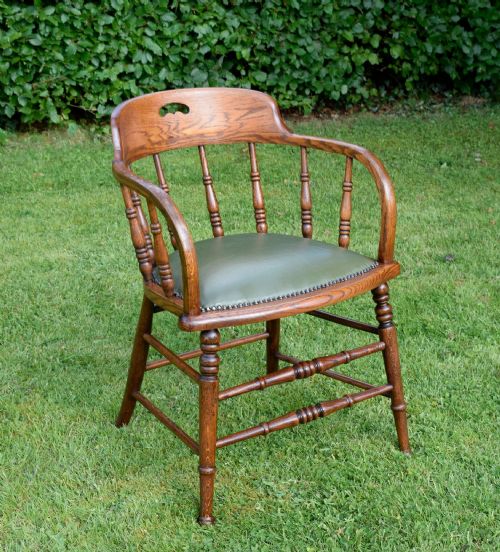
A vintage wooden tub chair wraps the sitter in a continuous curved back, combining nineteenth-century timber frames with low, enveloping seats.
Vintage Wooden Tub Chair
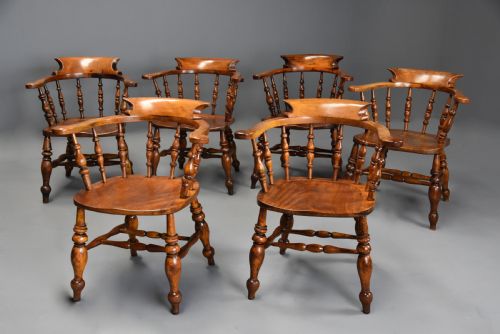
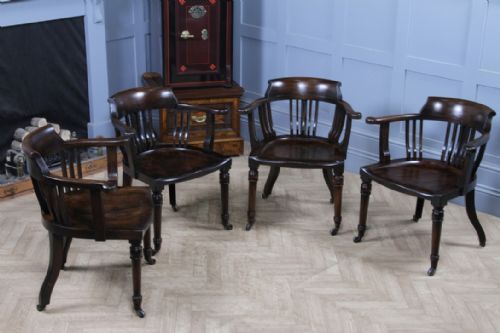
When searching for a vintage wooden tub chair, buyers encounter solid timber seating built across the nineteenth and early twentieth centuries, spanning periods from the eighteen-eighties to nineteen-thirty. The selection here leans heavily towards sturdy captain chairs, smokers bows, and oak or mahogany desk chairs alongside French bergère forms.
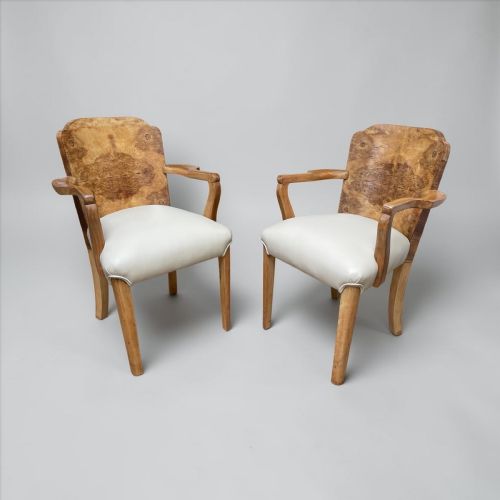
Forms range from sturdy elm and beech country armchairs to refined Edwardian mahogany desk chairs and Louis XV style painted cane seats. Many pieces serve specific domestic functions as office chairs, occasional seating, or low library seats.
Origins stretch across English country houses and French workshops, utilising traditional vernacular designs that prioritise robust joinery and deep, curved backrests over rigid formality.
Materials and construction methods
Carpenters built these frames using native and imported hardwoods, most frequently pairing elm seats with beech, oak, or ash for the bentwood rails and spindles. Mahogany and satinwood appear in later Edwardian and desk-specific variations.
Makers shaped the continuous tub rails through steam-bending timber, securing joints with traditional dowels and wedged tenons to withstand daily use in studies and parlours.
Upholstery and seating surfaces varied from solid turned timber and woven cane panels to tan hide and fabric inserts, matched to the function of the chair.
Listings span the nineteenth and twentieth centuries, featuring oak, elm, mahogany, beech, cane, and leather across various desk and armchair formats.
Distinctions in craftsmanship
Quality rests in the integrity of the steam-bent back rail and the weight of the timber selected for the shaped seat. Superior examples retain crisp carved details and tight, original joinery without excessive reinforcement.
The sophistication of secondary woods and the presence of fine inlay work, such as mahogany and satinwood combinations, elevate certain desk chairs above plain utilitarian seating.
The Vintage Wooden Tub Chair Glossary
- Tub chair
- An armchair with a low, continuous curved back and arms forming a single enclosing unit. This shape provides compact comfort and support for the sitter.
- Smoker's bow
- A sturdy nineteenth-century wooden armchair featuring a low rounded back rail above turned spindles. These pieces frequently served as Captain's chairs in offices and studies.
- Bergère
- An enclosed upholstered armchair with wooden frames, often featuring exposed carved oak or painted finishes and cane panels. French examples frequently follow Louis XV revival styles.
- Caned
- A seating surface woven from rattan peel stretched across a wooden frame. This technique lightened the visual weight of Edwardian and nineteenth-century chairs.
- Captains chair
- A low, robust wooden armchair designed for swivel bases or desk use, originating in the Victorian era.
Vintage Wooden Tub Chair: Frequently Asked Questions
What is a tub chair?
A tub chair is an armchair characterised by a low, rounded back that curves seamlessly into the arms. The resulting enclosed shape resembles the side of a wooden tub.
Craftsmen often used steam-bent timber to form this continuous rail, supporting it with turned spindles or solid wood panels above a saddle-shaped seat.
How do I date a wooden chair?
Dating relies on examining the timber species, joinery techniques, and overall style cues recorded across the Victorian, Edwardian, and Art Deco periods. Earlier pieces often combine elm and beech with hand-cut fixings.
Later Edwardian and nineteen-thirty examples introduce refined mahogany frames, lighter cane work, and occasionally stamped manufacturer details on the underside.
Were these chairs used at desks?
Many sturdy wooden armchairs and smokers bows served dual purposes as desk chairs in nineteenth-century studies and offices. Their curved backs offered support during long hours of writing.
Victorian and Edwardian workshops also produced specific swivel variants in oak and mahogany tailored exclusively for office use.
How do I care for antique timber?
Maintenance requires keeping wooden frames away from direct heat sources and sudden temperature shifts that dry out historical timber. Regular application of suitable beeswax preserves the natural grain.
Avoid chemical polishes that degrade the patina built up over centuries of handling and domestic use.