

Vintage Wooden Serving Tray
A vintage wooden serving tray brings tangible utility and period character to a room, ranging from mahogany butler's trays on stands to inlaid Edwardian tea platters.
Vintage Wooden Serving Tray
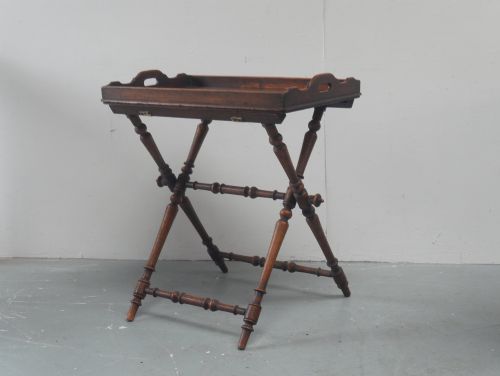
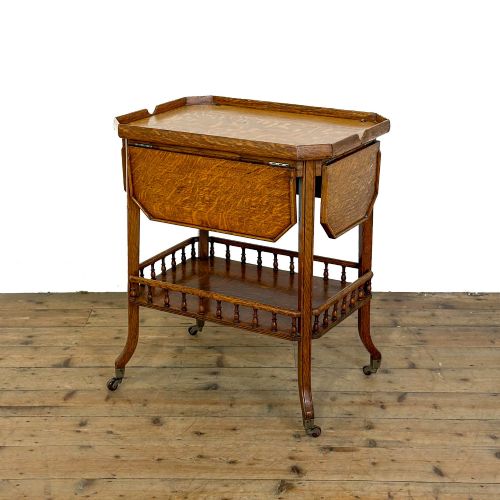
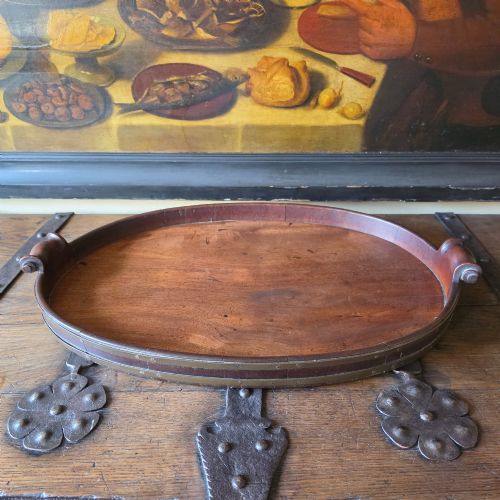
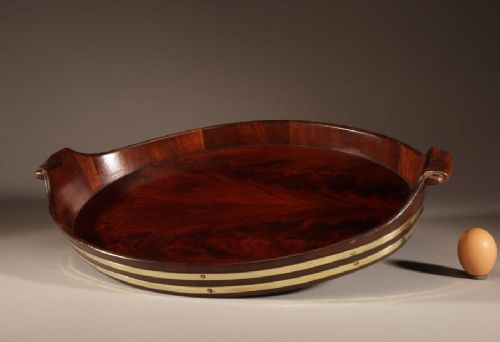
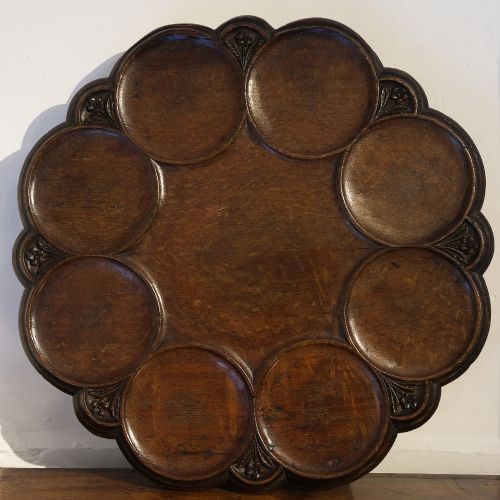
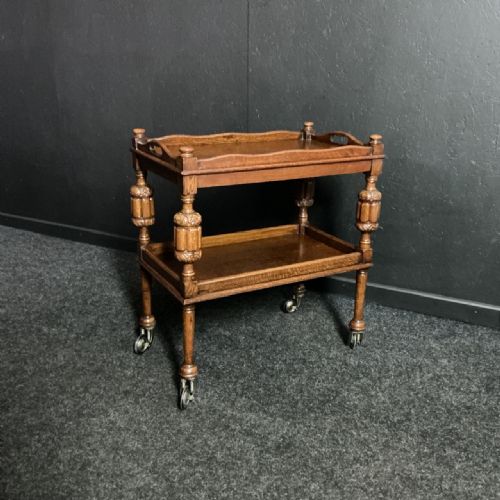
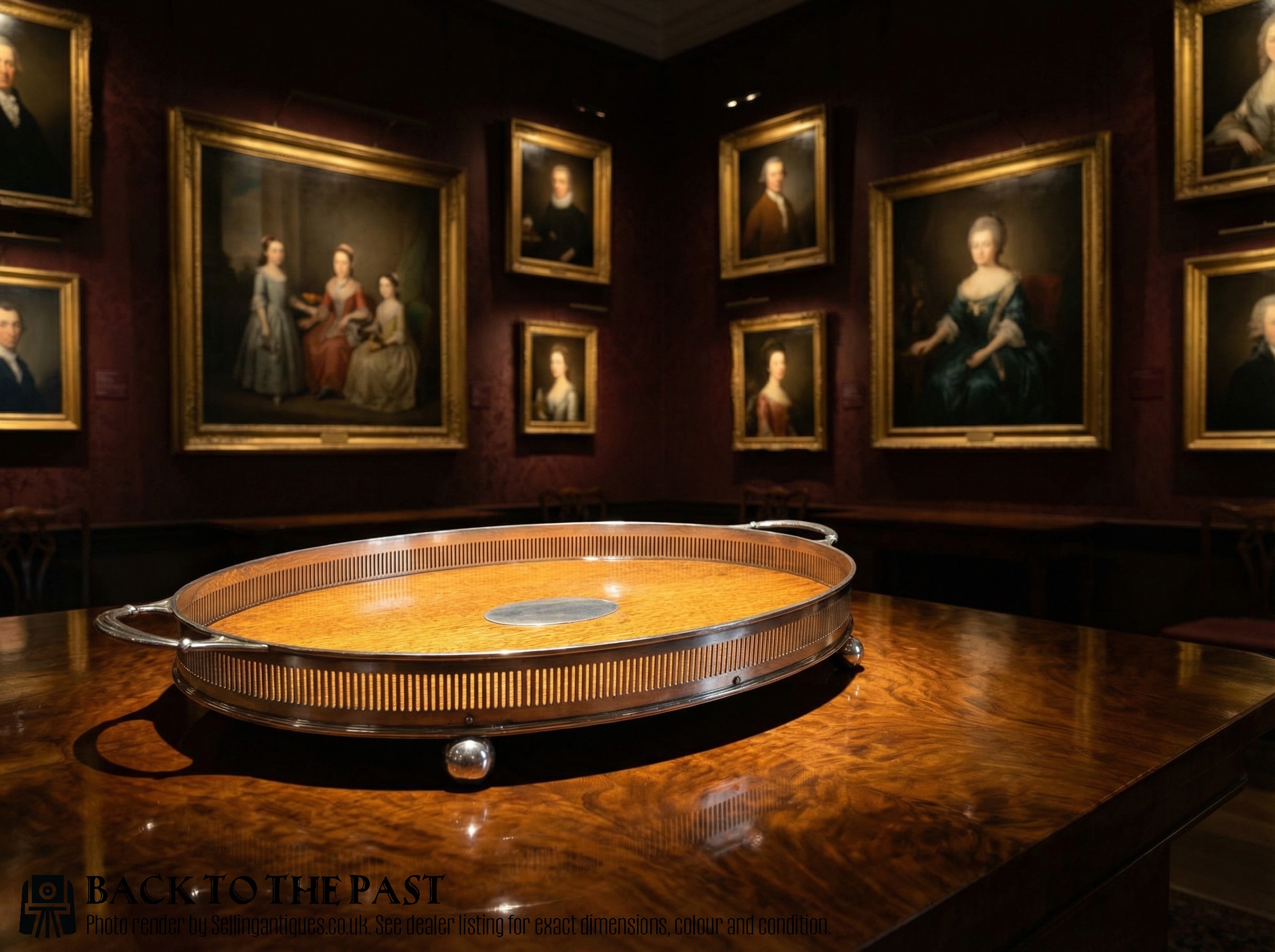
A vintage wooden serving tray encompasses forms designed for carrying drinks and food, including oval serving platters, butler's trays with folding stands, tea trolleys, and rotating lazy susans. These pieces span from the 18th century through the Edwardian era, reflecting changing domestic habits around hospitality and afternoon tea.
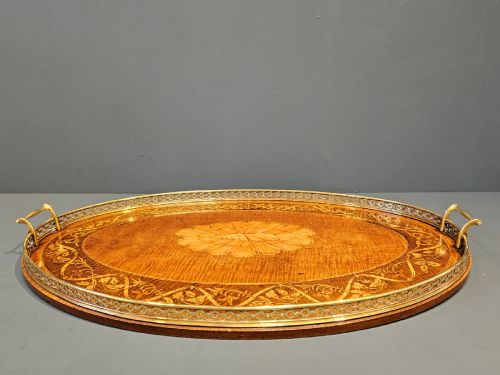
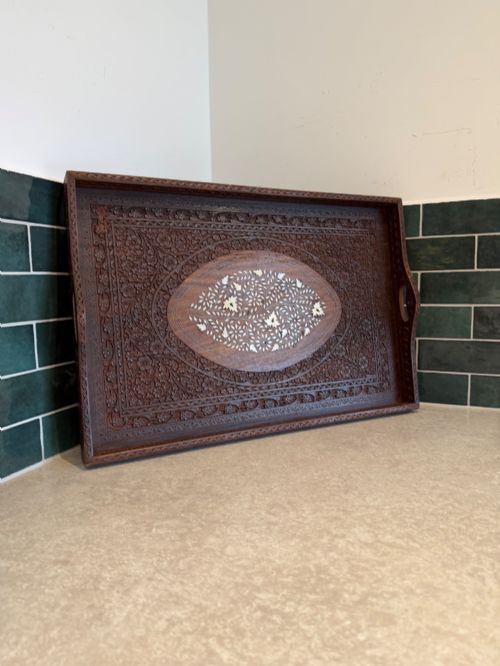
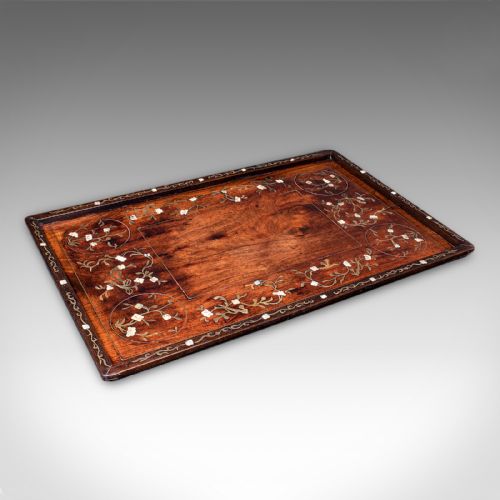
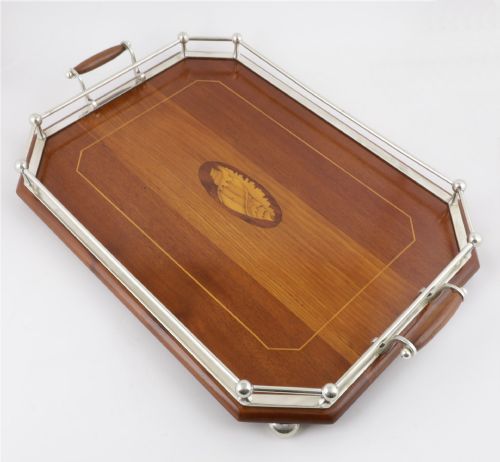
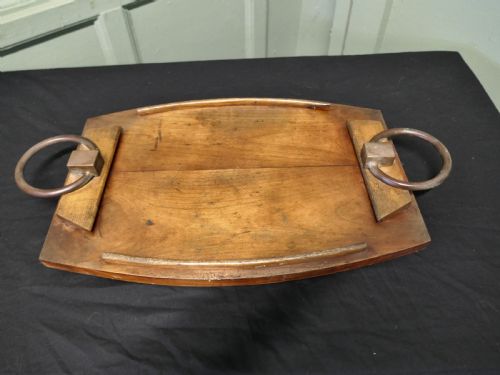
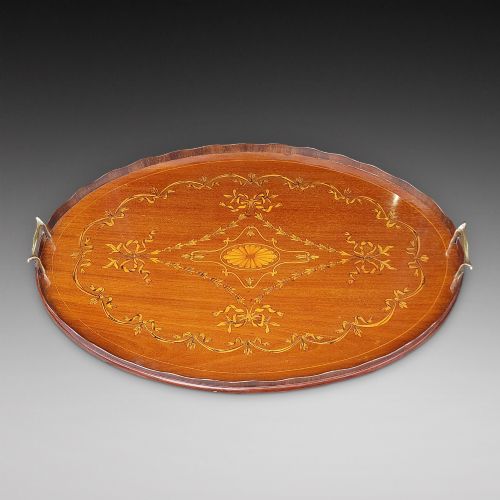
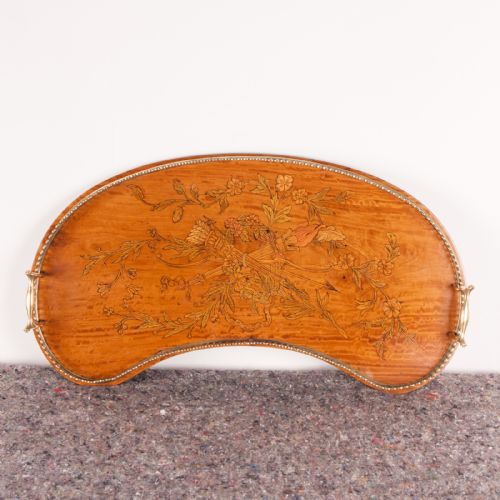
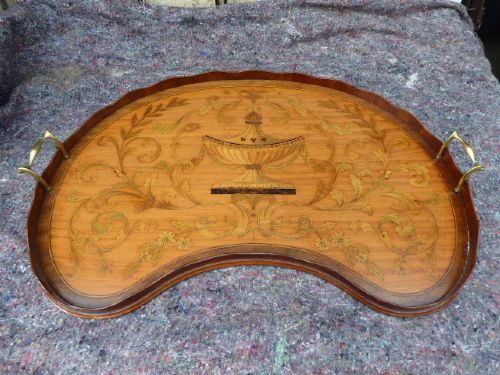
Mahogany and oak dominate the pieces seen here, often shaped into oval, kidney, or rectangular forms with handles or brass galleries. Many examples feature delicate marquetry inlay or contrasting satinwood banding, showing the decorative ambitions of Victorian and Edwardian cabinet makers.
Materials and construction
Makers utilised dense timbers such as mahogany, oak, teak, and walnut, selecting them for stability and rich grain patterns. Oyster veneering and marquetry added surface ornamentation to Edwardian and Victorian trays, while coopered construction utilised tight stave joints for circular vessels.
Metal mounts in brass and silver plate frequently reinforced corners, handles, and gallery rails. Folding stands relied on sturdy hinged frames designed to support heavy silver services without wobbling.
Listings feature woods such as mahogany, oak, walnut, and satinwood, spanning the 18th, 19th, and Edwardian periods.
Judging quality and craftsmanship
Quality rests upon the crispness of the inlay, the thickness of the timber, and the integrity of the joinery. Superior pieces display hand-cut dovetails, tightly fitted veneers, and substantial brass hardware rather than stamped metal and painted decoration.
The degree of preservation in the original polished surface also dictates standing. Trays retaining deep patination and crisp carved details sit at the higher end of the range compared to examples with stripped finishes and rounded edges.
Edwards and Roberts
The Vintage Wooden Serving Tray Glossary
- Butler's tray
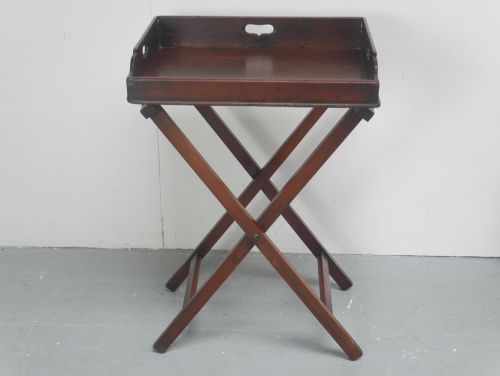
- A removable wooden tray with hinged or cutout sides, traditionally paired with a folding X-frame stand for portable service.
- Marquetry
- The art of applying decorative pieces of veneer to a structure to form geometric or pictorial designs.
- Coopered
- Constructed from curved wooden staves joined edge-to-edge, similar to barrel making, to form a rounded tray wall.
- Lazy Susan
- A rotating circular tray placed on a table to assist in moving food easily between guests.
- Gallery tray
- A tray edged with a low raised border or pierced metal railing to prevent items from sliding off during transit.
Vintage Wooden Serving Tray: Frequently Asked Questions
How were butler's trays used?
Butler's trays served as portable surfaces for carrying heavy silver tea services and dinner courses from the kitchens to the drawing room or dining table. The removable tray top lifted directly off its folding stand for ease of loading.
In period homes, staff utilised these trays to clear rooms quickly between courses without making multiple trips to the scullery.
Can I use an antique tray daily?
Most wooden serving trays are robust enough for gentle daily use, provided you protect the polished timber from standing water and heat. Using coasters and linens preserves the historic finish.
For heavy service, ensure the handles and structural joints feel secure before carrying loaded glassware across a room.
How do I date a wooden tray?
Dating relies on timber choice, hardware style, and construction methods. Georgian and 18th-century pieces often feature solid mahogany with simple hand-cut handles, while Edwardian examples favour satinwood marquetry and kidney shapes.
Looking at the underside and screw types helps distinguish older hand-turned elements from later mass-produced fittings.
What is an oyster veneered tray?
Oyster veneering involves slicing small branches diagonally to produce circular or oval cross-section discs of wood grain. Makers arranged these patterns across the tray surface to create decorative visual movement.
This technique requires patient hand-fitting and denotes careful craftsmanship typical of higher-grade Edwardian and earlier periods.