


Edwardian Wooden Tray
An edwardian wooden tray brings warmth and utility to a room, offering a practical surface built from honest timber.
Edwardian Wooden Tray
When you search for an edwardian wooden tray, you encounter pieces designed for serving tea or displaying domestic objects during the early twentieth century and surrounding decades. The materials and forms shift between simple utilitarian items and highly decorative furnishings made for formal reception rooms.
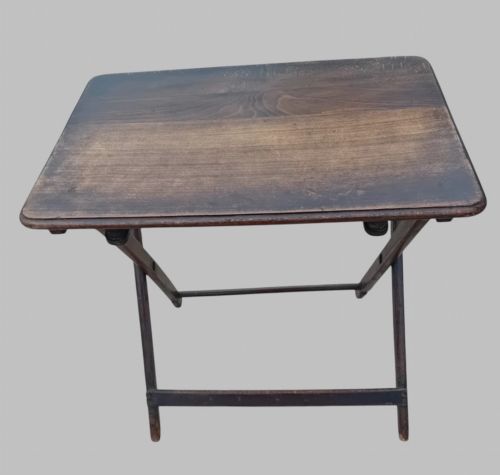
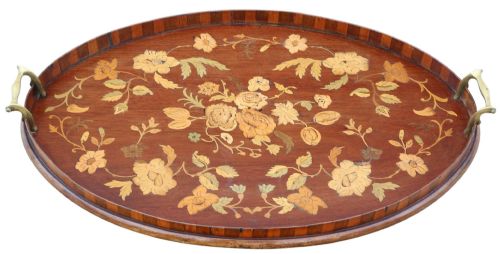
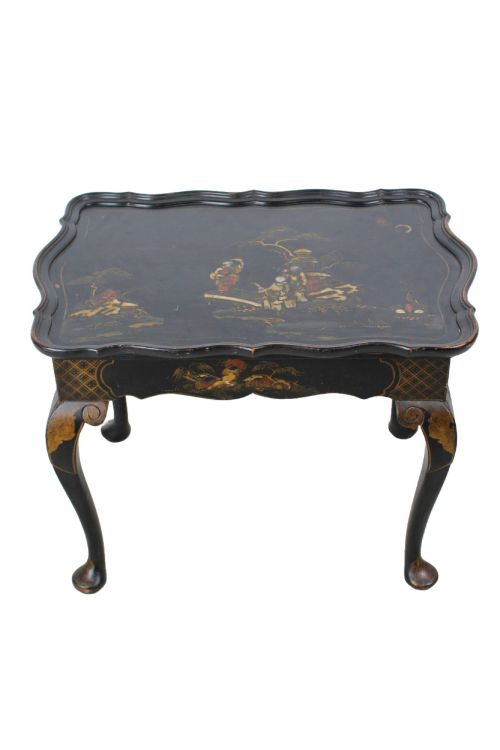
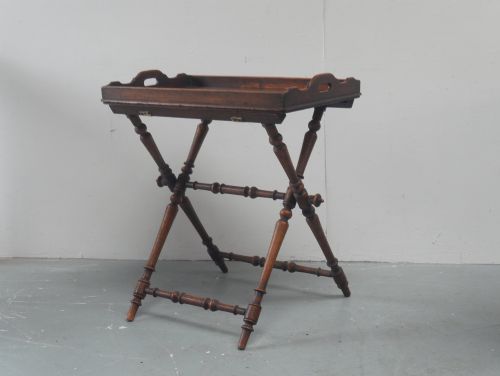
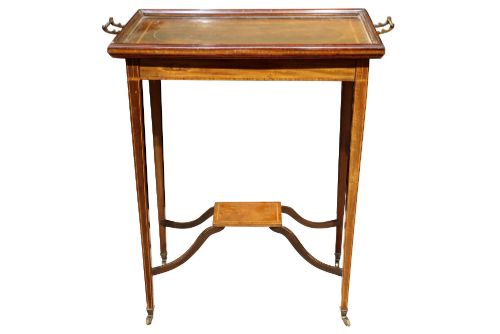
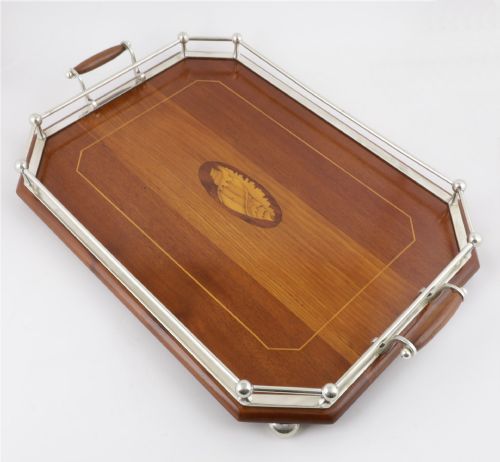
The versions most frequently met on this page include mahogany and oak serving trays, often featuring inlaid details or gallery edges. Alongside standard serving pieces, you discover related forms such as folding tray tables, occasional tables, and butler trays resting on dedicated stands.
Periods spanning from the late nineteenth century through the Edwardian era heavily influence the selection, bringing styles from Arts and Crafts simplicity to refined marquetry. These pieces reflect a period when domestic hospitality required sturdy yet elegant wooden accessories.
Materials and construction
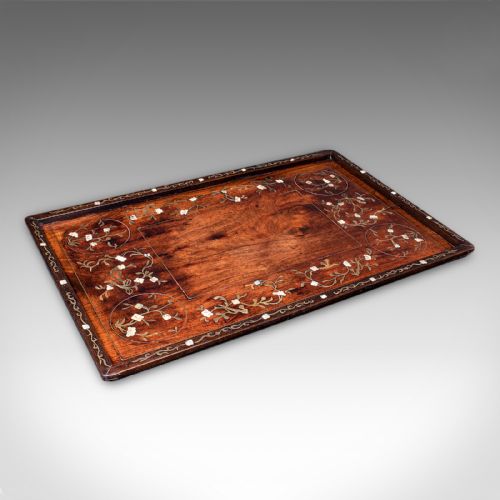
Cabinetmakers utilised durable timbers such as mahogany, oak, and walnut, often accentuating surfaces with contrasting satinwood or intricate marquetry inlay. Brass fittings, silver plate accents, and glass inserts appear on select pieces to provide structural contrast and visual refinement.
Construction techniques relied on solid joints and carefully fitted veneers, ensuring the wooden bases could support daily domestic use. Trays intended for serving often incorporate raised gallery borders or integrated handles carved directly from the timber or applied in metal.
Listings feature oak and mahogany alongside brass, glass, and iron components across the Edwardian and Victorian periods.
Assessing quality and craftsmanship
Quality reveals itself in the precision of the marquetry inlay and the selection of figured wood grains, such as oyster veneered surfaces. Superior examples demonstrate crisp carving, tight joinery, and balanced proportions that elevate a functional item into a decorative centrepiece.
Simpler pieces prioritize robust utility, employing solid oak or mahogany built to withstand frequent handling. The distinction lies in the finesse of the finishing details and the integrity of the materials selected by the maker.
Edwards and Roberts·Heals of London·Liberty Design
The Edwardian Wooden Tray Glossary
- Marquetry
- The art of applying decorative pieces of veneer to a structure to form intricate patterns. This technique defines the most ornamental Edwardian serving surfaces.
- Butler tray
- A portable wooden tray designed to lift off a folding stand for serving food or drinks. These versatile items combine practical storage with removable utility.
- Gallery tray
- A serving tray featuring a raised border around its perimeter to prevent items from sliding off. These rims are frequently pierced or inlaid with contrasting woods.
- Satinwood
- A durable, yellowish timber prized for its lustrous sheen and smooth grain. Makers utilised it extensively for fine inlay work on Edwardian furniture.
- Oyster veneer
- Wood veneer cut across the branches or roots to produce circular or oval patterns resembling oyster shells. This method creates striking decorative effects on tray surfaces.
Edwardian Wooden Tray: Frequently Asked Questions
How do I use an Edwardian tray today?
These trays function well as coffee table surfaces for holding books and decorative objects, or as intended for serving drinks during gatherings.
Their sturdy wooden construction allows them to transition easily from display pieces to functional accessories in a modern home.
Are these trays suitable for daily use?
Most pieces were built for active domestic service, utilising solid hardwoods like mahogany and oak that withstand regular handling.
Using coasters and protecting the polished wood from excessive moisture helps preserve the vintage finish over time.
What is the difference between a butler tray and a serving tray?
A serving tray is designed to be carried by hand from room to room, featuring integrated handles or raised edges.
A butler tray typically pairs with a folding wooden stand, functioning as a temporary side table or serving station.
How do I distinguish Edwardian pieces from Victorian ones?
Edwardian designs often embrace lighter timbers, simpler geometric lines, and refined marquetry influenced by the Arts and Crafts movement.
Victorian pieces tend to feature darker, heavier woods and more robust, ornate carvings reflecting earlier nineteenth-century tastes.