





Inlaid Wood Tea Tray
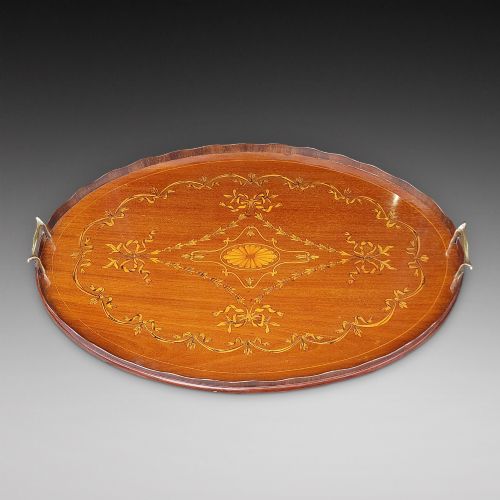
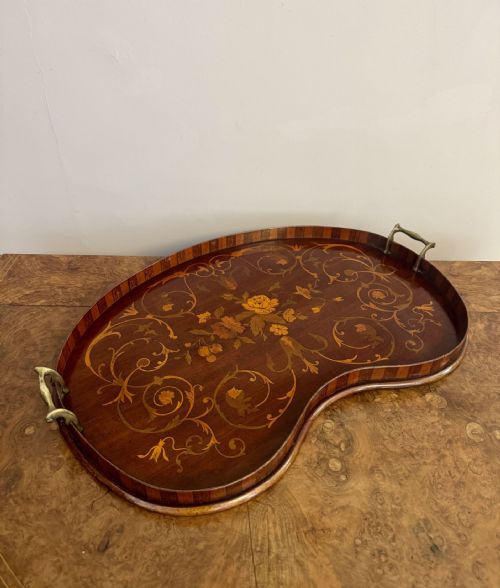
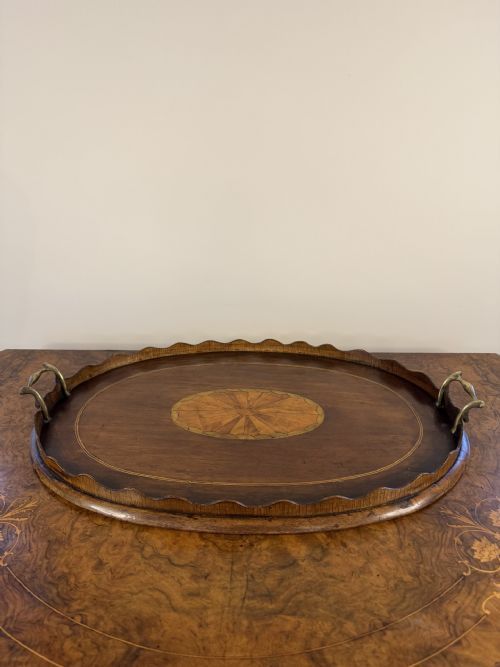
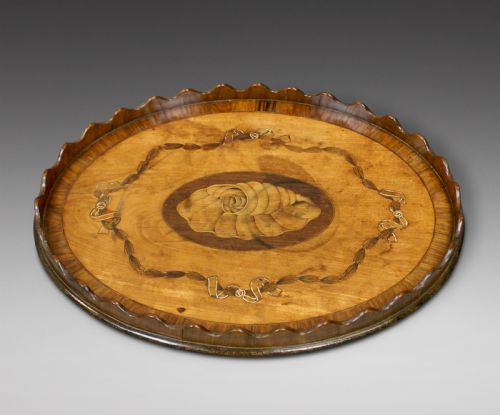
These inlaid wood tea tray examples combine practical service with fine marquetry, offering a touch of period elegance to any room.
Inlaid Wood Tea Tray
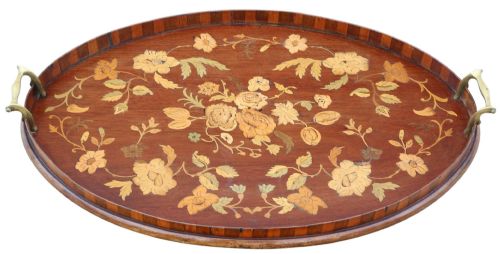
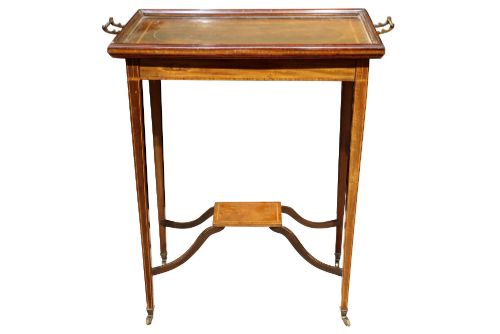
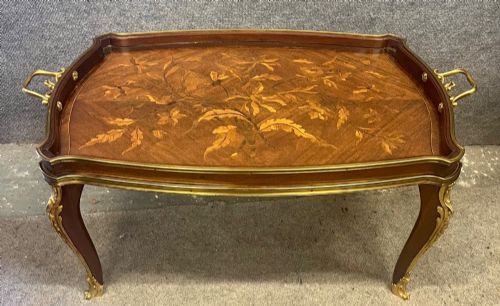
An inlaid wood tea tray brings together the functional utility of a traditional serving piece and the decorative art of marquetry. Buyers searching for an inlaid wood tea tray will find serving trays, occasional tables, and butler's trays originating from periods such as the Georgian, Victorian, and Edwardian eras.
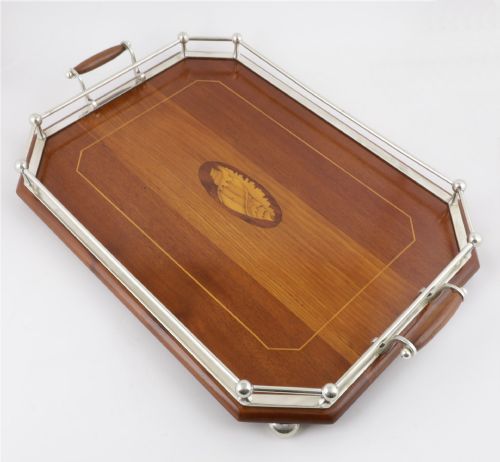
The pieces appearing on this page span several decades, ranging from nineteenth-century serving trays to early twentieth-century table forms. Formats vary from standard oval and rectangular serving shapes to octagonal, kidney-shaped, and gallery-rimmed designs.
Materials and construction
Makers constructed these pieces primarily using solid or veneered mahogany, enhanced with contrasting satinwood, walnut, and kingwood timbers. Marquetry inlay methods allowed artisans to create intricate decorative patterns across the wooden surfaces.
Many examples incorporate additional structural elements such as brass galleries, silver plate mounts, and sturdy side handles. These metal accents secured items during service while framing the detailed wood grain.
The listings span multiple centuries, incorporating mahogany, satinwood, walnut, and kingwood across Victorian, Edwardian, and Georgian periods.
Distinguishing quality
Superior quality in these items shows in the crispness of the marquetry and the tightness of the wood joints. Finer examples display meticulous contrast between the satinwood and mahogany elements without lifting or gaps in the inlay.
The weight of the timber and the finish of the handles or brass galleries also indicate the standard of production. Trays maintaining a deep, even polish on the wooden surface demonstrate greater original craftsmanship.
The Inlaid Wood Tea Tray Glossary
- Marquetry inlay
- Decorative patterns formed by fitting together small pieces of veneer into a wooden surface. This technique creates pictorial or geometric designs using contrasting woods.
- Gallery rim
- A raised metal or wooden border fitted around the edge of a tray. It prevents items from sliding off during movement.
- Etagere
- A piece of furniture consisting of a set of open shelves for displaying small objects. Several listings combine this tier form with a removable tray top.
- Satinwood
- A durable, lustrous yellowish timber native to India and Ceylon. Makers utilised it extensively for contrasting inlay work.
Inlaid Wood Tea Tray: Frequently Asked Questions
How were these trays used?
These pieces served primarily for carrying tea sets and refreshments from the kitchen to the drawing room. Servants utilised the sturdy wooden bases and handles to transport heavy pots and cups safely.
Over time, many of these items transitioned from active service into static decorative display pieces. Some examples were also mounted onto folding stands to function as occasional tables.
How do I care for the wood?
Keep these items away from direct sunlight and strong heat sources to prevent the timber from drying out. Consistent indoor humidity protects the delicate veneer and marquetry from cracking.
Clean the surface only with a soft, dry cloth to remove dust. Avoid using liquid polishes or harsh chemical cleaners that might damage the historical finish.
How can I tell the period?
Examine the timber species, construction methods, and overall stylistic motifs to determine the age of a piece. Georgian and George III examples often feature heavier proportions and classical Sheraton Revival motifs.
Edwardian and later nineteenth-century pieces frequently display lighter satinwood contrasts and distinctive shapes such as kidney outlines or octagonal brass galleries.
Can I use an antique tray daily?
Daily use is possible if you handle the piece with care and protect the wooden surface from moisture. Placing hot teapots or damp vessels directly on the antique finish can cause water rings or heat damage.
Many owners prefer to use linens or coasters on the tray if serving liquids regularly. For heavy everyday service, an occasional table or a sturdy butler's tray works well.