


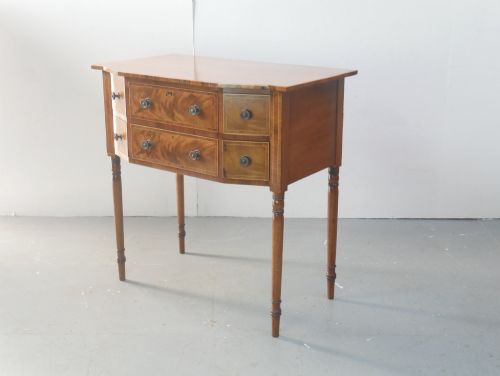
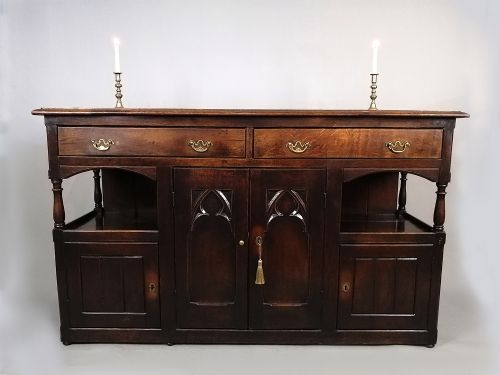
Vintage Wooden Server
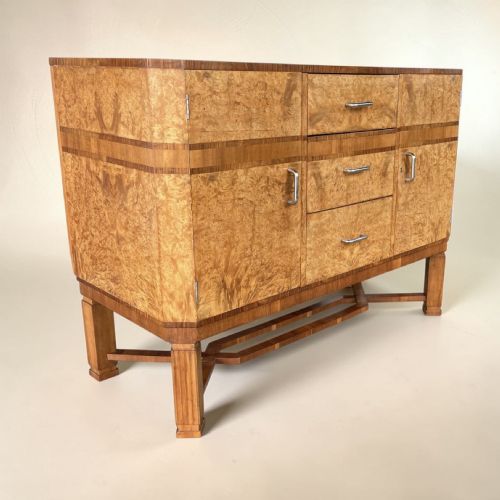
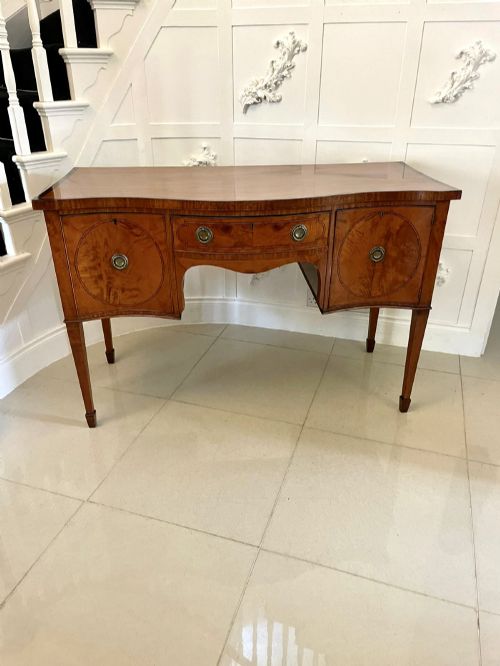
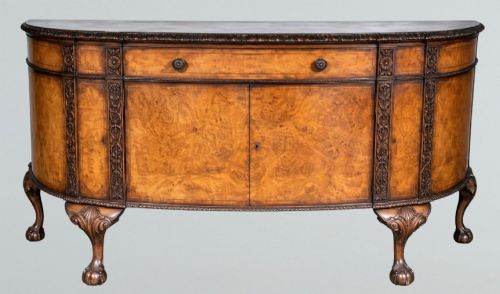
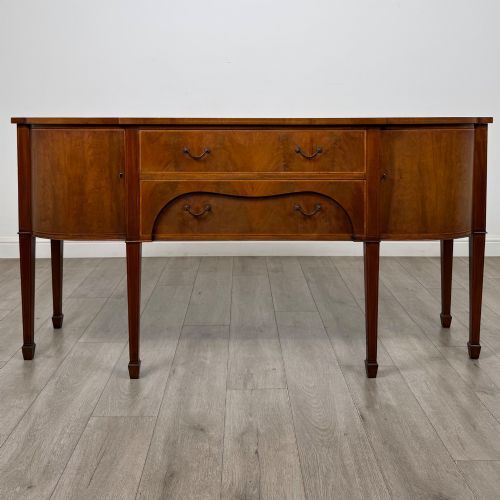
When you search for a vintage wooden server, you are looking at substantial timber storage and serving pieces spanning Georgian, Victorian, and Art Deco periods.
Vintage Wooden Server
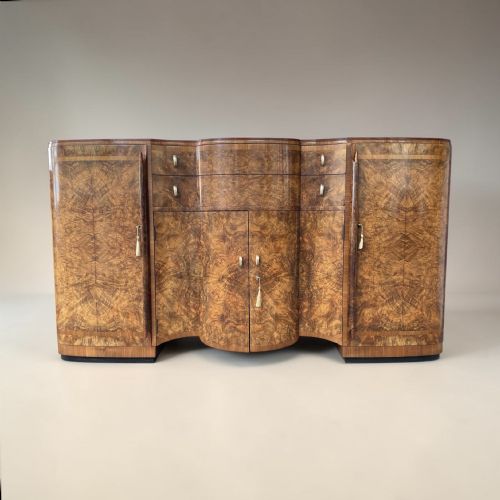
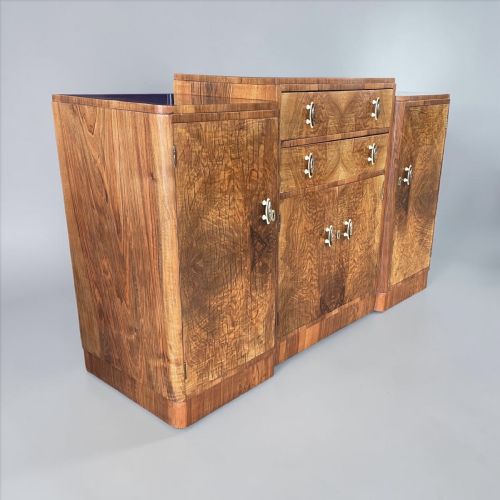
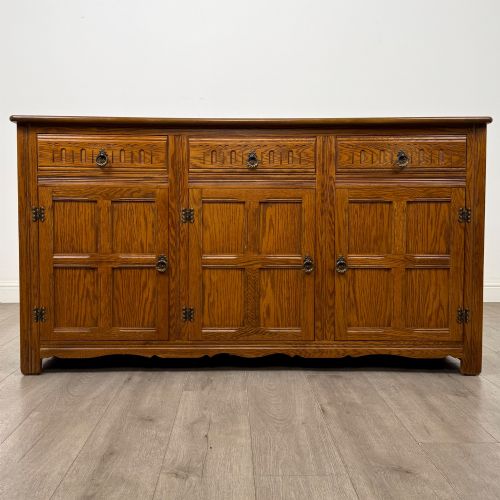
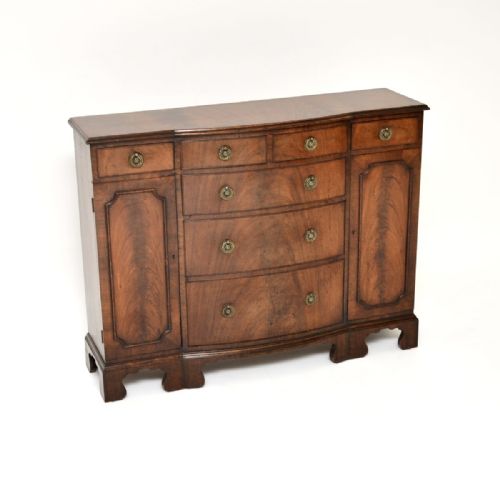
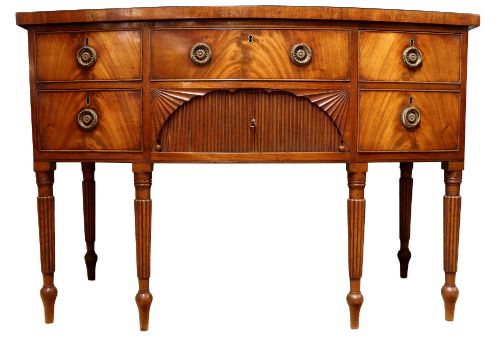
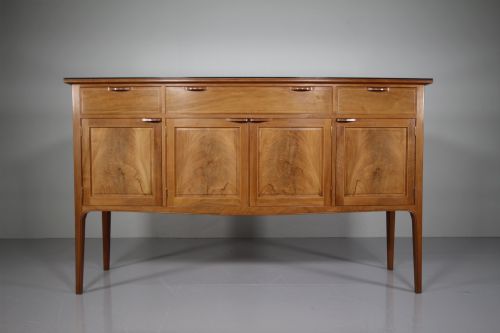
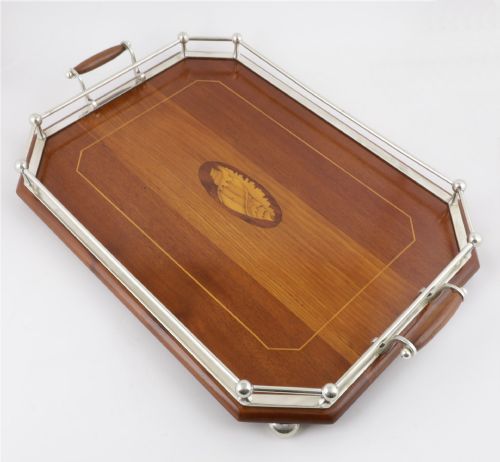
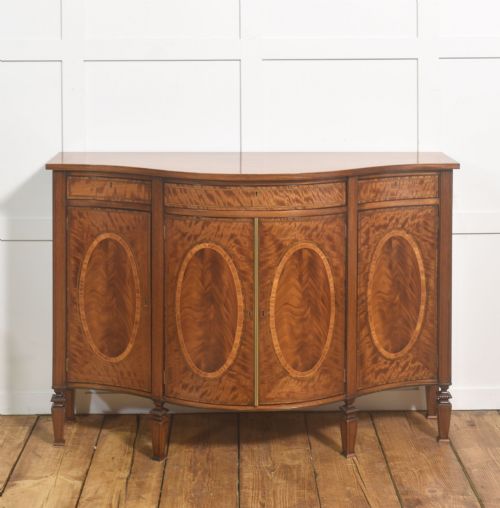
A vintage wooden server encompasses a broad array of utility furniture designed for domestic hospitality, including sideboards, cupboards, dressers, and serving trays. These forms emerge primarily from Georgian, Regency, Victorian, Edwardian, and Art Deco periods, crossing both British workshops and continental sources.
You are most likely to encounter mahogany and oak sideboards alongside walnut consoles and painted buffet bases. The selection ranges from bow-front and serpentine proportions to compact side cabinets and serving trolleys.
Materials and Technique
Cabinetmakers constructed these pieces predominantly using solid and veneered timbers such as mahogany, oak, walnut, and satinwood, frequently enriched with burr walnut figuring or marquetry. Structural integrity relied on traditional joinery methods suited to heavy daily use in dining rooms and kitchens.
Metal elements appear as functional and decorative accents, incorporating brass handles, coppered bands, iron fittings, and silver plate galleries. Marble tops and glass inserts also feature on specific serving cabinets and washstands.
Listings incorporate items constructed from mahogany, oak, walnut, pine, elm, and satinwood.
The Measure of Construction
Quality rests upon the selection of timber figure, such as richly grained mahogany or burr walnut, matched with balanced proportions and precise cabinet joinery. The sophistication of applied decoration, from shell inlay to linenfold carving, separates standard utility items from superior workshop productions.
Maker attribution and stamped signatures elevate specific pieces, whilst the integration of original hardware, brass galleries, and intact marble tops preserves the physical integrity and historical standing of the furniture.
Maurice Adams·Edward Barnsley·Gomme·Whytock and Reid
The Vintage Wooden Server Glossary
- Serpentine
- A gently undulating front curve popular in fine cabinet making. This shape requires advanced woodworking skill to achieve symmetrical flow across drawers and doors.
- Breakfront
- A cabinet design where the central section projects forward from the flanking wings. This architectural arrangement creates depth and shadow on larger sideboards.
- Bow front
- A convex curved cabinet face that swells outward towards the viewer. It softens the rigidity of rectangular dining room furniture.
- Linenfold
- A carved wooden panel motif imitating folded vertical drapery. This Tudor revival style appears frequently on early twentieth century oak cupboards.
- Coopered
- Constructed using vertical wooden staves bound with metal hoops, much like a barrel. This technique forms rounded serving trays and buckets.
Vintage Wooden Server: Frequently Asked Questions
What is the difference between a sideboard and a server?
Sideboards generally offer larger storage capacity with cupboards and drawers tailored for dining room service. Servers tend to be more compact or specialised for presenting food and drink.
Both categories overlap considerably in older domestic interiors, fulfilling similar roles in hospitality and storage.
How do I identify a Georgian piece?
Georgian furniture displays restrained classical proportions, often executed in rich mahogany with subtle stringing or brass drop handles. Construction focuses on functional elegance without heavy ornamentation.
Later revivals emulate these proportions, so timber ageing and secondary woods assist in confirming exact period origin.
Where should I place a wooden server in my home?
These pieces suit dining rooms, hallways, and living spaces where surface area and enclosed storage prove useful. Low console tables and serving trolleys offer flexible placement options.
Larger breakfront sideboards require adequate wall space to display their proportions and architectural details properly.
How do Art Deco servers differ from Victorian ones?
Art Deco pieces emphasise streamlined geometric forms, sleek veneers, and minimal hardware, reflecting modernist design shifts of the 1930s. Victorian servers favour heavier mass, darker timbers, and elaborate carved details.
Comparing the drawer construction and finish helps distinguish between these distinct aesthetic movements.