
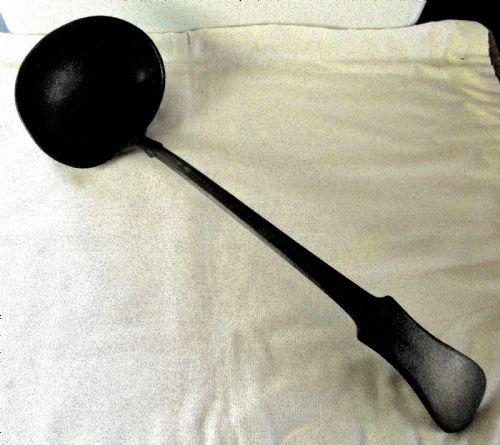
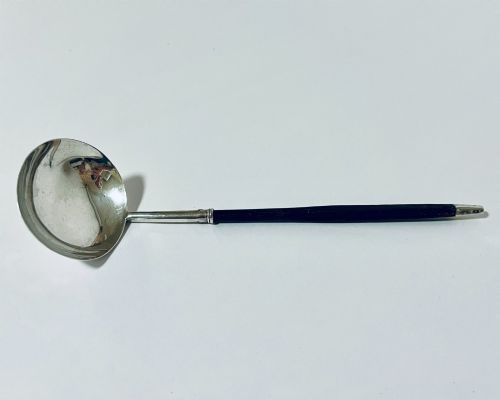

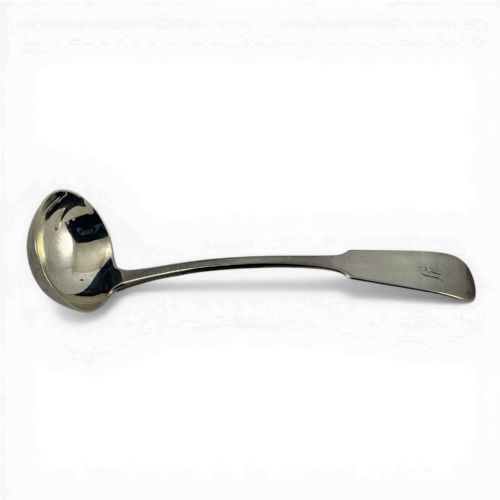


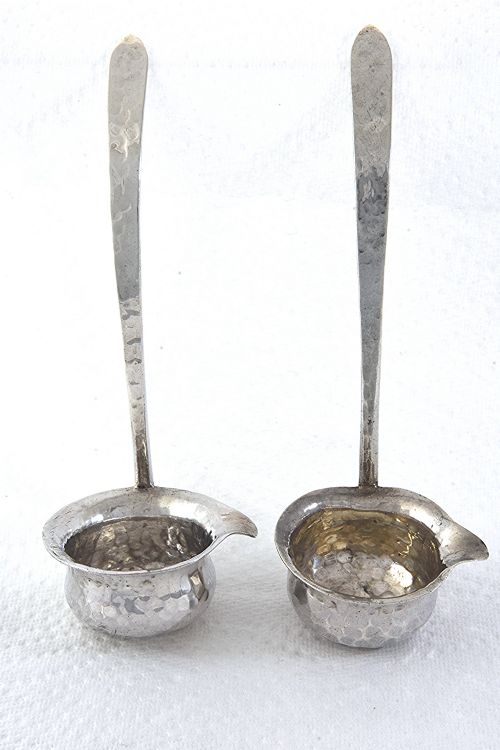
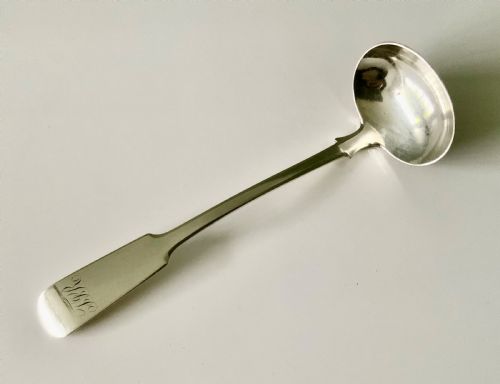


Georgian Toddy Ladle
A georgian toddy ladle is a tactile piece of historic barware designed for serving punch, featuring distinctive materials like silver and whalebone.
Georgian Toddy Ladle
When you search for a georgian toddy ladle, you encounter serving utensils primarily shaped as long-handled spoons used for dispensing warm spirits from a bowl into glasses. The majority of these pieces originate from the Georgian era, the 18th century, and the Regency period, though occasional later examples appear.
The dominant material on this page is sterling silver or silver, often paired with organic elements such as horn, wood, coquilla nut, and baleen or whale bone. Bowls take various forms, including plain silver, cut glass, flint glass, pewter, or those inset with coins like a shilling or a silver gilt coin, alongside pieces with twisted handles.
How they were made
Silversmiths shaped metal bowls and stems through traditional smithing techniques, frequently incorporating hallmarking to certify purity and origin. Handles were turned from wood, horn, or whalebone, then fitted securely to the metal bowls.
Glass bowls utilised cutting and flint glass manufacturing methods, while coin-inset examples integrated actual currency into the base of the bowl. Treen and coquilla nut elements involved specialist carving and polishing wood and seed materials.
Georgian Toddy Ladle Retail Price Guide 2026
Typical asking prices for georgian toddy ladle among the pieces listed under this phrase on Sellingantiques today, from the lower quarter to the upper quarter. They describe what is for sale here now, not the wider market.
What varies in quality
Quality rests on the crispness of the silversmith's marks, the integrity of the twisted handle, and the clarity of any cut glass or inset coin. Pieces retaining their original whalebone or organic handles intact display superior preservation.
The weight of the silver and the balance between the bowl and the long handle distinguish standard utility items from finer provincial or London-made examples.
Dixon & Son·William Ferguson·Thomas Morley·Elizabeth Morley
The Georgian Toddy Ladle Glossary
- Toddy ladle
- A small serving spoon designed for ladling hot punch or toddy from a bowl into individual cups. These utensils typically feature elongated handles to reach deep vessels.
- Baleen
- The flexible horny substance from the mouths of certain whales, commonly utilised for twisting into slender, tactile handles on 18th-century ladles. This material provided both grip and flexibility.
- Hallmark
- An official stamp applied by an assay office to indicate metal purity, origin, and the year of manufacture. These small marks offer historical certainty for silver pieces.
- Coquilla nut
- The hard, dark brown seed of a South American palm, frequently carved into small vessels or handles during the Georgian period. Its dense grain takes a high polish.
Georgian Toddy Ladle: Frequently Asked Questions
What is a toddy ladle used for?
These utensils served to scoop warm alcoholic punches and toddies from a central bowl into individual drinking vessels during social gatherings. Their long stems kept hands safely away from hot liquids.
Today, they function as decorative barware accessories or collectible silver pieces that connect modern homes with historic dining traditions.
Why do some ladles have coins in them?
Silversmiths occasionally inset silver coins, such as shillings or silver gilt pieces, directly into the bottom of the ladle bowl. This practice often reflected patriotic sentiments or commemorated specific reigns.
Over time, these coin bowls became a distinct regional and stylistic choice among makers across Britain and Ireland.
What are twisted whalebone handles?
Makers heated and twisted natural baleen from whales to create flexible, slender handles that resisted heat transfer from hot punch bowls. This organic material provides a tactile contrast to the metal bowl.
Examples with intact twisted baleen require careful handling to preserve the historic material in stable condition.
How do I care for silver and glass ladles?
Silver and glass pieces need gentle cleaning with appropriate non-abrasive cloths to maintain their metal surfaces and clarity without damaging historic hallmarked details. Organic handles like wood, horn, or bone must stay dry and away from excessive moisture.
Displaying them securely or storing them flat prevents strain on the joints connecting the bowl to the long handle.