





Silver Toddy Spoon
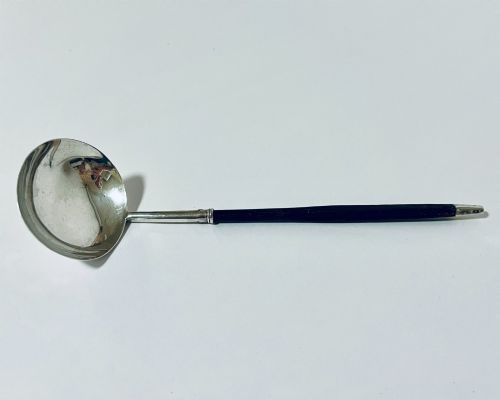
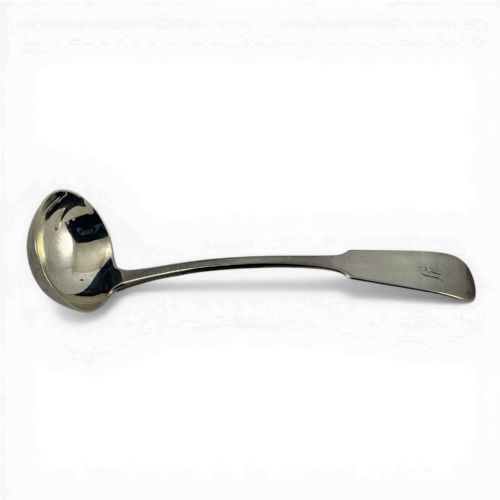
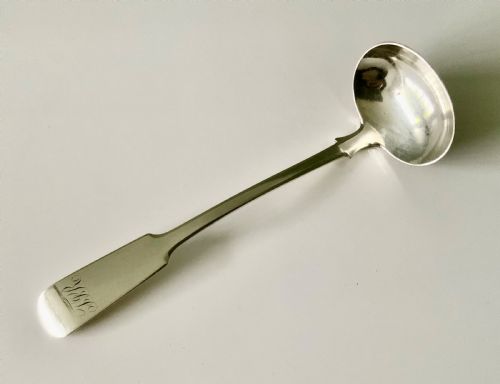
These silver toddy spoon pieces are tactile domestic servers from the Georgian, Regency, and Victorian eras designed to ladle punch or spirits.
Silver Toddy Spoon
When you search for silver toddy spoon, you are looking at serving utensils and punch ladles designed to ladle spirits or punch. The pieces on this page span the Georgian, 18th Century, Regency, and Victorian periods.
You will encounter forms that range from provincial condiment ladles to long serving spoons. Many examples pair silver bowls with organic handles made from wood, horn, or coquilla nut.
Origin points across the listings include English and Scottish provincial makers. Scottish provincial examples from towns like Elgin sit alongside English hallmarked pieces.
How they were made
Silversmiths formed the bowls from silver and sterling silver using traditional hammering and shaping techniques. These bowls are often integrated with turned wooden or nut handles to insulate against heat.
Makers utilised organic materials such as horn and coquilla nut alongside treen for the stems. Provincial silversmiths marked their wares with local hallmarking stamps to indicate origin and standard.
Listings feature silver, sterling silver, wood, horn, and coquilla nut across Georgian, Regency, and Victorian periods.
What varies in quality
Quality rests in the crispness of the provincial hallmarks and the structural integrity of the join between the silver bowl and the organic handle. Finer pieces maintain a balanced weight and smooth transitions along the stem.
The choice of handle material alters the character of the piece, with dense coquilla nut and figured horn representing more deliberate material selection than standard turned wood.
William Ferguson
The Silver Toddy Spoon Glossary
- Provincial
- Made outside the main assay offices, typically bearing local maker marks. These pieces often display regional stylistic quirks.
- Treen
- Small handmade wooden domestic objects. In this context, it refers to the turned wooden handles.
- Coquilla nut
- The hard, dark brown nut of the Brazilian palm tree, valued for turning into smooth handles. It polishes to a fine sheen.
- Hallmarked
- Stamped with official marks denoting metal purity and origin. These stamps help date the piece.
Silver Toddy Spoon: Frequently Asked Questions
What is a silver toddy spoon used for?
These pieces were utilised for ladling hot punch or spirits from a bowl into individual glasses during social gatherings.
Their long handles kept fingers clear of the warm liquid while serving.
How do I date a silver toddy spoon?
Dating relies on the style of the bowl, provincial maker marks, and any stamped hallmarks present on the silver.
Pieces originating from the Georgian or Victorian eras display distinct decorative motifs characteristic of those reigns.
Why do some ladles have wooden handles?
Makers attached wooden, horn, or coquilla nut stems to prevent heat transfer from hot punch bowls.
Organic handles also provided a lighter and more tactile grip than an all-silver construction.
Are Scottish provincial ladles different?
Scottish provincial examples often feature unique maker marks that differ from standard London hallmarks.
Towns such as Elgin produced distinctive regional variations of these serving utensils.