




18th Century Punch Ladle
An 18th century punch ladle brings the social rituals of Georgian punch bowls and grand dinners directly to the modern table.
18th Century Punch Ladle
An 18th century punch ladle is a serving utensil designed for dipping and pouring punch, soup, or toddy during communal drinking gatherings. The selection spans the 18th Century, Georgian period, and early 1800s, crossing over into nineteenth-century examples.
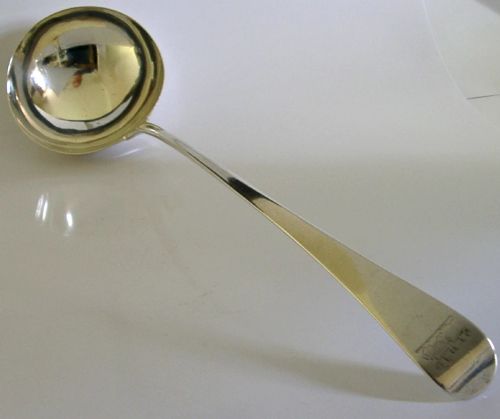
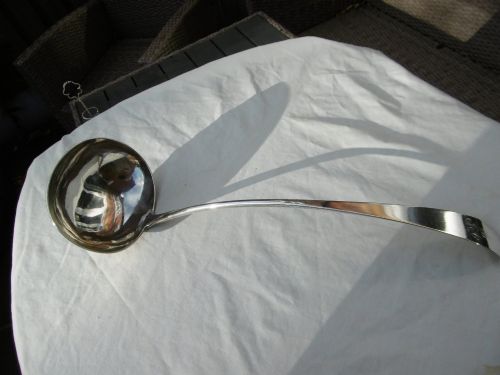
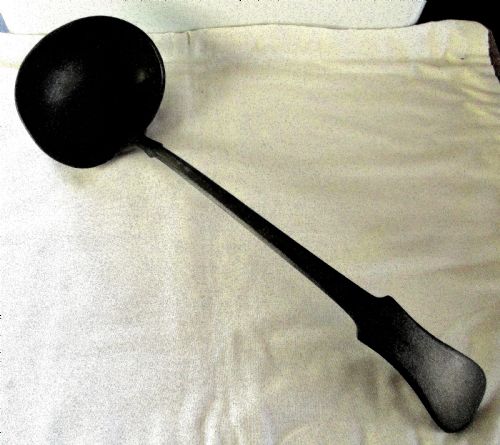
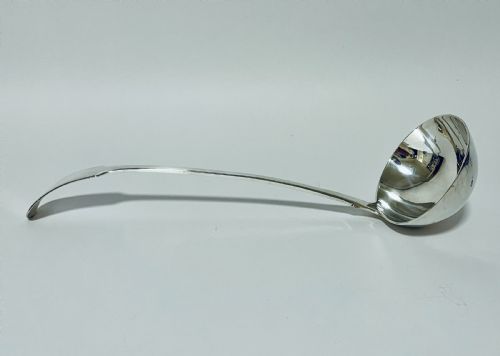
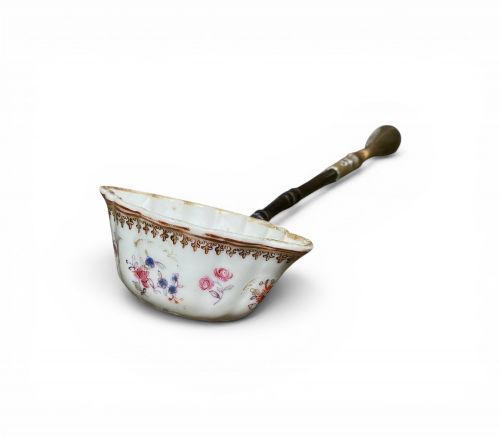
Forms vary significantly in size and material, ranging from massive sterling silver soup ladles weighing over two hundred grams to smaller toddy ladles intended for individual bowls. Collectors encounter English, Scottish, Irish, and Chinese export porcelain pieces alongside pewter and treen.
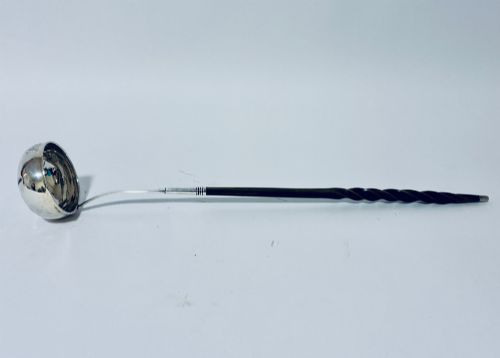
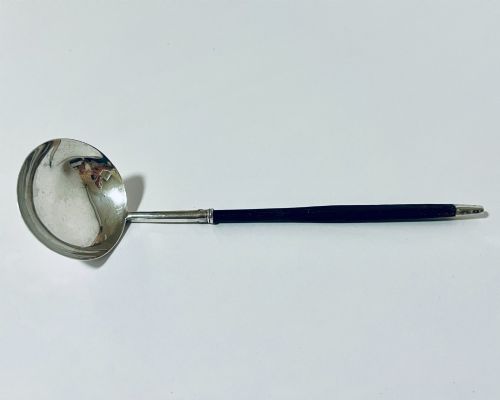
The most common variants on this page include sterling silver and silver-mounted pieces, often paired with organic handles made of coconut, coquilla nut, or wood. Specialised forms like toddy ladles frequently incorporate inset coins such as a King George II currency piece within the bowl.
Materials and construction
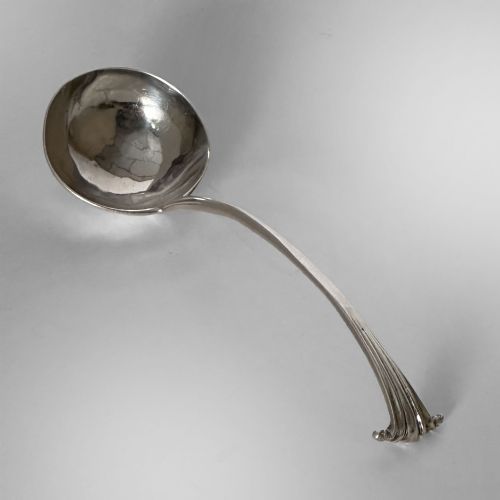
Metals dominate the construction of these pieces, utilising sterling silver, silver, old Sheffield plate, pewter, and base metal alongside enamel and porcelain. Silversmiths hammered, cast, and chased these metals into deep bowls, frequently engraving family crests or decorative patterns onto the terminals.
Organic materials provide structural contrast in handles and bowls, employing turned wood, treen, coquilla nut, and coconut shell. These natural elements required careful mounting in silver or metal sockets to join the handle securely to the bowl.
18th Century Punch Ladle Retail Price Guide 2026
Typical asking prices for 18th century punch ladle among the pieces listed under this phrase on Sellingantiques today, from the lower quarter to the upper quarter. They describe what is for sale here now, not the wider market.
Several toddy ladles feature an inset King George II coin right in the bottom of the bowl, likely to encourage patriotic toasts while drinking.
Determinants of quality
Quality rests upon the weight of the metal, the clarity of the maker's mark, and the crispness of chased or engraved crests. Heavy silver gauge and balanced proportions separate utilitarian kitchen tools from grand dining room silver.
The integration of mixed materials dictates distinction, particularly in organic handles like coconut or coquilla nut where smooth patination and secure silver mounts indicate superior craftsmanship. Maker attribution to known workshops elevates a piece above anonymous provincial examples.
Milne and Campbell·Hester Bateman·Dixon and Son·Michael Smith
The 18th Century Punch Ladle Glossary
- Toddy ladle
- A small drinking vessel utensil designed for scooping hot whisky toddy from a communal bowl into individual glasses. These pieces often feature twisted whalebone, wood, or twisted silver stems.
- Punch ladle
- A large serving utensil with an extended handle and a deep bowl used for serving mixed punch. They frequently pair silver bowls with organic handles of coconut or nut.
- Old Sheffield plate
- A composite material made by fusing a thin sheet of silver to a thicker copper base. This technique preceded modern electroplating.
- Treen
- Small handmade wooden household objects and utensils turned on a lathe. In ladles, treen forms the handle or the bowl itself.
- Famille rose
- A palette of Chinese porcelain enamel colours dominated by pink, introduced during the Qing dynasty in the Qianlong period. Pieces utilising this palette were exported to Europe.
18th Century Punch Ladle: Frequently Asked Questions
How were 18th century punch ladles used?
These utensils were passed around the dining table or punch bowl to ladle mixed spirits, wine, or fruit punch into cups and glasses. They sat alongside large ceramic or glass bowls during social gatherings and formal dinners.
Smaller toddy versions were kept near the hearth for serving hot whisky drinks. Their long handles kept hands safely away from the steaming bowl contents.
What materials make up these ladles?
Sterling silver and standard silver form the primary bowls of most examples, often paired with handles turned from wood, whalebone, or coconut shell. Pewter and Chinese export porcelain also appear alongside old Sheffield plate.
Organic materials like coquilla nut provide a tactile contrast to polished metal work. Silver mounts securely join these diverse substances together.
How do I identify a Georgian punch ladle?
Georgian examples typically display hallmarks stamped directly into the metal indicating the town, maker, and date of assay. Stylistic cues include chased floral motifs, bright-cut engraving, and family crests.
Objects from this era reflect the prevailing neoclassical or rococo design trends of the eighteenth century. Weight and hand-hammered construction marks further distinguish period pieces from later reproductions.
Can I use an antique silver ladle today?
Silver and pewter pieces remain robust enough for gentle everyday serving use when washed by hand in warm soapy water. Avoid dishwashers and harsh abrasives to preserve the antique surface and hallmarks.
Organic elements like coconut or wood require dry storage and occasional conditioning to prevent cracking. Displaying them on the table continues their original domestic purpose.