


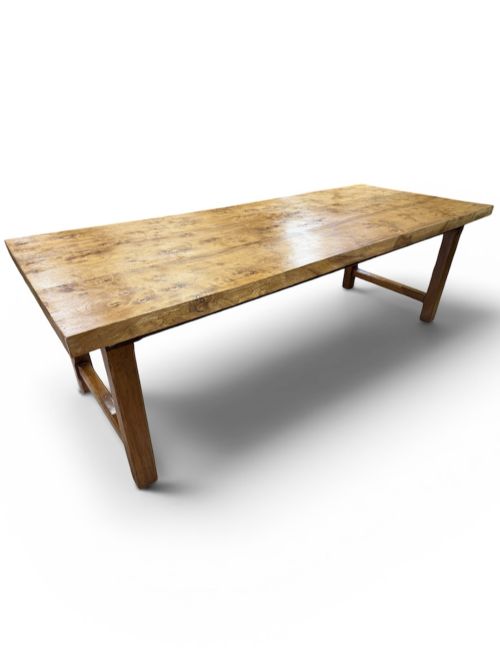
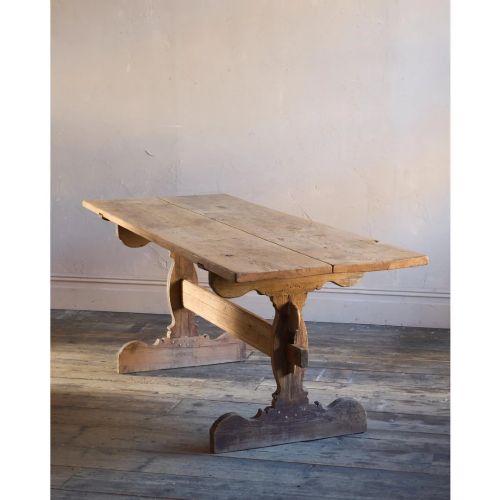
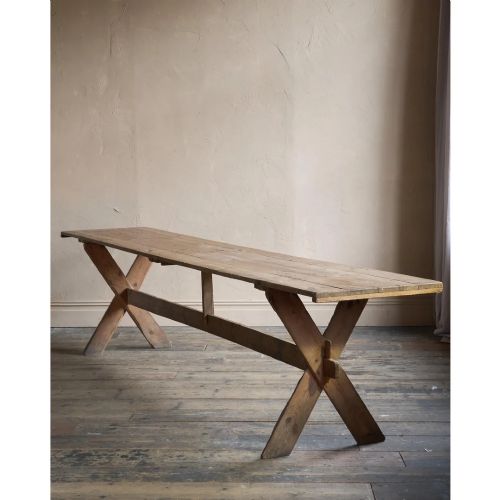
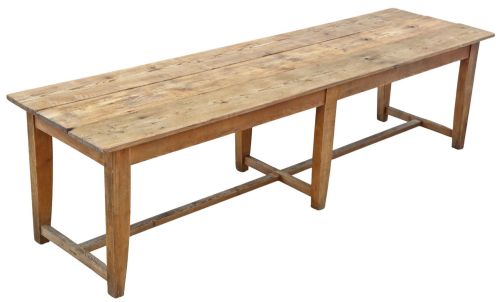


Rustic Pine Trestle Table
These rustic pine trestle table pieces bring honest utility and enduring character to any room through straightforward timber construction.
Rustic Pine Trestle Table
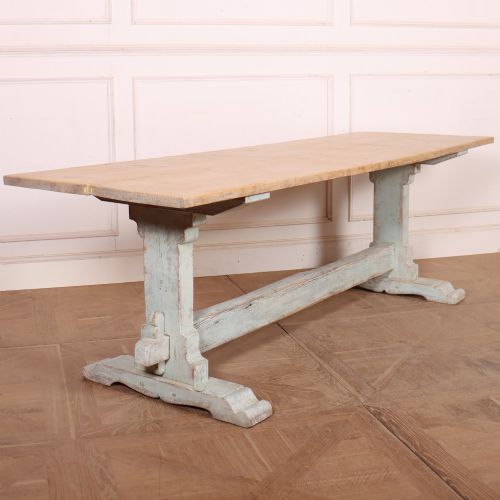
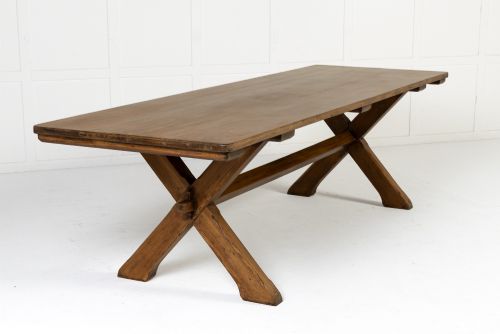
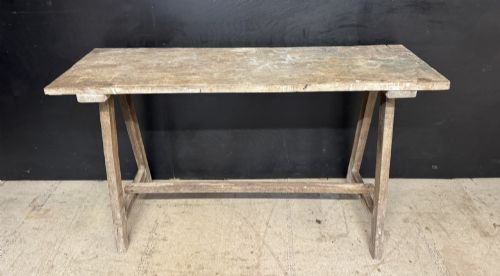
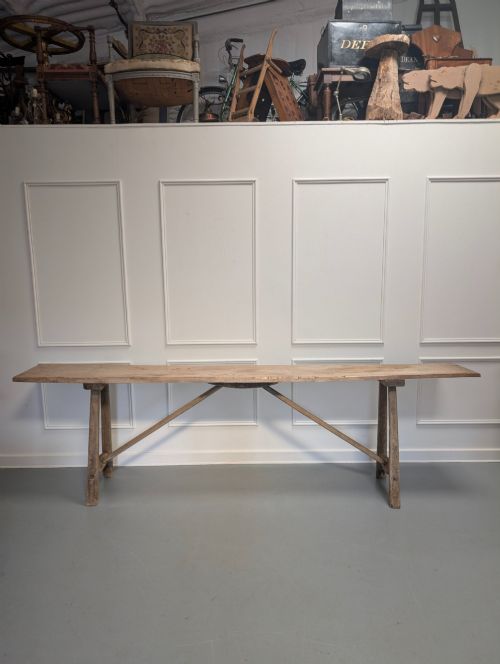
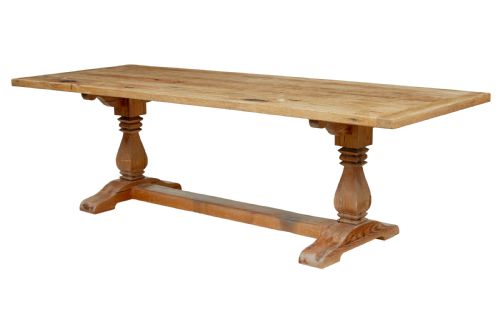
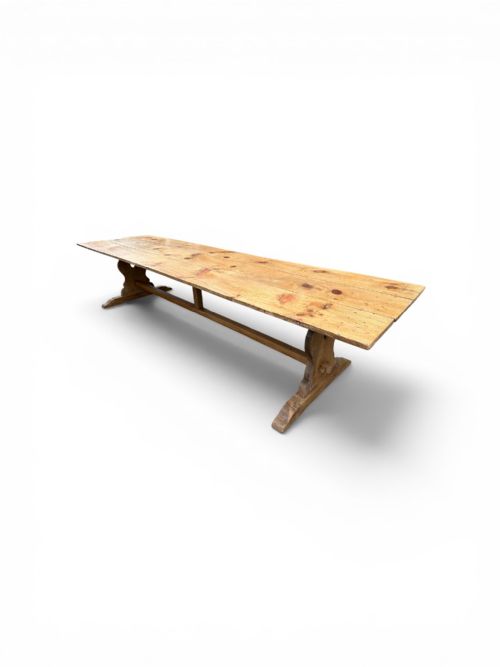
A rustic pine trestle table combines simple timber tops with sturdy supporting trestle bases designed for practical daily use. When you search for this phrase, you find practical furniture rooted in utilitarian traditions rather than delicate formal design.
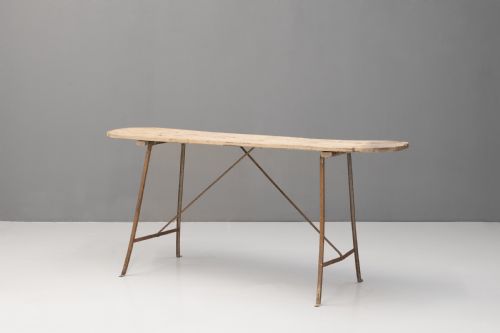
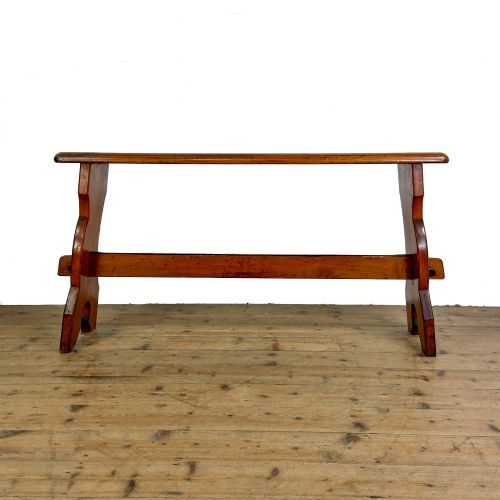
The selections on this page span the nineteenth century, nineteen-ten, and the Edwardian era. You encounter forms adapted for various domestic spaces, including kitchen tables, dining tables, and console tables.
Geographic influences shape these pieces across different regional traditions. Listings include French country styles, French provincial aesthetics, Scandinavian country work, and rustic farmhouse designs.
How they were made
Makers built these tables primarily using pine, supported by occasional elements of oak, general timber, and iron hardware. These materials provided the necessary strength and stability for heavy daily tasks in kitchens and taverns.
Surface treatments added both protection and distinct aesthetic character to the wood. Evidence records the use of traditional Falu paint, a specific red earth paint known for preserving timber in Scandinavian country applications.
Rustic Pine Trestle Table Retail Price Guide 2026
Typical asking prices for rustic pine trestle table among the pieces listed under this phrase on Sellingantiques today, from the lower quarter to the upper quarter. They describe what is for sale here now, not the wider market.
Current listings span the nineteenth century, nineteen-ten, and the Edwardian era, utilising pine, oak, timber, iron, and Falu paint.
What varies in quality
Quality in a rustic pine trestle table rests upon the integrity of the timber and the honesty of its construction. Better examples show thoughtful joinery that accommodates the natural movement of pine over generations.
The character of the surface finish dictates the visual appeal of each piece. Tables retaining original paint layers or deep patination from decades of use command greater appreciation than those stripped bare.
The Rustic Pine Trestle Table Glossary
- Trestle table
- A table consisting of two or more supports connected by a horizontal beam holding a flat top. This construction method allows maximum legroom and easy dismantling for transport.
- Falu paint
- A traditional Swedish red paint containing copper sludge from the Falun copper mine. It preserves exterior and interior timber surfaces effectively.
- Farmhouse table
- A large, sturdy wooden table traditionally used for food preparation and communal family meals. These pieces often exhibit simple lines and robust timber construction.
- Console table
- A long, narrow table designed to stand against a wall. They frequently serve hallways or living spaces where floor space is limited.
Rustic Pine Trestle Table: Frequently Asked Questions
What is a rustic pine trestle table?
A rustic pine trestle table is a practical wooden dining or kitchen table supported by end trestles rather than four corner legs. These pieces originate from various nineteenth and early twentieth-century traditions.
They offer sturdy construction and straightforward utility, making them central pieces for kitchens, dining rooms, and taverns.
How do I style a rustic pine table?
Pair your rustic pine trestle table with simple wooden chairs, benches, or mismatched seating to maintain an authentic country aesthetic. The natural wood grain and painted finishes blend well with both traditional and contemporary interiors.
Keep table dressings simple to highlight the character of the aged timber and historic construction.
Are these tables suitable for daily dining?
These tables were originally built for hard daily use in kitchens, taverns, and farmhouses. Their robust construction handles everyday meals and family gatherings with ease.
Using placemats and coasters helps protect the historic timber surface from excessive moisture and heat.
How do I identify the period of a pine table?
Dating relies on examining construction methods, tool marks, timber characteristics, and regional styles. Nineteenth-century and Edwardian examples show hand-finished details distinct from modern factory production.
Examining the wear patterns and original surface treatments also provides clues to the age and origin of the piece.