

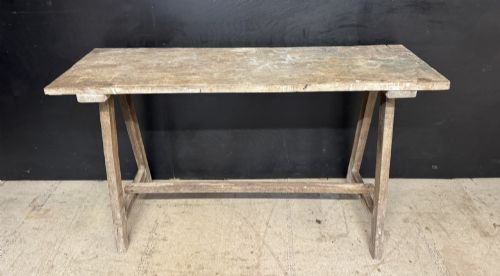
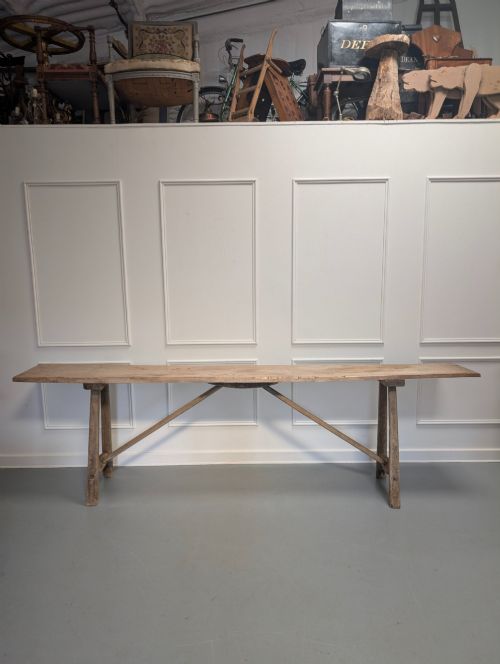
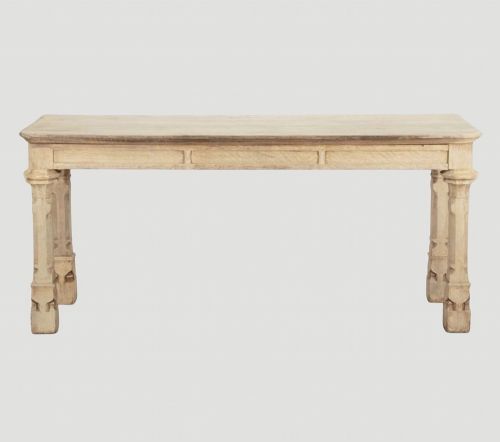


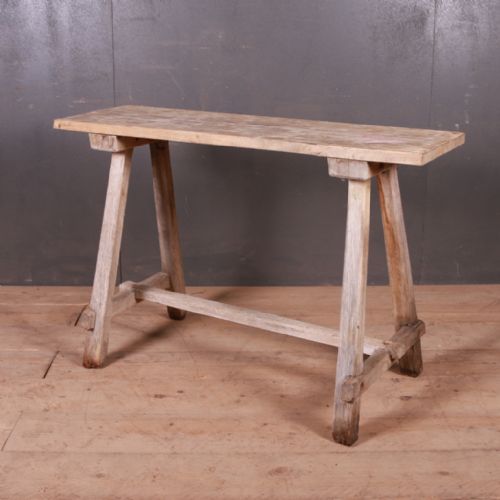


Bleached Wood Console Table
A bleached wood console table brings understated pale grain and utility to a hallway or reception room.

Bleached Wood Console Table
A bleached wood console table is a narrow surface designed to stand against a wall, often taking the form of servers, serving tables, and hall tables from the eighteenth and nineteenth centuries. The pieces available show a strong leaning towards French country and provincial origins, alongside English and Scottish examples.
Beyond standard console forms, the selection includes related utilitarian tables such as drapers tables, trestle tables, and dresser bases. These items share a practical heritage, frequently constructed from robust timbers like oak and mahogany before undergoing a lightening process.
The aesthetic is defined by the pale, scrubbed appearance of the wood, which softens the heavy proportions typical of Georgian and nineteenth-century furniture. Buyers find everything from simple trestle designs to tables paired with brass hardware or painted elements.
How they were made
The primary structural materials are solid hardwoods and softwoods, predominantly oak and mahogany, with occasional uses of walnut, ash, pine, and timber alongside paint and brass details. Construction relies on traditional joinery methods suited to heavy utility furniture, ensuring stability in narrow formats.
The distinctive pale finish is achieved through historical stripping and bleaching techniques that remove dark original varnishes or accumulated wax. This exposes the natural grain of the oak or mahogany, leaving a dry, matte surface texture.
Bleached Wood Console Table Retail Price Guide 2026
Typical asking prices for bleached wood console table among the pieces listed under this phrase on Sellingantiques today, from the lower quarter to the upper quarter. They describe what is for sale here now, not the wider market.
Some sturdy oak tables spent their youth holding heavy cheeses in Welsh dairies before retiring to polite hallways.
What varies in quality
Quality rests in the integrity of the timber and the subtlety of the bleaching process, which should respect the age of the piece rather than flattening the grain. Superior examples retain crisp carving and original structural proportions without excessive surface sanding.
The distinction between a utilitarian workshop piece, such as a dairy or drapers table, and a formal console lies in the refinement of the legs and edges. Better tables balance practical strength with balanced joinery and appropriate period brass or timber components.
The Bleached Wood Console Table Glossary
- Console table
- A table designed to stand flat against a wall, frequently supported by brackets or legs at the front. They often served as decorative serving surfaces in nineteenth-century hallways.
- Drapers table
- A long, utilitarian table traditionally used in fabric shops for measuring and displaying cloth. These feature generous proportions and sturdy timber construction.
- Trestle table
- A table comprising two or more support frames connected by a horizontal beam. This form provides maximum legroom beneath the surface.
- Potboard dresser
- A kitchen or dining sideboard featuring an open lower shelf for storing pots and pans. They are typically fashioned from solid oak.
- Bleached wood
- Timber treated to lighten its natural colour, removing dark stains and patination. This process highlights the grain structure.
Bleached Wood Console Table: Frequently Asked Questions
Where should I place a console table?
These narrow tables suit hallways, narrow corridors, and reception rooms where floor space is limited. Their shallow depth allows them to sit against walls without obstructing pathways.
They also function well behind sofas or as serving surfaces in dining areas, echoing their historical use in country houses and provincial homes.
How do I clean bleached wood?
Dust the surface regularly with a dry, soft cloth to prevent dirt from settling into the open grain. Avoid harsh chemical cleaners and excessive water.
Occasional application of a suitable wax can help protect the pale timber from spills and daily wear while maintaining the dry finish.
Are these tables sturdy enough for daily use?
Most examples originate from commercial, agricultural, or robust domestic environments, meaning they were built for heavy labour. Trestle and drapers tables offer particularly high stability.
Their solid construction handles everyday items easily, though care should be taken with hot dishes or liquids on unprotected surfaces.
How can I tell a nineteenth-century table from an earlier one?
Examination of the joinery, tool marks, and timber shrinkage provides clues to age. Eighteenth-century pieces often display hand-cut joinery and deeper patination beneath the bleach.
Nineteenth-century versions frequently show standardised machining alongside traditional assembly methods, reflecting changing workshop practices.