
Vintage Wooden Office Chair
A vintage wooden office chair brings honest character to a workspace, offering sturdy timber frames and practical swivel or captain's forms built for daily use.
Vintage Wooden Office Chair
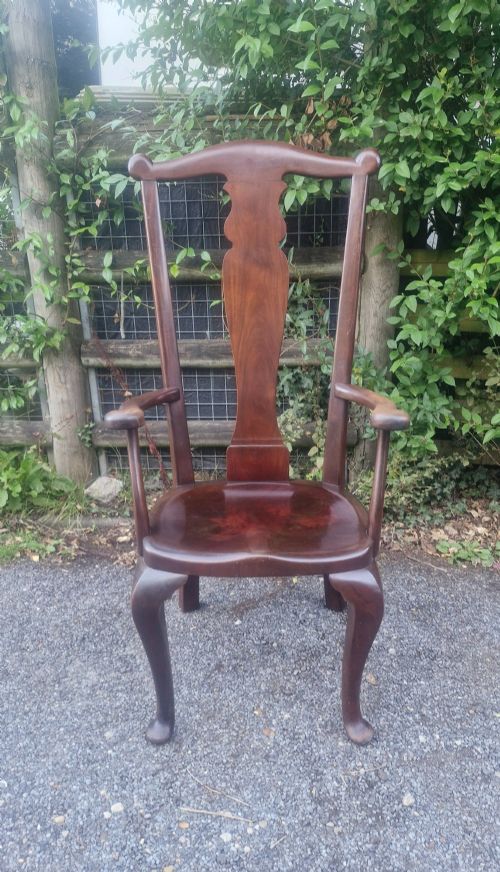
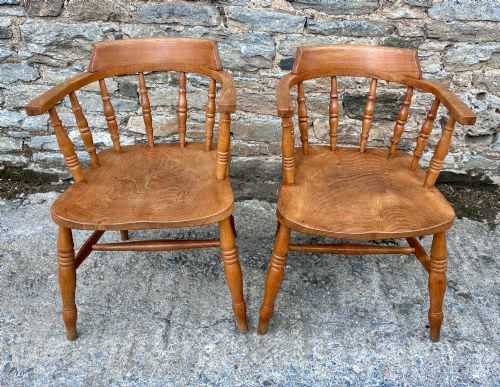
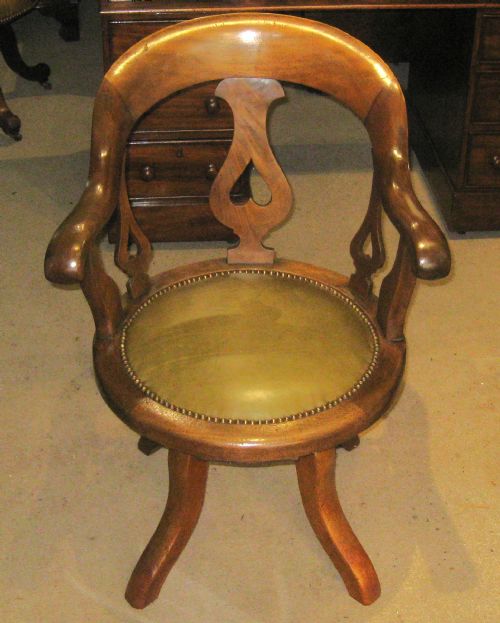
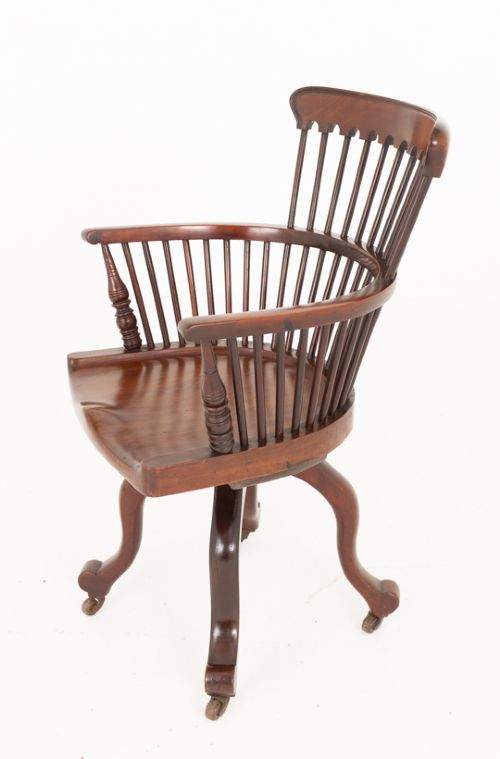
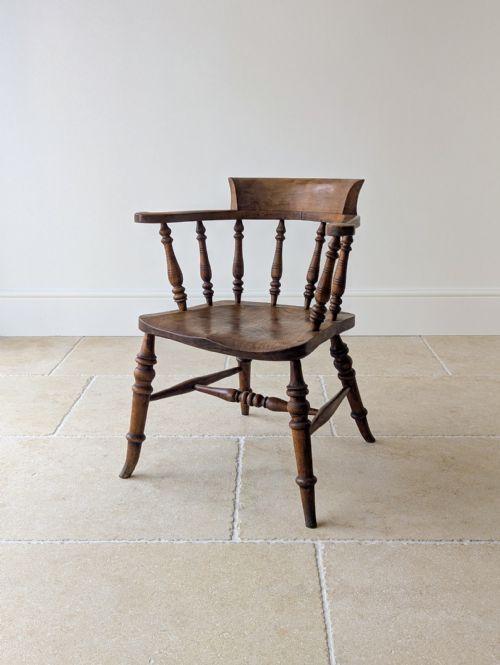
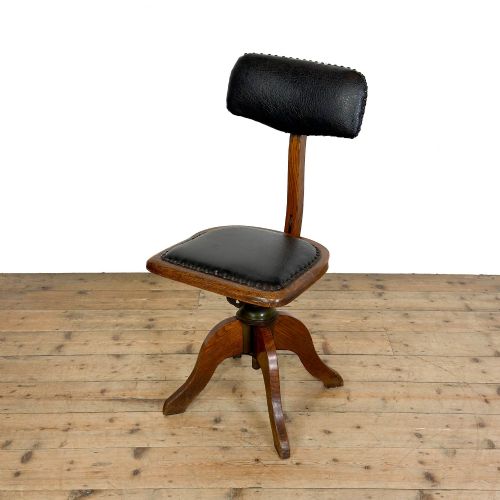
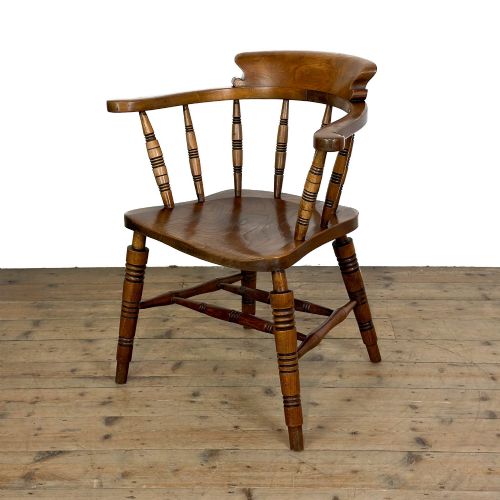
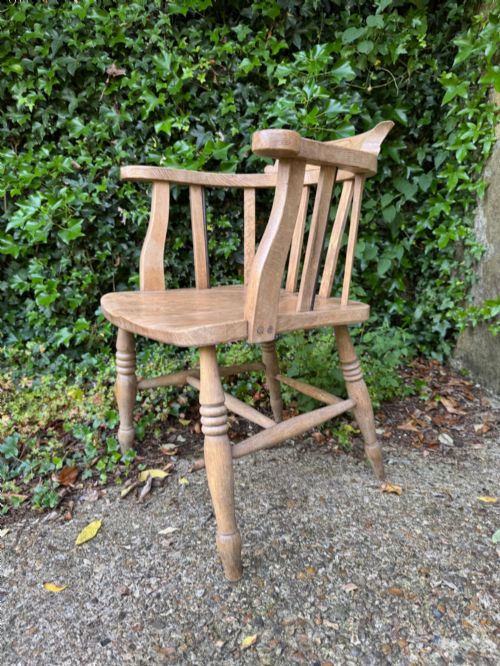
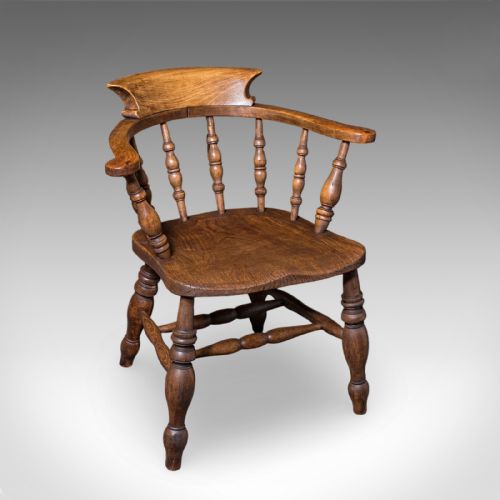
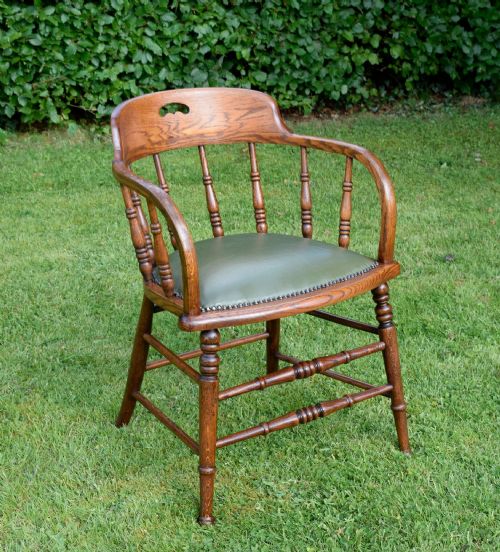
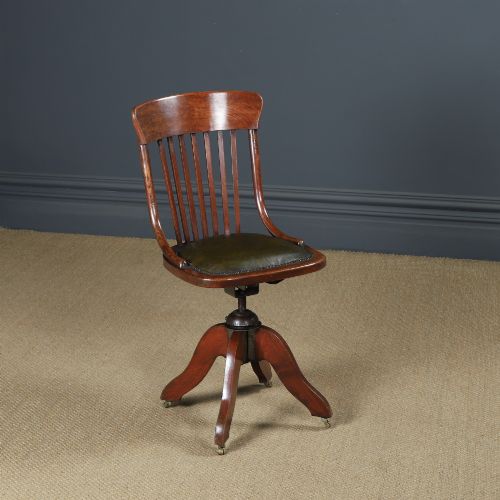
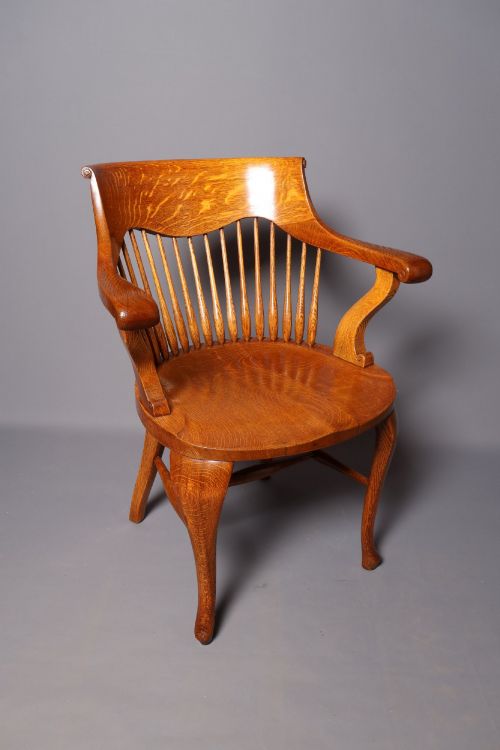
A vintage wooden office chair encompasses desk chairs, armchairs, and captain's chairs originating from the Victorian, Edwardian, and early twentieth-century periods. Buyers seeking these seats will find sturdy seating designed for practical work, often taking the form of low-backed smokers' bows or revolving desk chairs.
The selections span English country and provincial styles alongside formal revival designs like Queen Anne and Chippendale. Most pieces rely on robust timbers intended to endure long hours at a writing desk or ledger.
Origins trace through the nineteenth and twentieth centuries, yielding functional office seating that prioritises utility. The most common survivals on this page date from the Edwardian era and the year 1900, reflecting the expansion of administrative work during those decades.
Materials and construction
Frames rely heavily on native hardwoods such as oak, mahogany, elm, and beech, selected for their structural rigidity and durability under continuous use. Elm and beech frequently form the bent components and spindles of captain's chairs, while mahogany and oak provide the formal presence required for executive desk seating.
Metal mechanisms, brass swivel fixings, and iron screw assemblies appear on later models to allow height adjustment and tilting movement. Leather, tan hide, and brass studs finish the upholstered seats of revolving armchairs, combining industrial metalwork with traditional cabinetmaking.
Certain military armchairs carry official stamps, suggesting some clerks took their stamped paperwork very seriously indeed.
Assessing quality and craftsmanship
The distinction between standard utility seating and finer examples rests on the sophistication of the joinery and the selection of timber. Solid walnut, figured mahogany, and deep-grained oak denote higher status pieces commissioned for principal offices rather than general clerks.
The integration of mechanical functions such as smooth swivel actions, rise-and-fall screws, and tilt mechanisms separates basic side chairs from advanced office seating. Original leather upholstery and stamped maker marks elevate a piece by confirming its provenance and period integrity.
The Vintage Wooden Office Chair Glossary
- Captains Chair
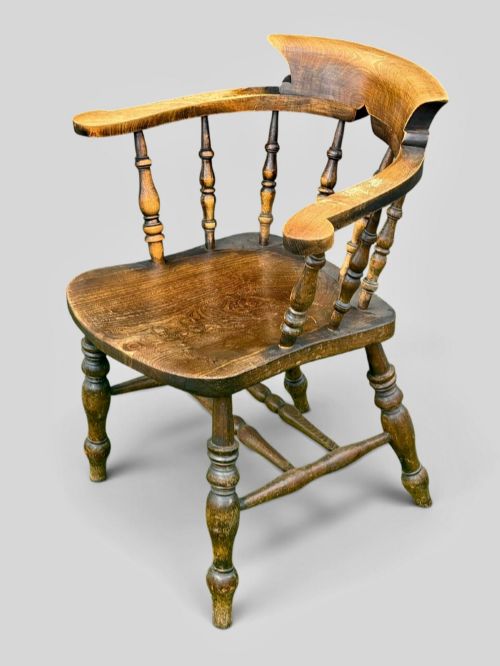
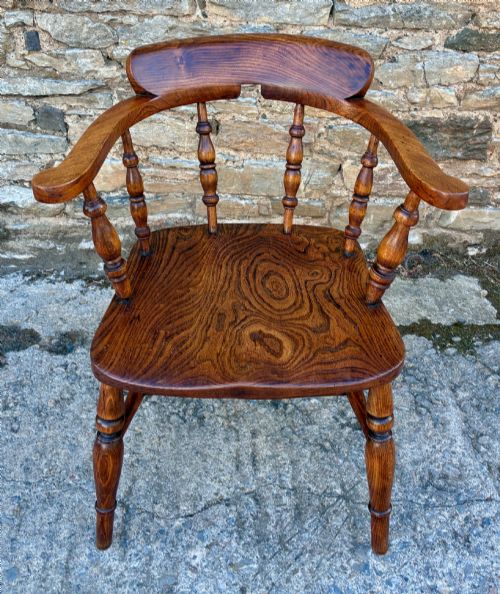
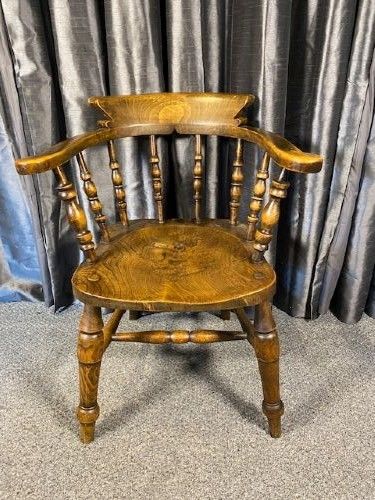
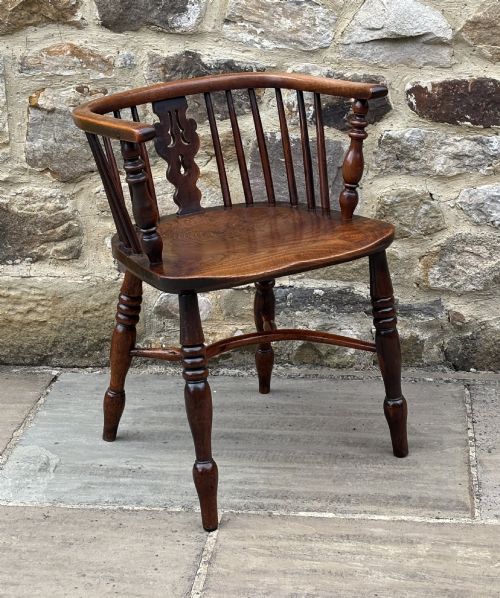
- A sturdy wooden armchair with a low, curved back rail supported by turned spindles. These seats originated for use on ships and in offices, offering robust comfort.
- Smokers Bow
- A traditional English wooden armchair closely related to the captain's chair, featuring a continuous bowed backrest. They use robust turnings and solid elm seats.
- Revolving Chair
- A desk chair fitted with an undercarriage mechanism that allows the seat to rotate fully. These often incorporate a central iron screw for height adjustment.
- Bergere
- A type of upholstered chair characterised by woven cane panels on the back or sides. Examples from the early twentieth century often combine oak frames with swivel bases.
- Chippendale
- A classic eighteenth-century style revived in later office seating, recognised by pierced splat backs and carved mahogany details. Edwardian makers utilised this style for executive desks.
Vintage Wooden Office Chair: Frequently Asked Questions
How do I adjust a swivel chair?
Many vintage swivel models use a central threaded iron spindle that raises or lowers the seat when turned. Simply rotate the wooden seat clockwise or anticlockwise to achieve the desired height.
Tilt actions on Edwardian examples often rely on under-seat spring mechanisms secured with metal tension nuts. Adjusting these requires basic hand tools to tighten or loosen the spring pressure.
Are these chairs suitable for daily desk work?
Most of these chairs were engineered for rigorous daily clerical work and remain well-suited for modern study use. Their solid timber construction provides enduring physical support.
Swivel and tilt variants offer ergonomic movement similar to modern seating, though stationary captain's chairs provide a fixed, upright posture ideal for writing.
What is the difference between an armchair and a desk chair?
Desk chairs are specifically proportioned to fit beneath writing tables, often featuring compact armrests or swivelling bases for mobility. General armchairs may have broader proportions intended for fireside or occasional use.
Office variants frequently incorporate mechanical adjustments and durable leather or hide pads designed to withstand long hours of administrative tasks.
How do I care for leather seats?
Original leather and tan hide benefit from regular dusting with a dry, soft cloth to prevent grit accumulation in the grain. Applying a neutral leather balm periodically maintains suppleness and guards against cracking.
Keep these chairs away from direct heat sources and strong sunlight, which dry out both the timber finish and the historic upholstery.