
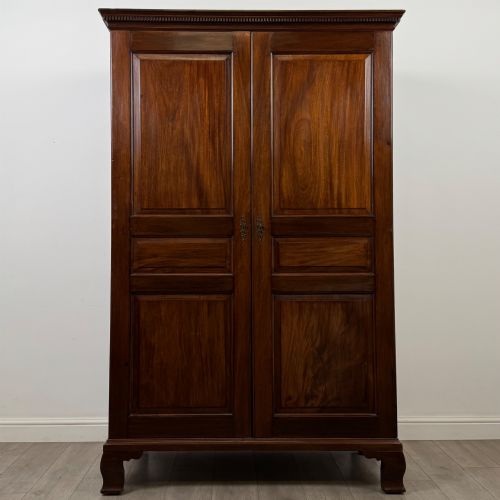
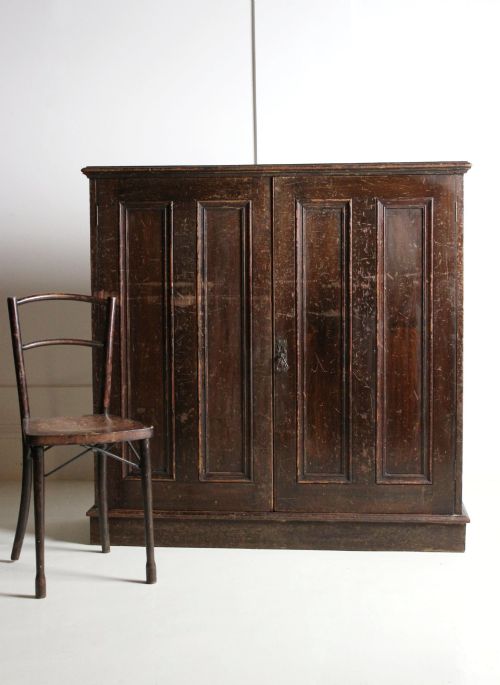
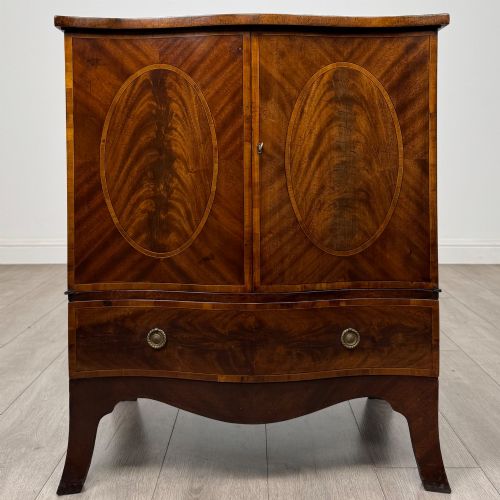
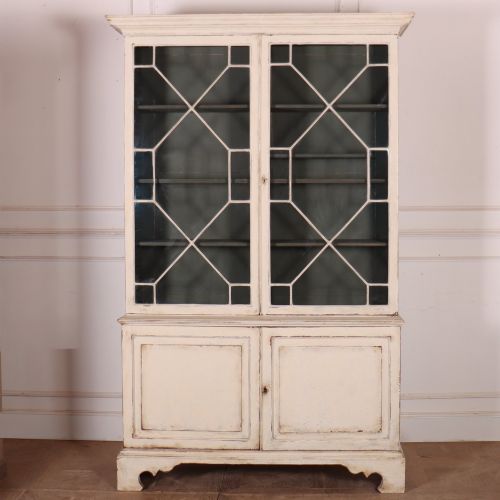
Vintage Wooden Linen Press
A vintage wooden linen press offers substantial storage for textiles while anchoring a room with period character.
Vintage Wooden Linen Press
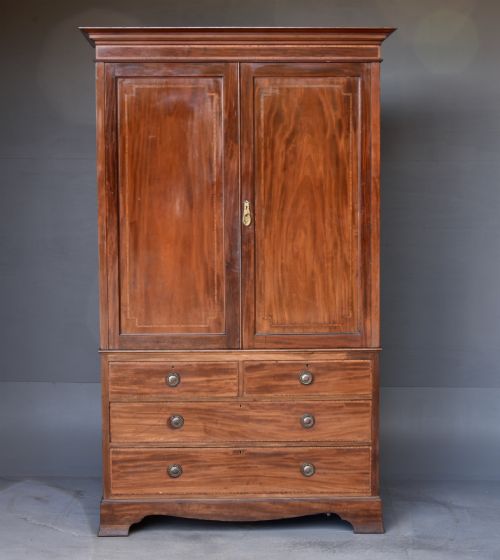
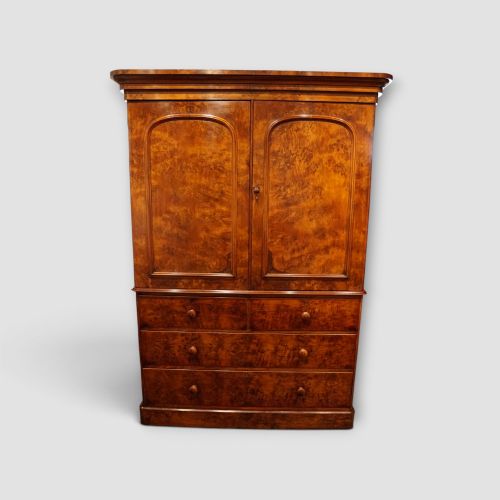
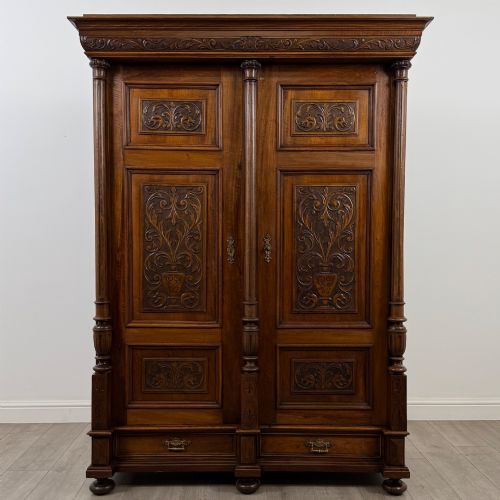
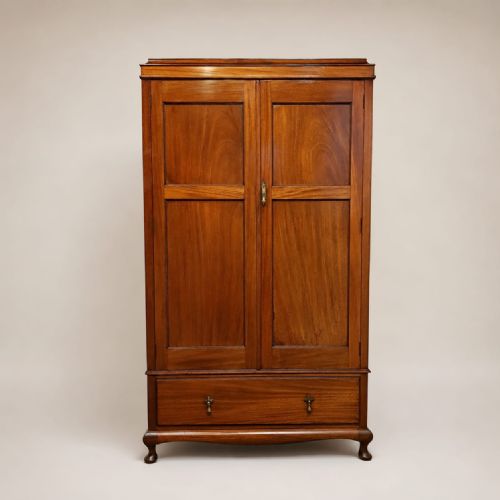
A vintage wooden linen press combines upper storage shelves traditionally used for folded linens with lower drawer sections for garments. These large storage pieces appear in styles spanning the 18th century, Georgian, Victorian, and Edwardian periods.
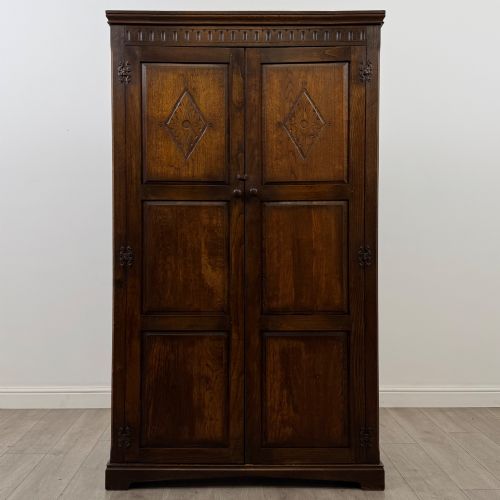
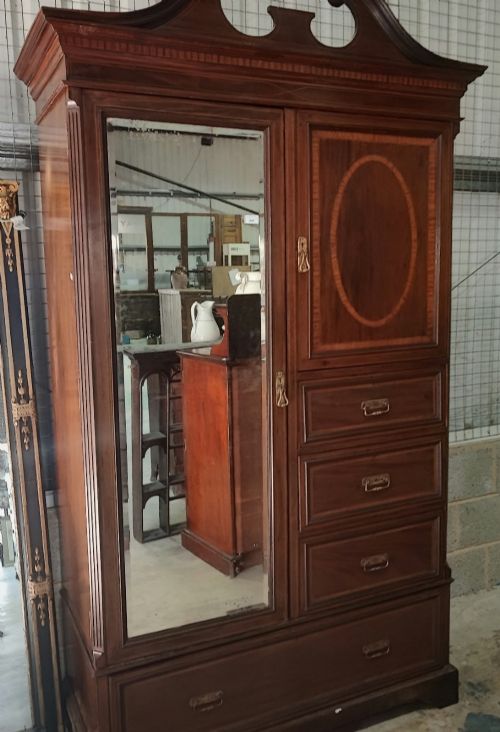
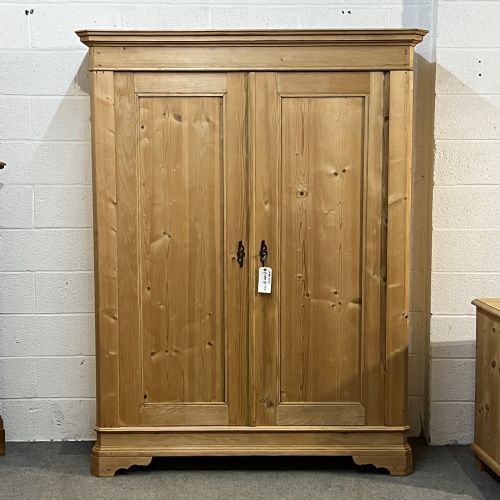
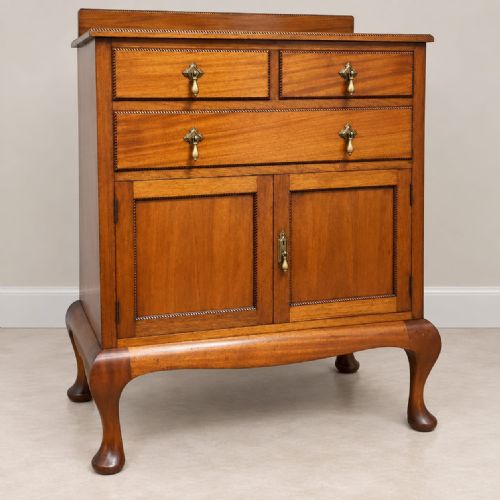
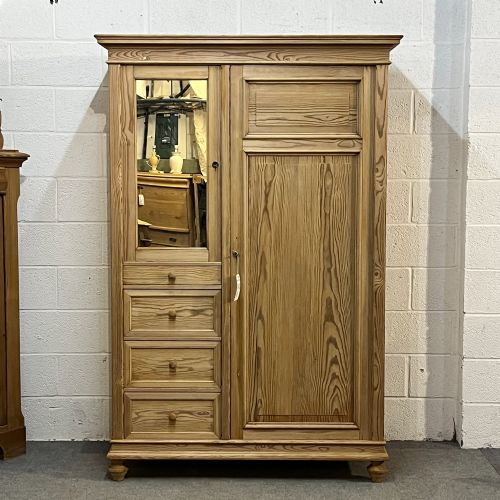
Buyers will encounter tall cabinets constructed from timber such as mahogany, oak, pine, and walnut, often with panelled doors or glazed fronts. Many examples incorporate compactum layouts, combining hanging space, shelves, and internal drawers within a single carcass.
Origin and period dictate the proportions and ornamentation, ranging from simple painted pine country pieces to finely figured flame mahogany and inlaid satinwood designs.
Materials and construction methods
Cabinet makers utilised solid hardwoods and native softwoods, pairing structural timbers like oak and pine with decorative veneers such as mahogany and burr walnut. Carcasses frequently employ secondary timbers for internal drawer linings and back panels.
Surface decoration relies on French polishing, painted finishes, scumble glaze, and intricate wood veneers secured with traditional animal glues. Brass handles, escutcheons, and hinges provide functional hardware, while carved mouldings define the period aesthetic.
Listings feature mahogany, pine, oak, walnut, and satinwood across Georgian, Victorian, Edwardian, and 1930 periods.
Assessing quality in construction and materials
Quality rests in the selection of timber, particularly the grain figuration in flame mahogany and burr walnut veneers. Superior pieces display careful book-matching across doors and drawer fronts rather than random timber orientation.
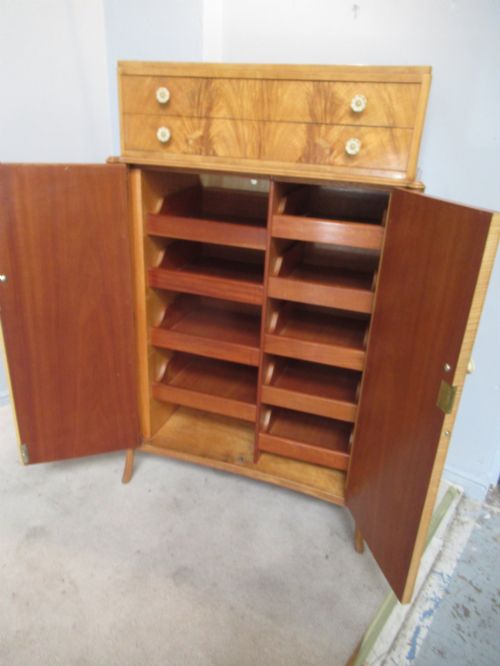
Internal joinery distinguishes workshop standards, seen in hand-cut dovetails on drawers and substantial panel construction that prevents warping. The survival of original brass hardware, working locks, and interior sliding trays elevates a piece above standard utility furniture.
maples & co·Edwards and Roberts·Johnston’s of London
The Vintage Wooden Linen Press Glossary
- Compactum
- A large fitted wardrobe combining hanging space, shelves, and internal drawers within one unit. These multi-functional storage pieces became popular during the Victorian and Edwardian eras.
- Flame mahogany
- A veneer cut from the fork of the mahogany tree to produce a distinctive flickering flame pattern. Cabinet makers used this timber on prominent surfaces of Georgian and Victorian furniture.
- Scumble paint
- A decorative surface treatment applied to create faux wood grain or mottled textures over a base coat. This technique appeared on 19th-century pine furniture to imitate costlier hardwoods.
- Tallboy
- A tall chest of drawers stacked upon a larger base chest or enclosed cupboard section. These vertical storage units maximise floor space in domestic interiors.
- Escutcheon
- A protective metal plate surrounding a keyhole on a cabinet door or drawer front. These functional brass or iron fittings often serve a decorative role in period furniture.
Vintage Wooden Linen Press: Frequently Asked Questions
How do I date a wooden linen press?
Dating relies on timber choices, construction techniques, and stylistic motifs corresponding to Georgian, Victorian, or Edwardian periods. Hand-cut dovetails and secondary timbers offer reliable indicators of age.
Secondary clues include the type of fixings, handles, and internal configurations such as sliding linen trays versus modern hanging rails.
Can I use a linen press as a wardrobe?
Many linen presses convert easily for modern clothing storage by removing interior sliding trays to accommodate a hanging rail. The lower drawers provide ample space for folded garments and accessories.
Checking internal depths ensures standard coat hangers fit inside the upper cupboard section before conversion.
How do I care for antique mahogany and walnut?
Maintenance involves applying microcrystalline wax periodically to nourish the wood and protect the polish from moisture and dry air. Avoiding direct sunlight prevents timber fading and veneer lifting.
Dusting with a soft, dry cloth preserves the finish without abrasive cleaners.